Step-by-step educational guides designed to help navigate transition, legal processes, healthcare systems, advocacy, and everyday life. Whether you are changing your name, updating documents, starting HRT, or learning how to support a trans loved one, these guides aim to make complex topics easier to understand.
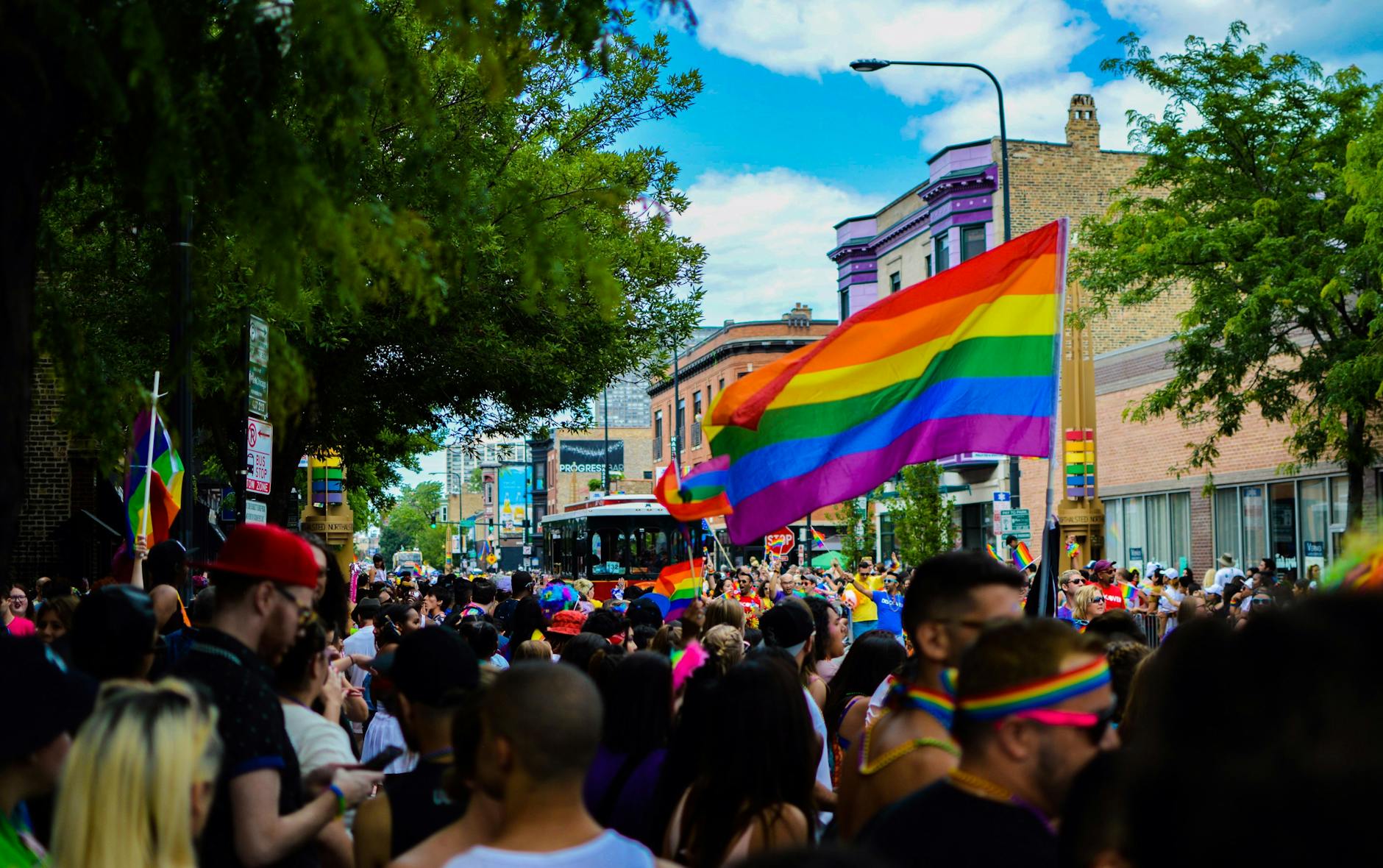
Pride is exciting and intimidating for many transgender people, especially for folks newly adjusting to their identities. Pride can be celebrated in hundreds of ways; this is our beginner guide for attending pride as a trans person.
What Is Pride Month: Celebrations, Protest, & Community
June has been observed as LGBTQ Pride Month since 1970, the first year held in celebration after the 1969 Stonewall Riots. Over the decades, Pride has evolved to encompass visibility, solidarity, and community. Many pride festivals are organized around the end of June to commemorate Stonewall.
Pride can hold different meanings for every individual. Most pride festivals are organized in three overarching themes:
Celebration
Protest
Community
Celebration-Based Pride Festivals
The most visible and attended pride festivals celebrate modern LGBTQIA+ experiences through parades and performances. These are massive events that draw millions, connecting attendees with local vendors and organizations between scheduled concerts and drag performances.
In 2025, the five most popular US pride festivals were:
These events host booths for amazing organizations, such as PFLAG, the Human Rights Campaign, Trevor Project, and GLAAD, as well as locally based groups. They also bring incredible talent: Ariana Grande, Cher, and RuPaul are just a few mega-stars who have performed at pride festivals.
However, celebration-centered prides aren’t perfect. They garner unique criticism for being overly corporate because most of their funding comes from pinkwashing businesses that fail to commit to LGBTQIA+ rights. As cool as the parades are, it’s hollow to see Mastercard, Amazon, and Walmart march while pushing donations to anti-LGBTQIA+ causes.
Because many of these events are organized by 501c3 nonprofits, they can become victims of tolerating the intolerant. Festival organizers enforce code-of-conduct statements, but free-speech touting booths occasionally sell rainbow Confederate flag merchandise right next to PETA and Autism Speaks.
Protest-Centered Pride Events
In response to the growing number of corporate celebration-based pride festivals, other organizers have created events centered around the original spirit of Stonewall. After all, the first pride events were riots.
These events feature few vendors and community booths, channeling energy towards protest demonstrations, workshops, and speaker panels. Activism is a constant struggle, so organizers move participants to act against homophobia and transphobia throughout the year.
501c4 nonprofit status allows organizers to be politically selective. They can officially endorse specific parties and individuals, guiding participants to vote against hateful candidates. On the other hand, 501c4 status forces all donations to be ineligible for tax-exemption, heavily impacting their ability to get funding and sponsorships.
With limited budgets, protest-themed pride events see vastly fewer participants compared to celebration festivals unless there is remarkable public energy towards action. When lacking an immediate pressing issue, most individuals aren’t inclined without dozens of vendors or entertainment options.
Community-Focused Pride Spaces
Community-centered pride festivals join the values of celebration and protest to make meaningful spaces for participants. Organizers balance both ends, creating unique experiences and challenges.
With 501c3 nonprofit status, these organizers garner greater funding since corporations are incentivized towards tax-exempt sponsorships. However, that status forces organizers to include all political platforms in events and cannot endorse candidates. Inclusion conduct statements target hate speech, but this can still be stalled by local First Amendment policies.
These events are often selective regarding vendors and organization booths. You are more likely to see local charities and activist groups than Target or Mastercard. Through an intersectional view, partners are chosen carefully to define the festival’s public image.
There are unique challenges associated with these events, which every organizer must address in planning:
What workshops and panels are attractive, yet informative?
What should police and security presence look like?
How strict should family-friendly censors be?
Although community pride festivals are smaller than others, they’re incredibly fun to be a part of.
How to Choose the Right Pride Event for You
Thousands of pride festivals are organized each year throughout the United States. It can be daunting to choose which ones to commit to, especially if travel is involved.
Understand the different types of pride festivals commonly organized, as explained previously. Would you rather have a massive party or network with local groups? Do you want something close to home or a mini-vacation?
Although smaller than broad festivals, there are other incredible events based on specific identities and needs:
Black Pride
Disability Pride
Trans Pride
Family-Friendly Pride
Kink Pride
Sober Pride
It’s crucial to research whether an event is transgender-inclusive. Not all queer organizations have stellar views or histories. These are some ways to research how trans-friendly a pride festival is.
Review Organizers: Are transgender, nonbinary, and BIPOC individuals in leadership roles? What statements have individual organizers made about transgender people?
Check Collaboration: Have transgender speakers or performers been previously included? Have transgender partners been treated and paid fairly compared to cisgender ones?
Consider Accessibility: Do organizers include gender-neutral restrooms in official maps? Does the festival have space for cooling off, overstimulation, or other needs?
Go Online: Have any media outlets reviewed previous events? What have previous festival participants written online on X, Reddit, and Facebook?
What to Wear to Pride: Fashion, Comfort, & Managing Dysphoria
Pride festivals are opportunities to show off your best (and worst) gay fashion. It’s your choice if you want to go full-rainbow or completely stealth.
With a light base, accessorize your outfit. Incorporate vibrant colors with makeup, glitter, jewelry, and handkerchiefs. It could be as tiny as stickers or a full 3×5 flag.
Always dress for comfort first. Festivals easily reach 100°F, and their outdoor nature means activities commence rain or shine. Lightweight layers or a backup outfit are ideal, offering you options throughout the day.
Dressing for comfort also applies to gender dysphoria. Gender expression is experimental at pride festivals. Although most participants know not to assume gender based on outfits, it still sucks getting misgendered – plan outfits that will make you feel good in your body.
Avoid overbinding.Binders exacerbate heat and cause sweating to worsen, putting you at additional heatstroke risk. Bring a backup outfit if you’re unsure whether the main one will be too warm. Know your limits and be prepared to stop binding in an emergency.
Avoid heels and boots unless you are extremely used to them. Outdoor festivals mean hours of standing and walking outside. Sneakers, sandals, and other footwear with arch support are best.
Avoid the sun. It’s too easy to get sunburnt at festivals because you’re so focused on booths and activities. Hats, sunglasses, and parasols help when sunscreen fails or you can’t find shade.
What to Bring: The Ultimate Pride Packing List
Essential items will vary based on festival policy. Some pride events limit bag sizes, props, and parasols, so always check the organizer’s website.
Plan to bring a small amount of cash in addition to cards and cardless payment methods. Bring at least one form of ID, especially if you plan to visit beer tents.
Cash is ideal to tip performers, although many provide QR codes to CashApp, PayPal, and Venmo.
Vendors don’t always have cardless tap readers. Backup cards are handy to avoid being turned away.
Create a tiny mobile self-care kit. These should include refillable water bottles, blister bandages, energy snacks, electrolyte gummies, and hand sanitizer. Add daily medication, headache relief, and period products as needed. High-grade stuff should be handled by the festival’s first-aid tent, but check beforehand.
Small bags are almost a requirement. Venues may restrict you to clear totes, drawstrings, and purses, but you’ll regret not having one. Some booths may even give out free branded bags, which you can use to fill with other freebies, merchandise, and flyers.
Bring sunscreen. Check the festival guidelines to see whether sunscreen must be lotion-based or if aerosol types are allowed.
Battery packs and charger cables are great. It’s unlikely you will be near any outdoor outlets, and most festivals lack accessible charging stations.
Small handheld fans will cool you off throughout the day. If you forget to bring one, there will definitely be free ones you can physically fan yourself with.
Keep a small card with important information on you at all times. Festivals normally restrict participants from keeping self-defense items and require safety to be managed by their personal security team. This card should include phone numbers to the following:
A trusted friend or family member
Your local public defender
Your regional ACLU affiliate
Your regional National Lawyers Guild
Bring additional items based on need. Earplugs help manage loud noises, and fidgets are common tools to deal with overwhelming crowds.
Pride Safety Tips for Trans & Queer Attendees
Festival organizers work hard to keep events safe, but it’s important to be mindful. Despite escalating risks and disruptions, pride festivals are incredibly safe.
Use the buddy system. Even if you attend Pride alone, keep your location actively shared with trusted friends throughout the day. Create a designated meeting spot in case of separation when attending in groups. In both settings, establish check-in times with a friend and a code word for emergencies.
Set reminders to pace yourself. You should be drinking water every 30 to 60 minutes, which can be easy to forget without cellphone notifications. Create similar reminders to reapply sunscreen.
Commit to situational awareness. Take note of nearby exits, report suspicious actions and bags to staff, and try to not to get lost in the party. Never accept drinks from strangers and keep drinks in eyesight at all times.
Avoid engaging with homophobic protesters. Individuals have a First Amendment right to protest along the boundary lines of festivals. They aren’t allowed to protest on festival grounds or touch participants, but they CAN be as loud and annoying as they want. You have the same rights, but use caution to avoid escalating.
Acknowledge needs for digital privacy. You don’t have to be out to attend Pride, but be aware that it’s nearly impossible to stay anonymous at big events. Thousands of people will be taking photos throughout the day, including event organizers. Bring face masks or sunglasses if privacy is a concern.
People celebrate Pride differently. June is a time to celebrate, build community, and remember history. Here are important affirmations to remember this Pride Month.
Pride Is Everywhere (Not Just Festivals)
Pride isn’t just a weekend festival. There is no wrong way to celebrate Pride. Some people love parties and nightclubs, others prefer staying in with their chosen family.
Festivals can be crowded and emotionally taxing. It’s okay to practice the joy of missing out and unplug. Pride is just as valid at home with friends as it is at huge clubs.
Looking for more ways to celebrate pride? Check out our guides to LGBTQIA+ films, books, and museums to observe other great aspects of queer culture.
Pride Is For Everyone (Including You)
There are no entrance exams or tests regarding Pride. It’s for everyone open to celebrating and learning about queer experiences.
Some people go all out for Pride. That’s cool! But it’s also fine if that’s not your style. Everyone is welcome, and that includes people who dress for comfort over glam.
You don’t have to be out to attend Pride. Pride is for everyone – including those questioning, in the closet, or just allies. It’s a red flag if Pride becomes gatekept since lots of transgender people may pass for cishet.
Permission to Explore Pride Your Way
It doesn’t matter if you attend Pride solo or with friends. Yes, lots of people attend Pride with close friends. It can be fun to plan a mini road trip and spend the day hanging out. But many people attend Pride alone, too!
If you’re anxious about attending Pride alone, message local LGBTQIA+ organizations or online groups. There’s always someone else out there feeling the same way as you.
Attending pride festivals alone creates more opportunities to meet other community members. People tend to close themselves off when attending in groups, whereas solo travelers get pushed to connect.
It’s Okay to Be Overwhelmed at Pride
Festivals are hot, crowded, and loud. It’s normal to feel overwhelmed. Pride can also bring up complicated emotions when we’re reminded of legislation, outness, and family support.
Give yourself permission to take breaks. Many pride festivals provide designated quiet areas to decompress and ground yourself. You’re not required to stick it out or suffer through the motions.
You are allowed to leave if you’re uncomfortable or stressed. If stepping away isn’t enough, you’re not obligated to stay until the festival officially ends.
Post-Pride Self-Care: How to Decompress After the Festival
Regardless of whether it’s your first time attending Pride or if you’re a seasoned veteran, festival weekend can be emotionally intense. Make time to intentionally practice self-care afterwards. Rest is just as important as celebrating.
Joy and grief can co-exist. It’s possible to feel excitement, loneliness, and hope all at the same time. Pride is one of those holidays that brings up all sorts of feelings.
Check in with your support network. Talk about your Pride experience and emotions with your friends, family, and mental health professionals. For more information about self-care and resources, check out our mental health guide.
Stay connected with folks you met at Pride. You can continue building affirming friendships after June by following local LGBTQIA+ organizations and joining online support groups.
Frequently Asked Questions
Can I attend Pride if I am closeted or don’t pass?
Yes. There is no entry exam to attend Pride. You will see people at every stage of their journey, including people fully stealth and baby trans individuals experimenting for the first time.
If you’re worried about privacy or possibly being outed, face masks and sunglasses are perfectly acceptable.
What should I do if someone misgenders me at Pride?
A quick and polite correction usually does the trick. Accidental misgendering happens – even in queer spaces. Don’t let brief stranger interactions ruin your Pride.
If the misgendering is intentional, your safety and well-being are a priority. Walk away or locate nearby volunteers and security for support.
Is it safe to go to Pride alone as a trans person?
Yes. Thousands of people attend Pride alone every year and have incredible experiences.
However, pride festivals can amplify anxiety. Create a digital safety net by setting up check-in texts throughout the day. Drop a pinned location to track you until returning home.
How do I find trans-specific spaces inside a massive pride festival?
Pride festivals can feel overwhelmingly geared towards cisgender queer spaces. To find trans-specific spaces at your festival, ask event staff for advice. Alternatively, most nonprofit booths will be staffed by transgender folks and allies who can direct you to interesting events, panels, and marches.
Gender-affirming surgery is a big decision along one’s transition journey. This metoidioplasty consultation guide walks you through what questions to ask potential surgeons.
Metoidioplasty (meta) is a genital gender affirmation surgery that uses hormone-enlarged clitoris tissue to create a penis. Metoidioplasty is one of two genital gender affirmation surgeries available to transgender men, ideal for individuals who do not want to undergo phalloplasty.
Metoidioplasty is associated with fewer steps and complications than phalloplasty, although it results in a smaller penis. Some individuals can urinate standing up and achieve shallow penetration with their metoidioplasty results, but this varies based on available clitoris tissue.
Understanding Metoidioplasty
Metoidioplasty surgeons cut ligaments surrounding the clitoris to free it from the pubic bone. Since the clitoris contains erectile tissue, metoidioplasty penises can become erect without penile implants, unlike phalloplasty.
The urethra is connected to the new penis, allowing individuals to better urinate with their anatomy. Urethral tissue is collected from the labia minora, vaginal lining, and buccal mucosa.
There are different metoidioplasty techniques, offering different advantages depending on individual goals.
Other surgeries often occur alongside metoidioplasty, such as scrotoplasty, mons reduction, vaginectomy, hysterectomy, oophorectomy, and testicular implants. The timeline for additional surgeries varies based on surgeon.
Common Goals of Metoidioplasty
Standing to Urinate
Preserving Erogenous Sensation
Maintaining Natural Erections
Minimal Scarring
Who Is Eligible for Metoidioplasty?
Metoidioplasty is not an ideal fit for everyone. Good candidates are considered eligible based on:
Age. Patients must be at least 18 years old for metoidioplasty.
Documented Gender Dysphoria. Metoidioplasty requires patients to procure surgical support letters from a qualified mental health professional documenting persistent gender dysphoria.
Anatomy. Candidates must have significant clitoral growth to support metoidioplasty.
Weight. BMI requirements vary by surgeon, but most providers prefer BMIs under 35 to decrease the risk of complications.
General Health. All physical and mental health conditions must be well-managed for ideal recovery.
Why Choosing the Right Surgeon Matters
Not all surgeons are equal. Metoidioplasty is highly specialized and non-reversible, so choosing an experienced surgeon ensures better outcomes.
Metoidioplasty surgeons have preferred specializations and techniques. Some providers may prioritize urethral lengthening, while others focus on lowering complications. Their experience impacts complication rates, aesthetic results, urethral lengthening success, and erectile sensation preservation.
Questions to Ask During Metoidioplasty Consultation
Get the most out of your consultation. Many clinics have consultation wait times of over six months, so it’s best to maximize your appointment.
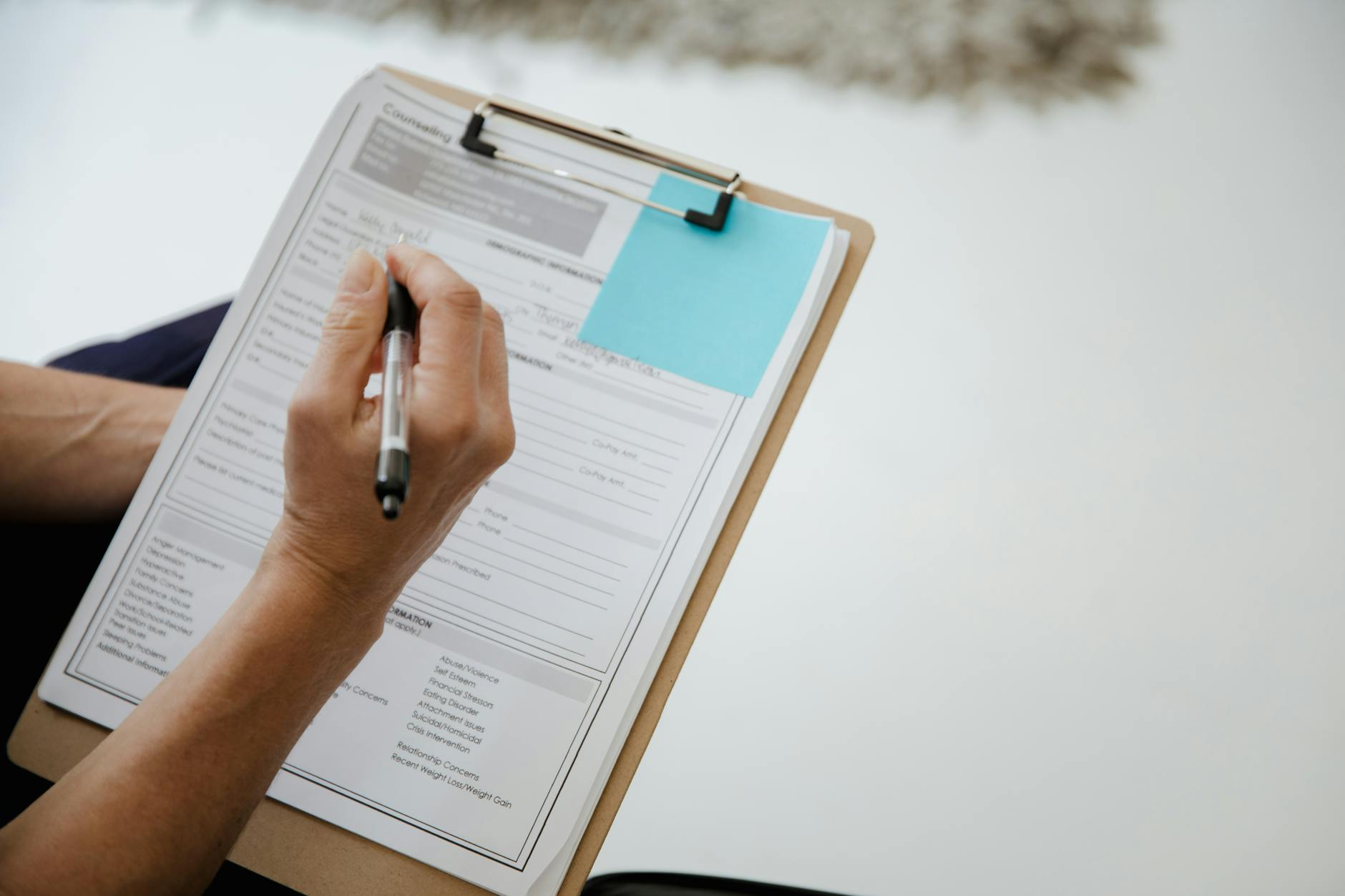
Bring a written list of questions to your consultation appointment and take notes. While digital lists are convenient, physical paper is recommended for optimal notetaking. Use the button below to download a printable PDF of our questions.
Where can I ask questions between today’s consultation visit and surgery?
Where can I ask questions after surgery while recovering?
What are your average wait times for surgery after consultation?
Who will be my main surgeon?
Can I see photos of your results for patients with similar anatomy?
Questions About Surgical Techniques
Do you perform any of the following surgeries:
Vaginectomy
Hysterectomy
Oophorectomy
Salpingectomy
Urethral Lengthening
Scrotoplasty
Monsplasty
Perineoplasty
Testicular Prosthesis Implantation
Out of the above procedures, are they done in one or multiple stages?
What do you prioritize in your results?
What implant sizes are typical for testicular implantation?
Questions About Functionality
How much of my anatomy can be released from metoidioplasty?
How much visible length do you estimate I will see after recovery?
What about my anatomy might limit my results?
What is the realistic worst-case outcome for me?
What metoidioplasty technique do you recommend for my anatomy?
Will tissue grafts be needed?
Based on my anatomy, am I a good candidate for urethral lengthening?
What do you define as success regarding standing urination?
What percentage of patients are labeled as successful by your definition versus personal definitions?
Do any of your patients achieve shallow penetration?
What length is required for shallow penetration?
What happens to erotic sensation after surgery? Is sensitivity usually increased, decreased, or unchanged?
Questions About Risks & Complications
What are the most common issues associated with standing to pee, such as spraying or dribbling?
What is your fistula and stricture rate?
What are your complication rates for scrotoplasty, such as migration or rejection?
Are there any risks of numbness?
What kind of scar patterns should I expect?
Questions About Recovery
How long after metoidioplasty until I can pee standing up?
How long after metoidioplasty until I can return to normal physical activity?
How long after metoidioplasty until I can resume sexual activity?
How long will I need to wear a catheter?
How long after metoidioplasty until I can return home?
How long after metoidioplasty until I can resume driving?
How long after metoidioplasty until I can use substances like alcohol?
When can I return to work after surgery?
How painful do patients report recovery is?
Questions About Revision
What is the process if a fistula or stricture occurs?
What is the process if migration or rejection occurs?
How often do your patients need revisions?
What is the revision process like?
How long after surgery must I wait before pursuing revisions?
Questions About Cost & Insurance
Do you have patient navigators or social workers available to assist with costs?
What is the total estimated cost?
What does the total quote include?
Do you offer payment plans?
Questions About Preparation
Do I need electrolysis or hair removal?
Should I stop smoking or vaping before surgery?
Are there any medications I must stop taking?
What lab work or medical clearances are required?
What fertility options should I consider?
Questions About Long-Term Outcomes
What are patients most surprised about regarding surgery?
What do patients struggle to adjust to after recovery?
What do long-term results typically look like?
How do implants hold up over time?
What kind of follow-up care do you provide?
Metoidioplasty Consultation Red Flags
Unrealistic promises
Avoiding or refusing to discuss complication rates
Lack of transgender patient experience
Having concerns dismissed
Poor communication
Pressure tactics
Frequently Asked Questions
Is metoidioplasty safer than phalloplasty?
Yes. Metoidioplasty is generally considered safer than phalloplasty because it is less invasive, leading to lower rates of complications. The procedure is completed in fewer stages, resulting in less time spent under anesthesia.
However, both metoidioplasty and phalloplasty are considered safe. Associated complications, such as fistulas and strictures, are normally not urgent. Like all surgical procedures, extremely rare life-threatening complications can occur due to anesthesia.
Can metoidioplasty be converted into phalloplasty later?
Yes. Many transgender individuals choose to convert their metoidioplasty into a phalloplasty later if their results do not fully alleviate gender dysphoria.
Some surgeons intentionally stage metoidioplasty as an initial step towards phalloplasty. Consult with your surgeon on their approach.
How long does metoidioplasty recovery take?
Initial metoidioplasty recovery ranges from six to eight weeks for basic mobility, although final aesthetic results take up to 12 months to stabilize.
The exact timeline depends on procedure complexity, such as getting urethral lengthening or a vaginectomy. The first two weeks are the most acute, and daily activities gradually return as pain is managed.
Does metoidioplasty preserve sensation?
Yes. Metoidioplasty preserves full erogenous and tactile sensation, allowing the new phallus to be erect without nerve grafting or erectile implants.
Can you pee standing up after metoidioplasty?
Yes. Individuals can stand to pee after metoidioplasty, but only if they undergo urethral lengthening. Even with urethral lengthening, the ability to stand and aim varies based on anatomy, body type, and hand dexterity.
Looking For More? Here Are Our Recommendations.
Browse Trans Solidarity Project’s guides or check out these posts:
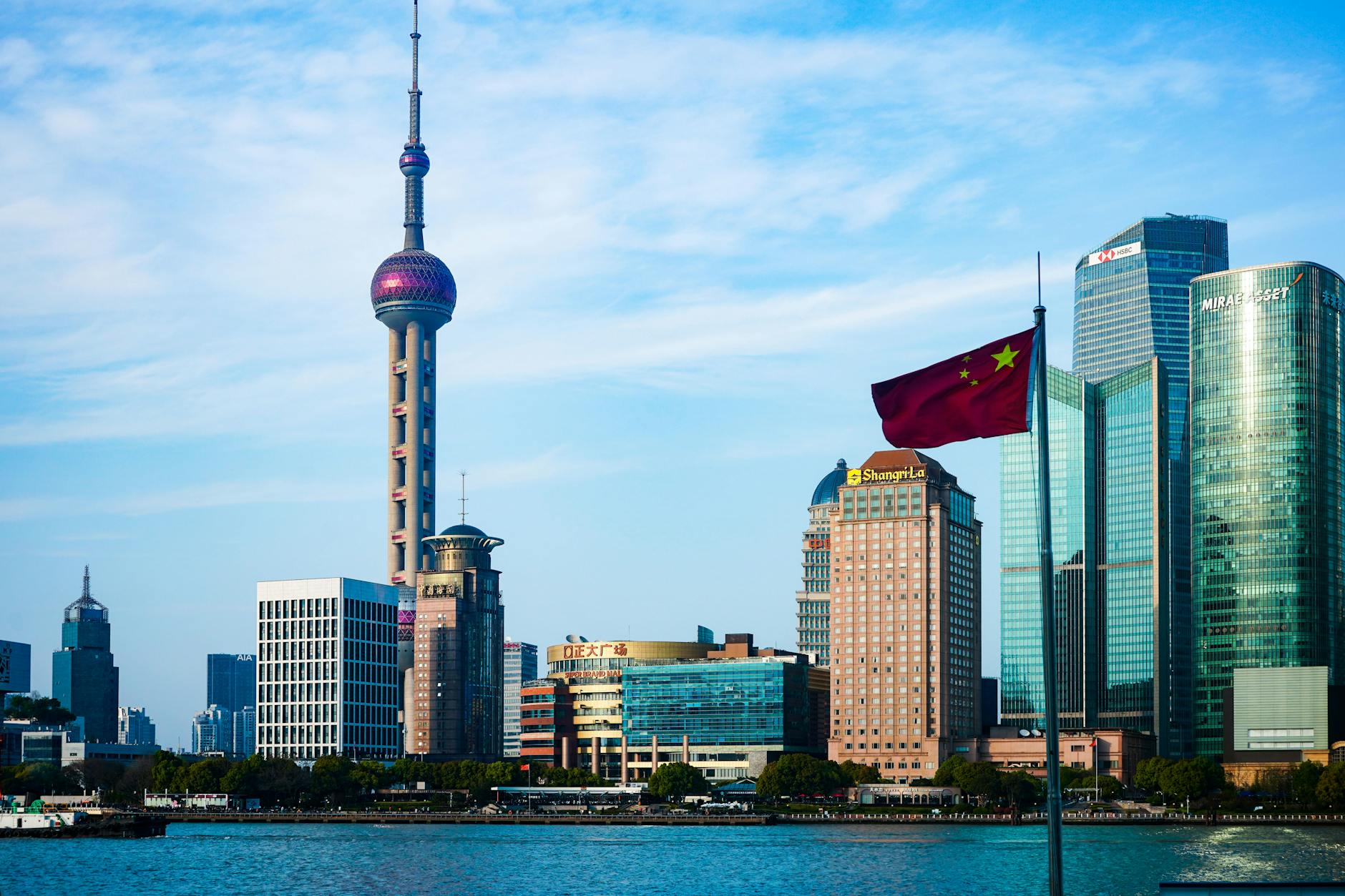
I recently returned to the United States after traveling throughout Asia. Last time, I wrote about my experiences in Indonesia. Here are my takeaways as a transgender man visiting China.
Disclaimer: For the most part, I am cisgender-passing. Strangers assume I am queer, but don’t make the connection that I am transgender.
I don’t hide my transgender identity, but transmasculine people are invisible. There is a time and place to push visibility versus safety. Always use caution when traveling, especially if you are visibly transgender.
China was the focal point of my entire trip. When choosing where to go, I was torn between China and Cuba since I knew current politics meant future travel to either destination could be impossible.
The United States has a difficult relationship with China, effectively putting us in a Second Cold War. China is a top tourist destination despite political barriers due to its rich cultural history and natural wonders. However, Americans are more hesitant to visit China compared to other Asian destinations like Japan, South Korea, or Thailand.
China Travel Guide: Important Things to Know Before Visiting
The One-Child Policy ended in 2015 to combat China’s declining birth rates. As of July 2021, there is no limit on the number of children a couple may have. Despite this, China’s birth rates have not improved, and young couples report reluctance to have children due to the high costs of living.
China is a massive country with geographical diversity rivaling that of the United States. Most of China is mountainous, which is why most people live in the less mountainous east.
The north gets frigid winters and humid summers. While in Beijing, it was below freezing, and the city was dusted with snow. In contrast, regions south of Hong Kong are classified as tropical – Hainan stays around 80°F throughout the year. Only 6% of people live west of the Heihe–Tengchong Line, which is extremely arid from the Tibetan Plateau and Gobi Desert.
The Department of State classifies China with a Level 2 Travel Advisory, recommending travelers to exercise increased caution when visiting. This advisory is due to reported arbitrary enforcement of local laws and exit bans by the People’s Republic.
This disproportionally affects Americans with high-ranking connections. Government personnel, academics, and journalists are more likely to be targeted due to PRC censorship and its difficult relationship with the US.
Even in major cities like Beijing and Shanghai, it is unsafe to drink local tap water. Both locals and foreigners should drink water boiled, filtered, or bottled to avoid contamination.
Always visit your primary healthcare provider before traveling abroad. Your provider will administer and prescribe necessary vaccinations and medications for your travel.
The CDC recommends the vaccinations and medications for the following:
Chickenpox
Diphtheria-Tetanus-Pertussis
Influenza
Measles-Mumps-Rubella
Polio
Shingles
COVID-19
Chikungunya
Hepatitis A
Hepatitis B
Japanese Encephalitis
Rabies
Tick-Borne Encephalitis
Typhoid
Leptospirosis
Schistosomiasis
Crimean-Congo Hemorrhagic Fever
Dengue
Leishmaniasis
Hantavirus
Tuberculosis
The CDC recommends having a list of local doctors and hospitals at your destination. Use the emergency function on your phone or carry a physical card in Chinese detailing your blood type, serious allergies, and chronic conditions.
You don’t have to, but it is a good idea to have travel insurance when leaving the United States. Your normal health insurance won’t help you in China. Travel insurance covers emergencies, including legal assistance.
Some medications widely accessible in the United States may be prohibited in China.Commonly restricted medications include stimulants (ex. Adderall, Ritalin), pseudoephedrine, dextromethorphan, codeine, and benzodiazepines. On the other hand, China has a massive culture around herbal medicine that requires caution when transporting back to the United States.
What’s the difference between Chinese and Mandarin?
Technically, Mandarin is a distinct language under the Chinese language family. Chinese can refer to 13 major languages (ex. Cantonese, Wu, Min), similar to how Romance is the language family to Spanish and French.
Each of the 13 major regional languages is a distinct language and unintelligible to the others. A native Cantonese speaker has as much luck understanding Wu as a native Spanish speaker understanding Portuguese. These are separate languages, not dialects or accents.
HOWEVER, Mandarin is the standard official language. People I met were adamant that Chinese means Mandarin and vice versa because the PRC has made it part of the national identity. In the simplest sense, Mandarin and Chinese are related but different if you’re speaking to a linguist; they’re the same if it’s everyday conversation.
China has an extremely low English proficiency rate. If you are traveling to China, it will be nearly impossible to navigate without a guide or knowing Mandarin.
Even in Beijing, only 15% of people speak basic English. The EF English Proficiency Index ranks China at 86 out of 123, and less than 1% are conversational.
Like most things, Hong Kong and Macau are exceptions. Due to European occupation, Hong Kong is highly proficient in English, whereas Macau is skilled in Portuguese. Both Special Autonomous Regions speak Cantonese rather than Mandarin.
All Chinese languages are tonal, and Mandarin contains four tones. Tones can be a strange concept to English speakers – the closest tonal languages to us are Norwegian and Swedish, which each have two tones. The pitch of a tone changes the meaning of a word, so it’s important to get it right and difficult to master.
Google Translate can handle basic Chinese, but it will be difficult to use. All Google services are blocked in Mainland China without a VPN. Locals use Baidu Translate for conversation and WeChat’s built-in features for messaging.
Religion, National Identity, and Cultural Expectations in China
China officially allows freedom of belief, so citizens are allowed to worship under any faith. However, the government mandates that faiths be congruent with the Chinese national identity.
The Three Pillars are fundamental to daily life, even when people don’t outwardly identify with a religion. Chinese culture is rooted in tradition, even if it’s separated from organized religion.
China is a collectivist culture that prioritizes group harmony. As a result, saving face and conflict avoidance are important to understand Chinese relationships.
Most Americans are self-aware enough to understand our patriotism can be silly, jarring, or even disturbing. That can’t necessarily be said about Chinese nationalism. The Communist Party of China promotes hegemony under a unified national identity to make China a global superpower. Combined with censorship and surveillance, you’re not going to find anyone openly going against the status quo.
Censorship and Surveillance in China
China is one of the most censored countries in the world. Censorship is mandated by the Chinese Communist Party, the sole ruling party of the People’s Republic since 1949. Combined with mass surveillance, this was the biggest culture shock I experienced.
The CCP doesn’t censor everything, but it may feel like it. The Chinese government censors anything that might make the CCP look unfavorable or break cultural hegemony.
In other words, reserve all political topics for private conversations away from prying eyes or cameras. Chinese citizens are willing to talk privately, but people have societal trauma from the rough takeover of the CCP.
All elections must adhere to the leadership of the Chinese Communist Party. There are no competing parties, zero opposition, and the CCP controls all nominations. The Chinese Communist Party determines the National People’s Congress, and the National People’s Congress determines the president, premier, and other key official roles.
Based on people I talked to, citizens don’t vote – but they aren’t particularly bothered by this. People have been conditioned into believing they are too uneducated or inferior to make political decisions.
Censorship applies to television, print media, radio, theater, literature, and every facet of life.
Theater plays a huge role in education. Every village will have performances – I recommend seeing some of them, but remember they’re scripted. You also won’t be allowed to record most of them.
Censorship in television and radio is less jarring to Americans since we expect it. While US censorship is based on advertiser interests and profit margins, China centralizes it to enforce party loyalty.
All books and printed media are regulated. This includes flyers and novels brought in by tourists, but inspections are generally limited to political and religious topics.
Prints are what cause the most grief for travelers. People expect graphic T-shirts saying “screw the CCP” aren’t going to fly, but they’re caught off guard when guidebooks get flagged. Border agents don’t manually search every item, but all luggage gets X-rayed. The Lonely Planet’s China guidebook is commonly confiscated because it includes maps that don’t align with official standards.
What Is the Great Firewall of China?
The Great Firewall refers to mass internet censorship in China. Many apps common in the rest of the world are blocked by the Great Firewall. Certain apps and websites won’t work if you’re connected to a local SIM card or internet. The Great Firewall forced me to partially detox because so many things simply didn’t work.
Customs officials have been given the authority to inspect electronic devices since 2024, although they don’t check everyone. People are chosen randomly for forbidden media, including downloaded movies and pornography.
You can use blocked websites and applications with VPNs, but it’s more complicated than it sounds. Throughout most of the world, VPNs work fine and give you the freedom to use apps from anywhere.
The Great Firewall purposely looks for VPNs. China is pro-AI, and AI technology is ingrained in the Great Firewall. VPN use gets flagged by the Great Firewall, so users must change servers frequently to work against the algorithm.
The Great Firewall does NOT apply to Hong Kong or Macau. The Special Administrative Regions have uncensored internet access. As a result, most foreigners get eSIMs and SIM cards based in Hong Kong and Macau for easier internet access. However, internet use is still surveilled to monitor possible anti-government activities.
Foreigners cannot purchase SIM cards in Mainland China since purchase requires Chinese citizenship. I ran out of data halfway through my trip, and my Hong Kong-based provider’s tech team could not figure out how to reload, and my available phone didn’t accept eSIMs. I was without mobile data until I finally reached Hong Kong.
Notable Websites and Applications Blocked in Mainland China
DuckDuckGo
Meta (Facebook, Instagram, WhatsApp, Messenger)
ChatGPT
Discord
Reddit
X
Tumblr
Pinterest
Twitch
TikTok
Signal
Archive of Our Own
Netflix
Crunchyroll
HBO
Spotify
SoundCloud
Bandcamp
DeviantArt
BBC
TIME
ABC
The New York Times
Bloomberg
The Washington Post
The Wall Street Journal
HuffPost
Reuters
Wikipedia
Internet Archive
China’s Surveillance State and Facial Recognition
China is widely considered the world’s largest surveillance state. To be fair, the United States is just as bad, but it’s much more obvious in China compared to the National Security Agency.
There are cameras everywhere, including in rural villages. While not every square foot may be monitored in the countryside, mass surveillance is still maintained through the Sharp Eyes Initiative and assigned patrols.
All public and private cameras are connected to the government to allow centralized monitoring; all surveillance is equipped with advanced AI technology to track facial recognition. Biometric data is required for most foreigners entering China as part of the immigration process.
Mass censorship and surveillance also mean there is little genuine public art. It’s not everyone’s favorite, but I believe graffiti encapsulates society’s inner thoughts. The only place I saw graffiti in Mainland China was in regulated districts like 798 until I reached Hong Kong.
China is a cashless and cardless economy. The United States is a hybrid cash-card economy where most merchants accept both payment types. This isn’t the case in China: merchants may refuse to accept cash, and merchants do not have card readers. Debit and credit cards will only be useful at ATMs.
Like the rest of Asia, China uses QRIS-based wallets. It is entirely QR-based, and transactions occur in one of three ways:
The vendor will have a QR code available to scan. Input how much money you want to send to the vendor. They will get a notification when it is received and complete the transaction.
The vendor will have a QR scanner. Open your QRIS wallet and find your personal QR code to place on the scanner. The vendor’s machine will scan and withdraw the exact amount needed for the transaction.
The vendor will have a WeChat or Alipay “miniprogram” that you pay, similar to a virtual shopping cart. WeChat and Alipay allow vendors to host tiny regulated websites within the app.
In my experience, the transaction type depends on the merchant industry and size. Street vendors, tiny stores, and small businesses will use method #1. Moderate and large stores will primarily use method #2. Sites owned by the People’s Republic and restaurants will use method #3.
China is communist. Doesn’t that mean the People’s Republic owns EVERYTHING?
No. China is communist in name, but uses a Leninist approach that is more “state capitalist” in practice.
China’s private sector creates market competition. Individuals are not allowed to own property, but are allowed to own buildings, apartments, and factories sitting on land they can lease up to 70 years at a time.
The People’s Republic controls specific sectors like banking and telecom, but private companies make up 60% of China’s GDP. That being said, the government reserves the right to seize assets and regulate companies that cause sizable harm.
This means shops can go out of business if they can’t make a meaningful profit. There’s also a rising unemployment crisis amongst China’s youth because the job market is extremely competitive.
The two payment apps used in China are WeChat and Alipay. Get both and set up payment before arriving in China. Having both WeChat and Alipay provides a backup in the event of technical difficulties.
Certain industries are cheap, like haircuts and nail services. China is the world’s manufacturing hub and has put a lot of energy into electronics to compete with Japan and the US, providing good deals on tech not available at home.
Travel costs and accommodation are similar to other developed countries like Japan, Australia, and the United Kingdom.
Climate and the Best Time to Visit China
China is geographically huge. The north borders frozen countries like Russia and Mongolia, the west is covered in arid mountains and deserts, and the south is near tropical destinations like Vietnam and Thailand.
Beijing, which is located in northern China, experiences wet 88°F summers and dry 18°F winters.
Shanghai sits in central China, experiencing humid 90°F summers and damp 32°F winters.
Hong Kong, located in one of China’s southernmost regions, gets to 90°F in the summer and experiences mild 60°F winters.
Tourism peaks during the spring and fall while the weather is mild, but it varies by region.
Typhoon season is from May to December, peaking between July and September in coastal regions like Guangdong, Fujian, and Zhejiang. China experiences about 20 typhoons per year. China’s government evacuations have decreased typhoon fatality rates, although tropical cyclones still pose a significant threat.
Chinese Holidays and Festivals That Affect Travel
Festivals and public holidays can change a trip. The biggest ones to look out for are Golden Week and Chinese New Year. Here are the most notable events to consider in China.
New Year’s Day (January 1)
Chinese New Year (January or February)
Qingming Festival (April 4, 5, or 6)
Labor Day (May 1)
Dragon Boat Festival (June)
Mid-Autumn Festival (September or October)
Golden Week (October 1)
Is China Safe for Transgender Travelers?
China is not an openly LGBTQIA+-friendly destination, but it is considered safe for queer tourists. China poses heavy restrictions on LGBTQIA+ citizens, but most of these will not impact your ability to experience China.
Same-sex activity between consenting adults has been legal since 1997, when it was decriminalized under the Penal Code.
While China has a long history of LGBTQIA+ activity dating back to ancient times, the Ming Dynasty established sex as part of the heterosexual marriage contract. While same-sex activity was briefly legal following the Qing Dynasty, the Communist Party publicly humiliated and imprisoned people found guilty of “deviant or decadent” behavior.
Like most Western apps, Grindr does not work well in China. Users can only use the app when connected to a VPN or foreign mobile data. Always use caution when using geo-tracking dating apps in countries hostile to LGBTQIA+ identities.
LGBTQ+ Censorship in China
The Chinese Communist Party mandates censorship throughout public and private life. While the CCP primarily targets political content that could make the People’s Republic look negative, state censorship is also applied to LGBTQIA+ topics.
China labels modern LGBTQIA+ advocacy as foreign, regardless of the nation’s extensive queer history. Since the CCP and the Great Firewall are already predisposed to censoring content likely to mass mobilize, LGBTQIA+ activism is lumped together in national bans.
State censorship prevents large-scale and public LGBTQIA+ organizations. Pride celebrations do exist, although they are kept low-profile to prevent government conflict.
ShanghaiPRIDE, the largest public pride festival in China, was forced into an indefinite hiatus in 2020. The organization continues to host limited virtual events via their website. Although PFLAG China still operates, it changed its official name and mission in 2021 to focus on “national development, national progress, and social harmony.”
Queer content creators frequently post films to independent or foreign websites like YouTube and Vimeo – although this limits domestic reach due to the Great Firewall.
Does China Recognize Same-Sex Couples?
China defined marriage as the formal union of a cisgender man and woman in 1980. Following public support and a court ruling in 2016, the National People’s Congress amended the law in 2017 to allow same-sex couples the right to appoint each other as legal guardians, akin to marriage. China does not recognize same-sex marriages or civil unions, instead using the third category created by this amendment.
This system allows same-sex couples the right to make important decisions together, including death, funeral rites, and property management.
The appointment system struggles with corruption since it gives individual government officials too much personal power. A couple in Hunan was forced to attend a six-hour meeting while the official discussed whether the appointment would “disrupt public disorder.” Another couple in Guangzhou had to submit a 100,000 RMB deposit that wasn’t enforced on identical heterosexual couples in the city.
Can LGBTQ+ People Serve in China’s Military?
China has vague policies regarding whether LGBTQIA+ people can serve in the People’s Liberation Army. While there is no explicit ban, LGBTQIA+ citizens have privately reported that China enforces regulations akin to Don’t Ask, Don’t Tell.
China has a de jure military service similar to that of the United States. All Chinese citizens ages 18 and older are required to serve if called, like the Selective Service under Article 55 of the Constitution.
The massive number of volunteers has made mandatory conscription or drafts unnecessary since 1949. The People’s Liberation Army recruits for two-year periods. Like the American military-industrial complex, better career prospects and social prestige drive young citizens to enlist.
LGBTQ+ Parenting, Adoption, and Family Rights in China
Same-sex couples are explicitly not allowed to adopt children within the People’s Republic. However, Chinese law does not forbid queer individuals from adopting children as singles.
On the other hand, domestic adoption is focused on heterosexual marriages and eligible single women. Unmarried men experience extreme difficulty when trying to adopt.
Are LGBTQ+ People Protected From Discrimination in China?
There are no anti-discrimination provisions under Chinese law to protect individuals on the basis of sexual orientation or gender identity, although citizens can still be protected by other laws.
There are no known legal protections for LGBTQIA+ people regarding hate crimes, housing, or other aspects of life.
Transgender Rights and Legal Gender Recognition in China
Civil law has allowed transgender citizens to change their legal gender since 1986. The National Health Commission updated policies in 2022 to allow transgender individuals to update their official documents as long as they have undergone surgery to remove reproductive organs (ex. orchiectomy, hysterectomy) rather than requiring full genital reassignment surgery.
While this requirement is still a heavy barrier, it is a slow improvement towards equality. Eligibility criteria for sex reassignment surgery were also relaxed: individuals no longer need a notarized declaration and one year of mental health intervention, and the minimum age for surgery has been lowered to 18. Other barriers continue to remain, such as being unmarried and notifying direct family members.
Gender-affirming hormone replacement therapy is difficult to access in China. The conservative social culture has created a vacuum of clinics or physicians to provide documented care, pushing transgender individuals to utilize telehealth services and online retailers.
While there are a few clinics in major cities that provide hormone replacement therapy, few transgender people pursue their services since it requires parental consent – even as adults.
China began allowing transgender minors access to transition in 2021 through the Children’s Hospital of Fudan University. A select number of these provide puberty blockers to eligible patients.
My First Impressions Arriving in China
I arrived in Beijing around 2 AM from an 8-hour flight – Indonesia is further from China than people expect! I was exhausted and quickly overwhelmed by all of the bureaucratic paperwork that’s part of the entry process. The more you travel throughout China, the more you’ll understand that bureaucracy is a major theme.
I wasn’t able to get DiDi, the ride-sharing app of China, to work. There are multiple official versions of DiDi, and I had downloaded the global one rather than the Chinese version. The global app kept routing me to download the local version. Connected to the airport’s wifi, I managed to download from the Google Play Store, but couldn’t log into my account without verifying my phone number. Normally, I can get texts using the Android wifi calling feature – but the airport’s internet blocks SMS, and the feature doesn’t work on data alone.
Without DiDi, I was forced into the taxi queue line outside. Registered taxis line up on the curb as passengers are directed by airport staff into cars. Handing off both the English and Chinese versions of my hostel address, my taxi driver drove me into Beijing.
I’m not a fan of taxis in general, and this experience wasn’t ideal. I kid you not – the driver drove over 190 kilometers per hour (120 mph) almost the entire way, ignoring flashing speed warnings along the route. He would slam the brakes every few minutes when approaching a speed camera.
The taxi driver refused to accept anything under 680 RMB (100 USD), even though a late-night travel like that should have been around 300 with tolls included. Like most people in China, he didn’t speak any English, so we were conversing with his speech-to-text app. Plus, at that moment, both WeChat and Alipay refused to send the driver money despite being set up before arriving – probably due to the high amount. I had to convince the driver to drive me to the nearest ATM to withdraw cash to pay him instead.
When the driver was finally appeased, he realized he didn’t know where my hostel actually was. My first stop was Peking International Youth Hostel, but it was so late that the streets were dead. He parked the taxi, and we walked back and forth through the hutongs with my luggage for another twenty minutes before we finally found it. He left quickly after that, but only after berating the hostel owner for his signage.
During my time in Beijing, I had three major impressions:
The city was both extremely dead and congested. Since I arrived during Chinese New Year, there were fewer people than usual because citizens traditionally travel to the countryside to be with extended family. On the other hand, the Forbidden City, Lama Temple, and Tiananmen Square were PACKED with both Chinese and foreign tourists during the day.
Guides explained this was due to the holiday, but Beijing can still feel like this throughout the year. While Beijing does have nightlife, people don’t go out nearly as much as in other countries. Half of my camera roll from Beijing is completely empty streets to capture how eerie it felt.
Beijing is eerily clean. There is no graffiti in China outside of specific sections like 798. No street art, no murals, and no public performances. Some people aren’t fans of street art since it can feel dirtier than what’s in museums – but it captures the thoughts of the public. This, combined with the lack of people milling about, made Beijing feel more like a set than an actual place.
There are cameras everywhere. Yes, even more than you’re imagining. At the average intersection, there were between eight and twelve cameras to capture every possible angle. It doesn’t matter if you’re outside on the Great Wall or in some little alley. All cameras are connected to the government and adapted with facial recognition AI. You’re always being watched.
Best Experiences I Had in China as a Transgender Traveler
Even though China can feel harsh, it’s beautiful and has a wealth of history, culture, and food to explore.
Beijing
Beijing’s Forbidden City might have been the busiest attraction I saw, still crawling with crowds despite the Chinese New Year. It was commissioned in 1406 by the Ming Dynasty and is the largest preserved royal palace in the world.
It’s also a lot of walking; the palace is 1,000 buildings over 180 acres, covered in uneven walkways and stairs. Although local signage is in Chinese, it’s interesting to experience something that was closed to the public until 1925.
The Great Wall was the highlight of my trip – it was the very reason I decided to go to China over Cuba. The Great Wall is a day trip from Beijing, and visitors usually pick between ten sites along the 21,000-kilometer fort.
I specifically visited Mutianyu, which is in the mountains north of Beijing. It’s remote enough that you can easily get photos alone, but still significantly restored. If you need convenience, Badaling is connected to Beijing by high-speed train – but that’s also why it sees the biggest crowds.
It’s hard to get good photos of Tiananmen Square, partly because it’s an entire plaza and partly because China doesn’t exactly want you photographing their most famous media disaster. It’s a somber experience because you know what happened there, but no one is allowed to speak about it.
There are even more cameras at Tiananmen than usual, and the plaza is filled with undercover patrols intentionally listening for discontent. There is a time and place for activism; saying anything negative in Tiananmen Square is the fastest way to be detained.
Local Cuisine
Chinese food is vastly different from American Chinese food; the cuisine we’re accustomed to is Cantonese-based and often uses more processed sauces. The same applies to Chinese food in the UK, Australia, and other parts of the world, since traditional Chinese food is way more regionally diverse than the Cantonese versions we know.
YSK: Despite stereotypes, the vast majority of China does not eat cats or dogs. Most citizens actually support a complete ban due to generational shifts in seeing them as pets. The People’s Republic removed dogs from the official list of “livestock” and reclassified them as companion animals in 2020.
There is a small minority that consumes dog and cat meat in specific regions like Guangxi and Guangdong. 69.5% of China reports never once consuming dog or cat meat. In high-consumption areas like Yulin, less than 13% of the population eats cat or dog on a regular basis. As a whole, it’s considered pretty taboo.
Try local dishes at every stop, whether it’s Peking duck, rou jia mo, or hot pot. Traditional food uses a lot of vegetables, unless you’re in the West, where vegetables become scarce compared to meat. Few regional profiles are numbing or spicy, like Sichuan.
Xi’an
After Beijing, my next stop was Xi’an – home of the Terracotta Army. The mausoleum is a relatively recent discovery, unearthed in 1974. The army dates back to 201 BCE from the first-ever emperor of China. 8,000 life-sized warriors stand in formation across three pits.
Nearly every figure is a restoration project. It is believed that the warriors were destroyed shortly after the Qin Dynasty collapsed by the very slaves who were forced to build the tombs.
According to local guides, it’s likely the soldiers were knocked over when the tomb was being looted by the rebelling slaves – and due to being positioned like dominoes, they all came crashing down. Only one warrior out of the 8,000 was found undamaged, the half-kneeling figure known as “The Lucky Archer.”
Xi’an is also the eastern point of the Silk Road, historically known as Chang’an when it connected China to Turkey. As a result, Xi’an has a substantial Muslim population that is famous for great street food.
Chengdu
While I wished I had time to visit Chongqing and witness its cyberpunk infrastructure, Chengdu isn’t a city to skip either. Chengdu sits in western China and serves as a major environmental site for preserving giant pandas.
It’s home to 21 million people and is China’s fifth-largest city with a rapidly increasing population. Chengdu is the capital city of Sichuan province, so you’ll get the best array of numbing spices here.
Chengdu is the final entry point to Tibet. There are a LOT of monks. This is the final stop before their pilgrimage, so you’ll see plenty of local shops selling Tibetan robes and other necessities.
Most flights to China’s outskirts originate in Chengdu, which brings up state censorship again. Tibet is one of the three big things you don’t discuss openly in China, alongside Taiwan and Tiananmen Square (also known as the “Three Ts”).
Like Taiwan, Tibet is a controversial topic because of its disputed sovereignty. It was annexed by the People’s Republic in 1950, experiencing cultural suppression and human rights violations since China has tried to enforce hegemony there from the mainland.
Like Taiwan, Tibet considers itself sovereign and illegally occupied by the People’s Republic. China and the rest of the world view Tibet as governed by the PRC to not upset international relations.
China’s High-Speed Rail System
China accounts for two-thirds of the world’s high-speed rail, connecting most provinces. Bullet trains are fast, reaching over 200 miles per hour, but they’re significantly more expensive compared to overnight trains. Still, they’re something everyone should try since the United States lacks high-speed rail.
Guilin & Yangshuo
Guilin had the most spectacular views outside of the Great Wall. Its dramatic landscapes genuinely feel unreal, covered in steep limestone karst hills. Guilin is in the southern portion of China and surrounded by rural “villages” a few hours north of Yulin.
China is the second most populous country in the world. Most citizens live in cities and have deeply inflated senses of what constitutes a “village” based on their life experiences. I actually stayed in Yangsuo, about an hour and a half south of Guilin.
The population of Yangshuo is 300,000. Our guide was adamant that Yangsuo was a “small village,” even though that’s close to the entire population of the Bahamas or Iceland. Similarly, locals view Xi’an as a “small city” with “just 13 million” people.
Guilin is famous for its caves and rivers, so make sure to visit some before moving on elsewhere. The easiest way to tour the Yulong River is by bamboo raft.
Hong Kong
I ended my journey in Hong Kong, one of China’s Special Administrative Regions. Hong Kong and Macau are SARs due to being occupied by European powers. Both cities are free to operate capitalist systems under loyalty to China until 2047. Most mainland laws, including the Great Firewall, don’t apply since Hong Kong and Macau have their own legal system.
Hong Kong was occupied by the United Kingdom until 1997. The UK ruled Hong Kong for 156 years after the First Opium War, forcing China to give Britain land to establish a colony. Similarly, Macau was controlled by Portugal for 442 years until it was given to China in 1999.
I didn’t get to spend much time in Hong Kong before boarding my next flight to Vietnam. It was like finally exhaling a breath I didn’t know I was holding. Mainland China is great, but it’s so rigid and can feel void of modern creative expression. There is a huge emphasis on China’s ancient history and art pieces, but the ultimate cost of state censorship is the destruction of genuine art.
Hong Kong also feels very British. Walking down its streets, it might take you a minute to realize you’re not in downtown London. Hong Kong uses the same city layout, public buses, and signage as the UK – and due to its colonial rule, English is an official language posted and spoken everywhere.
Buildings in Hong Kong are also older than those in the mainland. The People’s Republic requires buildings to be demolished and rebuilt constantly, so most buildings – regardless of whether it’s an apartment complex, massive skyscraper, or manufacturing center – have a lifespan of 25 to 30 years. This makes infrastructure seem of lesser quality in Hong Kong in comparison, which is probably the point.
Even though women are highly active in China’s workforce, they’re still expected to manage domestic life, similar to American women struggling with the double burden of unpaid labor. Even though women make up 54.6% of the national workforce, they only represent 26.5% of seats within the National People’s Congress.
China’s one-child policy reshaped society, creating a deep-seated preference for sons due to inheritance traditions. Even before the Chinese Communist Revolution, women were restricted to just a few roles. Foot binding originated during the Song Dynasty and continued until the mid-20th century.
Transgender foreigners obtain a type of privilege while in places like China. When we fail to conform to local gender norms, we aren’t automatically clocked. Locals are focused on our nationality and race over gender expression.
Entering China: Visa, Customs, and Immigration Process
I entered China at Beijing’s Daxing International Airport. Most travelers will enter China fine as long as you do not fit within any of the People’s Republic “watch lists,” like journalists, government officials, or those of Chinese ancestry.
How to Get a Chinese Tourist Visa
Although Americans can enjoy visa-free travel into Hong Kong, American citizens must obtain a physical visa to enter Mainland China.
You must have a physical visa before landing in China. There are no options to apply for or purchase a visa upon arrival. Most airlines require you to verify your approved visa before boarding to China.
Individuals traveling ONLY to Shanghai may have the opportunity to get an e-Visa through their pilot program, but the PRC uses physical paper visas only.
Potential travelers start the process by completing the China Online Visa Application (COVA), an extensive questionnaire that asks for personal, travel, education, and work history.
Once you’ve uploaded the required documents and submitted your application, the next step is physically taking your passport and application to your assigned Chinese Consulate. There are five available locations in the United States:
Washington DC
New York City
Chicago
San Francisco
Los Angeles
Passports must be physically delivered to their assigned location. The Chinese Embassy and Consulates do not accept mailed applications or passports. If you live in Texas, your nearest office is Washington DC; if you reside in Ohio, your assigned office is New York City.
Visa approval is also not a one-day process. You must hand over your physical passport and application to the office – and after a few days, you return to get your passport back. If your visa is approved, you’ll find a passport-sized sticker in your visa pages. Congrats! That’s your visa!
The process is laborious. My nearest office was the Chicago Consulate, which was at least a five-hour train ride, and going up north meant also staying in Chicago for about a week, since it takes the Consulate three or four business days to return your passport.
Luckily, some businesses offer solutions. Although the Consulate requires your passport to be physically delivered to its office, it does not require YOU to be the one delivering it. Many hirable companies will complete the visa process for you, bypassing the need to go in person.
I had success with ItEasy, but I shopped around for about a week before choosing them. The whole process feels sketchy since it feels wrong to mail your passport, but my visa got approved and returned on schedule. Just make sure to research any company before using this type of service.
A Chinese tourist visa costs 140 USD, which is much pricier than other visas. For context, my visa-on-arrival in Indonesia was 35 USD. That’s the minimum, but I paid 400 USD in total by doing the process with ItsEasy.
The price tag was why I shopped around for so long before going with them. I concluded it was worth it since going myself would mean paying for a two-way train ticket plus at least four nights of accommodation in Chicago. Since most hotels are about 100 USD per night, it was cheaper to go with ItsEasy.
What to Expect at Chinese Immigration
Once you get off your flight, your next steps will be completing a Digital Arrival Card and Immigration.
Travelers can complete the Digital Arrival Card within three months of entry through the National Immigration Administration WeChat and Alipay mini programs, but you can also complete it at the airport on your phone or on one of the kiosks.
Physical arrival cards can be made available, but NIA staff definitely prefer you complete the digital process. It creates a QR code that you present for scanning at immigration.
Immigration will inspect your passport, visa, and arrival card. China’s arrival cards are pretty comprehensive, so immigration didn’t ask as many questions as I expected – most of what they needed to know, like travel route and accommodation, was detailed in the arrival card.
If approved by immigration, you’ll have to complete fingerprinting and have your photo taken. This process isn’t optional; it’s required for basic entry for all travelers between the ages of 13 and 70.
China Customs Rules and Restricted Items
After clearing immigration, your next step is proceeding through customs. You’ll place all your luggage in an X-ray machine and walk through a metal detector – which is the exact same process you’ll be doing a lot, since all subway and train stations require X-rays and metal detectors.
NIA staff will determine whether you require additional screening based on your scans. Books, electronics, and magnetic items are the most likely to trigger inspection. Inspection does not mean confiscation; the NIA will open your luggage and manually decide whether your item is allowed into China.
None of my luggage was flagged for manual inspection. I entered Daxing with a laptop, additional mobile monitor, spare phone, and steel-toe boots.
NIA DID determine I required manual verification for travel plans, which they seemed to do with every non-Chinese person going through customs. This frustrated the woman behind me a lot more than it bothered me, but I will admit it seemed pointless for customs to go through every one of my travel stops when I had just gone through that with immigration, my airline, and the visa center.
Make sure you don’t bring anything into China that could get you in major trouble.
Personal belongings valued at more than 2,000 RMBmust be declared IF those belongings are intended to remain in China.
Cash valued at more than 20,000 RMB ($5,000 USD) must be declared.
1.5 liters of alcohol per person is allowed without declaration. Any excess must be declared. Liquid is considered alcohol if it contains 12% or more alcohol content.
Individuals are permitted to bring up to 400 cigarettes, 100 cigars, or 500 grams of tobacco. Any excess must be declared.
Animals, animal products, plants, plant products, microbes, biological products, human tissues, blood, and blood products must be declared.
Radio transmitters, radio receivers, and communication security equipment must be declared.
Commercial advertisements and samples must be declared.
Cameras, video cameras, laptops, and other electronics valued at over 5,000 RMB AND intended to be taken out of China must be declared.
Gold, silver, and other precious metals must be declared.
Cultural relics, endangered animals/plants/products, and biology species resources must be declared.
Individuals are forbidden from bringing firearms, imitation arms, ammunition, or explosives of any kind.
Counterfeit currencies and counterfeit negotiable securities are strictly prohibited.
Printed media, films, photographs, gramophone records, cinematographic films, loaded recording tapes and video tapes, compact discs, and electronic storage media deemed detrimental to the political, economic, cultural, and moral interests of China.
Individuals are prohibited from bringing deadly poison of all kinds.
Opium, morphine, heroin, marijuana, and other “addictive” drugs and psychotropic substances are forbidden from being imported into China.
The above is China’s official customs clearance guide for entering MAINLAND CHINA. Hong Kong and Macau have different customs clearances that you should verify before entering.
Traveling to China With Prescription Medication
China can be strict about medication, and I was most worried about encountering issues in China versus the rest of my trip.
Upon arrival, I had prescription sertraline, topical testosterone, and doxycycline hyclate. Unlike Indonesia, I passed through customs without being flagged for inspection and passed through without any issues regarding my medication.
It is a good idea to obtain signed letters from your medical providers to present with your prescriptions if you are uncertain whether customs will give you grief.
Getting From the Airport to Your Accommodation
Finally, head to the arrival corridor and choose how you want to get to your accommodation.
Since I arrived a little after midnight, my only options were to get a taxi or wait at Daxing until morning. If you arrive during the day, the Daxing Airport Express subway line takes you to the city in 20 minutes. Airport shuttle buses operate during the day, and ride-sharing is available via DiDi China.
Tourists are required to register their accommodation within 24 hours of arrival under the Exit and Entry Administration Law. Hotels will handle this for you automatically, but this is something to keep in mind if you use any private residences during your visit.
Best Apps and Tools for Traveling in China
Having the right tech can alleviate stress associated with traveling. These are my top recommendations.
None of these are sponsored – they’re just the apps I found worked best for myself and other travelers.
WeChat & Alipay
WeChat and Alipay are strict requirements for travel in China. Without them, you will be unable to purchase most goods and services since China is both cashless and cardless.
WeChat and Alipay work similarly to PayPal. Users transfer funds via QR codes associated with their accounts. Merchants will either provide a QR for you to scan, scan your QR code, or have you order virtually through a mini program.
Download and prepare both apps before arriving in China. Neither is superior, and nearly all vendors accept both apps. Having both WeChat and Alipay provides a potential backup.
WeChat Pay (also known as Weixin) is integrated in the general WeChat app, which is China’s dominant social media app. Users can post on social feeds, instant message, video call, and transfer money all in one spot. WeChat’s built-in translation is handy for foreigners since it will automatically translate mini programs like government tickets and restaurant menus.
Alipay (Zhifubao) has its own cool features, like having DiDi integrated. If you have a DiDi account, Alipay allows you to order food delivery and rideshares without changing applications.
As mobile wallets, WeChat and Alipay are identical. Users report greater success connecting international cards to Alipay, but both accept mainstream cards and charge the same 3% fee on transactions greater than 200 RMB.
DiDi China
DiDi is a ridesharing app like Uber, Lyft, and Grab. It serves 550 million, predominantly serving users in China and Latin America. If you want an alternative to taxis and public transit, DiDi is a necessity since Uber and other competitors don’t operate in Mainland China.
DiDi has a SEPARATE app to operate in Mainland China. The global app version does not work inside China due to the Great Firewall, which is why DiDi created a separate app to comply with local laws.
AMap
We live in a digital world, so having a navigation app is essential for easy travel. AMap (Gaode) is China’s number one navigation app – over one billion users use AMap for reliable routing.
Google Maps does not work in Mainland China. Even though you can download Google Maps for offline use, it is not recommended because Google lacks accurate geographic data from the GCJ-02 coordinate system. Basically, even when Google Maps works, it can’t give you accurate directions because of legal issues.
Apple Maps is highly accurate and works as an alternative to AMap. This is because Apple has a positive relationship with the People’s Republic and is allowed to map streets in compliance with local regulations, whereas Google has a poor relationship with the PRC.
Premium/Paid VPN
Normally, I recommend free but trustworthy VPNs because I believe in accessibility. I like Proton because their free VPN is still solid without forcing you to upgrade. You might be able to get by with only free VPNs in Mainland China, but having a premium or paid VPN will reduce headaches.
The Great Firewall is a sophisticated algorithm, constantly evolving to detect VPNs. Most free VPNs have already been detected and blocked by the Great Firewall.
Users have intermittent success with Proton’s free VPN and related WireGuard, but it’s not reliable.
Proton VPN has a better user-friendly interface for phones and laptops, but you can’t pick what server you connect to without paying for an upgraded membership. This can suck if your automatic assignment is already blocked by the Great Firewall.
WireGuard allows users to connect to any free server of their choice via downloaded config files. Users can switch between servers easily. Since WireGuard is the underlying service under Proton VPN, it’s less user-friendly and has a learning curve.
If neither seems like a reliable option for your trip, paid VPNs are pretty equal to the Great Firewall. Commercial VPNs use advanced services on premium servers, and multi-server access allows users to move around node blocking.
Regardless of whether you use a free or premium VPN, make sure you have it installed before arriving in Mainland China. VPN providers are blocked, so you will be barred from downloading.
Popular Premium VPN Providers
ExpressVPN
Proton VPN
SurfShark
NordVPN
TotalVPN
Google Translate, Apple Translate, and Baidu Translate
Mandarin is the standardized version of Chinese. While that’s a linguistic headache, it’s good news for translation apps and tourists since almost all of the population understands it.
Google Translate is arguably the best translation app available for free. The app allows users to translate offline by saving entire language modules for free. It also translates photos similar to Google Lens and can process real-time conversations. However, Google and all its related services (including Google Translate) are blocked by the Great Firewall. You’ll need a VPN or foreign mobile data to use its online services.
Apple provides the same features as part of its base Apple software. Apple is NOT blocked by the Great Firewall, so you can use Apple Translate freely. Conversely, Apple Translate only works for 19 languages compared to Google Translate’s 249. Good news – Chinese is included.
12306
12306 is the PRC’s official website for booking train tickets throughout Mainland China. Knowing how to use 12306 is high-priority unless your travel is being handled by a guide.
Foreigners are allowed to use 12306 to book accommodation as long as they have a valid passport. Make sure to have your passport handy at the train station since staff will verify it for entry.
Even though 12306 has an English interface, tourists can find the registration process difficult. Third-party services like Trip.com can also handle train booking, although they’ll charge additional fees.
Offline Tools
You should have mobile apps that function without wifi or data that can help in an emergency. Choose an app that best fits your needs, like money conversion, a compass, and first aid.
The American Red Cross has a free First Aid app that walks users through different health emergencies. All functions work offline.
Final Thoughts on Traveling in China as a Transgender Visitor
China was 100% worth visiting, but it will push you out of your comfort zone if you venture past Hong Kong. The culture shock in Mainland China is more jarring than in US-friendly destinations like Japan and the Philippines.
Like my time in Indonesia, China isn’t a destination I would recommend to everyone. Its rules are intimidating, and China lacks a visible LGBTQIA+ culture.
Want to learn more about China? Here are some more great guides.
Lonely Planet
Nomadic Matt
National Geographic
Indie Traveller
Looking for More Educational Guides?
Browse Trans Solidarity Project’s guides, or check out these posts:
I got back a few weeks ago from an extended trip traveling throughout Asia. I plan to write about my experiences over the next few weeks in a series of posts. Here are my takeaways as a transgender man visiting Indonesia.
Disclaimer: For the most part, I am cisgender-passing. Strangers generally assume I am queer, but don’t make the connection that I am transgender.
I don’t hide my transgender identity, but transmasculine people are invisible – and there is a time and place to push visibility versus safety. Always use caution when traveling, especially if you are visibly transgender.
Why I Chose Indonesia (And Why Most Americans Don’t)
Americans don’t think about Indonesia. Lots of Americans don’t even consider traveling beyond Mexico. To the American mind, Indonesia is an expensive flight to the other side of the world, where there are more ideal destinations nearby – like Hawaii, the Philippines, and Japan.
I won’t lie. Indonesia wasn’t at the top of my list. It wasn’t even on my radar as a destination until traveling with some Australians the year before. But my trip out of the country was going to be about two months long, and I planned to visit other countries nearby.
Indonesia at a Glance
I spent two weeks exploring the islands surrounding Bali and Lombok. The country contains over 17,000 islands and possesses a massive amount of natural diversity. Bali has an impressive beach and vacation culture that caters to international tourists looking to relax.
Here are some of the most important things to know about Indonesia.
Population & Geography
287 million people live in Indonesia, making up 3.47% of the global population. It’s the fourth most populous country, just behind the United States, China, and India.
Over half of the country lives on Java Island. Even though Indonesia has over 17,000 islands, only 922 are officially inhabited. Indonesia is classified as newly industrialized, but development varies drastically by region. High-speed rail connects Jakarta and Bandung, but islands like Nusa Penida don’t even have paved roads.
Health, Safety, and Common Travel Risks in Indonesia
Always visit your primary healthcare provider before traveling abroad. Your provider will administer and prescribe necessary vaccinations and medications for your travel.
The CDC recommends the vaccinations and medications for the following:
Bali Belly can last 24 hours to four days and isn’t life-threatening for most people with strong immune systems – although it may feel otherwise. If your symptoms don’t alleviate after rest, visit a local clinic to get checked out.
The average Indonesian is at least bilingual or trilingual. They will know their local regional language (ex. Balinese, Javanese, Minangkabau), Bahasa Indonesia, and one outside language like English, Chinese, and Arabic.
Tourist hot spots and guides have greater foreign exposure and nuanced vocabularies. In contrast, rural areas will have poor English proficiency, which will make it impossible to travel without assistance.
The good news is that you’ll always be around people who understand English. The bad news is Google Translate won’t be much help. Look up simple phrases local to the areas you will be visiting.
Religion & Cultural Expectations
Indonesia is predominantly Muslim, which makes up 87% of the population.Halal is the norm, so it’ll be harder to find pork at restaurants. You’ll also regularly hear the daily Adhan on mosque loudspeakers – regardless of where you are. It’s pretty loud, although it’s not hard to tune out.
Both men and women need to wear clothing that covers the shoulders and knees, especially in temples, mosques, and other religious sites.Sarongs are almost always available for free or a small rental fee. Some mosques require women to wear headscarves.
The official currency of Indonesia is the rupiah (IDR). Technically, rupiah can be divided into 100 cents, similar to the US dollar, but rupiah’s massive inflation makes it obsolete.
Indonesia is a predominantly cash-based economy, so make sure to regularly withdraw cash from nearby ATMs. Debit EDC machines are common in major tourist spots, but most merchants will charge a small fee for every card-based transaction. Small stores, like warungs, are cash-only.
YSK: Indonesian currency uses a lot of zeros. Merchants will shorthand prices, and you’re expected to connect the dots. No, that restaurant menu isn’t advertising a steak dinner for 100 IDR. Handicrafts like bracelets and wood carvings are 50,000, not 50.
Like the rest of Asia, Indonesia uses QRIS-based wallets, where customers pay via QR codes. The most commonly used QR wallets accepted include DANA, GoPay, OVO, and ShopeePay. However, these apps require registration with a local Indonesian phone number. If you’re set on this route, you’ll need an Indonesia-based SIM card.
Generally speaking, Indonesia is cheap. Food and accommodation are a fraction of what you’d pay elsewhere, even in tourist hot spots like Bali. Budget travel will run you around 400,000 IDR per day, but costs can be cut as low as 50,000 IDR if you plan well.
Climate and Best Time to Visit
Indonesia is directly on the equator. As a result, its tropical climate doesn’t have extreme summers or winters – although the weather still varies based on the wet and dry seasons.
Visit during the dry season for premier surfing and hiking, but be prepared for higher prices and bigger crowds. I visited during early February, which is when Indonesia starts to finish its heaviest rainfall. It didn’t cause me any significant issues other than one day that the streets were flooded on Gili Trawangan, forcing me to stay inside. Boats and ferries may also have to postpone journeys during poor weather, so prepare for potential delays.
Winds are predictable, so monsoons and typhoons are considered low threats for the region. Typhoons can occur anytime during the wet season, but are most likely to hit from December to March. Indonesia sees about eleven typhoons per year, primarily on the Lesser Sunda Islands, Java, and Sumatra.
Indonesia sits on the Pacific Ring of Fire and has the highest number of active volcanoes in the world. Across its 17,000 islands, there are 130 active volcanoes like Merapi, Semeru, and Anak Krakatau. These volcanoes are great tourist attractions, but can still be dangerous.
Observation lowers risks associated with volcanoes; remember that danger is always present.
Minor earthquakes are extremely common throughout Indonesia, ranging in magnitude of 5.0 or lower every day. Larger earthquakes are less common: Indonesia usually sees one 7.0 earthquake per year and one 8.0 or higher every five to seven years. As such, Indonesia experiences tsunamis every four years on average.
Major Holidays That Affect Travel
Festivals and public holidays can change a trip. Ramadan, for example, brings vibrant street life during the evenings but is also accompanied by closures and reduced working hours. Here are the most notable events to consider in Indonesia.
New Year’s Day (January 1)
Isra Miraj (Varies)
Imlek (January or February)
Ramadan (February or March)
Nyepi (March or April)
Wafatnya Isa Almasih (March or April)
Idul Fitri (March or April)
Hari Buruh (May 1)
Kenaikan Isa Almasih (May)
Waisak Day (May)
Idul Adha (May or June)
Hari Lahir Pancasila (June 1)
Hari Kemerdekaan Republik (August 17)
Tahun Baru Hijriyah (June, July, or August)
Maulid Nabi Muhammad (August or September)
Hari Raya Natal (December 25)
Is Indonesia Safe for LGBTQ+ Travelers: What You Need to Know
Even though Bali has earned Indonesia a laid-back reputation, it still has strong religious roots. Equaldex ranks Indonesia 12th out of 100, similar to countries like Iraq, Algeria, and the United Arab Emirates.
The Ministry primarily blocks sites that promote gambling and nudity. Some websites, like Reddit and Imgur, are blocked entirely; others, like Facebook and Roblox, require age verification. Mass censorship leads many citizens and foreigners to use VPNs, especially when needing to access queer topics.
Parliament passed legislation in 2022 that criminalizes criticisms of the sitting president and vice president.KUHP applies equally to offline and online speech. Further, KUHP applies to Indonesian citizens and international travelers. “Attacking the honor or dignity” of the government can result in up to three years’ imprisonment.
The Ministry takes additional steps to censor media that “promotes” LGBTQIA+ topics. This, along with Indonesia’s other censorship laws, has led to instances of police raids in consensual adult queer gatherings under the pretext of pornography. Three Indonesian men were arrested in 2025 for managing a normal LGBTQIA+ group on Facebook and face up to 12 years’ imprisonment for “distribution of obscene material through electronic media.”
Recognition of Relationships
Indonesia does not recognize same-sex marriages, civil unions, or domestic partnerships.Same-sex marriages have been explicitly banned since 1974 via Article 1, which states marriage is a “physical and spiritual bond between a man and a woman as husband and wife.”
Military Service
Technically, there are no laws that prohibit LGBTQIA+ individuals from joining Indonesia’s military.
Indonesia maintains a volunteer army and does not require conscription. However, several soldiers have been fired under the ST/1648-2019 Telegram, which authorizes military courts to punish servicemembers caught engaging in same-sex activity.
Despite a general lack of LGBTQIA+ support in Indonesia, transgender identity (known locally as waria and priawan) has a long history and a greater acceptance rate. While transgender people do experience discrimination and verbal harassment, anti-transgender violence in Indonesia is considered rare.
However, transgender people have begun to experience greater rejection due to the Sharia Muslim population. It is not advised to visit regions like Aceh due to the targeted enforcement of Sharia law.
I arrived after a 28-hour flight at Bali’s I Gusti Ngurah Rai International Airport around 1 AM. After explaining my testosterone medication to customs, I was ready to sleep in an actual bed, but couldn’t check into my hotel until 3 PM. Luckily, DPS and Indonesia’s other airports have capsule hotels in the arrival area that can be rented.
I spent the night at PassGo, took a shower, and checked out at 12 PM. Immediately, I noticed how warm it was. DPS’s landside is all outdoors – it’s shaded well, but you’ll start sweating after a few minutes unless you duck into one of the air-conditioned shops.
I’m not a fan of taxis. I always feel on edge about the meter and knowing if I’m being charged the right rate. DPS has designated zones for passengers wanting to ride-share with Grab or Gojek, so I fiddled with both apps for the first time and booked a GrabCar to pick me up. It cost 376,000 IDR, which included the roadway toll for the one-hour ride to my first hotel.
Most foreigners will be surprised by local traffic in Asia. Despite how it looks, it’s relatively safe once you understand it. Indonesia’s heat never goes away – some areas are warmer based on ocean breeze and elevation, but you’re never going to be cold.
I was also shocked by the number of statues. Bali and Indonesia as a whole are influenced by Indian Hinduism, creating a richly different atmosphere and architecture, compared to back home, since Christianity looks down on statues and idolatry.
Locals are friendly, albeit it’s always surface-level niceties similar to what you might experience in the American Midwest or South. Most folks are willing to help or answer questions if you’re polite.
Trans Travel Highlights
Indonesia has many temples and mosques. Visit them! Just remember their rules, like wearing appropriate clothing or a sarong. Religion plays a crucial role in all cultures, so visiting local temples is a great way to become familiar and show your respect.
You may find Kecak shows, which are fire-themed performances that tell the story of Ramayana. The show is in local Balinese, but it’s easy enough to follow along with visual cues and reading the paper program. Enjoy a local Bintang beer and get lost in the story.
Indonesia has beautiful scenery and plenty of outdoor activities. While there, I did whitewater rafting, the sunrise Batur volcano hike, and snorkeled with turtles. I even learned to ride a bike while visiting the Gili Islands and tried yoga in Seminyak.
DCIM\100GOPRO\GOPR9290.JPG
Indonesia produces the world’s most expensive coffee through civets, nocturnal carnivores similar to a cross between a cat, weasel, and raccoon.
You’ll find lots of plantations and merchants selling Kopi Luwak. Be aware that there are environmental and animal welfare concerns regarding civets since local plantations often poach these animals for coffee production.
Indonesia is home to 20% of all primate species. You’ll see wild long-tailed macaques, Sumatran orangutans, and other species like langurs and gibbons. These guys are used to living around humans, but that doesn’t mean they’re friendly – they’re likely to get aggressive when they feel threatened or want food.
If you’ve never surfed, Indonesia is a great place to try it. The waves are gentle and consistent, and there are dozens of schools that provide cheap lessons for travelers.
Make sure you visit Indonesia’s beaches during the right time; Indonesia’s predictable winds and ocean currents mean some beaches are disgusting due to trash build-up during certain parts of the year.
Speaking of beaches, remember that Indonesia is significantly more trans-friendly than queer-friendly due to its history. I still haven’t met any cisgender people who recognize my top surgery scar without them being LGBTQIA+ or an ally due to the lack of transmasculine visibility, but I never had any issues being topless. Being visibly transgender, regardless of sex assigned at birth, is generally safe for travelers outside of Aceh and Sumatra Selatan.
Bali has the best LGBTQIA+ scene in Indonesia due to its tourist culture and increased tolerance of Hinduism compared to Islam. However, even Bali has limits, and you won’t see public PDA.
Grindr is blocked in Indonesia, including Bali. You can use a VPN to access the app, but I don’t necessarily recommend it. Grindr notifies others of your identity and physical location. Always use common sense when traveling.
You don’t have to, but it is a good idea to have travel insurance when leaving the United States. Your normal health insurance won’t help you in Indonesia. Travel insurance covers emergencies, including legal assistance.
The two queer scenes are Seminyak and Canggu. Seminyak has Jalan Camplung Tanduk Arcade, a major street that has a variety of businesses and bars. The main Seminyak gay bars are Mixell, Bali Joe, Face Bar, and Bottoms Up. Canggu has Inklusiv Warung and a few bars of its own.
There are no official gay beaches in Indonesia, but Bali’s Batu Belig is popular with LGBTQIA+ travelers. It sits between Seminyak and Canggu and has plenty of quiet cafes.
There are no LGBTQIA+ pride festivals or official organizations in Indonesia. Events and organizations are not legally permitted to exist due to high religious conservatism. However, LGBTQIA+ people still connect through social media groups.
Bali used to have more gay spas and bathhouses before Indonesia started cracking down in 2016. There are still a handful of men-only spas like Elegantz Sauna, Banana Spa, M.A.N. Resort, and Za Sauna Renon.
As long as you are discreet, hotels will be accommodating to same-sex couples. Smaller and family-owned accommodations may provide separate beds for unmarried couples.
Gender Roles, Masculinity, and Passing in Indonesia
Indonesia follows traditional patriarchal gender norms. Tourist areas like Bali are more progressive, but rules remain strict in religious sites.
Both men and women are expected to dress modestly, although this varies based on setting and location. Kebaya and sarongs are common amongst Indonesian women. Muslim women may wear a Jilbab headscarf, while men will wear Blangkon headdresses and Peci velvet caps.
Men are afforded greater flexibility in both formal and casual settings – as long as they still present as masculine.
Indonesian women are expected to manage the home while men work or pursue leadership roles. As expected, the few jobs largely available to women revolve around hospitality.
Sex work is technically illegal in Indonesia, but it still widely exists underground. Despite Indonesia not having any official federal laws regarding prostitution, sex work is banned under general laws that target “immoral” behavior. Some massage parlors and spas offer “plus-plus” services. Other sex workers use dating apps like Tinder, Bumble, and IndonesianCupid to find clients.
Airport, Customs, and Entry Process
Like many other countries, Indonesia is transitioning to a digital customs process that can take visitors by surprise. Here are the basics on the immigration and arrival process.
Arrival Process
As soon as you exit your plane, collect your luggage at your designated baggage terminal. Lost luggage should be reported to the staff at the Lost and Found counter. Professional porters can assist with luggage for a small fee.
Complete your Arrival Card. While at DPS, there were no physical paper copies available, and we were expected to connect to the free airport wifi to access the form.
The form can be completed up to 72 hours before arrival. Use the official website to complete it in advance or scan one of the QR signs at the airport. You’ll fill out your passport details, flight information, and primary accommodation address.
Indonesia’s arrival card includes everything for your immigration process – like the health declaration, quarantine information, and customs.
Personal clothing, toiletries, and accessories are allowed without declaration if their total value is under $250 USD. Personal belongings valued at more than $250 USD must be declared.
Cash valued at more than 100 million IDR ($6,500 USD) must be declared.
One liter of alcohol per person is allowed without declaration. Any excess must be declared.
Individuals are permitted to bring up to 200 cigarettes, 50 cigars, or 100 grams of tobacco. Any excess must be declared.
If you are staying in Indonesia for more than three months, you must declare if you are bringing more than two electronic devices – such as phones, tablets, laptops, or cameras.
You are allowed to bring prescription medication. Indonesia prohibits visitors from bringing Chinese herbal medicines and illegal drugs. Make sure you have reviewed what medications are legal in Indonesia.
Individuals are forbidden from having firearms, ammunition, knives, stun guns, or other self-defense tools.
Indonesia has strict laws regarding sexual content. All forms of pornography are illegal.
Some items, like counterfeit branded merchandise, live plants, and cultural antiques, need special permits due to government restrictions.
Medication Considerations
The only stumbling block I had was with medication. Indonesia can be weird about certain prescriptions – specifically psychotropic medications.
Upon arrival, I had prescription sertraline, topical testosterone, and doxycycline hyclate. My arrival card caused me to have my luggage searched by customs, but I was able to pass through after answering questions and showing both my prescription labels and signed letters from my doctors that I had procured in advance.
Get Your Visa
Show your Arrival Card QR code to customs staff. Based on its information, you’ll either continue walking or be pulled aside.
Make sure your visa is in order, if necessary. American citizens are required to have a visa for any travel in Indonesia.You can apply for and purchase a Visa on Arrival (VOA) at the airport for 525,000 IDR – this is what I did and recommend for other travelers since visa websites are difficult to navigate.
Head to Arrivals
Head to the arrival corridor and choose how you want to get to your accommodation.
There are designated zones for taxis, ridesharing, and public transit depending on the airport.
Apps and Tools That Made Travel Easier
Having the right tech can alleviate so much stress while traveling. These are my top recommendations.
None of these are sponsored – they’re just the apps I found worked best for myself and other travelers.
WhatsApp
Americans aren’t fans of WhatsApp. US phones provided easy messaging features before WhatsApp hit the market, so Americans never had a reason to transition to it when rotating social media apps like Facebook Messenger and Snapchat. However, you’ll need WhatsApp if you’re leaving the States.
WhatsApp is the dominant messaging platform in Indonesia. If you book any tours or day trips, you’ll need WhatsApp to communicate with your guide. You can even shop online or browse shop inventories.
Download WhatsApp and get it set up before you leave. WhatsApp requires phone number verification, so do it while you have access to your US number.
Alternatively, you can set up WhatsApp with a local SIM number, but you won’t be able to access that account once the number expires.
Google Translate
Google Translate is generally reliable for basic communication. Having the Google Translate app allows you to translate offline by saving the entire Indonesian module ahead of time. Additionally, the app can translate photos similar to Google Lens and process real-time conversations.
Apple provides the same features as Google Translate as part of its base Apple software. The main difference between Apple Translate and Google Translate is the number of languages offered, since Apple Translate only works for 19 languages compared to Google’s 249. Good news though – Indonesian is one of those 19.
As I mentioned previously, translation apps aren’t super reliable. Only 20% of the population speaks Bahasa Indonesia as their primary native language, which is the form of Indonesian available on Google Translate and Apple Translate. Again, though, the vast majority of the population speaks very basic English.
Google Maps allows users to download maps for offline use for free, which will save you in a pinch. Offline maps typically last 15 to 30 days before expiring and needing to be redownloaded.
Indonesia has heavy traffic, but Google Maps knows how to handle it when suggesting routes and travel estimates. Just make sure you have it set correctly based on car, motorcycle, or pedestrian routes.
Grab & Gojek
Both Grab and Gojek dominate ride-sharing and food delivery in Southeast Asia.Uber never found its footing here – so make sure you have at least one of these apps installed.
Grab is larger and operates in Singapore, Malaysia, Indonesia, the Philippines, Thailand, Vietnam, Cambodia, and Myanmar. Gojek only operates in Indonesia, Singapore, Thailand, and Vietnam.
Similar to Lyft and Uber in the US, most people have both apps to compare prices. Gojek usually offers lower prices despite its smaller service area, but I wasn’t able to get Gojek to work correctly with my digital wallet to test out the app. Throughout my trip, I used Grab dozens of times with great success.
There is one notable culture shock when ridesharing in Southeast Asia compared to back home. Motorbikes. Unless you need a full car, you can ride a GrabBike for a fraction of the price. One-way from Seminyak to Sanur takes about 30 minutes and costs 35,000 IDR ($2.25 USD).
Motorbikes are also faster since Indonesian drivers just go with the flow. Bikers swim with traffic between cars to avoid gridlock, which is why that same 30-minute journey easily takes at least an hour by car.
However, compared to other destinations along my trip, motorbikes were the most dangerous in Indonesia. I didn’t have any issues while using GrabBike, but driving is intense, and only half of my drivers ever gave me a helmet.
Rideshare drivers are pretty intense about getting you to ride with them. One of my accommodations was a ten-minute walk from the convenience store – and no joke, each time I walked there, I would be asked by seven different drivers if I wanted a ride. Always book drivers with the app if you can, since drivers like these will use inflated prices when driving you.
12Go
If you need long-distance travel, use 12Go to book trains, buses, and ferries. 12Go is a travel aggregator site that allows users to book routes. It’s a lot easier to navigate compared to physical travel agent offices.
GetYourGuide & Klook
Viator and TripAdvisor are king in the United States, but they’re not common elsewhere. The most common booking sites for Indonesia are GetYourGuide and Klook, which allow you to purchase tickets and tours.
Personally, I recommend glancing through all of the major booking sites since each platform will have different bookings. Tours are available based on individual merchants, so you’ll likely find something cool on GetYourGuide that wasn’t on Viator and vice versa.
Proton VPN
There are hundreds of VPNs out there. Most of them cost money or only provide a limited use before shutting off free service. You don’t have to go with Proton VPN, but it’s my suggestion since it’s a solid free VPN that works as a mobile app, browser extension, and computer application.
Download at least one VPN you know works before traveling abroad. Especially to somewhere like Indonesia, which enforces strict censorship laws – you otherwise won’t be able to access certain websites or apps.
Offline Tools
It’s a good idea to have a mobile tools app that functions without wifi or data. The app I use does money conversion and many other features that have been helpful from time to time. Get the app that fits your needs best.
Speaking of which, I’m also a fan of having the American Red Cross’s free First Aid app. It walks you through different health emergencies, basic aid, and how to get help in a crisis. All of its functions work offline, since that’s the last thing you need to worry about in an emergency.
Life360’s AI alerts your family if it detects you got into a car crash and allows you to send SOS alerts from the app at any time.
Life360 has great security, so you won’t have to worry about data being leaked by hackers – but Life360 has been in trouble before for intentionally selling user data to third-party data brokers for targeted advertising and analytics. You can turn off or pause your location at any time within the app, but it’s a good idea to have something so your loved ones know you’re moving around.
Other options include Covert Alert, which is a voice-activated location-sharing app that shares GPS coordinates in emergencies, or Google Maps’ innate feature to share your live location via a copyable link.
Final Verdict
Indonesia is a massive country. Over 17,000 islands, each of which is physically and culturally unique.
I thoroughly enjoyed my time spent in Indonesia, but it’s not a destination I would recommend to everyone. Indonesia is perfect for exploring the outdoors, relaxing, and partying – but it comes with certain stress and limitations. It is definitely worth traveling to, but not for your first or second time out of the country as an LGBTQIA+ person.
Want to learn more about Indonesia? Here are some more great guides.
Estrogen is the primary sex hormone that produces “feminine” attributes, such as breast growth and body fat redistribution. Estrogen is prescribed to individuals assigned male at birth as part of their gender transition and monitored by their healthcare team to replicate natural estrogen production levels in cisgender women.
Does estrogen HRT require hormone suppressants?
Actually, no. Anti-androgens are not strictly required, although they are commonly prescribed as part of transfeminine hormone replacement therapy.
Individuals with low natural testosterone levels can be adequately suppressed by estrogen alone through a negative feedback loop. Natural testosterone can also be suppressed by high estrogen levels in estrogen monotherapy, but this is only possible with injectable estrogen.
Combined use of anti-androgens with estrogen provides more effective and reliable results by pushing one’s testosterone levels into a cisgender female range. Many transgender women use anti-androgens such as:
Spironolactone
Cyproterone Acetate (CPA)
Bicalutamide
GnRH Agonists
Finasteride and dutasteride are also used in feminizing hormone replacement therapy to block dihydrotestosterone (DHT), the primary hormone that causes male-pattern baldness.
Isn’t estrogen also prescribed to cisgender women?
I’ve heard of progesterone hormone therapy. What’s that?
Progesterone is another hormone that some individuals use alongside estrogen. Progesterone is the hormone responsible for pregnancy, the menstrual cycle, and gestation.
There is anecdotal evidence that progesterone improves breast development, body fat redistribution, and mood – but there isn’t much official research supporting its use.
Estrogen HRT Methods
There are multiple standard ways to use estrogen for HRT. The chosen administration method depends on:
Personal convenience
Lifestyle
Side effects
Hormone stability
Insurance concerns
Method
Frequency
Stabilty
Pros
Cons
Oral
1x per day
Very stable
No needles, consistent levels
High upkeep
Topical
1x per day
Very stable
No needles, consistent levels
High upkeep, transfer risk
Injectable
1x per week, two weeks, or four weeks
Peaks and troughs
Flexible dosing
Hormone fluctuations, needles
Pellet
1x per three to six months
Moderate fluctuation
Very low maintenance
Hard to access
Nasal
1x per day
Stable
Minimal transfer risk
High upkeep, expensive
Oral Estrogen
Pill-based and sublingual estrogen is the most common hormone therapy route for transgender women and nonbinary individuals. Typically prescribed as 17-β estradiol, oral estrogen is swallowed or dissolved under the tongue once per day. Examples of oral estrogen include Premarin, Estrace, and Estratab.
Oral estrogen is the most accessible and cheapest form, costing around $10 to $30 per month out-of-pocket. Like topical and nasal therapies, oral estrogen provides extremely stable hormone levels due to daily upkeep.
Unlike oral testosterone, oral estrogen is completely safe to use long-term. Oral testosterone is toxic to the liver, but estrogen is considered cardioprotective despite slight clotting risk.
Need help paying for prescriptions that insurance won’t cover? Try GoodRx.
Topical Estrogen
Estrogen can be safely administered via dermal contact via gels, patches, and creams. Transdermal estrogen is applied daily in small doses and absorbed by the body throughout the day.
The largest disadvantage to topical estrogen is its transdermal nature. You must ensure your hands are completely washed after application to ensure estrogen does not transfer to other humans or animals. Avoid skin-to-skin contact on the application site even after it has dried. Additionally, be mindful of swimming, showering, or applying other creams (ex. sunscreen) on the application site since it will wash or dilute the medication.
Hormone Stability and Pharmacokinetics
Pharmacokinetics refers to the effects of the body based on the original administration of a dose, including when it is eliminated and the time for the next dose.
Since bodies assigned male at birth cannot produce sufficient estrogen naturally, regular administration is required to maintain proper hormone levels. The main disadvantage of injectable and implant/pellet hormones is the pharmacokinetic cycle that causes hormonal dips and peaks. In contact, administration routes such as oral and topical circumvent this by being topped off each day.
Is topical estrogen less effective than injections or oral?
The effectiveness of HRT is determined by hormone levels and genetics, not the administration route. When undergoing hormone replacement therapy, a healthcare professional will monitor your hormone levels and adjust your prescription as needed.
In other words, your provider is going to make sure you obtain optimal hormone levels regardless of whether you use oral, topical, or injectable estrogen.
If you’re intentionally seeking less noticeable or slower results from estrogen, that’s also an option – but you’ll need to find a provider that is knowledgeable in low-dose hormone replacement therapy since it is not the norm. Again, the administration route doesn’t matter; lesser or slower results are caused by a lower estrogen dose for a finite amount of time.
Injectable Estrogen
Estradiol injections typically come as estradiol valerate (Deletrogen) and estradiol cypionate (Depo-Estradiol). Medication is self-administered via syringe once per week, although this can vary to every other week, every three weeks, or monthly, depending on prescription and personal preference.
Since estrogen can be safely administered via tablet, injectable estrogen is less common among transgender women compared to transgender men. Injectable estrogen is usually preferred when high doses are necessary that oral medication can’t accommodate.
Injectable estrogen comes in two forms.
Intramuscular Injections
Intramuscular injections, also known as IM, use long, thick needles to inject estrogen into muscle tissue. Needles range from 1” to 1.5” and 21 to 23 gauge. Needle length varies based on individual need – the needle must be long enough to puncture the muscle layer.
That’s a huge needle! Doesn’t that hurt?! Actually, IM hurt way less than they look. The needle is visually terrifying, but the size doesn’t cause any additional pain compared to subcutaneous injections.
Pain is primarily caused when the needle breaks the skin barrier and activates nerves to notify your body of injury. Once the skin barrier is broken, the needle continues to penetrate down into the fat and muscle layers – but neither of those contains nerve endings that cause pain.
Subcutaneous, also known as subq, shots use smaller needles to inject estrogen into the subcutaneous fat layer just beneath the skin. Since subcutaneous injections only penetrate the upper two layers, they don’t require the length associated with IM.
Subq injections are compatible with self-injectors like Xyosted, a medical pen that delivers medication via a spring mechanism. While IM can be accomplished with self-injectors, it’s difficult and less common compared to subq.
Both IM and subq injections are meant to be self-administered, although it is possible to find a provider or family member to help if you struggle with needle phobia. Since subq uses smaller needles, many people find them easier to manage.
As noted with intramuscular injections, the pain associated with subcutaneous shots will be similar since pain is largely induced by breaking the skin barrier.
Pellets are a relatively new form of hormone replacement therapy where crystalline estrogen is implanted beneath the skin by a healthcare professional every three to six months.
Estrogen pellets are exceptionally small (about the size of a single grain of rice) and are inserted under local anesthesia. Unlike other forms of HRT, where medication is typically self-administered, pellets must be administered by a provider.
Similar to IM and subq injections, estrogen pellets will suffer the same dips and peaks due to their pharmacokinetics. They provide immense convenience since you only have to worry about the application every few months, but you’ll have starker estrogen dips.
Pellets sound cool! Why haven’t I heard more about them?
Probably because they’re hard to access. Oral and injectable estrogens are the standard forms of HRT, so you have to go out of your way to request pellets.
Just because a healthcare provider prescribes HRT doesn’t mean they’re knowledgeable or comfortable with pellets – so you’ll have to find a provider that specializes in it.
Nasal Estrogen
Nasal estrogen, such as Evamist, is administered once per day and functions the same as topical estrogen. However, nasal estrogen significantly reduces the risk of accidental transfer.
Due to how new nasal estrogen is, it is rare to find. As of the time of this article, there are no generic versions available in the United States.
There are lots of scary articles out there that claim transgender-related HRT is dangerous. Studies show HRT is safe, although there is a lack of high-quality, long-term data to assess limitations in previous studies, since long-term studies require… time.
Estrogen does impact your health, but not in any particularly scary way. Metabolic changes and risk of blood clots increase, BUT these changes place transgender women at the same exact risk as cisgender women with naturally occurring estrogen.
Does brand name matter, or will using generic medication cause inferior results?
No. Pharmaceutical companies will say otherwise, but brand name does not impact HRT effectiveness. The only thing that matters is the active ingredients and dosage.
Does injectable estrogen cause faster results than other forms of HRT?
No. Accounts that injectable estrogen is more effective are entirely anecdotal and not aligned with empirical evidence. Effectiveness of estrogen is determined by dose and HRT level, not administration route.
When will I see the effects of HRT?
That depends on dosage and genetics. Some changes, such as skin and mood changes, occur quickly, while other changes can happen years down the line. Look at the women in your family and consider how puberty impacted them to predict how HRT will manifest changes.
Looking for more educational guides?
Browse Trans Solidarity Project’s guides, or check out these posts:
Roughly 12 million people fly each day, ranging from short business commutes to long-distance journeys. After aerial terrorism, largely stemming from 9/11, air travel requires intensive mandatory screening. Each country has unique screening guidelines; here is the most pertinent information for individuals who are transgender and encounter TSA.
CONTENT WARNING: This post discusses airport security and a personal account of TSA transphobic harassment, forced strip searches, and mistreatment. Reader discretion advised.
While TSA is an American agency, all countries enforce similar mandatory screenings. Most countries require screening upon entry into an airport for all departing flights and for international arrivals.
How Effective Is TSA Screening?
Compared to other US agencies, TSA is relatively young, and its detection rate makes it fairly controversial. Experts state that TSA screening is largely “security theater” to comfort travelers and deter some criminals.
Standard TSA Procedures (What Everyone Goes Through)
The following procedures are universal to all TSA screenings unless you participate in PreCheck or CLEAR+ (more on those later).
Secure Flight Prescreening and Watchlists
Before you ever arrive at the airport, TSA engages in Secure Flight that ranks passengers’ “risk level” based on names and watchlists.
The Privacy Impact Assessment and System of Records Notice state that personal information collection is supposedly minimized, but the main purpose of the Secure Flight prescreening procedure is to block folks on either the No Fly List or individuals marked “Do Not Board” via the Centers for Disease Control and Prevention.
The majority of checked luggage is screened without conducting a physical bag search, directing the luggage onward to your planned airline. If TSA does conduct a physical bag search, a notice will be placed inside your bag. Luggage lost or damaged during screening can be filed with TSA directly, although luggage lost or damaged during transport is filed via your airline.
Don’t have checked luggage? Continue on to your nearest TSA checkpoint – unless you need to check in with your airline for a physical boarding pass.
Can I lock my checked baggage? Yes, although it won’t really matter regarding TSA. TSA officers use universal master keys certified with Safe Skies Luggage and Travel Sentry to unlock commercially available locks for physical bag inspections.
Carry-on luggage refers to bags that are taken with you on the plane, in contrast with checked baggage, which is stored on the plane separately from passengers. Personal baggage falls under the same screening procedures as carry-on; the only difference between carry-on and personal luggage is size.
REAL ID is fully in effect.The law was passed some time ago, but TSA will now fine all passengers who do not have REAL ID-level certification and will not let you pass until certification is presented or the fine is paid. Passports and certain other documents hold the same validity as REAL ID, so if you have a passport, you do NOT need REAL ID.
Afterwards, you will proceed to a scanning queue. All carry-on luggage must be placed on the conveyor belt to be screened by a TSA officer.
TSA requires all electronic devices be taken out of luggage and into a separate bin for screening. This includes laptops, monitors, tablets, e-readers, and handheld game consoles. Non-American airports may not require electronic devices to be removed from baggage.
Shoes must be removed, although you can keep your socks on. Shoes will also be placed in a bin for screening, as well as any belts, jackets, watches, etc. Leave nothing in your pockets. Most other countries do not require shoes to be removed unless you have steel-toe boots that will trigger the sensors.
Most food, especially packaged items and fruit, is allowed in carry-on luggage. Liquids, gels, aerosols, baby food, and breast milk have additional requirements.
All liquids and gels must comply with the 3-1-1 rule unless they qualify for exemption.
The 3-1-1 rule refers to how each passenger is allowed ONE quart-sized bag for carry-on liquids and gels.
All items must fit inside a ONE QUART bag.
All items must be 3.4 ounces (hence the three) or 100 milliliters.
Any non-exempt items that do not comply with this rule must be checked luggage. Two exemption categories bypass the 3-1-1 and 100 milliliter restriction.
Prescription medication is allowed in any amount, including if it is in a liquid, gel, or aerosol form. However, you MUST have prescriptions for all medication, have all medication in its original packaging, and have a reasonable amount of your trip.
Breast milk, baby formula/food, and toddler drinks are classified as medically necessary by the TSA and allowed in any amount. These items will be screened separately to detect potential drugs, explosives, and harms.
In practice, I have never seen TSA actually require a quart-sized bag. It’s used as a comparison tool to help passengers visualize how many 100 ml items they are allowed to bring. However, other counties do actually care and require liquids and gels be placed in a ziplock bag during screening.
Proceed through the scanner. Your carry-on luggage will be screened separately while your body is scanned by an agent. Any flagged luggage will be pulled aside for screening by TSA.
Don’t know what should go in checked, carry-on, or left at home? Here is the full TSA list, which can be searched and sorted into categories.
TSA Body Scanners and Transgender Travelers
The United States uses Leidos body scanners (or any machine labeled as “Advanced Imaging Technology”) as well as metal detectors. Assume you will be scanned by a AIT machine unless you have PreCheck or CLEAR+, since those are standard.
How AIT Body Scanners Work
AIT machines scan the entire body, bouncing a signal on every inch of the body in the tube to detect “anomalies.” As far as we know, the scanning technology is safe, albeit invasive. AIT scanners are NOT transgender-friendly and detect transgender bodies as anomalies.
There are concerns about data privacy and AIT scanning since the machines keep a small record of what your body looks like.
The official statement is that this data is eventually deleted, although it is a valid concern in a world hostile to transgender lives. The only reason we put up with it is that we have been trained to accept a lack of privacy for security theater.
Why TSA Scanners Are Gendered
This occurs because AIT scans are gendered into a male and female binary. When you approach the machine, a TSA agent quickly and silently assigns you a male or female scan. The machine is hypervigilant and flags anything “out of the ordinary,” flagging mundane things like paper left in your pocket. All anomalies will be covered with a yellow or red box on the imaging screen to indicate the flagged region.
AIT will flag packing prosthetics, lack of penis, presence of unforeseen penis, and binders. It doesn’t matter if you pack, bind, or tuck; there is a fairly high chance you will be flagged.
Being flagged does not mean you did anything wrong. Remember: AIT machines specifically do not know how to handle transgender bodies, and it is a flaw in the current system.
In my experience, metal detectors cause no issues. Assuming you have put all metal items in the conveyor bin for separate scanning, you’ll pass through every time without issue. Outside of the United States, metal detector scanners are the norm rather than invasive screens like AIT.
You’ve Been Flagged. What Happens Next?
If your body is flagged by an AIT machine, you will be required to undergo a pat-down by a TSA agent.
The Department of Homeland Security provides TSA the authority to conduct pat-downs as the next step in screening.
Pat-downs are meant to be less invasive and typically take less than 60 seconds, where an agent uses the back of their hands to apply minor pressure over clothing to detect hidden items. TSA agents have the authority to require the following:
Agents are allowed to require clothing to be adjusted.
Agents are allowed to require head coverings or pieces be removed. If the covering is religious, see the following section for additional rights.
Agents are allowed to conduct a pat-down across the entire body, including the groin, buttocks, and head.
Agents are allowed to force you to adjust your stance, typically with your feet apart and arms raised. If you have a disability or struggle to raise your arms, see the next section.
Agents are allowed to conduct more than one pass for their pat-down.
Your Rights During a Pat-Down
Not all TSA officers follow the rules and may not be committed to creating a safe environment. The Department of Homeland Security states that all passengers have the following rights:
You are entitled to request a specific gender to pat you down, regardless of gender identity or expression.
You are entitled to have a witness present, including if you are taken for a private screening.
You are entitled to be moved to a private area if a public pat-down makes you uncomfortable.
You are entitled to have the TSA agent change their gloves before screening.
You are entitled to inform TSA agents of medical devices you may be wearing, areas that are painful to touch, or if you have difficulty raising your arms.
You are entitled to have flagged luggage screened privately rather than in the public queue.
You are entitled to remove any religious head covering yourself, pat it down, and have it tested for residue rather than having a TSA agent directly remove the covering.
You are entitled to ask for a supervisor if you are uncomfortable or if a TSA agent’s conduct seems inappropriate.
Have a question about TSA procedures? TSA can be contacted via the Cares Hotline at 1–787-2227 or the TSA Contact Center at 1-66-289-9673.
As a transgender man, I genuinely cannot say whether it is better to pack or forgo it during screening. I’ve been told both are the “correct” procedure because it seems TSA doesn’t have uniform guidance they’re trained on.
I took my first flight in 2022 to Mexico, departing from Chicago’s O’Hare airport. Immediately before me, I had seen a disabled person in a wheelchair be harassed by the TSA, requiring them to stand to screen. Based on the circumstance and my inexperience, I chose to be proactive and told the TSA agents prior to entering the Leidos machine that I was transgender and likely to flag, since I was unsure if my packer prosthetic would cause issues. The agents called over their supervisor and had a conundrum they didn’t know how to resolve, eventually having me pass through the metal detector and undergo a pat-down. Afterwards, the TSA agents reprimanded me for wasting their time and stated that next time I should walk through the Leidos machine without giving notice.
Later that same year, I took another flight to New York City, also out of O’Hare. Based on my past experience, I entered the Leidos machine with the same packer I had previously and did not notify the TSA agent beforehand. The scan presented a red flag over my crotch.
This TSA agent gave me a quick pat-down and decided he did not like the size of my packer (which was a 5-inch Freetom), stating I required private screening. I asked why and explained the flag was due to my packing prosthetic since I am transgender, but TSA agents always assume that every flag must be treated as a worst-case scenario. The agent escalated, stating my lack of willingness meant he would likely call the police to arrest me unless he was “gracious” enough to change his mind. My friend had already passed through the screening, so I was alone. I followed the agent to a private room, where he pulled aside another male agent to be his witness.
Upon entering the room, the agents stated I had to strip naked and emphasized that any lack of consent meant they would be calling the police. Since I couldn’t think of any other options, I complied and stripped down to nothing but the thin towel they handed me. I handed them my packer. Both of the agents snickered, one of them elbowing the other while mumbling under his breath.
They both were baffled by the prosthetic and claimed they had no idea what it was, despite my trying to explain beforehand. The older agent took a cotton swab to the packer and left to analyze it while the other agent stated I had to wait, standing with nothing but the towel, in essentially a two-square-foot closet. After an agonizing fifteen minutes, the agent returned with a negative result. Both of the agents were visibly disappointed, but then took to quickly commanding me to get dressed and leave immediately.
In the end, I didn’t miss my flight – but I did develop a fear of TSA from the encounter. At the time, I was doing exactly what a previous TSA agent had directed me to – but TSA’s transgender guidance isn’t uniform, and there are always bad actors who use scare tactics to harm others.
I have had fewer personal issues binding while screening, although it has been a while since I’ve had top surgery. The chance your chest will be flagged correlates to the size of your chest, so larger chests are likely to be flagged regardless of compression. Smaller chests are likely to pass through with excellent binding compression without being flagged.
Does TSA engage in racial profiling? There have been thousands of jokes made about TSA’s “random” screenings, where agents require travelers to undergo more intensive screenings even if they did not flag any alarms.
Officially, TSA prohibits racial profiling and states that agents are not allowed to discriminate based on race, color, national origin, sex, religion, age, or disability. Unofficially, TSA agents are given too much freedom to “randomly” search anyone they want.
If your luggage is flagged by the conveyor scanner, it is pulled to a separate belt and must be manually verified by TSA. They’ll open the luggage and look for the item in question to determine whether it’s allowed through.
As mentioned previously, medical prescriptions are always allowed in carry-on luggage in any quantity as long as it is a reasonable amount for your travel. Always make sure your medication has its prescription label and is in its original packaging. The name on your medication must match your identification. The same applies to needles, syringes, and sharps.
If you inject medication, some folks use specific bags or kits to transport their prescriptions. They aren’t required, but are good accessories and increase stealth while traveling.
If you are worried about your medication being allowed, you can also bring a signed letter from your prescribing provider to present to TSA. As an American engaging with TSA, I’ve never had issues requiring this, but have done so when taking large quantities traveling abroad.
Always keep prescription medication in carry-on luggage. Checked luggage sometimes gets damaged and lost, and you may not be able to get a refill upon arrival. Furthermore, checked luggage is kept in storage that gets extremely cold; medications like injectable or transdermal hormones must be kept at a relatively consistent temperature to stay viable.
Once you have completed body and carry-on luggage screening, you’re done. Put your shoes back on and proceed with your luggage to your assigned flight gate.
After your initial screening, you will not have to undergo it again upon arriving at your destination IF it is domestic. Similarly, domestic layovers will not require additional screening.
However, international layovers may require you to be screened again during layovers, depending on the country. The vast majority of the world uses regular metal detectors, so it’ll be quick and relatively painless. You will also have to be screened upon arrival at any international destination as part of the customs and immigration process.
TSA Alternatives: Are They Worth It?
There are several official programs allow travelers to bypass the traditional AIT screening procedure, but they aren’t interchangeable. PreCheck and CLEAR+ are two of the most common Trusted Traveler Programs.
TSA PreCheck costs approximately $80 for a five-year plan and gives you access to a separate screening lane where electronics are kept in carry-on luggage, you keep your shoes, jackets, and belts on, and you go through a simple metal detector. PreCheck also requires background checks and interview appointments to become eligible.
CLEAR+ costs $200 every year and uses biometric data (such as an iris or fingerprint scan) to quickly verify your identity rather than forcing you to use the document queue – which is what takes the longest when screening. You’ll be taken directly to a screening machine. However, CLEAR+ users may still use an AIT machine.
TSA PreCheck is available at over 200 United States airports, while CLEAR+ operates at about 50. Not all airports that have PreCheck have CLEAR+, and not all airports that have CLEAR+ may offer PreCheck – which is why our fantastic consumer market advises travelers to purchase plans for both programs.
If you have money to spend and travel frequently, PreCheck is useful for transgender travelers since it will allow you to avoid “advanced” AIT screening. But again, it’s not cheap nor easy to register for.
Passenger Support Specialist (PSS) Program
Anyone is allowed to request services from the Passenger Support Specialist Program. PSS is staffed with TSA agents who undergo additional training to better assist travelers with specific needs.
PSS is free to use, but it requires booking in advance. PSS must be contacted at least 72 hours before your flight via TSA Cares.
Grounding, Emotional Safety, and Post-Screening Care
Before any trip and engaging with airport security, take time to take care of yourself. Be aware of your physical and emotional needs, checking in throughout the process to remind yourself of your limits.
Prep grounding techniques as part of your travel checklist. This could be downloading a self-care app like Finch, writing down mantras and emergency contacts, or learning specific breathing techniques.
All transgender people are important and worthy of dignity. Airport screening can be traumatic for all travelers, but it’s disproportionately unfair to transgender individuals.
Looking for more educational guides?
Browse Trans Solidarity Project’s guides, or check out these posts:
HRT, also known as hormone replacement therapy, is the use of synthetic hormones to mimic traditional sex hormones. The use of testosterone HRT has been foundational and approved as the best form of treatment for transgender people for nearly a century.
Testosterone is the primary sex hormone that produces “masculine” attributes, such as facial hair, a deepened voice, and higher muscle mass. Testosterone is prescribed to individuals assigned female at birth as part of their gender transition and monitored by their healthcare team to replicate natural testosterone production levels in cisgender men.
Nearly all forms of injectable testosterone are ethers suspended in sesame oil or cottonseed oil that are absorbed slowly by the body due to esterification.
Injectable testosterone comes in TWO forms.
Injectable
Also known as IM, intramuscular shots are the most common form of testosterone prescribed.IM injections use longer, thicker needles to inject testosterone into the muscle.
Intramuscular injections commonly use needles 1” to 1.5” and 21 to 23 gauge. Needle length can vary depending on individual need since the needle must be long enough to puncture the muscle, although gauge size is standard to accommodate testosterone’s viscosity.
“That’s a huge needle! Doesn’t that hurt?!” Actually, IM injections are not nearly as painful as they look. The needle is visually terrifying, but the size does not cause any additional pain compared to subcutaneous injections.
Pain is primarily caused when the needle breaks the skin barrier and activates nerves to notify your body of injury. Once the skin is broken, the needle continues to penetrate down into the fat and muscle – but neither contains nerve endings that will cause pain.
Subcutaneous, or subq, shots use smaller needles to inject testosterone into the subcutaneous fat just underneath the skin. Since subcutaneous injections only penetrate those two layers, they don’t require the length associated with IM injections.
Subq injections are also compatible via self-injectors like Xyosted, a medical pen that is used with your medication to deliver the medication via its spring mechanism. While IM can be done with self-injectors, it is difficult and less common.
Both subcutaneous and intramuscular shots are meant to be self-administered, although it is possible to find a provider or family member to help if you struggle with needle phobia. Since subq injections use smaller needles, folks find them easier to manage.
As noted with intramuscular injections, the pain associated with subq shots will be similar to IM, since pain is largely induced by breaking the skin barrier.
Testosterone can be safely administered via dermal contact through gels, patches, and creams. Transdermal testosterone is applied daily in small doses and absorbed by the body throughout the day.
Hormone Stability and Pharmacokinetics
Pharmacokinetics refers to the effects of the body based on the original administration of a dose, including when it is eliminated and the time for the next dose.
Since bodies assigned female at birth cannot produce testosterone naturally, regular administration is required to maintain proper hormone levels.
One disadvantage of injectable testosterone is the pharmacokinetic cycle, causing hormonal dips and peaks. The day following testosterone injection is when testosterone levels are highest, causing side effects like mood swings and acne. Conversely, levels are lowest immediately before an injection and are associated with irritability and low energy, known as “T drop.” This cycle can be heightened or reduced based on dose frequency – some guys inject their testosterone every week, while others take it once a month.
In contrast, topical testosterone does not present noticeable dips or peaks since it is administered daily. All forms of topical testosterone produce a steady hormone dose with minimal fluctuation.
Is Topical Testosterone Less Effective Than Injections?
“I heard that topical testosterone isn’t as effective as injectable testosterone. Is that true?“ No. Empirical evidence shows that topical testosterone is just as effective as injectable testosterone. This myth is due to anecdotal accounts since many users post their results (or lack thereof) online, creating the illusion that topical testosterone is less effective. Injected testosterone may produce faster results in the first week, but this is completely negated in the following days.
The effectiveness of testosterone is NOT dependent on how it is administered.
Effectiveness is determined based on hormone levels and genetics. When undergoing hormone replacement therapy, a healthcare professional will monitor your hormone levels, and your testosterone prescription will be adjusted based on your levels.
In other words, your provider is going to make sure you obtain optimal hormone levels regardless of whether it is injectable or topical.
If you’re seeking less noticeable results from testosterone, that’s also an option – but you’ll need to find a provider that is knowledgeable in low-dose hormone replacement therapy since it’s not the norm. Again, the administration route does not matter; the lesser results are caused by a lower dose of testosterone for a set amount of time.
Genetics play a significant role in how secondary sex characteristics express themselves during hormone replacement therapy. Regardless of testosterone levels, some cisgender men struggle to ever grow facial hair or get a super deep voice. Testosterone levels influence the pace at which these results will appear, but genetics will cap off aspects like male pattern baldness, erectile tissue size, and body hair.
“Are there any downsides to topical testosterone? Why would anyone choose injectable testosterone instead?” The application route is highly dependent on a variety of factors. Topical testosterone bypasses needle phobia (since there are no needles involved), but it has two main disadvantages.
Topical testosterone must be applied daily. Injectable testosterone is administered once every week, two weeks, or a month. Once injected, you’re free to go and forget about it until it’s time for the next dose. Thus, topical testosterone has a higher upkeep and is not recommended if you’re forgetful.
Secondly, topical testosterone must permeate the skin to be effective. This means you must make sure your hands are completely washed after applying to ensure testosterone does not transfer to other humans or animals, and avoid skin-to-skin contact on the application site even after it has dried. You also have to be wary of swimming, showering, or applying other creams (like sunscreen) on the application site since it will wash or dilute the medication.
As a minor footnote, lots of guys prefer injectable testosterone because it is cheapest. Topical testosterone can be expensive or laborious for insurance to cover.
Need help paying for prescriptions that insurance won’t cover? Try GoodRx.
Testosterone patches work the same way as gels and creams. Once applied, testosterone is absorbed through the skin via an alcohol-based gel in the patch.
Subcutaneous Testosterone Pellets
Pellets are a relatively new form that administers crystalline testosterone implanted beneath the skin.
Testosterone pellets are exceptionally small (about the size of a single grain of rice) and are inserted under local anesthesia every three to four months by a healthcare professional. Unlike other forms of HRT, pellets require visiting your provider to directly administer the medication.
Similar to the dips and peaks mentioned for injectable testosterone, pellets will suffer the same issue. They provide immense convenience since you only have to worry about the application every few months, but you’ll have starker dips during T drop.
“Pellets sound cool! Why haven’t I heard more about them??” Likely because they’re hard to access. Injectable IM and subq testosterone are the standard methods, so you have to go out of your way to request pellets.
Just because a provider prescribes HRT doesn’t mean they’re knowledgeable or comfortable with pellets – so you’ll have to find a provider that specializes in it.
Nasal Testosterone Gel
Natesto is a form of hormone replacement therapy that utilizes a nasal gel to administer testosterone every six to eight hours.
It works similarly to topical testosterone, but it significantly reduces the risk of accidental transfer. On the other hand, nasal testosterone requires more upkeep since it is administered multiple times each day.
Due to how new nasal testosterone is, it’s rare to come across. As of the time of this article, there are no generic versions available and are considered too cost-prohibitive for most folks.
Oral, Sublingual, and Buccal Testosterone
Testosterone is also administrable orally through a pill, BUT it is not recommended for hormone replacement therapy due to how testosterone is compounded and dissolved by the body over time.
The chemical composition of testosterone is frequently modified to improve its functionality and allow the body to better absorb the medication. When modified synthetic testosterone enters the bloodstream, the excess ether compounds are cleaved off during hydrolization and force the testosterone to return to its bioidentical form, similar to naturally occurring hormones, ready to perform its associated tasks. Without the modification, testosterone would not be effective in slowly releasing hormones into the body.
When oral medications are administered, they are first absorbed through the gastrointestinal tract and passed into the liver. Without synthetic modifications, pure bioidentical testosterone is overwhelmingly metabolized through the liver, rendered ineffective. However, synthetic modifications to oral testosterone (such as methyltestosterone) are extremely hard on the liver and considered too toxic for long-term HRT when other safer methods are readily available.
Testosterone undecanoate, another form of oral testosterone, is considered safer but is also not recommended since it is eliminated from the body within a few hours and requires excessively frequent dosages that are expensive on the body and wallet.
Sublingual and buccal testosterone administer medication via dissolving it under the tongue or against the surface of one’s gums. Since it isn’t swallowed, sublingual and buccal testosterone avoids extreme liver toxicity that other forms of oral testosterone cause. Both are virtually impossible to find in the United States.
There are a great deal of scary articles out there that claim testosterone is dangerous. Studies currently show that testosterone-based hormone replacement therapy is safe – although there is a lack of long-term high-quality data to study limitations in previous studies, since long-term studies require… time.
Testosterone does impact your health, but not in any particularly scary way. Cardiovascular issues, sleep apnea, and metabolic changes increase, BUT these changes place transgender men at the exact same risk as cisgender men with naturally occurring testosterone. HRT does not put you at an adverse risk, and monitoring prevents potential issues like polycythemia from happening.
Does brand name matter, or will using generic medication cause inferior results?
No. Pharmaceutical companies will say otherwise, but brand name doesn’t impact HRT effectiveness. The only thing that matters is the active ingredients and dosage.
Does injectable testosterone cause faster results than topical versions?
No. As explained in the topical testosterone section, accounts of injectable testosterone being more effective are anecdotal and not aligned with empirical evidence. Effectiveness of testosterone is determined by dose and HRT level, not administration route.
When will I see the effects of HRT?
That depends on dosage and genetics. Some changes, such as clitorial enlargement and acne, will occur quickly, while things like body hair and hairline changes can happen a decade into HRT. Look at the men in your family and consider how puberty impacted them to predict how HRT will manifest changes.
Packing is the practice of placing an object into the crotch to resemble the look and feel of a penis. Even some cisgender men pack when they feel the need to compensate for their natural bulge. Packing is commonly done by transmasculine people to reduce gender dysphoria and can be completed with a wide variety of devices.
Q: DO I HAVE TO PACK? A:Nope. Many people don’t pack since it’s a personal preference. Packing is not a requirement for being transgender, and there are lots of reasons transmasculine people might choose not to pack.
Q: WHAT SIZE SHOULD I GET? A: Any size works, but most guys prefer packers based on their height and weight. Your packer’s size will affect how you sit, exercise, walk, and move around. Cisgender men typically average at three to four inches while flaccid, but it can also be helpful to compare length and girth based on nationality.
How do I get started with packing?
Packers use either padding or phallic shapes to imitate the bulge of a natural penis. If you have never packed, it can feel strange walking around and getting used to it.
Most folks become acquainted with packing via the sock or gel tube method since both are free.
Sock Packing
There really isn’t a right or wrong way to sock pack. Grab a couple of mid-length socks, roll one inside the other to create a ball shape. Adjust the shape until you’re happy with it. Stick it in your pants. Simple as that.
If you’re wearing briefs or boxer briefs, congrats – your underwear will act as a natural harness to hold the sock packer throughout the day.
Prefer boxers? Any men’s underwear with a non-buttoned flap can have the packer stuck between the fabric flaps and keep the socks from actually touching your skin and causing irritation.
Gel Packing
Once you’re comfortable with sock packing, the next step is gel packing since it better resembles the feel of a penis compared to cloth. Fill a non-lubricated condom with hair gel and tie it off once it’s at a good shaft length. Use additional condoms to double or triple layer the packer, making it stiffer.*
Fill another condom about a quarter of the way with hair gel. Twist the condom and fold it in on itself to create a second layer. Tie it off – you’ve got your first testicle. Repeat these steps to create a second testicle.
Get a pair of nylon pantyhose cutting off one of the legs. Drop the shaft into the toe of the leg and tie it inside. Drop the two testicles into the next part of the pantyhose, tying it firmly and cutting off any loose hose.
Gel packers are surprisingly strong despite how cheap they are to create. To wear a gel packer, you’ll either need well-fitted briefs, boxer briefs, trucks, a jock strap, or a DIY harness. Compared to sock packers, gel packers are more likely to force you to acquire a male gait since there is physically something between your legs.
Gel and sock packers are the simplest forms of packing, but there are hundreds of designs available. Here are the most common types of packers and what makes them unique.
Soft Packers
Soft packers resemble flaccid penises and are best suited for casual everyday use. These packers are typically created from elastomer or silicone, designed solely for creating a bulge. Soft packers cannot be used for sex or urination.
Ironically, soft packers were first mass-produced on the mainstream market as a gag bachelorette gift before being picked up by transmasculine consumers. Soft packers range between $15 to $50 based on material.
Elastomer packers cost significantly less, but are worse for your health since they often contain chemicals that leach into the body through skin contact.
Silicone packers are the community standard since they are body-safe and last for years. The silicone prevents skin irritation despite daily use.
Some folks don’t like the phallic look that packers imitate. Minimal packers are abstract and aim to solely create a bulge without traditional phallic shapes. Depending on how abstract and artsy you’re going for, these can range from $3 to $30.
STPs include any device that allows the user to urinate while standing up, such as at a urinal. Most STPs are STP packers, resembling the shape and color of cisgender penises for optimal stealth while in use. STP packers are the most basic type of prosthetic packer.
Stand-to-pee packers have a learning curve since they incorporate different bowls and seals. Always practice using your STP at home before trying it in public to avoid urine dripping down your jeans. It’s natural to be frustrated while learning the process, so be patient and follow the packer’s instructions and community input.
STP packers require either well-fitted underwear, packing pouches, or a harness to hold the device. Non-anatomical STP devices, on the other hand, usually aren’t and are instead held in one’s pocket or bag.
Always clean your packer. Even if you only use a basic soft packer, it’ll naturally get gross and sweaty since it’s in your crotch. Dirty packers can cause UTIs, infections, and skin irritation.
These packers are where most individuals get confused since some companies refer to them as pack ‘n plays, 2-in-1, 3-in-1, or even 4-in-1. Multifunctional packers are prosthetic devices that are designed for everyday flaccid packing plus one additional function.
The most common multifunctional packer model is the pack ‘n play, which allows you to have penetrative sex with the same packing device that is usually flaccid for casual packing. These packers accomplish this through rods or a valve inflation system to stimulate an erection. Since these packers allow you to pack and have sex, they’re also considered 2-in-1 devices.
Technically, STP packers are ALSO multifunctional 2-in-1s since the two functions are packing and peeing. Again, multifunctional packers are where most folks get confused, so make sure to always read the label on a packer for what its functions are.
The 3-in-1 packer allows the user to casually pack, have penetrative sex, and urinate while standing up with the same device. 3-in-1s are hollow like regular STP packers, but are able to later become erect through a rod system designed for the model.
A 4-in-1 model refers to a packer that packs, acts as an STP, allows for penetrative sex, and sexually stimulates the user during sex. The 4-in-1 label is a marketing gimmick – most 3-in-1s provide sexual stimulation to the user regardless of whether it’s labeled as a 3 or 4. Like the 3-in-1, the 4-in-1 is hollow for everyday packing and STP use. Some 4-in-1s, like the discontinued Freetom, have ridges in the silicone to provide stimulation, while others, like the Peecock, provide stimulation through the rod system.
Rods, rods, rods. Are there any packers that allow you to pack, pee, and have sex without rods? Not yet, unfortunately. The Bionic was the closest device to solve this conundrum, but the project has been mostly discontinued.If you’re looking for a rod-less packer but don’t need to urinate standing up, the Peecock Inflatable uses the basic idea of the Bionic to incorporate air valves.
Compared to binders, there aren’t as many organizations that offer packer charities. On the other hand, packers can be safely created DIY-style, unlike chest binders.
The Queer Trans Project offers a set number of Build-a-Queer Kits throughout the year based on donations. The kits include a variety of items, like packers and binders, based on individual need.
The Thrive Fund is a general fund operated by Point of Pride for folks who don’t fall under their other scholarships for surgery, binders, HRT, shapewear, or electrolysis.
Albeit not free, transgender groups are a great option to buy pre-owned items. Multifunctional packers are expensive! While buy/sell/trades exist on all social media platforms, make sure you’re using a reputable one like r/ftm.
Disclaimer: None of these items are sponsored! All listed products are based on my honest and personal opinion, so take them with a grain of salt.
Affirmation Cards ($15)
In my previous gift guides for transgender men and women, I suggested affirmation journals. These journals allow users to express their feelings in a meaningful, guided format to help digest tough emotions – so if you’re able to find a suitable affirmation journal, they’re still a quality choice.
In contrast, affirmation cards replace the journaling aspect and replace it with mantras. Affirmation methods like mantras have been proven to be effective in focusing the mind and shifting individuals away from negative thoughts. These are a great DIY gift, so spend time writing affirmation statements like…
“I am worthy of receiving good things and accomplishing my goals in life.”
“I am allowed to feel upset, angry, and sad sometimes – it’s part of being human.”
“I deserve to be loved and to love others.”
“I am allowed to take up space, to have desires, and to have a voice.”
“I have done difficult things in the past, and I can do them again.”
Unfortunately, most pride merchandise is ugly – by nature, pride flags use sharp colors that make obnoxious shirts or the infamous rainbow suit. Pride apparel is also difficult to wear in public since it can feel dangerous to be openly queer in most spaces.
Pride decor offers a happy medium between these extremes since these items are kept within the comfort of one’s home. Fleece and throw blankets are comforting, safe, and always useful. We’re always queer – including at home, so help bring a little bit more pride into their life.
Unsure what pin to get them? Pronoun enamel pins are the perfect place to start, especially if they experience misgendering regularly. Or just go for pins based on their favorite interests!
Self-Care Kit ($35)
If they’ve been stressed or overwhelmed lately, self-care kits are practical and thoughtful gifts to encourage them to spend time on themselves. Self-care kits are customizable, so they offer greater freedom in choosing what items will suit your loved one best. Most kits include comfort snacks, mindfulness exercises, and candles, but anything can be self-care!
Skincare items are a great addition to transgender self-care kits. While not all transgender individuals undergo medical transition, hormone replacement therapy can be taxing on the skin during its early stages. When gifted alongside their favorite snacks, these items can make for a wonderful self-care day.
Transgender Guide & Workbook ($25)
There are thousands of self-help books available online, but a decent workbook can provide structured guidance regarding the medical, social, and legal aspects of transition. Not all transgender people want to transition, so make sure they’re interested in some aspects of the process before giving them a workbook.
While there is tons of information online, it can be exhausting to search through to find mediocre answers. Transgender-centered guides aim to answer questions they wouldn’t think to search Google about HRT, surgery, identity documents, legal rights, and more. Accepting Gender is a dense workbook created by nonbinary counselor Alex Stitt and grounded in acceptance and commitment therapy to guide readers in understanding their gender identity beyond the traditional male-female binary. Alternatively, Theo Lorenz’s Trans Self-Care Workbook is a combination coloring book and journal that uses cognitive behavioral therapy techniques and mindfulness. If they’re seeking medical or legal-based advice, check out Trans Bodies, Trans Selves instead.
Transgender Memoir ($20)
Although transgender identities have become more visible within the last decade, we’re still vastly underrepresented in the media. A good memoir connects its reader with the lived experiences of the writer, exploring their life’s challenges while offering inspiring advice and telling a captivating story.
Maia Kobabe’s Gender Queer was the most banned book in 2021, and it’s still frequently challenged by US public schools due to its content. Banned books are always important to read, and Gender Queer is a cathartic (albeit controversial) graphic novel.
Nonbinary: Memoirs of Gender and Identity is an anthology edited by Micah Rajunov and A. Scott Duane, covering the stories of over 30 writers to describe the true diversity of nonbinary experiences. There isn’t one way to be nonbinary, and this collection holds a variety of experiences that will connect.
Travis Alabanza published None of the Above: Reflections on Life Beyond the Binary in 2022. The limited amount of nonbinary identities currently represented by media currently still focuses on white perspectives to appeal to mainstream audiences. None of the Above tells the real experiences of a Black writer navigating an unkind world, needing a bit more intersectionality.
Are they social and enjoy hanging out with friends? Indie board games have seen a rise in popularity over the past decade and offer a fun way to spend quality time beyond classics like Monopoly and Scrabble.
Consider their personality and preferences. If they enjoy structured gameplay, go with a game like Gayopoly – it’s a LGBTQIA+ take on the classic game that is fairly easy to understand without reading hundreds of rules. On the other hand, go with a card-based game like Radical Queer Witches, Queeriosity, or Scurvy Buggers if they’re a social butterfly. At the end of the day, you want to make sure you get a game they’ll actually want to play with you.
Hobby Starter Kit ($25)
It’s always fun when starting a new hobby, even if you don’t stick with it. Sure, you could try to push them to continue their previous hobbies – but it’s just as easy to be the devil on their shoulder and inspire them into a new hyperinterest.
Hobby starter kits are inexpensive and save them the trouble of getting too deep into an interest before determining whether it’s for them. Here are a couple of guides filled with kit suggestions.
Corporations dominate the vast majority of the consumer market (gotta love capitalism), so it’s hard to find someone who isn’t interested in supporting small businesses. Look up to find small queer-owned businesses near you and buy a gift card to invite them to make an interesting purchase.
Maybe they’re not into physical gifts, and none of the above options stuck out. For a person who’s got it all, you can donate to a cause in their name – just make sure they’re keen on the idea.There are hundreds of nonprofits out there, so pick a charity best tailored to them. The most common ones include the ACLU, HRC, Lambda Legal, Trevor Project, A4TE, Trans Lifeline, and SAGE, but make sure to consider smaller organizations or local nonprofits.
Looking for more gift guides?
Browse Trans Solidarity Project’s guides, or check out these posts:
The holiday season thrives in the spirit of consumerism, so it can be infuriating to find a quality gift with a surplus of options available. December can be especially difficult for transgender individuals due to the high chance that our gender identities are “divisive” and a reason to be cast out from our biological families. Here are ten holiday gift recommendations for the transgender women in your life.
Disclaimer: None of these items are sponsored! All listed products are based on my honest and personal opinion, so take them with a grain of salt.
Makeup 101 ($10 – $75)
Transition is expensive. Nearly every aspect is costly, although this reality comes as a surprise to many cisgender people. Makeup is no exception.
There are multiple routes you could take. The easiest (albeit least personal) option would be to purchase a gift card for a local store. If you know her shade and preferences, you can take the initiative to buy a palette or set. Or, if you’re makeup-savvy, make the gift an experience by going to the store together.
Learning to do makeup properly with the latest fashion trends can be difficult and overwhelming, especially for folks who don’t know anything about makeup. To fill this common gap that many transgender women experience, there are numerous courses available to teach the fundamentals. Both Ulta and Sephora offer individualized lessons at their stores.
Necklaces adorned with names or initials are common gifts for all women, including your transgender loved one. There is something magical about personalized jewelry; it affirms our fundamental identities and makes the bold statement, “I see you as you, and I accept you.”
The most accessible place to order personalized jewelry is Etsy, which also allows you to support a small business. Just make sure to read user reviews before placing an order.
Some transgender women are content or even prideful of their natural speaking range. Other transgender women aren’t greatly bothered if they managed to avoid testosterone-based puberty. But there are just as many other women who are uncomfortable or dysphoric about their voices since it outs them as transgender – which presents an additional safety risk that prevents going stealth.
If she falls into the latter range, you could gift the tuition for voice training. If the price tag is too steep but you know her voice bothers her, you could also create a good gift by spending time gathering relevant YouTube videos.
Journaling can be for anyone, and it’s a great tool to deal with stress and self-esteem issues. By purchasing her an affirmation journal, you’re providing her with a new coping skill to affirm her identity as a woman.
Guide her into reframing negative thoughts into optimistic ones, and dig into core beliefs holding her back. Affirmation journals come in a wide range of styles and themes – get creative and buy one based on her personal interests.
Fiction or Nonfiction Read ($30)
Is she a bookworm? Compared to the general population, transgender people receive far less positive visibility in the media. Despite this reality, seeing ourselves represented can be an incredibly beautiful and heartwarming experience.
For fiction fans, Nevada by Imogen Binnie follows Maria Griffiths’ road trip from NYC to the West Coast. Like most books written by transgender writers, Nevada has a small following compared to mainstream bestsellers – but the novel is well-received amongst LGBTQIA+ critics due to its impact on the transgender fiction scene when it was originally published in 2013.
Trans Bodies, Trans Selves is a solid nonfiction recommendation, which was edited and published by Laura Erickson-Schroth in 2014. Technically, Trans Bodies, Trans Selves is for all gender identities – but it’s an incredibly undervalued piece of literature. Based on the 1973 book Our Bodies, Ourselves (written by the Boston Women’s Health Book Collective to highlight censored topics like birth control, sexuality, abortion, and menopause), it holds a wealth of information related to transgender health.
Similar to the suggestions above, transgender people don’t frequently see themselves represented well. Memoirs are a special subcategory of nonfiction that connects us with the experiences of other transgender individuals who have gone through similar struggles.
If you’re only going to read one transgender memoir ever, make it Whipping Girl. Julia Serano’s book is a wonderful blend of personal storytelling and critical theory that shook late third-wave feminist academia. The book explores the many ways transgender women are objectified, erased, excluded, and mystified both in general culture and within feminist circles.
Jennifer Finney Boylan is a prolific writer with a dense bibliography. She transitioned at age 42 after having two children with her wife, Deirdre, and many of her memoirs tell her unique experience as a transgender parent. She’s Not There: A Life in Two Genders and Stuck in the Middle With You: A Memoir of Parenting in Three Genders are Boylan’s two most well-known works to start with.
In my gift guide for transgender men, I mentioned Some Assembly Required by Arin Andrews. Rethinking Normal is its companion memoir, written by Katie Hill – Arin’s girlfriend, who wrote her own memoir about being a transgender teenage girl.
Sometimes, the best presents can’t be wrapped neatly under a tree. The gift of making memories can be just as good as anything you can put a bow on.
If she’s open to the idea, book a spa day. However, I will caveat that you need to ensure the spa is transgender-friendly to ease her concerns. There is a history of issues regarding transgender people and spas that have barred us from basic services, since all occupations are capable of bias. There isn’t much more gender-affirming than lavishly getting a facial or manicure – but it might be a good idea to book the day for two and tag along to ease her anxieties.
Of course, remember that she is an individual. If she’s into music, look up concerts in your closest city. If she likes art or history, plan some museums. Become a personalized tour guide for cool shops, interesting sites, drag shows, and nightlife.
Hormone Replacement Therapy (HRT) Kit ($25)
Organizer kits are helpful devices to keep her on top of her medication regimen, which can be beneficial if she’s forgetful or travels frequently. Unlike transgender men, most transgender women use a pill-based HRT regimen, although that doesn’t mean an HRT organizer is out of the question.
Get a fun pill organizer and help make the daily labor of pills more pleasant! Or, if you know she takes HRT via injection, get a sturdy case to help protect her medication.
Digital Artwork Commission ($)
By commissioning a digital artist, you’re supporting a small creator and giving her a deeply personal gift. Digital art is a unique way to affirm her identity – it allows her to envision herself the way she wants to be seen, even if that’s not the way she currently can present herself to the world.
Maybe she’s not into physical gifts, and none of the above options stuck out. For a woman who’s got it all, you can donate to a cause in her name – just make sure she’s keen on the idea.
There are hundreds of nonprofits out there, so pick a charity best tailored to her. The most common ones include the ACLU, HRC, Lambda Legal, Trevor Project, A4TE, Trans Lifeline, and SAGE, but make sure to consider smaller organizations or local nonprofits.
Looking for more gift guides?
Browse Trans Solidarity Project’s guides, or check out these posts: