Explore the stories, movements, and individuals who shaped transgender history across cultures and generations. From forgotten pioneers to major moments in LGBTQ+ activism, this section highlights the resilience, resistance, and contributions of trans people throughout history.
There is a lot of slang within the transgender community, including the usage of the word “egg.” Explore what the word “egg” means and how we got here in this guide.
LGBTQIA+ people have had their own language for centuries, fueled by a need to connect despite censorship and persecution. Queer subcultures have separate dialects, from twinks and bears to chapstick lesbians and U-haul butches – so it’s not a surprise that transgender people have their own language, too.
Within transgender communities, an egg is an individual who is likely transgender, but is unaware, questioning their gender identity, or otherwise closeted about their identity.
There is a great deal of symbolism wrapped up in this term. Generally speaking, eggs are developing embryos, and although we may expect an egg to hatch into a chicken (or, in this metaphor, a cisgender male) based on outward appearances, there’s no way of fully knowing until that final reveal. The moment of self-discovery is called “cracking”: a raw moment of anxiety accompanied by emerging into a fresh identity in a giant new world.
Traditionally, eggs are individuals who do not know that they are transgender, separating them from well-aware-but-closeted folks. Closeted individuals are frequently grouped with non-closeted eggs because there is genuinely no way to know someone’s internal identity if they’re still in the closet.
Some of them openly question gender expression, while others push themselves to adhere to norms and fragile masculinity. There is no right or wrong way to egg out.
The term “egg” is typically affectionate within transgender circles. Transgender people are endeared to small signs and habits of their identity before self-discovery, resulting in “how did I not know sooner” moments.
It’s also generally endearing when applied to other people, regardless of whether they are actually questioning their gender identity. The world is openly hostile to transgender identities; there is no group of people that transgender people feel safer around than transgender people, including eggs.
There’s a separate conversation about whether it is appropriate to police other people’s gender identities, especially since eggness relates to potentially-trans-but-unsure folks. This conversation is dictated by the communal egg prime directive rule; it’s unkind to police others’ identities, but it’s also important to remember that the term “egg” is generally unserious.
Etymology of the Trans Egg: From 2010 Forums to Academia
Although we have documentation on when and where the word “transgender” originated, the word “egg” is a greater mystery. Based on forum conversations, I would argue the modern usage of the word originates from 2010.
Transgender people have communicated through anonymous forums for decades, following an earlier tradition of underground magazines like Urania, Transvestia, and Drag. Early trans-specific forums include Transgender Forum and Susan’s Place, as well as various Usenet and CompuServe groups.
On Susan’s Place in 2007, user Doc advised another user about potential names, citing Doom Patrol Volume 2 #19 (1989), in which Negative Man and Negative Woman merge to become the intersex individual Rebis after hatching fully formed from their own egg. Although this is not a direct reference, Doc’s comment lays the groundwork about media that formed the transgender egg.
In 2010, FairyGirl wrote to Ashley4214 about self-acceptance, “At this point why does it matter if you’re a pink egg or a blue egg painted pink? The end result is the same – you are pink, NOW.” This comment is likely the earliest use of the word “egg,” encapsulating the metaphor used today.
Later that year, Cindy wrote to Melody after her coming out experience, “There is no way to unbreak the egg. As I tell my TG newbies, the second you tell some one you are TG there is no going back. There is no telling the family, wife, boyfriend whatever that being TG was just a joke.” Cindy captures the second half of the transgender egg metaphor: hatching.
After 2010, the word is difficult to trace as it evolved into modern slang. It’s impossible to know the exact moment “egg” was first used to describe a closeted transgender person.
Bitplane7 uploaded a definition for “egg mode” (likely referencing “girlmode” and “boymode”) in 2016: “Someone who is trans but doesn’t know it yet; someone who is still an embryo of the trans person they will eventually hatch into.”
Transgender Studies Quarterly published Grace Lavery’s “Egg Theory’s Early Style” in 2020, establishing the word “egg” in transgender academia. The piece explores the history of transgender people pushing against their internal gender identity before self-discovery.
Despite all of this, the word “egg” is still lost on most cisgender people. It’s incredibly well-known within the transgender community, but the allegory has yet to enter the mainstream.
How Reddit, Memes, and the Pandemic Popularized the Transgender Egg
The subreddit r/egg_irl opened the floodgates for the word “egg” within transgender communities. Reddit is the most popular forum platform today, followed by TransGender Pluse and transgender-related Discord servers.
As of July 2026, r/egg_irl has 52,000 visitors and 4,000 posts and comments per week. The subreddit’s memes popularized the term, expanding outward into other subreddits like r/trans, r/asktransgender, and r/traaaaaaannnnnnnnnns.
Them theorizes that the COVID-19 pandemic was instrumental to the word’s increased use. “Online activity increased across the board, which means a greater number of people came into contact with niche online terminology and the communities that come up with them,” wrote Evelyn Bauer. “There were many trans people who cracked their eggs and transitioned during the early days of the pandemic, so it also makes sense that the term would grow exponentially from 2020 onward.”
Frequently Asked Questions
Is it okay to call someone an egg?
No, it is not okay to call someone an egg because speculating on someone else’s gender identity is considered invasive, rude, and disrespectful. Although egg culture is lighthearted, the egg prime directive is an unspoken rule within the transgender community to never force one’s egg to crack prematurely.
Is every questioning person an egg?
No, not every questioning person is an egg. Questioning one’s gender expression, identity, and associated roles is normal and may not lead to identifying as transgender. Someone may explore gender and ultimately conclude that they are cisgender.
What does it mean to “crack” an egg?
“Cracking” one’s egg refers to the moment of self-discovery when an individual concludes that they are transgender. It represents breaking through a shell of denial or unawareness, which is an irreversible process since a broken eggshell cannot be mended together.
What does “egg mode” mean?
“Egg mode” is a slang variant of terms like “boymode” and “girlmode,” describing the period of time when a transgender person was living before discovering their transgender identity.
Why is the word “egg” used as a metaphor for trans people?
The egg metaphor utilizes the concept of a developing embryo inside a shell. From an outside perspective, one might expect an egg to hatch into a standard chick (or cisgender person), but there is no way to know until the egg hatches.
LGBTQIA+ history and Pride Month center on the 1969 Stonewall Riots. This is an introductory guide to transgender Stonewall history, covering its influential figures and what drove them to action.
Despite popular belief, Stonewall was not the first large-scale LGBTQIA+ protest in the United States. Cooper Do-nuts, Dewey’s Restaurant, and Compton’s Cafeteria saw similar unrest as early as 1959. Stonewall is heralded as the tipping point after decades of persecution.
Stonewall would not have happened without previous demonstrations. Stonewall was able to garner mass media attention and move the public towards empathy because of earlier work.
Stonewall didn’t solve everything. Anti-LGBTQIA+ persecution continues today, and the Stonewall Riots were followed by the AIDS crisis. But LGBTQIA+ people would not have fundamental rights if Stonewall hadn’t happened.
Criminalized Identities: The Reality Before Stonewall
Due to punitive laws, LGBTQIA+ people met in underground spaces for centuries. From Molly Houses to Victorian cottaging, queer people met in secret out of fear. Leading up to Stonewall, LGBTQIA+ identity was charged as a felony.
To survive, queer activists never worked publicly. Identities were intentionally kept anonymous; rosters to organizations like the Mattachine Society and Daughters of Bilitis were never published. Coming out of the Lavender Scare, public identification equated to unemployment, disownment, and criminal sentences. Since homosexuality was still classified as a mental disorder by the American Psychiatric Association, queer and transgender individuals were subject to involuntary institutionalization, lobotomies, chemical castration, and electroshock aversion therapy.
LGBTQIA+ people did not feel proud in those years. Illinois had recently become the only state to decriminalize sodomy, but police frequently raided queer spaces to arrest gender-nonconforming individuals who violated crossdressing laws. The few bars not raided were owned by the Mafia, who blackmailed patrons to maintain security deposits.
This culture produced Stonewall and similar riots across the United States. Due to aggressive laws, gay bars were the only space LGBTQIA+ people could meet without modern-day community centers.
Sparks of Resistance: The Night the Crowd Fought Back
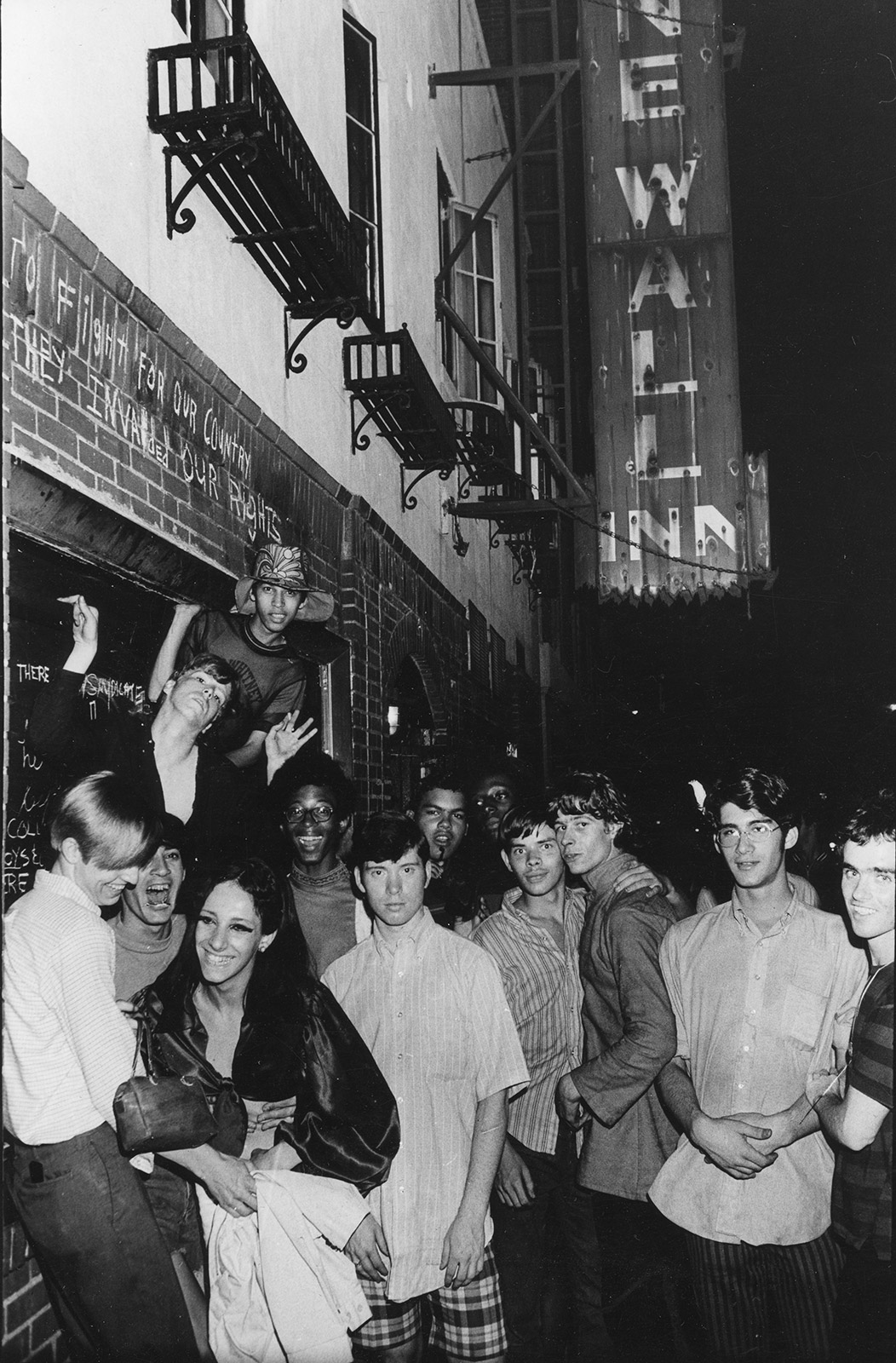
At 1:20 AM on June 28th, 1969, the New York Police Department Public Morals Squad raided the Stonewall Inn. Stonewall was regarded as one of the most popular queer spaces in New York, heavily frequented by transgender young people.
200 individuals were at Stonewall that night, and most had never experienced a police raid. Historically, the NYPD communicated with the Mafia regarding raids, so bar staff could tip off patrons before police arrival. However, Stonewall staff never received a call that night. The officers allegedly never received their weekly gayola, prompting the raid.
Police barred all exit routes before announcing the raid, ordering everyone to line up to submit their identification. In previous raids, the NYPD would arrest all crossdressers who failed the Three-Article Rule – a statute that required individuals to wear at least three articles of clothing matching their sex assigned at birth.
The patrons refused to comply. Suspected crossdressers were separated to another room, and some of the lesbian women were sexually assaulted by police while being frisked. When police were unable to coerce patrons into submitting identification, they decided to take everyone to the police station.
However, the officers had to wait for patrol wagons to transport Stonewall’s confiscated alcohol. Hundreds of people began crowding outside Stonewall to watch the NYPD. Once the first wagon had arrived, police officers began forcing detainees on – starting with Mafia members and Stonewall staff.
An officer shoved a drag queen. She hit the officer on the head with her purse. He clubbed her over the head. The crowd was growing increasingly hostile. A rumor begins floating that individuals still in the bar are being beaten by police, people outside start throwing pennies and beer bottles at the police wagon.
Stormé DeLarverie was escorted outside to the wagon, but they kept darting out. After fighting with four officers for ten minutes, DeLarverie was hit over the head with a baton. As they were heaved into the wagon, DeLarverie shouted to the crowd, “Why don’t you guys do something?”
The crowd’s unrest turned violent, and police started to disperse the crowd. Officers had expected patrons to scatter since even large queer groups were notoriously passive.
The crowd tried to tip over the police wagon, forcing the cars and wagon to drive off with slashed tires. Someone declared that Stonewall had been raided because the Mafia didn’t pay off the NYPD – prompting the crowd to throw coins, bottles, and bricks to “pay” the officers. The bar caught fire, and women and transgender men imprisoned down the street at The Women’s House of Detention joined the crowd’s chanting. Violence continued to escalate.
Eventually, the NYPD Tactical Patrol Force arrived to free officers trapped inside Stonewall. Spurred on by their humiliation, the officers began grabbing everyone they could to force onto wagons.
I had been in enough riots to know the fun was over … The cops were totally humiliated. This never, ever happened. They were angrier than I guess they had ever been because everybody else had rioted … but the fairies were not supposed to riot … no group had ever forced cops to retreat before, so the anger was just enormous. I mean, they wanted to kill.
The crowd continued to mock the NYPD, who were trying to clear them via a phalanx. Creating an impromptu kick line, they jeered the police, “We are the Stonewall girls, we wear our hair in curls, we don’t wear underwear, we show our pubic hair.” In response, the officers advanced and bashed them with batons. The riot continued for hours, finally clearing around 4:00 AM. By the end, thirteen individuals were arrested, and four officers were injured.
The New York Times, the New York Post, and the Daily News all reported on the raid the next morning. Rumors rapidly spread, claiming that the riot was formally organized by the Black Panthers or caused by a jealous gay police officer.
Rioting continued on Christopher Street each night until July 1. Thousands of people began showing up and took part in similar violence against the NYPD as the TPF tried to force order. Leaflets demanding that the Mafia and NYPD leave gay bars alone circulated.
Respectability Politics: The Radical Homophile Schism
Days later, the Mattachine Society traveled to Philadelphia for its annual picket. In the aftermath of the Stonewall riots, a schism was clearly forming – not everyone appreciated what had transpired on Christopher Street.
Until Stonewall, queer activism in America had taken an approach based on Europe’s Homophile Movement. Since the 1800s, LGBTQIA+ advocates have argued that peaceful assimilation was the best route to equal civil rights. Homophile organizations never even titled themselves as queer, censoring themselves and participants from being visibly gay at demonstrations.
Decades of docile pickets had seemingly accomplished nothing for LGBTQIA+ rights. In its violence, the Stonewall riots changed how New York City and the world saw queer people. Rather than continuously suffering, LGBTQIA+ people were willing to fight back despite the consequences.
The Stonewall-Homophile schism was based on respectability politics. Individuals present at the riots were outcasts within the larger homophile movement, deemed too queer to be meaningful activists. Those individuals were angry – no dress code forces the intolerant to see us as human. It is not the fault of visibly queer and transgender people for their own oppression, but rather their oppressors.
This schism founded queer militancy, a new identity of LGBTQIA+ activism that created groups like the Gay Liberation Front that would support the Black Panthers and other New Left causes. Without the Stonewall-Homophile schism, queer people would not have survived the following federal response to the AIDS crisis.
Key Figures: The Transgender and Queer Activists of Stonewall
Stonewall has become a myth within LGBTQIA+ history. Over multiple nights, thousands of people attended to show solidarity. Here are notable people who were (and weren’t) at the Stonewall riots.
Marsha P. Johnson: The Myth and Reality of the “First Brick”
Johnson was considered one of the primary leaders behind Stonewall, colloquially known as the Saint of Christopher Street. She’s credited as throwing the first brick on the 28th.
However, Johnson wasn’t there when the riots started. Despite numerous folk retellings placing her as Stonewall’s original instigator, Johnson stated she didn’t arrive at the riots until 2:00 AM – 40 minutes after the NYPD had begun the raid.
Johnson was still present throughout the riots, including the following nights. After Stonewall, Johnson founded the Street Transvestite Action Revolutions (STAR) and became active in the Gay Liberation Front (GLF) and Gay Activists Alliance (GAA).
Sylvia Rivera: Transgender Pioneer and Co-Leader of STAR
Rivera is the second-most famous figure from Stonewall and Johnson’s best friend. Like Johnson, Rivera is credited with throwing the first bricks and Molotov cocktails at Stonewall.
Rivera has confirmed these claims, but her impact at Stonewall is cloudy. Some witnesses, including Johnson, stated that Rivera was never present at the riots. Stonewall historian David Carter wrote that Johnson alleged Rivera “was asleep after taking heroin uptown” during the riots.
Despite these conflicting stories, Rivera was still influential. Regardless of whether Rivera was present at the Stonewall riots, she was visibly involved in the preceding demonstrations with Johnson in STAR, GLF, and GAA.
Stormé DeLarverie: The Catalyst for the Stonewall Riots
Overshadowed by Johnson and Rivera, DeLarverie is reported by most eyewitnesses as the true original instigator who turned Stonewall into a riot. DeLarverie has confirmed that they were the lesbian woman who got into an altercation with four officers before shouting to the crowd, “Why don’t you guys do something?”
Like many of Stonewall’s patrons, DeLarverie identified androgynously. One of the sentiments that formed the Stonewall-Homophile schism was that many LGBTQIA+ people (such as DeLarverie, Johnson, and Rivera) did not conform to cisgender heterosexual standards like Christine Jorgensen and the Mattachine Society.
DeLarverie was heralded as the “guardian of lesbians in the Village” and “Rosa Parks of the gay community.” Although DeLarverie was less involved than Johnson and Rivera, they worked frequently as a bodyguard, bouncer, and street patrol to keep Greenwich Village safe.
Miss Major Griffin-Gracy: Stonewall Survivor and Trans Leader
Griffin-Gracy was an active participant during the Stonewall riots, directly fighting officers alongside Johnson and DeLarverie. However, her involvement at Stonewall was cut short when she was struck unconscious by an officer.
She sustained major injuries from the riots, causing her admittance to Bellevue Hospital’s psychiatric ward and queen tank. Those experiences formed Griffin-Gracy into a prison abolition activist.
Edmund White: The Authorial Eyewitness to Christopher Street
White was a novelist and playwright who frequented Stonewall. By chance, White was at the bar when police originally began the raid. Although he was not an active participant in the riots, White served as a historian and documented the riots.
Regarding Stonewall, White is most known for his published letter to Ann and Alfred Corn – which he wrote just a few days after the riots.
The big news here is Gay Power. It’s the most extraordinary thing. It all began two weeks ago on a Friday night…
In the years after Stonewall, White emerged as part of a solidifying generation of queer writers. As part of the Violet Quill, White was considered a defining figure in contemporary queer writing alongside Michel Foucault.
Dave Van Ronk: The Folk Icon Caught in the Stonewall Crossfire
As the “Mayor of MacDougal Street,” Van Ronk lived in the Village and had been eating at the nearby Lion’s Head when he heard growing unrest outside. Although Van Ronk identified as cisgender heterosexual, he actively joined in the riots in solidarity.
Van Ronk was a monumental icon in folk songwriting, mentoring artists like Bob Dylan and Joni Mitchell. Fueled by his deep-seated hatred for police, Van Ronk was part of numerous political groups like the Socialist Workers Party, Young Shachtmanite Young Socialist League, and Libertarian League.
Van Ronk was one of the thirteen people arrested during the Stonewall riots. He was charged with second-degree felony assault and harassment for throwing a heavy object at an officer during the riots.
Howard Smith: The Village Voice Reporter Inside the Inn
Smith was a journalist associated with the Village Voice, New York Times, Playboy, and Ladies Home Journal. Like Van Ronk, Smith identified as cisgender heterosexual despite being at Stonewall. Unlike Van Ronk, Smith played a much more passive role as a documenting journalist.
Due to his credentials, Smith was the only journalist able to enter Stonewall during the riots. Other journalists were forced to document from outside on Christopher Street, but Smith was able to obtain a unique perspective despite the risk.
Thomas Lanigan-Schmidt: From Street Youth to Stonewall Artist
After moving to New York in 1965, Lanigan-Schmidt had meshed with the homeless population around Stonewall. He was particularly fond of Christopher Street’s drag and party culture, which was how Lanigan-Schmidt ended up at Stonewall when the raid began.
Lanigan-Schmidt was an active participant throughout the riots and was photographed by the Village Voice. His photograph made him one of the few recognizable veterans of Stonewall still alive.
After the Stonewall riots, Lanigan-Schmidt’s art found critical acclaim as he specialized in kitsch subculture.
Bob Kohler: The Radical Ally Who Fought for Street Youth
Kohler was an active participant during the Stonewall riots and fought with police officers on the front lines. Stonewall formed Kohler into a militant, which he frequently incorporated into later demonstrations. Throughout his life, Kohler was arrested thirty times while protesting.
Stonewall connected Kohler with Rivera and the homeless queer youth who lived at Christopher Park. Kohler and Rivera would become best friends over the following decades. He was one of the Gay Liberation Front’s founders, as well as a member of the Black Panthers, Fed Up Queers, Congress of Racial Equality, and ACT UP.
Zazu Nova: The Front-Line Vanguard of the Uprising
Nova also held a leading role during the Stonewall riots, although she was not present the first night. Eyewitness accounts held Nova in a high regard on par with Marsha P. Johnson and Jackie Hormona.
Like many of the LGBTQIA+ people who visited Stonewall, Nova was a sex worker deemed too queer to participate in homophile demonstrations like the Mattachine Society. The Stonewall-Homophile schism pushed leaders like Nova forward, and she became involved with STAR, GLF, and Gay Youth.
Craig Rodwell: Transforming a Street Riot Into a National Movement
Prior to the Stonewall riots, Rodwell was well-known as a community organizer – so he and partner Fred Sargeant naturally became participants when they happened upon the police raid.
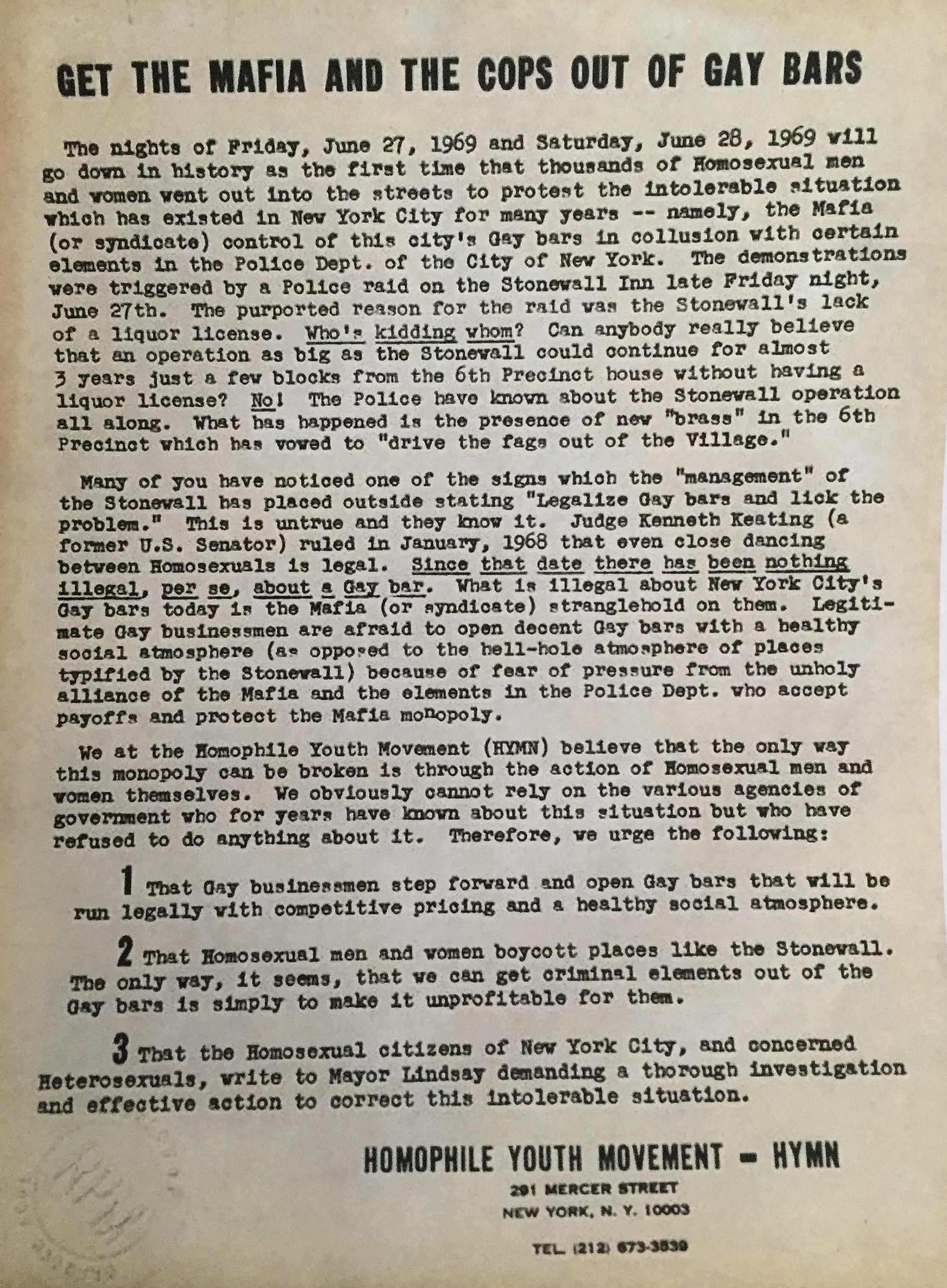
After the riot, Rodwell and Sargant called the New York Times, New York Post, and New York Daily News to spread the news. By the second night, the two had begun distributing 5,000 of their leaflet titled, “Get the Mafia and the Cops Out of Gay Bars.”
Rodwell was one of the first individuals to propose an annual demonstration in remembrance of the riots, supported by Sargeant, Ellen Broidy, and Linda Rhodes. The first Pride march was organized from Rodwell’s apartment.
Fred Sargeant: Co-Founder and Logistician of the First Pride March
Sargeant had been walking home with Rodwell when they passed by Stonewall, noticing a gathering crowd that was beginning to escalate. Like Rodwell, Sergeant was a participant involved in the riots.
He and Rodwell wrote and distributed 5,000 copies of their leaflet titled “Get the Mafia and the Cops Out of Gay Bars” during the second night to capitalize on the community’s frustration at the NYPD and Mafia.
The nights of Friday, June 27, 1969 and Saturday, June 28, 1969 will go down in history as the first time that thousands of Homosexual men and women went out into the streets to protest the intolerable situation which has existed in New York City for many years — namely, the Mafia (or syndicate) control of this city’s Gay bars in collusion with certain elements in the Police Dept. of the City of New York.
Sargeant advocated that the LGBTQIA+ community needed to open their own bars legally despite city restrictions, boycotting establishments like Stonewall. With Rodwell, Sergeant proposed an annual demonstration for the riots at the Eastern Regional Conference of Homophile Organizations.
Despite his role during Stonewall, Sargent is transgender-exclusionary. He openly advocates for Drop the T campaigns and argues that transgender individuals “did nothing” towards LGBTQIA+ activism. Although figures like Marsha P. Johnson, Sylvia Rivera, Miss Major, and Nova did not identify as transgender during the riots, they would have in modern language. It is theorized that many of Stonewall’s veterans did not identify with medicalized terms like transsexual because they were trying to survive New York City sex work, which was safer to do while identifying as queer and cisgender.
Jack Nichols: From Mattachine Picket Lines to Radical Liberation
Nichols was not present during the Stonewall riots, but he is noted for his reporting. Nichols and his partner, Lige Clarke, were the first journalists to report on the riots to the general public outside of New York City, largely due to his proximity to the riots while working out of Manhattan.
Nichols co-founded the Mattachine Society of Washington with Frank Kameny in 1961, regularly participating in the Mattachine Annual Reminder pickets at Independence Hall. On the opposite side of the Stonewall-Homophile schism, Nichols worked with the Mattachine Society to successfully lobby the American Psychiatric Association into declassifying homosexuality as a mental illness.
Lige Clarke: The Revolutionary Journalist of the Post-Stonewall Press
Like Nichols, Clarke was not physically present during the Stonewall riots. With Nichols, Clarke published eyewitness accounts of the riots to reframe the events as the start of a new revolution.
Clarke and Nichols worked for Screw magazine, although the two would later become the main editors of Gay – the first national weekly LGBTQIA+ newspaper by the end of the Stonewall riots.
Allen Ginsberg: From the Beat Generation to the Stonewall Rebellion
Beat poet Allen Ginsberg visited Stonewall during the third day of rioting. Like many influential Beat poets, Ginsberg lived in Greenwich Village and had heard news about the rebellion. However, Ginsberg was not an active participant in the riots.
Ginsberg had been openly queer since the publication (and lawsuit) of his poem “Howl.” He was encouraged by the riots, stating, “Gay power. Isn’t that great! We’re one of the largest minorities in the country… It’s about time we did something to assert ourselves.”
In the years after Stonewall, Ginsberg became actively involved in political causes like the United States’ involvement in Asia, the Vietnam War, recreational drugs, and communism.
Mark Segal: From Stonewall Rebel to Prime-Time Television “Zapper”
Segal participated in the Stonewall riots, most known for writing on the sidewalks and walls throughout Christopher Street, “Tomorrow Night Stonewall.” After the events of the first night, Segal’s message spread quickly to prepare the community for future riots.
Segal was a founding member of the Gay Liberation Front and Gay Youth, and he worked with Rodwell and Sargent to organize the first Pride parade in 1970. After Stonewall, Segal became particularly fond of direct actions like zaps, which he popularized after crashing a broadcast of WPVI-TV.
Martha Shelley: The Strategic Force Behind the Post-Riot Mobilization
Shelley originally dismissed the Stonewall riots when she passed by, believing the unrest was related to ongoing anti-war demonstrations. When Shelley realized the riots were frustrations related to LGBTQIA+ inequality, she joined in.
Shelley had been a regular member of the Daughters of Bilitis despite her frustration that events like the Annual Reminder were ineffective. The Stonewall riots gave Shelley the perfect opportunity to form the community’s raw anger into long-term organizing.
Despite her important role in LGBTQIA+ organizing, Shelley is a complicated figure. She identifies today as a gender-critical radical feminist (transgender-exclusionary radical feminist, or TERF) and opposes conventional gender-affirming care like hormone replacement therapy. Shelley vocalizes the radical lesbian feminist belief that transgender activism is forcing butch lesbians to become transgender men.
Marty Robinson: Engineering the Political Might of Gay Liberation
Robinson was a provocative activist who participated in the Stonewall riots with Segal and Shelley. With Shelley, Robinson made speeches to the crowds on the second night to move them to action.
Robinson was frustrated with the results obtained from the Mattachine Society, joining the Gay Liberation Front and similar organizations like the Gay Activists Alliance and ACT UP. Like Shelley and Segal, Robinson is credited with creating the theatrical direct action known as “zaps” to interrupt interviews and speeches.
Jerry Hoose: The Christopher Street Youth Who Fought for Total Freedom
Hoose had been living on Christopher Street with other gay homeless youth, joining the Stonewall riots with the crowd. Afterwards, Hoose began organizing with the Gay Liberation Front to create a “society so that gays, lesbians, and transvestites could be free to be themselves.”
Hoose was less focused on political organizing under GLF, preferring to raise money through community dances he would regularly host.
The First Pride: Christopher Street Liberation Day and the Fight for Trans Inclusion
The first Pride observance was held in 1970, originally named Christopher Street Liberation Day. Although the Gay Liberation Front and the Gay Activists Alliance organized the parade in New York City, (unconnected) demonstrations were organized on the same day in Chicago, San Francisco, and Los Angeles.
These four cities created the tradition that would be expanded into the modern festivals organized today. Each of these cities has an extensive queer history that led them to organize in solidarity, although New York considers itself the “true” original Pride.
New York’s Christopher Street Liberation Day was planned by Sargeant, Rodwell, Shelley, Brenda Howard, and Ellen Broidy. Like GLF, the CSLD organizing committee was politically divided – figures like Broidy and Howard were transgender allies in contrast to Sargeant and Shelley.
Sargeant is known today for his public anti-transgender tirade in 2020, stating that transgender people did not participate at Stonewall or organize following pride celebrations. Sargeant’s argument is frequently weaponized by TERFs seeking to erase transgender people from LGBTQIA+ history.
This is not only frustrating because it is blatantly wrong, but because it is documented that Sargeant and Shelley intentionally excluded and silenced transgender individuals (including Johnson, Rivera, and DeLarverie) while capitalizing on their legacies on Stonewall. The very reason Rivera left GLF and gave her famous “Y’all Better Quiet Down” speech was that members like Sargeant pushed anti-transgender assimilation.
Frequently Asked Questions
Who threw the first brick at Stonewall?
There was no single person who threw the “first brick.” Historians actually debate whether an actual brick was ever thrown during the riots.
The Stonewall legend paints Marsha P. Johnson and Sylvia Rivera as throwing the first bricks. The riots were spontaneous, and although the first brick is a powerful piece of queer folklore, Stonewall veterans agree that the myth downplays the collective organizing behind the gay liberation movement.
When and where did the first Pride march take place?
To honor the Stonewall riots, four cities held separate demonstrations in 1970: New York City, Chicago, Los Angeles, and San Francisco. These four demonstrations are collectively the first Pride marches.
New York City’s Christopher Street Liberation Day March began on Washington Place and continued for 50 blocks and a “gay-in” at Central Park.
Chicago organized the Gay Liberation March, starting from Washington Square Park down Michigan Avenue to Water Tower.
Los Angeles managed to get an official permit for the Christopher Street West Parade, marching from McCadden Place to Hollywood Boulevard for a carnival-style festival.
San Francisco held a modest Gay Liberation March from Polk Street to the Civic Center, organizing a larger gathering at Golden Gate Park that was raided by the SFPD.
Were transgender people excluded from early Pride celebrations?
Yes. Transgender people were silenced, discouraged, and excluded from participating in early Pride demonstrations. Leadership was predominantly white cisgender gay men and women who kept transgender people from engaging.
Even when transgender people could participate in early Pride demonstrations, they weren’t allowed to speak. Despite being refused, Sylvia Rivera grabbed a microphone to deliver her “Y’all Better Quiet Down” speech to confront a growing movement that excluded transgender people, drag queens, and people of color.
Were transgender people involved in the Stonewall riots?
Yes. It is heavily documented that transgender individuals were on the front lines of the Stonewall riots, including Marsha P. Johnson, Nova, Stormé DeLarverie, and Miss Major.
Transgender exclusionaries try to depict Stonewall’s history as void of transgender participants. This simply isn’t true. Although individuals like Johnson and DeLarverie did not identify as transsexual, it would be a gross miscategorization to portray their identities and gender nonconformity as cisgender expression.
American Psychiatric Association. “Position Statement on Homosexuality and Civil Rights.” American Journal of Psychiatry 131, no. 4 (1974): 497. Available at American Psychiatric Association Foundation.
U.S. President. Executive Order 10450. “Security Requirements for Government Employment.” Federal Register 18, no. 82 (April 29, 1953): 2489–2492. Available at National Archives.
Author’s Note: There is a lot of documentation related to gender diversity in Asian and Pacific Islander cultures, such as hijra, kathoey, and fa’afafine. There is little history written about important gender diverse individuals, especially within the AAPI American diaspora.
Cecilia Chung: HIV/AIDS Activist and Transgender Rights Pioneer
Cecilia Chung has worked to bring visibility to transgender people living with HIV/AIDS. Chung has led multiple projects throughout her life to address the needs that come with being transgender, living with HIV, and being a person of color.
Chung grew up in Hong Kong before immigrating with her family to Los Angeles at age 19. In her younger years, Chung mistakenly believed she was a cisgender gay man since she had never had the framework to think critically about her gender identity.
She graduated with a degree in international management from Golden Gate University in 1987. By 1992, Chung made the decision to transition, which caused her to become estranged from her family, who struggled to understand.
Chung lost both of her jobs due to her transition, forcing her into homelessness and survival sex work in San Francisco’s Tenderloin. Chung self-medicated with drugs and alcohol to cope with constant sexual and physical violence. Chung was diagnosed with HIV that year.
“[This period in my life] sounds painful, but it’s actually more painful to not know who you are. I would rather be really trying hard to survive than to look in the mirror and not see myself.”
In 1994, Chung began using her voice for advocacy. She joined San Francisco’s Transgender Discrimination Task Force, working on a report to the city that led San Francisco to instill anti-discrimination policies to protect transgender residents. She also found work as an HIV test counselor and caseworker for the city.
Chung persisted despite her circumstances. But in 1995, she was brutally stabbed by two men attempting to sexually assault Chung, forcing Chung to be taken to an emergency room with a punctured artery, severed tendon, and nerve damage.
She was met by her mother, who was called by the emergency room as Chung’s emergency contact, despite being estranged for several years. The two finally reconciled, and Chung’s life slowly came back together.
Within a few years, Chung led the Asian Pacific Wellness Center’s mobile HIV testing program to expand resources for transgender youth. She was named Deputy Director of the Transgender Law Center and even served on California’s Civil Rights Enforcement Working Group.
In 2013, Chung was appointed by President Barack Obama to continue her advocacy work at a national level on the Presidential Advisory Council on HIV/AIDS. After Obama’s second term, Chung founded Positively Trans to continue supporting transgender people living with HIV, supported by the Transgender Law Center and Elton John AIDS Foundation.
Kim Coco Iwamoto: First Transgender AAPI State Legislator in U.S. History
Iwamoto was born on the northern island of Kaua’i, where her great-grandparents had immigrated to seek plantation work after leaving Japan. She graduated from a boys’ Catholic preparatory school in 1986 and moved to New York City to attend the Fashion Institute of Technology.
While in New York, Iwamoto’s transgender identity led her to volunteer most of her free time at the local community center – which instilled her passion for helping marginalized youth. She became motivated to continue her education at San Francisco State University, the University of New Mexico School of Law, and the Harvard University John F. Kennedy School of Government program.
Iwamoto officially joined politics in 2006, serving two terms on the Hawaii Board of Education. When she was originally elected, Iwamoto was the highest-ranking openly transgender person to be elected.
After serving four years under Governor Neil Abercrombie’s Civil Rights Commission, Iwamoto ran in the 2016 Senate election but lost during the primaries to Karl Rhoads. Iwamoto was recognized by President Barack Obama as a Champion of Change in 2013.
Iwamoto was endorsed by the Sierra Club, Victory Fund, Maui Time Weekly, Our Revolution, and Unite Here! during her run for Lieutenant Governor in 2018. She finished her campaign in fourth place, losing the nomination to Josh Green. Iwamoto was listed by Newsweek as one of fifty current trailblazers for LGBTQIA+ rights.
In 2020 and 2022, Iwamoto ran unsuccessfully against House Speaker Scott Saiki. They competed for Hawaii’s 25th and 26th districts, but Iwamoto came 200 votes short of Saiki during the primaries.
Christopher Lee: Transgender Filmmaker and Founder of Trans Film Culture
Christopher “Cristoph” Lee was an award-winning filmmaker and transgender man from the San Francisco Bay Area, creating as one of the founders of radical transgender erotica. Lee was born in San Diego in 1964, but moved to the Bay Area in the early 1990s.
Lee initially found community with San Francisco’s AAPI lesbian circles, leading him to produce DYKE TV. Within a few years, Lee came out as a transgender man and used his expertise in film to document his transition via “Christopher’s Chronicles.” He continued making other subversive films, such as “Trappings of Transhood,” “Alley of the Tranny Boys,” and “Sex Flesh in Blood.”
In 1997, Lee collaborated with Elise Hurwitz and Alison Austin to establish Tranny Fest (renamed to the San Francisco Transgender Film Festival in 2004). SFTFF was the world’s first transgender film and arts festival and North America’s longest-running transgender film festival.
Lee’s films are recognized as some of the first created by BIPOC transgender men, and he is credited as one of the origins of radical transgender porn.
Lee lived with chronic fatigue and immune deficiency syndrome (CFIDS/ME/CFS), which shaped his life experiences. Even though Lee was active in the community, he struggled with depression and mental illness. Lee died by suicide at age 48 in 2012.
Lee’s chosen family spearheaded AB 1577, the “Respect After Death Act,” to allow California death certificates to be updated to reflect an individual’s lived gender. Toni Atkins introduced AB 1577 with the support of the Transgender Law Center. The Respect After Death Act was passed by Governor Jerry Brown in 2014.
Rocero was born in Manila in 1983. Despite being born to a working-class family, Rocero began competing in professional beauty pageants at age 15. Within two years, Rocero was the highest-earning transgender pageant queen in the Philippines.
Despite her age, she immigrated to San Francisco, where she could freely change her legal name and gender marker. However, for the sake of her future career, Rocero chose to go stealth while pursuing modeling in the US.
While at a restaurant in Manhattan’s Lower East Side, Rocero met a fashion photographer who took an interest. Rocero was offered a contract to NEXT Model Management, which she worked with for 12 years. With NEXT, Rocero modeled for international swimsuit brands and beauty editorials. During that time, she worked diligently to build her modeling portfolio while pursuing naturalization.
During a TED Talk in Vancouver in 2014, Rocero disclosed her transgender identity to the audience in connection with International Transgender Day of Visibility. For years, Rocero had lived in stealth – and while this provided safety, those around her (including her fans) didn’t know the true Rocero. The video, titled “Why I Must Come Out,” has over one million views and can still be viewed on the official TED YouTube channel.
Rocero launched Gender Proud shortly after, a media production company aimed to highlight the needs and rights of transgender people. Hoping to uplift transgender youth, she produced the digital series “Beautiful As I Want To Be.” Through it, Rocero paired young transgender people with older mentors – including Caitlyn Jenner, who had recently come out.
Rocero also produced “Willing and Able,” focusing on transgender employment and athletic competition. The film won a GLAAD Media Award.
In 2020, Rocero was chosen to participate in Playboy Playmates of the Year – making her the first transgender woman to ever do so.
Rocero directed a four-part documentary titled “Caretakers” in 2021 to highlight the struggles and hardships of Filipino Americans during the COVID-19 pandemic.
Rocero published her personal memoir, “Horse Barbie,” in 2024. The book is still relatively unknown despite being an Editor’s Pick on Amazon and chosen as a Best Book of the Year by Book Riot, Elle, and Esquire.
Dedalus Moving Pictures produced Rocero’s short film “Dolls” in 2025, which Rocero wrote and directed alongside Lilly Wachowski.
Chella Man: Deaf Transgender Artist, Actor, and Advocate
Chella Man has grown a following as a content creator, actor, model, and artist, becoming arguably the most visible AAPI transgender masculine person today. Man sits at the intersection of multiple identities due to being Chinese American, Jewish, transgender, and Deaf.
Man grew up in Central Pennsylvania, losing their hearing starting at age four. They experienced gender dysphoria throughout their entire childhood, struggling to conform to conservative norms within their community.
Man began medically transitioning in 2017 after they turned 18, creating their YouTube channel at the same time to document their experiences. Man currently has over 200,000 followers, posting about a variety of topics like vlogs, politics, transition, and American Sign Language.
Man was cast as Jericho in DC Universe’s Titans, making their acting debut as a mute crime fighter. Like Man, Jericho is Deaf and uses sign language to communicate – allowing them to relate deeply with the character.
“Casting disabled actors/actresses for disabled roles will aid to authentically represent and deconstruct stereotypes built around our identities.”
In 2021, Man published “Continuum” with Ash Kwak Lukashevsky, an essay-style memoir detailing their life. The book was published with Penguin Random House as the newest addition to Pocket Change Collective, which was a series made from 2020 to 2022 about activism and intersectionality.
Man also began pursuing visual art in 2021 and uploaded “The Beauty of Being Deaf” to their YouTube channel to promote the release of their jewelry collection. The jewelry transforms hearing aids into designer fashion, combining several of Man’s identities and interests as an avenue for other Deaf people to interact with fashion.
Cecila Chung, Kim Coco Iwamoto, Christopher Lee, Geena Rocero, and Chella Man are only a few powerful figures from transgender AAPI history. Transgender history is ongoing, and these individuals exist in a larger, unfinished legacy.
Check Out More Trans History
Look through our history articles to explore transgender history throughout America.
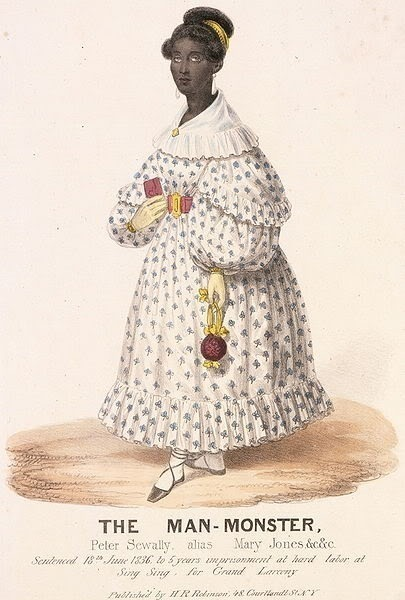
Disclaimer: This post will only contain short biographies of each individual. At some point in the future, I will likely write longer excerpts to fit into my Transgender History series, such as Christine Jorgensen, Mary Jones, and Lili Elbe.
Elagabalus: A Contested Transgender Empress of Ancient Rome
Elagabalus is an interesting person to study. She was emperor for just four years before being assassinated and replaced by her cousin, Severus Alexander. Admittedly, Elagabalus was not a good emperor – but I’d like you to point out a stable fourteen-year-old that would make a good emperor.
She disregarded religious traditions, causing scandal when she brought the cult of Elagabal to Rome and forced political leaders to serve her new deity. Elagabalus made herself the high priest and installed Elagabal as the chief deity of the Roman pantheon over Jupiter. She married five times, including twice to Vesta Vestal Virgin Julia Aquilia Severa. These actions, as well as her other strange habits, estranged Elagabalus from the Senate, Praetorian Guard, and the common public.
Elagabalus’s sexual orientation and gender identity are disputed by scholars since her story was credited by unreliable sources aiming to purposely vilify her. Cassius Dio referred to Elagabalus as a woman and even stated she was happily married to a man named Hierocles.
Upon her union with Hierocles, Elagabalus publicly preferred to be referred to as a woman, lady, and empress. She allegedly wore wigs and makeup, cast out male titles, and offered vast amounts of money to any physician who could provide her sex reassignment surgery.
At age eighteen, Elagabalus’s grandmother, Julia Maesa, determined that her popular support was too low to continue as empress. Maesa successfully conspired to assassinate Elagabalus and her mother, installing her grandson, Severus Alexander, as emperor instead.
Most of Elagabalus’s associates and friends were killed after her assassination, including Hierocles. All religious edicts and artifacts related to Elagabal were reversed and removed. Finally, she was a victim of damnatio memoriae and erased from public record – and would have been entirely forgotten without the works of Cassius Dio, Herodian, and Historia Augusta.
Modern historians are hesitant to identify Elagabalus as female since Dio, Herodian, and Historia Augusta were all antagonistic toward her, creating a greater chance that her gender identity and sexual orientation were fabricated to discredit her. Yet, if we are to trust what little history we have left regarding Elagabalus, she was the first and only transgender empress of Rome.
Marsha P. Johnson & Sylvia Rivera: Revolutionaries of the Stonewall uprising
Marsha and Sylvia are identified today as transgender, although they didn’t identify as such during their lifetimes. Transgender people have always existed, and language related to transgender identity did exist for Marsha and Sylvia – but that didn’t mean it was safe for them to identify as transgender. At the end of the day, it was safer to live as a crossdressing sex worker than identify publicly as transgender.
Transvestites are homosexual men and women who dress in clothes of the opposite sex. Male transvestites dress and live as women. Half sisters like myself are women with the minds of women trapped in male bodies.
After the dissolution of STAR, Marsha and Sylvia found purpose in AIDS activism during the pandemic, forced to watch their loved ones die. Marsha became highly involved in local theater productions, performing with the Angels of Light and the Hot Peaches.
Marsha was found dead in the Hudson River in 1992 after disappearing under mysterious circumstances at age 46. New York police originally ruled her death a suicide, but films like Pay It No Mind, The Death and Life of Marsha P. Johnson, and Happy Birthday, Marsha! reevaluated her death as a potential murder.
Sylvia reported that she never believed Marsha’s death was a suicide, stating that they had a pact to “cross the River Jordan together.” Other people close to Marsha, such as Jeremiah Newton and Kohler, speculated that Marsha may have been experiencing a mental breakdown and attempted to cross the Hudson River. Randy Wicker, who had been living with Marsha for 12 years, stated four men had been harassing Marsha on a pier the night she disappeared.
Sylvia passed away in 2002 at the age of 50 due to complications of liver cancer at St. Vincent’s Hospital. On the day of her death, it’s reported that Sylvia had been meeting with Empire State Pride Agenda delegates to advocate for transgender rights to be included in New York’s Sexual Orientation Non-Discrimination Act.
Laverne Cox: Mainstream Breakthrough in Television; Caitlyn Jenner: Visibility, Controversy, and Public Debate
Both Laverne Cox and Caitlyn Jenner are considered prominent trailblazers from the 2010s – they’ve had considerable impacts on transgender visibility, even though they’re near complete foils to each other.
Laverne has used her celebrity status to heighten visibility for transgender people amongst the general public, hoping to normalize trans experiences. She’s also been a frequent critic of anti-transgender legislation, such as bathroom bills and discrimination protections.
Most transgender people admire Laverne Cox; few like Caitlyn. It largely comes down to Caitlyn’s political views, lack of personal struggles, or relatability. Caitlyn was able to come out “fully transitioned” in the eyes of the public, missing any awkward transition phase before she appeared on Vanity Fair.
She’s a reality television star and has access to considerable wealth to transition. Normal transgender people have to jump through hoops to access gender-affirming care like hormone replacement therapy and surgery – Caitlyn has the funds to just pay for care out of pocket. Charity programs exist because so many transgender people are unable to afford clothes, basic medical services, or housing. Caitlyn’s representation of transgender people isn’t a normal transgender life.
In contrast, Laverne came out as transgender much earlier in life and had to struggle towards her best-known roles. For most, Caitlyn appears superficial, like how most people view reality personalities to begin with.
It doesn’t help that Caitlyn is also a proponent of respectability politics, conservative ideas, and generally an assimilationist. She is a strong Republican and a Trump supporter, arguing that transgender people must be more palatable to be afforded civil rights.
Regardless, both Caitlyn and Laverne sped up transgender visibility. Caitlyn is divisive, but her coming out was all anyone talked about for the next year. Laverne’s impact was gradual, integrating her performances in mainstream media to push Americans to be accustomed to transgender identity.
Petra De Sutter: One of the Highest-Ranking Transgender Politicians
Serving as Deputy Prime Minister of Belgium from October 1st, 2020, until February 3rd, 2025, Petra De Sutter is the first large-scale transgender politician. She served under Alexander De Croo after five years in the Belgian Senate.
Petra also served as a Member of the European Parliament during the year leading up to becoming Deputy Prime Minister. She’s part of the Groen Party, focused on strong environmentalism and human rights.
After her term as Deputy Prime Minister, Petra was elected as rector of Ghent University. Before her political career, Petra was a professor of gynaecology at Ghent that led to her expertise regarding the effects of pollution on the human body and fertility.
Elliot Page: Redefining Visibility for Transgender Men
Elliot Page has starred in numerous roles both before and after his public transition, making him arguably the most high-profile transgender man currently in the world. Like Laverne, Elliot has an extensive filmography – but he’s most known for his appearances in X-Men, Juno, and The Umbrella Academy.
Compared to transgender women, transgender men are still almost entirely invisible to the general public – which has its pros and cons. Transgender women are more visible, but that visibility comes with targeted antagonism used to vilify them and create anti-transgender narratives. However, being invisible doesn’t make transgender men necessarily safer.
Elliot came out as transgender in 2020 during production of The Umbrella Academy, which was incorporated into his role as Viktor Hargreeves. The following year, Elliot became the first transgender man to appear in Time magazine.
Check Out More Trans History
Look through our history articles to explore transgender history throughout America.
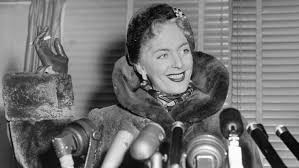
Christine Jorgensen is associated with being the first American to undergo gender-affirming surgery after her public transition in 1951. The LGBTQIA+ community was deeply underground during Christine’s life, and the US public hasn’t come across stories of successful sex reassignment surgeries after the death of Lili Elbe.
Christine was born on May 30th, 1926, to a middle-class family in the Bronx. Born as George William Jorgensen Junior, Christine described having a shy and feminine childhood that set her apart from her male peers.
Her father was a carpenter, while her mother was a devoted stay-at-home wife, so Christine and her older sister, Dorothy, were able to enjoy a typical white American childhood despite the Great Depression.
During her younger years, Christine frequently felt hopeless due to her identity issues. As a teenager, she openly experienced romantic feelings towards men but refused to identify as gay or homosexual. Despite not having language to express it, Christine firmly believed she “was a woman who had somehow ended up in the wrong body.”
Immediately after graduating from Christopher Columbus High School, Christine attempted to enlist in the United States Army but was rejected twice due to her small stature. However, Christine was drafted to serve in the Army mere months later due to World War II. Christine served in clerical roles at Fort Dix until her honorable discharge in 1946 due to illness.
Why did Christine want to join the Army? Christine was a teenager during the height of World War II and was exposed to military propaganda that pushed America’s youth to seek out service despite the risk.
In her own words, “I wanted to be accepted by the army for two reasons. Foremost was my great desire to belong, to be needed, and to join the stream of activities around me. Second, I wanted my parents to be proud of me.”
Once released from the Army, Christine moved to Hollywood with big dreams of becoming a photographer. However, Christine found this dream too difficult to achieve in reality and returned home after two years. Although Christine had no financial successes to show from her time in California, she had used the time to finally process and express her gender identity turmoil to others in select friendships she made.
Discovering Gender Identity and Early Hormone Therapy
Back on the East Coast, Christine pursued higher education at several different schools via the GI Bill, including Mohawk Community College, the Progressive School of Photography, and Manhattan Medical and Dental Assistant School.
During her studies, Christine met Joseph Angelo, the husband of one of her Manhattan classmates. Angelo helped Christine originally research the fascinating world of endocrinology and sex reassignment surgery.
Christine read about an endocrinologist who experimented with sex hormones on animals. This led Christine to wonder about the implications of taking hormone replacement therapy as a person assigned male at birth to resolve her feelings of femininity, so Christine contacted Dr. Harold Grayson. Grayson rejected Christine outright, instead referring her to psychiatry to “fix” her via conversion therapy.
Christine refused Grayson’s recommendation, believing that there had to be a biological explanation for the turmoil she felt that could be solved without conversion therapy. Instead, Christine turned to DIY hormone replacement therapy and began taking ethinylestradiol-based estrogen.
Eventually, Christine discovered the work of Dr. Christian Hamburger, an endocrinologist in Denmark who specialized in transsexual hormone replacement therapy. Christine disguised her trip to Denmark as a journey to see extended family due to fears that seeking gender-affirming surgery would make her an outcast.
Gender Identity and Cultural Attitudes in 1940s America
LGBTQIA+ people were framed as mentally ill and morally corrupt. With such a strong focus on gender norms, queer people destabilized the status quo and were pushed to the shadows. By 1950, McCarthyism had begun the Lavender Scare to instill a national witch hunt for queer people.
Transition was heavily medicalized and controlled by a small number of doctors who provided “experimental” treatments for transsexuals like Christine. Christine conformed to the polished femininity standard of the time period and ensured her published story stayed within the cultural script to present her transition as a scientific marvel rather than a pure reflection of her identity.
Travel to Denmark and Gender-Affirming Surgery
In 1950, Christine made the journey to Denmark to meet with Dr. Hamburger for the first time. Hamburger stated that Christine was indeed not homosexual but most likely transsexual, and he would be willing to provide gender-affirming surgery to Christine for free as part of his ongoing experiments.
After a full year of estradiol-based hormone replacement therapy, Christine obtained permission from the Danish Minister of Justice to receive a series of gender-affirming surgeries at Gentofte Hospital.
Hamburger conducted an orchiectomy and penectomy on Christine from 1951 to 1952, and provided her with an extensive hormone replacement therapy prescription for estradiol. She legally changed her name to Christine, stating the name honored Dr. Hamburger’s work. Christine recovered from the surgeries exceptionally well, eventually writing home to her family.
I have changed, changed very much, as my photos will show, but I want you to know that I am an extremely happy person and the real me, not the physical me, has not changed. I am still the same old “Brud.” But nature made a mistake, which I have had corrected, and I am now your daughter.
Reportedly, Christine’s family was loving and accepted her new identity with open arms, which she elaborated on in a 1980 Hour Magazine interview:
My family were very understanding. They had a choice; I gave them only one choice. Either they were to accept me or there was a break. My family did not want to lose me, and I was very close with [my mother and father] until they died.
Media Sensation: The 1952 New York Daily News Story
There are conflicting theories on how exactly Christine’s story was leaked to news outlets. Some believe it was Christine herself, some state a lab technician violated patient confidentiality, and Christine claims a family friend outed her story. The leading theory is that Christine’s letter was leaked to the press beyond Christine or her family.
On December 1, 1952, the New York Daily News bewildered the American public with their latest headline: “EX-G.I. BECOMES BLONDE BOMBSHELL.” The story became viral, and Christine found herself being asked to do countless interviews. She became an overnight media sensation, and the public was obsessed with how completely female Christine looked despite her biological sex.
Headlines emphasized her GI background and embraced her as an American beauty by describing her long legs, blonde hair, and high-fashion clothes. Jorgensen’s patriotism as a WWII veteran and beautiful feminine attributes embodied American values and structure, which captivated the public and press.
Originally, Christine wanted a quiet life – but the media attention made that impossible. Unable to find work in other fields, Christine discovered she could only make a living reliably through public appearances from her media attention.
Unlike other LGBTQIA+ individuals who were ruined by being outed, Christine had the unique advantage of using the publicity to her advantage. She existed in a time when America was bewildered but not outright disgusted by her transsexual identity, so Christine leveraged the attention to become a public speaker and nightclub performer upon her return to the United States.
However, Christine also experienced her share of discrimination. About six months after the New York Daily News’ article was published, reporters interviewed Christine’s surgeons to learn more about how the sex reassignment surgery process works. During these interviews, the surgeons confided that Christine had not had a vaginoplasty and therefore did not have a vagina.
The media and Christine’s public supporters felt betrayed, arguing that she was “nothing more than a limp-wristed queer who indulged in activities culturally identified as female and therefore effeminate.” Christine took this to heart and felt incomplete without a vaginal canal, so she sought out Dr. Joseph Angelo and Dr. Harry Benjamin to complete her vaginoplasty in 1954.
Was Christine intersex? After becoming a media sensation, a portion of news outlets debated whether Christine was actually intersex or a “pseudohermaphrodite.” Christine never supported this theory, and this idea was largely used to downplay the importance of her transition and identity as a transgender woman. At the time, intersex-related surgeries weren’t uncommon even though sex reassignment surgeries were.
Marriage, Legal Barriers, and Annulment in the United States
Christine had numerous romantic relationships throughout her life and was engaged twice – including Howard Knox in 1959. However, New York law required proof of birth sex to issue marriage licenses, and Christine’s birth certificate still identified her as male despite her public transition.
Despite her operations and hormone replacement therapy, New York refused to recognize Christine’s womanhood and refused to issue a marriage license for her and Howard. Transgender people were not able to legally update their gender documentation in New York until 2014, requiring petitioners to obtain a notarized affidavit from a medical professional.
The media treated the legal barrier as a massive scandal, publicly humiliating both Christine and Howard. Howard allegedly lost his job after his employer found out about his engagement to Christine, highlighting the lack of legal protections for transgender people and their loved ones.
Publishing An Autobiography, Becoming a Public Figure
After being turned away at the New York courthouse, Christine continued life. She remained a public figure and spent more energy on her image. By 1967, Christine published her autobiography Christine Jorgensen: A Personal Autobiography.
After decades of starring in tabloids, her autobiography allowed Christine to tell her story herself. Christine Jorgensen: A Personal Autobiography sold almost 450,000 copies, allowing Christine to continue giving lectures at colleges and universities across the country.
She received thousands of letters from people, most of whom came from transgender individuals seeking guidance. For all intents and purposes, Christine was the first transgender woman in America – her story helped millions relate their own internal conflict to her experiences. This put immense pressure on Christine to portray transgender identity as non-threatening to the general public while also being a positive representation to ordinary trans folks.
Author’s Note: Respectability Politics Respectability politics was termed in 1993 to refer to how some people within a marginalized community purposely abandon their identity to assimilate and gain respect from the greater public. Understanding Christine requires having a solid grasp of respectability politics.
Christine was the most vanilla and stereotypical person to fill the spotlight. She was a white, Christian, middle-class veteran – compared to transgender sex workers of color like Marsha P. Johnson and Sylvia Rivera, Christine has received overwhelmingly more attention to her legacy than others because she’s more “appealing” to talk about.
Christine, like most transgender people, felt forced to conform to cisgender stereotypes. Her story centers on “feeling trapped in the wrong body” and “always knowing,” both of which were standard requirements for gender-affirming treatment for the time period due to medical gatekeeping.
Christine’s autobiography was made into a drama film in 1970, directed by Irving Rapper and starring John Hansen. The film did okay despite the time period and its focus on transgender identity, eventually releasing on DVD via MGM Home Entertainment.
Glen or Glenda, which was released in 1953 by Ed Wood, was publicized as being based on Christine’s life after her transition made national news. George Weiss made Christine several offers to appear in the film, but she turned them down – resulting in Christine’s explicit mention being removed from the film but still included in the Ed Woodbiopic.
Christine continued to perform and give public lectures as she aged. Near the end of her life, Christine retreated from overt public attention but maintained a public presence until her death on May 3rd, 1989. At the age of 62, Christine died due to complications of bladder and lung cancer.
Christine Jorgensen’s life and death redefined what it meant to be openly transgender during the latter half of the 20th century. There are valid complaints and conversations to be had about respectability politics, but Christine was still an important figure within transgender history. Without Christine’s struggles, we may not have begun to have genuine conversations about gender-affirming care or pushed the next generation of transgender youth to become unapologetically visible.
Bradford Lourky portrayed Christine in Christine Jorgensen Reveals during a 2005 stage performance in Edinburgh. The show ran Off-Broadway in January 2006, later being reissued on CD by Repeat The Beat Records.
Christine’s story was produced into a musical play in 2024 (The Christine Jorgensen Show) and included in the third season of Monster: The Ed Gein Story last year. Although Christine had a relatively small impact on LGBTQIA+ history and rights, she is one of the most visible – likely because of how she appealed to respectability politics and spent her life in public.
Check Out More Trans History
Look through our history articles to explore transgender history throughout America.
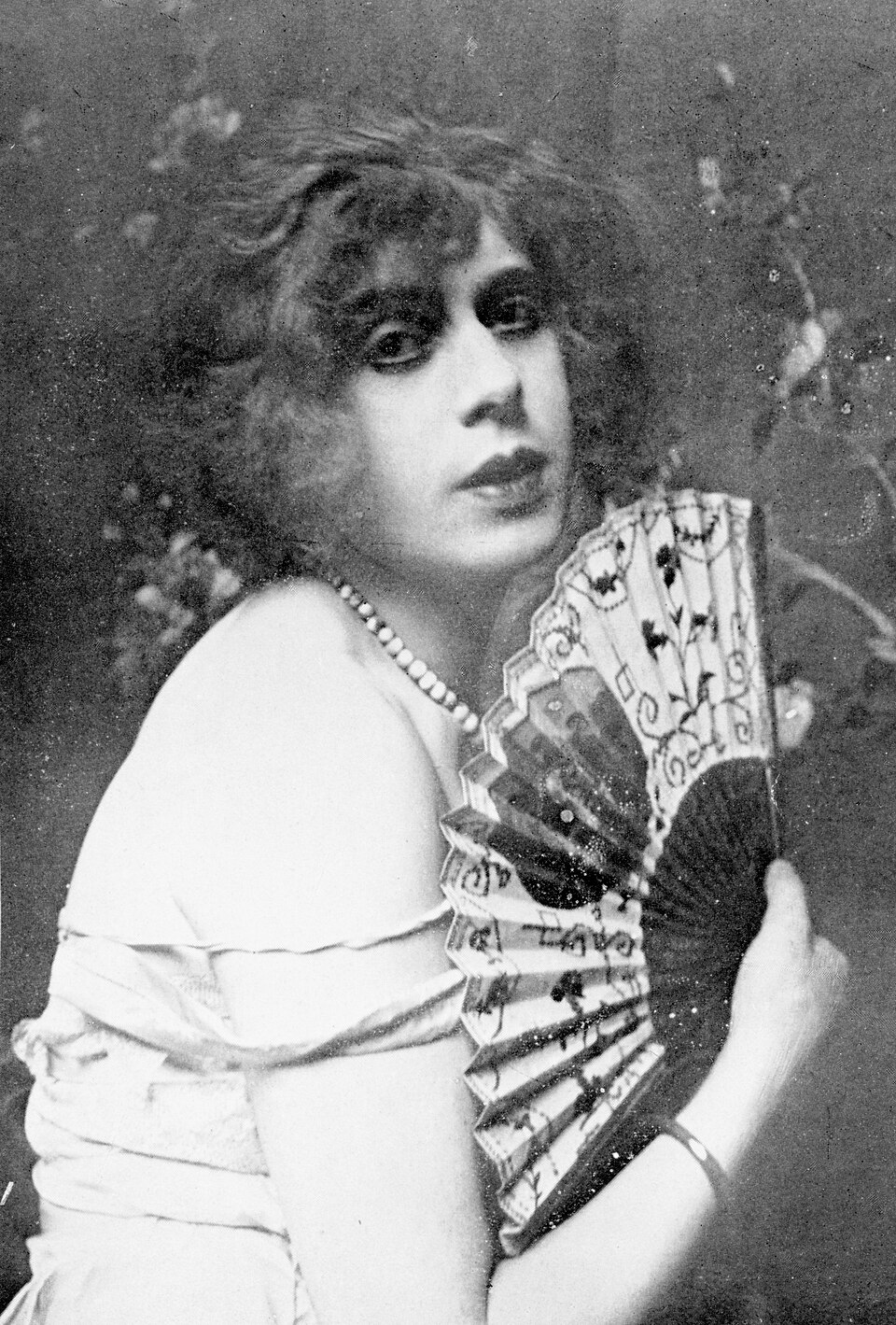
In 2015, Lili Elbe returned to mainstream conversation and discourse after Eddie Redmayne starred in The Danish Girl. Lili is one of the first individuals to undergo gender-affirmation surgery and serves as an important intersection of transgender history and women’s history.
Lili was born under the name Einar Wegener to a pair of merchants on December 28th, 1882, in Vejle, Denmark. She was the youngest of four and had a turbulent childhood due to bullying by male peers.
Disclaimer: Exact dates surrounding Lili are cited differently based on the source. This is because some early biographies purposely changed key facts to protect their subjects’ identities.
She spent her early life in Denmark, where she studied art at the Royal Danish Academy of Fine Arts in Copenhagen, beginning at the age of 19. While attending the Academy, Lili met Gerda Gottlieb – the two fell deeply in love and were married in 1904.
Many of Lili’s biographies extensively discuss her relationship with Gerda. Throughout Lili’s life, Gerda was supportive and nurtured Lili through her transition despite coming from a conservative Lutheran family.
After graduating from the Royal Danish Academy, both Gerda and Lili worked hard to create art. Lili specialized in landscape paintings, and Gerda focused on fashion and book illustrations.
“Poplars at Hobro” by Einar Wegener (Lily Elbe), 1919.“Cuckoo” by Gerda Wegener, 1920
One day, Gerda requested Lili to crossdress and fill in as a model when Anna Larssen had been late – and the experience led Lili to discover how much she preferred wearing women’s clothing. The couple arranged for Lili to be Gerda’s primary model, and Gerda found early success in painting.
Queen of Hearts by Gerda Wegener, 1928
Portrait of Lili Elbe with a green feather fan by Gerda Wegener, 1920
Lili Elbe by Gerda Wegener, 1928
Gerda’s star model was anonymous until 1912, when a scandal broke upon the public, and Lili was outed. They moved from Denmark and traveled around Italy and France for several months before deciding to live in Paris due to its renowned LGBTQIA+ scene.
Author’s Note: 19th Century Paris and the Bohemian LGBTQIA+ Scene
European LGBTQIA+ culture existed in a critical duality during the 1900s due to rapid social acceptance despite strict legal opposition, similar to present times. Major cities developed underground scenes that utilized coded symbols to circumvent anti-gay laws.
Lili found greater artistic success in Paris, and her paintings were accepted at the Salon d’Automne and Salon des Indépendants. Lili chose the name “Lili” at Anna Larssen’s suggestion, and she had begun regularly presenting as herself by the 1920s. These years allowed Lili to socially transition, appearing in public as a woman more frequently without fear of judgment.
Gender-Affirming Surgeries in Germany
In the late 1920s, Lili began consulting with medical professionals regarding her gender dysphoria with increasing frustration.
He was through with these bloodsuckers… Nobody understood what was wrong with him. But his sufferings were of the strangest kind. A specialist in Versailles had without further ado declared him to be an hysterical subject; apart from this he was a perfectly normal man, who had only to behave reasonably like a man to become perfectly well again; all that the patient lacked was the conviction that he was perfectly healthy and normal… Most people would probably have agreed [that he was “perfectly crazy”] for Andreas [pseudonym for Lili/Einar] believed that in reality he was not a man, but a woman.
Lili wrote to her brother-in-law and sister, Thomas and Christiane Thomsen, to borrow money for the Warnekros’s treatment if her stored paintings were not enough. Thomas wrote back two days later, “Don’t worry. Whatever you need is at your disposal.”
Lili took the train from Paris to Berlin to meet with Warnekros and Hirschfeld. Hirschefeld agreed with Warnekros’s determination that Lili was a suitable subject for gender-affirmation surgery. After seeing a range of doctors in Berlin, Lili underwent a series of surgeries.
The first operation, a surgical removal of the testicles, was performed by Dr. Erwin Gohrbant. The operation went without a hitch, and Gerda met with Lili in Berlin during her recovery. As soon as Lili was well enough, Warnekros ordered the pair to leave for Dresden for the following surgeries.
After being admitted to Staatliche Frauenklinik, Lili underwent her second and third – a transplantation of ovarian tissue on her abdominal muscles and removal of the penis and scrotum. It was the second surgery that Lili referred to as “the day of her proper birth,” viewing it as the most crucial in her medical transition into a woman.
Municipal Women’s Clinic (Staatliche Frauenklinik), Dresden–postcard from the early 1900s.
While Lili took notably longer to recover, these surgeries also went well without complications. Matron Margarette Leifert co-signed Lili’s request to the Copenhagen Ministry of Justice to legally recognize her as female under the name Lili Elbe, which Lili had chosen due to her surgeries in Dresden taking place on the Elbe River. By the end of spring in 1930, Warnekros had to leave to work for a few weeks away from Berlin. Lili chose to remain in recovery in Dresden while Gerda returned to Paris.
Portrait of Kurt Warnekros by Gerda Wegener, 1930Photograph of Lili after recovery, 1930
Near the end of summer, Gerda traveled to meet with Lili when she was discharged, going back to Berlin together. Lili found Berlin to be noisy and in stark contrast to peaceful Dresden, and internally struggled with how she ought to handle relationships from her lifetime as Einar. Right before Lili and Gerda returned to Denmark, Lili had a dream that Gerda would be happier with Fernando Porta, writing to him that Einar was dead and he should take care of the widowed Gerda.
Lili stayed with her older sister Christiane and her husband Thomas in suburban Copenhagen, while Gerda resided separately in town. During this period, Lili devoted herself to “freeing” Gerda from their previous marriage to allow Gerda to continue a free life. By October, Lili and Gerda were summoned to court by King Christian of Denmark, annulling their marriage.
After the annulment, Gerda left to meet with Fernando in Italy while Lili visited her brother Holger Wegener and sister-in-law Musse in her hometown of Vejle for a few weeks. Lili returned to Copenhagen and became even more introspective about herself and her legal rights to Einar’s legacy.
Love, Legacy, and the Final Operation
Despite Lili’s efforts, Gerda returned from Italy to Lili around the time Lili met Ernst Harthern, who would eventually publish Lili’s diaries after her death.
Although Lili wrote that Gerda wanted to marry Fernando “without delay,” Gerda still saw Lili as a lifelong partner. At times, Gerda and Lili went out as lesbian partners throughout their lives before the separation. Today, Gerda is understood as queer or bisexual despite her marriages to men. Before transitioning, Lili was closetly attracted to men but loved Gerda dearly.
Lili and Gerda hosted an exhibition of Einar’s paintings in Copenhagen, although this caused issues due to Lili’s lack of financial resources and inability to explain to the public what exactly had happened to Einar. Reluctantly, Lili agreed to a newspaper article regarding her transition – that article became viral around Europe and America, pushing Lili into a celebrity spotlight in March 1931 as Gerda married Fernando in Italy.
Photograph of Lili, Claude, and a (possibly Porta or Léon Leyritz)
Lili’s childhood friend, Claude Prévost, met with her in Copenhagen after traveling from Paris. During their reconciliation, Claude proposed marriage to Lili. Lili accepted, although she believed she needed the advice of Dr. Warnekros first.
Lili traveled to Dresden, asking Dr. Warnedros if he believed she was strong enough for another operation. Although Lili had told Claude she simply wanted Warnekros’s advice, she now sought surgery to have biological children.
Death and the Publication of Man into Woman
Warnedros determined Lili would undergo a fourth and fifth operation, a uterus transplant and creation of a vaginal canal. Lili wrote to Ernst to begin editing her diaries into a book.
However, the operation developed a severe infection due to a lack of immunosuppressant medication, and Lili’s body rejected the transplant. In the final three months of her life, Lili purposely did not tell Gerda or Claude of the operation to prevent causing them stress.
When I myself am no longer here, I want my sad book of love to be my legacy, a testimony that I once lived. I imagine that this book will be read, read as few books are, by all who are unhappy in love, into whose hands it shall fall year after year, and I feel as if I could shake them all by the hand. And I have such an unspeakable longing; it is in fact the only longing that I have, to say farewell to all—oh, none can realize what ultimate peace this would be for me.
On September 13th, 1931, Lili died from cardiac arrest with the company of her brother Holger at Dresden. As her final wish, Lili was buried in Trinity Cemetery near Staatliche Frauenklinik.
Lili’s story is known due to Ernst’s publication of her diaries, “Fra Mand til Kvinde” or “Man Into Woman.” Ernst originally published the diaries in Danish in 1931, later translating them into their UK and US versions by 1933.
Was Lili Elbe Intersex? Historical Debate and Lost Evidence
It is theorized that Lili might have been intersex and possessed both testicles and ovaries. However, confirmation of this has been permanently lost due to the bombing of Dresden, which would have included that information.
Cultural Legacy and Controversy
In 2000, David Ebershoff wrote The Danish Girl, a fictionalized account of Lili’s life and transition. Ebershoff’s book takes liberties in exploring Lili’s life since there are major gaps before Lili initially met Warnekros in Paris and began her diaries.
The book became a bestseller and won several awards, leaving the fictional Lili’s fate as a mystery on whether she lives or dies.
The Danish Girl won Best Supporting Actress at the Academy Awards as well as other professional awards at the Alliance of Women Film Journalists, Apolo Awards, Costume Designers Guild, Critics’ Choice Movie Awards, Detroit Film Critics Society, Empire Awards, Hollywood Film Awards, New York Film Critics Online, Palm Springs International Film Festival, San Diego Film Critics Society, Satellite Awards, Screen Actors Guild Awards, Venice International Film Festival, and Women Film Critics Circle.
Tobias Picker produced Lili Elbe in 2023, an opera based on Lili’s life and the Man into Woman diaries. Unlike The Danish Girl, Picker purposely cast a transgender performer to play Lili – making Lucia Lucas the first transgender person to play a star role in American opera.
Check Out More Trans History
Look through our history articles to explore transgender history throughout America.
Caughie, Pamela L., Sabine Meyer, Rebecca J. Parker, and Nikolaus Wasmoen, editors. Lili Elbe Digital Archive. Loyola University Chicago Libraries, 2019–. Lili Elbe Digital Archive, www.lilielbe.org.
Mary Jones is considered one of the first recorded gender-variant individuals in United States history, her story recorded in early 1800s court documents. While Mary has only been recently interpreted as transgender, she remains crucial evidence that gender-expansive identities have always existed.
It is believed that Mary Jones was born in New Orleans under the name Peter Sewally, according to penny press newspapers like The Sun and New York Herald. However, Mary wasn’t well-received by journalists and was targeted with hostile newspaper coverage that published her story for profit rather than factuality.
Due to misinformation, it’s not clear where exactly Mary is from. Mary originally stated she was from New York City, which is why some sources claim she was born there in 1803, but she gave different origins and ages during other court appearances. Despite this, Mary usually mentioned New Orleans during her testimonies.
Government census indicates that Mary was a skilled craftsman, although she worked and dressed as a man during the day as a waiter and cook. Mary was believed to be illiterate with little formal education, evidenced by her inability to sign documents during the trial, and claimed to have served a short time in the United States military.
The client in question, Robert Haslem, reported the theft to local law enforcement. Officers followed up on Haslem’s report and found Mary with several stolen wallets in her possession. Despite dressing in feminine clothes and using a prosthetic vagina for work, police determined that Mary had male genitalia.
After having sex with Mary, Haslem realised his wallet had been switched with a stranger’s and a strange bank order for $200 – and he was missing his own wallet and $99. Haslem tracked down the wallet’s owner, who had a similar experience with Mary the night before. Reportably, the other man never came forward because he didn’t want others to know he willingly had sex with a Black sex worker.
Haslem confessed and reported the theft to Constable Bowyer the next day, who found Mary that evening. Bowyer approached Mary undercover, who led him to the same alley that she had taken Haslem to previously to conduct “business.” Mary gave quite the “tussle” during her arrest, and allegedly dropped multiple stolen wallets during the altercation. One of the found wallets was Haslem’s, which provided sufficient evidence to detain Mary.
While Mary was kept at the closest watch tower, law enforcement searched Mary’s apartment and found a trunk filled with stolen wallets and bank notes. Haslem was only able to identify a few of the notes as his, which led the police to believe Mary was hiding more money on her person that required a physical examination.
“Bowyer also discovered,” wrote The Sun regarding the arrest, “to sustain his pretension, and impose upon men as sexus femineus, fabrefactus fuerat pertio bovillis, (cara bubulu) terebratus et apertus similis matrix muliebris, circumligio cum cingulum!!!” This line birthed Mary’s nickname as “Beefsteak Pete.”
Note: In Jonathan Katz’s review, he suggests that The Sun purposely wrote part of the story in Latin to censor the story from uneducated readers. It roughly translates that Mary “had been fitted with a piece of cow leather pierced and opened like a woman’s womb, held up by a girdle.” Sensationalised accounts claim that Mary filled the prosthetic with beef to mimic a vagina.
Mary was charged with grand larceny five days later, on June 16th, 1836 – but she was notably not charged for sodomy since Haslem stated they did not participate in anal sex. Mary appeared before the court dressed elegantly as a woman, presumably in the same outfit she was arrested in. However, her attire did not make her sympathetic to the court and instead provided “the greatest merriment in the court, and his Honor the Recorder, the sedate grave Recorder laughed till he cried.” At some point, someone sitting behind Mary “snatched the flowing wig from the head of the prisoner,” which invoked “a tremendous roar of laughter throughout the room.”
Finally, Mary spoke before the court: “I will be thirty-three years of age on the 12th day of December next, was born in this city, and get a living by cooking, waiting, and live on 108 Greene Street.”
“What is your right name?” asked the court during Mary’s examination.
“Peter Sewally,” Mary answered. “I am a man.”
“What induced you to dress yourself in Women’s Clothes?”
“I have been in the practice of waiting upon Girls of ill fame and made up their Beds and received the Company at the door and received the money for Rooms and they induced me to dress in Women’s Clothes, saying I looked so much better in them and I have always attended parties among the people of my own Colour dressed in this way – and in New Orleans I always dressed in this way.”
By the next day, penny press newspapers had published the trial and Mary Jones’ “practical amalgamation,” which was the common phrase of the period to refer to interracial relationships. Mary was presented as uniquely eccentric – but not a sodomite.
The jury ruled against Mary, returning a guilty verdict that sentenced Mary to five years of hard labor in Sing Sing State Prison for grand larceny. HR Robinson drew a lithograph of Mary Jones titled “The Man-Monster,” which created a stark contrast between the “Man-Monster” title, Mary’s sexual deviance, and how completely unthreatening and normal Mary physically looked.
“Despite its salacious title (and many papers’ reluctance to print it), the lithograph portrays Jones as nothing more or less than an elegant black woman” (NYC Department of Records and Information Services). “This apparent discrepancy points to an issue seen throughout Mary’s case: It is clear from the attention given to Mary’s gender in court records and in the media that her gender presentation was considered not only unusual, but indicative of some larger character flaw.”
Mary was sensationalised and quickly forgotten by the public – although she did come up again. In 1845 and 1846, Mary was repeatedly arrested and sentenced for “playing up [her] old game, sailing along the street in the full rig of a female.”
Mary’s last recorded words come from her 1848 case against Michael Bonney. Introducing herself as Julia Johnson, Mary stated, “I was born in Jersey, I am twenty-seven years old, I am married, my husband has gone on a trading voyage to New Orleans and other places. I live in the rear of No. 70 or 72 Sullivan Street, and do day’s work for a living.”
After 1848, nothing more is known about Mary Jones or her aliases. While the public was fascinated with her life, the media made no attempts to record Mary’s experiences beyond sex work.
Historical Interpretation and Erasure
Historian Timothy R. Gilfoyle recovered information on Mary Jones in the 1990s in his research on sex work in antebellum New York City. In City of Eros: New York City, prostitution, and the commercialization of sex, Gilfoyle argued that Mary was a gay cisgender man who chose to work as a woman as part of NYC’s larger brothel culture.
Jonathan Ned Katz interpreted Mary similarly, suggesting that Mary “acted like a woman” and formed a community as strategic moves to survive in a hostile world. For decades, Mary was written as a cisgender man due to her anatomy and work.
It wasn’t until the research of Tavia Nyongo and C. Riley Snorton that scholars began to consider whether Mary was genuinely gender-diverse or transgender. While many cisgender gay men crossdressed to engage in same-sex activities at the time, that doesn’t automatically mean Mary was cisgender.
Neither Gilfoyle nor Katz was necessarily wrong in their interpretations. Transgender is a fairly modern word, and our complicated understanding of gender diversity didn’t begin until the early 1900s. Mary did not identify as transgender, but neither did Elagabalus or Chevalière d’Éon – but they would have likely identified with the notion behind “transgender.”
The majority of history has been reviewed under a straight cisgender lens. History is written by the victors, and the victors have never been amicable towards the marginalized identities they moved to suppress.
Mary spent over seven years at New York’s most notorious prisons, including Blackwell and Sing Sing. Despite everything, Mary repeatedly returned to the same neighborhood in women’s attire under feminine aliases even when conforming to cisgender standards would have been safer.
Court and census records identified Mary as a skilled craftsperson who could have worked an honest profession as a man and pursued sex with men. Alternatively, Mary could have become a known “female impersonator” in a safer and more socially accepted environment. Mary could have also moved to a new city or neighborhood where she wouldn’t be known – but she did none of these things.
Check Out More Trans History
Look through our history articles to explore transgender history throughout America.
Mellison, J. “What Mary Jones Teaches Us About the Racist Roots of Transphobia and the Survival of Black Trans Women.” jmellison.net. Accessed 4 Feb. 2026.
Coming of Age as a Black Trans Girl Before the Language Existed
Media would convince folks that transgender identity is new, a novelty that didn’t exist before the 21st century. And teenagers specifically didn’t identify as alternative genders – but Miss Griffin was proof that wasn’t true.
Miss Major came out to her parents as transgender around age 12 or 13 while growing up in the Chicago South Side. After coming out, her parents believed that Griffin-Gracy’s identity was a phase they would later grow out of. Due to the time period, Miss Major identified herself as transsexual – the same term popularized by Christine Jorgensen upon her public return to the United States.
Similar to New York City and San Francisco, Chicago had a thriving underground queer scene that Griffin-Gracy integrated herself into. Between queer balls and chosen family, Miss Major found herself despite the times.
Although Miss Major graduated from high school early, her young adult life was tumultuous. Her identity led to expulsion from two colleges, turning her towards sex work. Following release from psychiatric incarceration, Miss Major moved to New York City to start fresh.
Stonewall Was a Riot – and Miss Major Was There
Griffin-Gracy involved herself in New York’s drag scene and performed as a showgirl – placing her at the perfect time and place for the bubbling revolution for queer rights. The theaters and bars Miss Major frequented were common targets for police raids and mafia blackmail. Griffin-Gracy was present the night that bargoers at the Stonewall Inn were fed up with discrimination.
The Stonewall Riots weren’t the first act of queer rebellion, but they’re credited as the launch point for LGBTQ rights since they encapsulated the moment when communities across the world felt inspired into action. The actions by Miss Major and other queer individuals at Stonewall pushed visible progress. Until then, queer protesting was uniform, quiet, and easily ignored. Militancy took hold, and the first pride was a riot.
However, Miss Major sustained major injuries from Stonewall due to a police officer striking her on the head while in custody. Those injuries caused Griffin-Gracy to be admitted to Bellevue Hospital’s psychiatric ward. She was placed in the “queen tank,” a standard practice by mental hospitals at the time to isolate LGBTQIA+ inmates to prevent other patients from being “corrupted.”
Incarceration, State Violence, and the Making of a Prison Abolitionist
Miss Major was released from Bellevue Hospital shortly afterwards, pushing her immediately back into the bubbling revolution. It was also during this time period that she was impacted greatly by anti-transgender violence when her friend was likely murdered by a client.
Frustrated by a lack of action by the authorities, Griffin-Gracy had to come to terms with the reality that transgender people – especially transgender women of color – are not protected by the government. While the Stonewall Riots had been her initial introduction to activism, protecting her transgender sisters from targeted violence formed her political identity.
In 1970, Griffin-Gracy was arrested and convicted for robbing one of her customers. Although she was released on parole after a few months of incarceration, she was sent to Dannemora prison (Clinton Correctional Facility) for wearing makeup to her parole meeting.
Dannemora was a maximum security state prison. Correction officers purposely tried to break Miss Major’s spirit, forcing her into isolation at the facility’s mental ward first. When shaving her hair and eyebrows didn’t break her, officers forced Miss Major to walk through the prison naked. Despite this, Dannemora also put Miss Major in a unique spot – her incarceration led to mentorship under Attica prison uprising leaders like Frank “Big Black” Smith. That mentorship introduced Miss Major to prison reform activism and understanding the prison-industrial complex.
“Mama Major”: Building Trans Community on the West Coast
Griffin-Gracy was released from Dannemora in 1974. After meeting fellow drag performer Deborah Brown in New York City, Miss Major had her first child, Christopher, and moved to California. Although her relationship with Deborah didn’t last, Griffin-Gracy was devoted to raising her son. San Diego provided Miss Major the opportunity to mentor young drag performers, which earned her the nickname “Mama Major.”
Miss Major was directly impacted by the AIDS crisis when her partner Joe Bob passed away from AIDS. After the construction of the San Diego AIDS memorial garden, she moved to San Francisco to work in HIV outreach and joined the Tenderloin AIDS Research Center as a health educator.
Through her work with TARC, Miss Major realized that most unhoused people felt too uncomfortable to seek services from organized facilities. To fill this healthcare gap, Griffin-Gracy started street clinics to provide HIV prevention services.
Miss Major joined the TGI Justice Project in 2004, which is the only US organization that specifically assists transgender people in prisons. Griffin-Gracy’s activism – and life – was intersectional.
Honoring Miss Major Is Honoring the Future
Social justice doesn’t occur in a bubble. Miss Major’s experiences were the product of her identities and her drive to help others.
Although Miss Major passed away due to complications of sepsis on October 13, 2025, her legacy in transgender activism, prison reform, and HIV prevention lives on.
Check Out More Trans History
Look through our history articles to explore transgender history throughout America.
The term “two-spirit,” which is commonly used to reference gender-diverse Native Americans today, did not exist before 1990. All terms used to explain gender variance, such as transgender, are relatively modern. Even though terms like transgender and gay did not exist during this time period, the fundamental ideas behind transgender identity have always persisted.
For ease of understanding, modern terms such as transgender and two-spirit will be used in this article when applicable.
Why is there so little Native American transgender history?
Oral storytelling is immensely powerful, but less able to survive centuries of persecution compared to the writing systems Europeans employed to chronicle events. As a result, Europe and Asia have better preserved histories of transgender identities – but that does not mean transgender people did not exist in the Americas before European arrival.
Each nation has an extensive history and layered culture, similar to the diversity of European countries abroad. Thousands of words identify and label individuals under the two-spirit umbrella.
The Arctic Circle
Northern Canada and Alaska are home to the Inuit, Yupik/Yupiit, and Aleut/Unangan peoples along the North Pole. Due to the harsh climate, Arctic communities rely on either hunting or fishing along the coast. All of these nations had language to identify trans-related experiences.
Compared to the binary mindset that Europeans held about gender, nations surrounding the Arctic Circle disagreed and believed gender to be expansive. In 2018, Meghan Walley of Memorial University elaborated, “Inuit gender is traditionally fluid and does not fit neatly into a binary framework. While complementary gender roles did exist, the extent to which they are based on biological sex remains unclear. Furthermore, mediatory spaces between these roles allowed people to transgress gender categories, swap roles, and assume a mixture of responsibility within their communities.”
The Inuit Nation used terms such as angakkug, aranu’tiq, kippijuituq, and sipiniq to describe gender-diverse identities. Similar to many other Indigenous Americans, Arctic nations believed in a more fluid gender system than the male-female binary: “…Aboriginal (First Nations, Metis, and Inuit or Indigenous) tribes, prior to colonization, maintained the belief in more than two genders, and that some Nations even identified up to six different gender categories… In most of the cases, such individuals were held in high esteem, being seen as having been given a gift from the Creator” (Meyercook & Labelle).
The First Woman: Uumarnituq and Aakulujjuusi of the Inuit
After creating the land, sky, sea, and creatures of the world, the gods created the first two human men – Aakulujjuusi and Uumarnituq. These two men lived on a beautiful island, but they grew lonely over time as they saw bountiful populations of birds, fish, and animals.
Aakulujjuusi and Uumarnituq desired the company of other humans and wanted to have children, and they desired each other’s intimate company. Following the example of nature’s animals, Aakulujjuusi and Uumarnituq had sex. By some miracle, Uumarnituq became pregnant despite both he and Aakulujjuusi being cisgender men.
As Uumarnituq’s pregnancy continued, it became clear to him and Aakulujjuusi that Uumarnituq would be in trouble when it was time to give birth. Uumarnituq lacked the natal equipment to give birth to their child, and neither of the men knew of modern C-section techniques. However, Aakulujjuusi knew of a spell that he chanted at night, changing Uumarnituq from a man into a woman. Aakulujjuusi sang his irinaliuti, or magic song, “A human being here, a penis here. May its opening be wide and roomy. Opening, opening, opening!”Through those words, the man’s penis split open, and their son was born as the new family embraced in the light of day. In that moment of crisis, Uumarnituq became Earth’s first woman, and Aakulujjuusi discovered the magic power of irinaliuti (Bernard Saladin d’Anglure).
Gender Amongst the Yupik: The Strange Man and His Whale
Within the region where the Yupik lived, between Alaska and Siberia, there was great consideration for people who expressed gender beyond their birth assignment. “When a man with a mustache is dressed like a woman, we (the Yupik) are careful not to make fun of him as instructed by our elders. The elders would say that such people were protected by the Maker of All. So to laugh at him would bring a curse to the thoughtless ones.”
Yupik families, similar to Inuit communities, with an unbalanced sex ratio of children (ex. four sons, zero daughters), were required to raise at least one of the children as the opposite sex until puberty. Upon puberty, the child could either assimilate into their sex assigned at birth or become a shaman.
There was a man who was the eldest of four brothers, raised as a girl, but continued to identify as a woman into adulthood past the point of puberty. The youngest of his brothers became frustrated that he and his other brothers had to share the meat collected from hunting. In their community, only men hunted – but if a man intentionally shirked his duties, he would not get a share of the community’s bounty. If he repeatedly shirked his duties, he would be expelled from the community entirely.
The youngest brother did not think his eldest brother deserved his portion of meat, since the communal rule states he must hunt with the men to be included, despite how the eldest brother performs tasks with the women of the community, such as sewing, cooking, and processing hides. So, violating the shamanic tradition regarding gender-expansive individuals, the youngest brother tried to persuade the other brothers to force their eldest brother to hunt.
When the eldest brother found out, his heart was broken. He went to the shore alone and cried and cried because his brothers had hurt his feelings.
After some time, the voice of the Maker of All gently asked the man as he cried, “Why is the woman crying?”
“My brothers complained about me not being out on the ice and sea with them at the hunts,” the man sobbed as he poured out his grief. “I am unable to go. I can’t! I can’t! I’m like a woman. How can I when I’m made like this?”
The Maker of All thought for a moment and then answered, “All right. I’ll see to it that you’ll get something.”
The eldest brother took comfort in this, returning home. It was not long before the man began to feel he was getting bigger in the stomach like a pregnant woman. His belly got bigger, and that frightened him terribly – how could the baby be delivered?
The Maker of All found the eldest brother crying again, and so it asked, “Why is the woman crying again?”
“If I’m going to have a baby, how is it going to be delivered?” the man asked.
“You go down to the sea and bury your face in your sleeves,” the voice instructed. “Rest there on the sea. You will not sink.”
The eldest brother hurried back to the shore, getting into the sea and burying his face in the sleeves of his coat. He floated, he cried, and somehow, a little whale was born.
The Maker of All solved the eldest brother’s problem in a way best suited for his special circumstance. Although he will continue to have a man’s body, he can affirm his feminine nature and perform women’s duties – and the baby whale will be a lure for his brothers to provide other whales and meat to the community. Thus, the eldest brother will not have to be hurt but will still be a boon to his community.
The eldest brother picked up the tiny whale and took it home. He loved it so dearly that he carved a wooden bowl and put water for it to swim in, but it was getting big fast and frequently needed larger bowls. When the whale became too big to keep at home, the eldest brother took his whale son to sea. When the whale son grew up, the eldest brother took a marker and dotted him with red spots to ensure the hunters knew not to harm his son.
The whale son loved to swim, sometimes going as far as the horizon. When the son returned, he would bring another whale that the eldest brother’s siblings would kill. He brought home many whales that created so much meat that the brothers became rich. The community was never short of meat, oil, or bones.
But one day, the whale son did not return home. The eldest brother waited and waited upon the shore, worried for his son. Days passed, but his son did not return. Becoming filled with grief, the eldest son buried his face in his sleeve and cried.
And like the times before, the voice of the Maker of All sounded, asking why the woman was crying. When the eldest brother explained, the Maker of All said, “You go out to the sea in your coat as you always do until you stop, but you will still be moving.”
The eldest brother did as he was told. He floated along the ocean, but did not see where he was going. When he finally stopped moving, the eldest brother looked up to find himself in a strange place – an entirely different village than the one he was from!
He approached the shore, seeing a tragedy as he walked up to the beach. The marked head of his son lay there, killed! But it was just his son’s head, and the eldest brother searched in vain to find his son’s body.
From afar, the eldest brother could see a village, so he followed the path to a house. He found a group of people telling stories to celebrate the great catch they had, humbly welcoming the eldest brother and asking him to tell them a story. The eldest brother told the story of how he had birthed and raised his whale son, who had been killed once he became too ambitious and swam too far from home. But when the village did not understand the eldest brother’s story, he left in tears – they had broken a sacred rule by killing an animal marked distinctively. After the eldest brother had left, a terrible thing began to happen to the hunters who had killed the whale son. They began to sweat and sweat. Horrified, the hunters looked at each other and found themselves getting smaller and smaller until they all turned to liquid (Bernard Saladin d’Anglure).
The Subarctic
South of the northernmost Arctic Circle, hundreds of tribes have called the subarctic region home throughout Alaska and Canada. Like the Inuit, Aleut, and Yupik to the north, subarctic nations were made of tough stuff to thrive in extreme conditions.
Subarctic cultures physically recorded a large amount of their stories, similar to Arctic tribes. Within Cree mythology, Wîsahkêcâhk was a hero and trickster used to explain nature. Wîsahkêcâhk was neither man nor woman. Oral tradition purposely depicted them as ambiguous and fluid – although Wîsahkêcâhk is usually assigned a (male) binary gender when the stories are documented in English.
Mandelbaum and The Plains Cree
Cree communities use a range of dialects within the Cree language, which descends from the Algonquian group. The Cree dialects have a large variety of words to discuss gender diversity, documented as early as the 1800s and compiled by David G. Mandelbaum in his 1940 work The Plains Cree. Unlike English and other European languages, Cree does not use gendered third-person pronouns like “he” or “she.” In reality, the Cree had many words to describe gender-diverse individuals like ᐃᐢᑵᐤ ᑲ ᓇᐯᐘᔭᐟ/Iskwêw ka-napêwayat, ᓇᐯᐤ ᐃᐢᑵᐏᓭᐦᐅᐟ/Napêw iskwêwisêhot, ᐄᓇᐦᐲᑲᓱᐦᐟ/înahpîkasoht, ᐊᔭᐦᑵᐤ/Ayahkwêw, ᓈᐯᐦᑳᐣ/Napêhkân, and ᐃᐢᑵᐦᑳᐣ/Iskwêhkân (Kai Pyle 2018, 2021).
While documenting his time with a Cree tribe, Mandelbaum wrote, “Berdarches usually became noted shaman. When asked whether he knew of any transvestite, Fine-Day [who Mandelbaum was interviewing] said, ‘They were called a·yahkwew. It happened very seldom. But one of them was my own relative. He was a very great doctor. When he talked his voice was like a man’s and he looked like a man. But he always stayed among the women and dressed like them… When he was finished [doctoring his brother], he said ‘I will have another name now. They will call me pîyêsiwiskwêw, Thunder-Woman…’ He wanted to be called pîyêsiwiskwêw because Thunder is a name for a man and iskwêw is a woman’s name; half and half just like he was.’”
Author’s Note: “Berdache” is considered an outdated and offensive term, originally used by European colonizers to describe various third-gender roles they saw in Indigenous American cultures.
Ozaawindib, Two-Spirit Chief of the Ojibwa
Ozaawindib (also known as Yellow Head) of the Ojibwa was described as agokwa or aayaakwe, the local terms for individuals who identified as female despite being assigned male at birth. Ozaawindib’s life was largely documented by John Tanner, who was captured during an Ojibwa ambush at age nine:
“Some time in the course of this winter, there came to our lodge one of the sons of the celebrated Ojibbeway chief, called Wesh-ko- bug, (the sweet,) who lived at Leech Lake. This man was one of those who make themselves women, and are called women by the Indians. There are several of this sort among most, if not all the Indian tribes. They are commonly called A-go-kwa, a word which is expressive of their condition. This creature, called Ozaw-wen-dib, (the yellow head,) was now near fifty years old, and had lived with many husbands. I do not know whether she had seen me, or only heard of me, but she soon let me know she had come a long distance to see me, and with the hope of living with me.”
Near the end of her life, Ozaawindib was given a medal by the United States government to declare her a prominent chief for negotiations. Given her immense contact with Europeans, Ozaawindib and her identity are well-documented – although many historians disconnect Ozaawindib from her gender diverse identity (Kai Pyle).
The Southeastern Woodlands
Several dozen tribes reside within the Southeastern Woodlands, which is loosely defined as the entirety of the modern Southeast. In contrast to other ethnographic classifications, Southeastern Woodland cultures share a high proportion of cultural traits with other regions. The most notable tribes include the Cherokee, Chickasaw, Creek, and Seminole.
Cherokee, Asegi Udanto, Strange
Asegi udanto was the Cherokee term for all individuals who fell outside the gender binary, literally translating to “strange.” Within Southeastern Woodland tribes, gender played an important part in established societal roles – but gender wasn’t a rigid assignment strictly determined by one’s birth (Qwo-Li Driskill).
An unpublished manuscript from a traveler in 1825 establishes the Southeastern Woodlands as incredibly gender diverse despite historical manipulation by European writers. Immediately after an encounter with local Cherokee people, they wrote, “There were among them formerly, men who assumed the dress and performed all the duties of women and who lived their whole life in this manner” (Gregory D. Smithers). Despite the writer being unknown, their records resemble similar instances dating back to the 16th century.
“We must understand that within dominant European worldviews all Cherokees were characterized as gender-nonconforming and sexually deviant. Early records from European men make this characterization numerous times, emphasizing and Otherizing Cherokee women’s sexual and social power and autonomy. Cherokee culture became characterized as one in which all Cherokees behaved in ways Europeans thought only men should behave, and, because of this, Cherokee men feminized” (Qwo-Li Driskill).
In Subject Matter: Technology, the Body, and Science on the Anglo-American Frontier, Joyce Chaplin wrote expansively on America before the Revolution. Southeastern Woodland Native Americans, such as the Cherokee, were described as “human genital monstrosities” since they failed to conform to traditional sexuality standards upheld in European cultures. Europeans were cruel upon contact with Native Americans. This resentment against gender diversity was evident in nearly all records of contact.
The Stomp Dance
Many Southeastern tribes, such as the Cherokee, Creek, and Seminole, participated in the Green Corn or Stomp Dance – the ceremony had structured roles assigned by gender and still takes place today in remote locales.
In an interview with a modern Two-Spirit activist, Brian Joseph Gilley writes, “Most men assume that taking on the female role of shaking shells at the stomp grounds would be met with considerable disapproval. However, at Two-Spirit stomp dances, the men are offered an opportunity to change their ceremonial roles.”
The Great Plains
Native American tribes within the Great Plains resided between the Mississippi River and the Rocky Mountains and are regarded as the most “represented” group within popular culture. Most Native stereotypes, such as feathered bonnets, tipis, and horse riding, are distinct aspects of Plains cultures and not universal to other regions.
Nih’a’ca of the Arapaho
According to Arapaho lore, Nih’a’ca was the first two-spirit individual and employed as a teaching tool as a sage, mediator, and trickster. Despite being haxu’xan, Nih’a’ca is a complex person and portrayed as both selfish and kind. There are hundreds of Nih’a’ca tales, which usually incorporate their gender identity as a small part of the story.
One morning, Nih’a’ca was bored with their boring life, living with their wife and children. They approached their wife and asked, “Are there any attractive young men seeking courtship?”
Nih’a’ca’s wife, who was used to their trouble-making, answered, “Yes, there is one. His name is Panther-Young-Man.”
Nih’a’ca smiled, dressed themselves as a woman, and went out for water. The Panther saw Nih’a’ca, who smiled at him. The Panther asked Nih’a’ca to marry him, and Nih’a’ca agreed. Soon after, Nih’a’ca moved out of their wife and children’s home to live with the Panther.
The next day, Nih’a’ca sent the Panther out to hunt. While he was away, Nih’a’ca went to the prairie and approached a rabbit. Nih’a’ca told the rabbit, “I want you for my child. I will keep you and give you food and water.”
The rabbit consented, so Nih’a’ca put the rabbit under their dress and took it home. When the Panther came home after a few days, Nih’a’ca said to him, “We are going to have a child.”
This made the Panther happy, so he left to go hunting again. But the rabbit grew fat, and Nih’a’ca became tired of caring for it. Feeding and giving the rabbit drink was a lot of work! Nih’a’ca decided it was time to birth their child, wrapping the rabbit up and laying it on their bed. When the Panther returned home, Nih’a’ca showed the Panther the rabbit, “We have had a child born to us.”
“Is it a boy or a girl?” asked the Panther, frowning in confusion. “It is very strange in appearance.”
“A boy. It looks like a rabbit, it is very fat,” replied Nih’a’ca.
“It is well,” nodded the Panther. The Panther told Nih’a’ca that he was going to hunt again, leaving the tent. But before the Panther had gotten far, he changed his mind and went back to the tent. He saw another man go inside his tent to speak with Nih’a’ca! Quietly, the Panther drew closer to the tent to listen.
“It is very strange. You have been married for only a short time and have a child already. How can that be?” The Panther heard the man ask Nih’a’ca.
“This is how it is. This is how I gave birth to a child,” answered Nih’a’ca. The Panther heard fabric rustle and believed his wife was showing herself to this other man. The Panther stormed into the tent and saw Nih’a’ca with their dress open to the other man.“Leave! The woods and brush will be where you live!” the Panther shouted at Nih’a’ca, pointing at the door. The Panther turned to the rabbit and said, “You are too fat! You shall have no fat, except on your kidneys and on your back behind the shoulders. You will run fast and leap and live on the prairie” (George A. Dorsey).
Osh-Tisch the Badé
Crow tribes recognized badé (also called baté or bóté), individuals assigned male at birth who fulfilled feminine and two–spirit gender roles in their communities. Badé were similar to roles in other Plains cultures, such as the Cheyenne he’eman and he’emane’o and Lakota wíŋkte.
“For some unexplainable reason Osh Tisch assumed the role of a warrior for a day in the summer of 1876. General George Crook sent some runners to the Crow Agency to recruit scouts for his campaign against the Lakotas and Cheyennes. One hundred and seventy-five warriors signed up for the fight against their traditional enemies.
“In the crowd of men, which included the war leader Plenty Coup, there were two remarkable women characters: Osh Tishch and The Other Magpie… Pretty Shield saw the Crow scouts leave the village to join General Crook’s blue-coat soldiers and described how Finds Them and Kills Them ‘looked like a man, and yet she wore woman’s clothes; and she had the heart of a woman. Besides, she did a woman’s work. She was not a man, and not yet a woman.’ While recognizing the special nature of the batée, Pretty Shield respected the womanly side of Finds Them and Kills Them by always referring to ‘her’ with feminine pronouns…
“Finds Them and Kills Them, who earned her name from the brave role she played in the Rosebud fight, would live on during the reservation era, subject to harassment from Indian agents and missionaries because of the life she had chosen so many years earlier” (Joseph Agonito).
Osh Tisch and their spouse, date unknown.
The Great Basin
The Rocky Mountains were home to Great Basin nations such as the Paiute, Shoshone, and Ute. Native Americans created communities within the Rocky Mountains’ deserts and mountain systems as far north as Oregon and Montana and as far south as Arizona and California.
To Imitate and Be Tudayapi
Both Northern and Southern Paiute nations identified tudayapi individuals when communicating with European ethnographers, literally translating to “dress like or imitate the other sex.” Like most two-spirit designations, tudayapi were well-respected and fulfilled spiritual roles to serve their communities.
In 1930, anthropologist Julian Steward wrote his own interpretation, “Berdachism is called [tudayapi], ‘dress like other sex.’ One such man dressed like a woman, associated with females, and did woman’s work, washing for the white people, and did not marry; but he had no other abnormality. A young boy dressed like a girl, went to a girls’ dormitory in a Nevada school, was put into the boys’ dormitory, then put out of school, married a boy who was granted a divorce when the judge learned the facts.”
Tainna Wa’ippe of the Basin
Shoshone tribes understood gender as more than a simple male-female binary. Unlike the Paiute, who associated gender-nonconforming behaviors with folks assigned male at birth, the Shoshone grouped all gender diverse people as tainna wa’ippe regardless of biological sex.
Tainna wa’ippe directly translates to “man-woman,” further separated into three subcategories:
Taikwahni tainnapa was associated with individuals assigned male at birth and identified as female, similar to transgender women today in mainstream culture.
Taikwahni wa’ippena refers to individuals assigned female at birth and identified as male, like transgender men.
Taikwahni, on its own, referred to intersex or agender individuals and could be applied to anyone, no matter biological sex.
Gender within the Shoshone nation throughout colonization helps visualize the deterioration of gender diversity throughout the Americas. Until contact with American explorers and Mormon missionaries, the Shoshone held strongly to their ancestral beliefs.
By 1866, miners had overtaken Shoshone territory in pursuit of gold. The Shoshone had peaceful relations with the mining towns, leading to their assimilation into mainstream American culture. However, this assimilation warped traditional views on gender since the term tainna wa’ippe was replaced with berdache.
The five Shoshone genders became four (male, female, male berdache, and female berdache), and gender-nonconforming identities would be incredibly stigmatized for the next century when the Native American Gay and Lesbian Gathering would recite pride.
The Northwest Plateau
The coastal mountain region, spanning Washington, northern Oregon, Idaho, Montana, and southern British Columbia, is home to the Northwest Plateau peoples. Due to their similar cultures and ecosystems, Plateau Native Americans are often grouped with Great Basin tribes.
Wyakin on the Plateau
The Niimíipuu or Nez Perce recited multiple oral traditions to Western explorers regarding genderfluid spirits and two-spirit dream-vision figures.
Lucullus Virgil McWhorter documented the Nez Perce War through Yellow Wolf, one of its last survivors. Yellow Wolf was not two-spirit himself, but his Niimíipuu upbringing influenced how he understood spirituality. Throughout the account, Yellow Wolf frequently spoke of his wyakin – a genderfluid guardian spirit that appeared to him in a vision.
“Wyakin is a generic term; it may be a single force, or it may embrace a combination of mythic forces acting in unison. It is a grave error to confuse this medium of the supernatural with God or Deity outright, as some writers have done. On this score, Many Wounds, who had a profound knowledge of his native religion, and who had, moreover, once taught a Methodist Bible class, wrote in reply to an inquiry: ‘It is this way. You have faith, and ask maybe some saint to help with something where you probably are stalled. It is the same way climbing a mountain. You ask Wyakin to help you’” (Lucullus Virgil McWhorter).
The Niimíipuu wyakin resembles broader Plateau traditions that also utilize genderqueer spiritual figures in other nations. Further, the wyakin presents the likely assumption that Plateau cultures were accepting of gender-diverse identities, although they were rarely documented compared to the Plains.
Gone to the Spirits
Kaúxuma Núpika (“Gone to the Spirits”) lived during the early 1800s and is considered the most well-known two-spirit individual recorded among the Plateau nations. Although assigned female at birth, Kaúxuma returned home after leaving a slave marriage to a Canadian fur trader. He asserted that the Canadian had changed Kaúxuma’s biological sex, making him into a man.
After settling back with the Kutenai, Kaúxuma took a wife and served as a courier, guide, and prophet. Kaúxuma was remembered as respected, even after his death – although his identity was misinterpreted and condemned by Western accounts.
The Northwest Coast
Northwest Coast Native Americans inhabit a narrow strip of land along the Pacific coastline from Alaska to northern Oregon. Nations within this region are considered distinct from cultures within the Plateau or Basin, resembling California Native Americans despite their proximity.
Gatxan, Moving Between Realms
The term gatxan is associated with Tlingit culture, but appeared elsewhere along the Northwest Coast to refer to two-spirit individuals who fulfilled blended gender roles in their communities.
The term was oddly translated as “coward” when reported by non-Indigenous fieldworkers to chroniclers, presenting a negative connotation to the identity. Given the fact that most Native American cultures respected two-spirit members of their tribes, the negative translation is jarring (Federica de Laguna).
“When non-Indigenous outsiders asked Tlingit people about shamans and medicine people, they sometimes referred to a small group of people known as gatxans. Gatxans reportedly had fluid gender identities. Europeans knew them as ‘half-men, half-women.’ Tlingits reportedly believed that gatxans possessed spiritual powers and routinely reincarnated themselves. In some cases, gatxans engaged in ‘homosexual’ relationships, although the anthropological record tends to overstate this point. Very little oral or written evidence survives to illuminate how both Tlingits and colonizers viewed the gatxan during the late 1700s and early 1800s, but we have clues. Anthropologists provide one clue: a definition of gatxans as ‘cowards.’
“I’ve uncovered no historical evidence to suggest that Tlingit people viewed gatxans as cowards during the late 18th and early 19th centuries. That’s not surprising, given that the traders, soldiers, and scientists who interacted with the Tlingit weren’t focused on deep historical analysis of gender identities or sexual habits among Indigenous people. These outsiders had other objectives, specifically, making money by extracting resources and expanding trade networks” (Gregory D. Smithers).
As expressed by Smithers, it is suspected that the term gatxan was intentionally misinterpreted. Several Northwest Coast cultures, such as the Tlingit, were misinterpreted in this way to protect their oral tradition from outsiders.
According to Frederica De Laguna, gatxan were incorporated into Tlinglit creation myths. A woman had married the Sun, bringing a gatxan into the world as her eighth child. From that birth onward, gatxan were continually reincarnated in Tlingit families.
Modern Revival Amongst the Coastal Salish
Although the Coastal Salish has a steep history of two-spirit identity, that history was disconnected through the colonization and residential school process. As Sparrow explains, “Indigenous constructs of gender and sexuality were among those elements specifically targeted for destruction…The federal government viewed development of industrial schools as essential to promote assimilation and adoption of agricultural lifestyles in Indigenous communities, but it was Christian missionaries who recognized the advantage of isolating children from their parents and culture.”
“I have read stories about Indigenous children arriving at residential schools, and being automatically separated into male and female gender groupings. Two Spirit children were especially targeted by school administrators and groups according to biological sex, regardless of their non binary identities or roles in family and community. Their appearance, hair and clothing were altered to reflect European dualistic gender norms, and they were schools according to colonial expectations and gendered divisions of labour. I try to imagine what this experience must have been like for my late maternal grandparents, being so young, far away from parents and family, and forced to live under such a violent regime.
“My mother told me that my late grandfather was thrown down a flight of stairs as a boy by a minister at residential school, and that he broke his collar bone as a result. This act of horrific violence was inflicted on my grandfather for simply stealing apples to feed his younger brother at residential school… The affect of such violent acts of conformity, assimilation and cultural genocide against our little Two Spirit children in residential schools is visceral and intergenerational”(Corrina Sparrow).
While the residential school program was employed in greater force in Canada, similar initiatives to forcibly assimilate Native Americans were conducted across the continent. As a result, modern Native Americans cannot identify most of their ancestral history before colonization.
What makes the Coastal Salish unique is their attempts to revive the lost two-spirit culture in recent generations. During their research, Sparrow interviewed multiple Coastal Salish individuals regarding their two-spirit identities.
“Our friends and relatives in this research said that Two Spirit needs to be recognized as an authentic, Nation-based identity again. As Indigenous People, we need to find ways to incorporate Two Spirit identity, roles and responsibilities without ancestral knowledge, stories, language, ceremony, activities and protocols once more… Two Spirit identity is part of our collective Coast Salish identity. They are not separated. Two Spirit identity, gender and sexual fluidity have always been part of our Coast Salish knowledge and cultural history” (Corrina Sparrow).
California
Nations such as the Mojave, Washoe, and Pomo reside in California’s microenvironments, comprising coastline, redwood forests, valleys, deserts, and mountains. Compared to other cultural regions, California Native Americans were considered exceptionally politically stable and sedentary due to experiencing less conflict with their neighboring nations.
‘Aqi the Undertaker
The Chumash people of southern California identified ‘aqi as a structured gender role within their societies. These individuals were assigned male at birth but valued as a third gender distinct from traditional male or female assignments.
Chumash society was separated into specialized guilds based on trade upon contact with Europeans. It is hypothesized that ‘aqi were often grouped with the “Undertaker Guild” to serve as spirit guides and dig graves for the dead, a role that had once been stereotyped as feminine. The ‘aqi role declined due to the presence of Spanish missionaries, who employed Catholic burial programs to make ‘aqi burial ceremonies obsolete to the new religious order.
“Perhaps most profoundly, the institution of Catholic burial programs and designated mission cemeteries would have usurped the traditional responsibilities of the ‘aqi. The imposition of Catholic practices in combination with a tremendously high death rate among mission populations would have undoubtedly have contributed to the disintegration for the guild.
“It is hard to overstate the chaos and panic the loss of their undertakers must have produced for indigenous Californians. The journey to the afterlife was known to be a prescribed series of experiences with both male and female supernatural entities, and the ’aqi, with their male-female liminality, were the only people who could mediate these experiences” (Deborah Miranda).
The ‘aqi are one of the earliest recorded examples of nonbinary identity amongst California’s Indigenous population. In Archaeology of the ‘Aqi, Holliman proposes that ‘aqi even had fictive kinships similar to today’s system of chosen families, although the colonization of Christianity destroyed ancestral religious practices.
Mojave ‘Alyha and Hwame
Beyond traditional men and women, the Mojave designated two additional gender classifications. ‘Alyha referred to individuals assigned male at birth and completed female roles, while hwame were people assigned female at birth and tasked with male roles.In an interview with French ethnologist George Devereux, a Mojave elder stated, “From the very beginning of the world it was meant that there should be [transgender people], just as it was instituted that there should be shamen. They were intended for this purpose.” Despite what religious conservatives might argue, the Mojave aligned with the modern belief that transgender identities have existed as long as humanity has.
“The Mohave did not think something was seriously wrong with an individual wanting to be of the opposite sex. They did not think that that individual needed a cure or fix… Besides being thought of as mentally-ill, transgenders face religious persecution from those who believe that such individuals are “violating the will of God. Far from being accepted, transgenders in America often face segregation and exclusion. The alyha and hwame were accepted as is and incorporated into their society whereas today’s transgenders in America are often excluded and discriminated against” (Monica Kalmen).
Drawing of Mohave ‘alyha, date unknown.
Within Mojave society, two-spirit individuals were respected. ‘Alyha often married cisgender men in their communities and were sought out for healing and spiritual guidance, while hwame were tasked with hunting and warfare to the same standard as other men.
The Southwest
Over 20 percent of Native Americans reside in the American Southwest, spanning Arizona and New Mexico along the San Juan and Rio Grande. Southwest nations have remarkably interesting architecture that distinguishes them from similar cultures among the California nations.
We’wha, the Zuni Ambassador
Alongside the Plains nations, the Native Americans within the Southwest have the most extensive recorded history of two-spirit identities. The lhamana were individuals assigned male at birth in the Zuni tribes who performed female roles, but they often presented themselves in a blend of men’s and women’s clothing.
Gender-nonconforming behaviors are also recorded within Zuni legends, such as in the Destruction of Kia’nakwe. After being captured by Ku’yapäli’sa, Kor’kokshi (the firstborn God of War) was dressed in female attire “because he was so angry and unmanageable” (Matilda Coxe Stevenson). This legend is used to explain ko’thlama, Zuni individuals who permanently adopt female attire after a rite of passage.
The most famous lhamana was We’wha, who was part of a Zuni delegation to Washington DC to meet with President Grover Cleveland in 1886. We’wha served as a cultural ambassador and educator for Americans, and their life was documented by their friend Matilda Coxe Stevenson. Interestingly, We’wha used both male and female pronouns and switched based on their current occupation.
“Some declared him to be a hermaphrodite, but the writer gave no credence to the story, and continued to regard We’wha as a woman; and as he was always referred to by the tribe as ‘she’ – it being their custom to speak of men who don women’s dress as if they were women 0 and as the writer could never think of her faithful and devoted friend in any other light, she will continue to use the feminine gender when referring to We’wha” (Matilda Coxe Stevenson).
Without We’wha, we likely would not know much regarding historical Zuni two-spirit identities. While We’wha preferred weaving, she was adamant to note that lhamana performed strength-based work like hunting, and the use of both male and female pronouns was commonplace for all lhamana.
We’wha, a Zuni lhamana, circa 1886
Nádleehi & the Diné
Diné (also known as Navajo) cultures recognized nádleehi, which literally translates as “one who changes.” Nádleehi was an identity often applied to individuals assigned male at birth with “a feminine nature,” allowing them to fulfill both male and female roles in their communities. While the majority of nádleehi were male at birth, some were assigned female or intersex at birth.
Nádleehi was a fluid gender role that allowed individuals to explore their identity as long as they contributed to their community. The Diné culture designates four gender categories: feminine woman, masculine woman, feminine man, and masculine man. Unlike other categories, the nádleehi was able to freely float between these roles.
Hosteen Klah was a Diné artist and medicine person during the 1800s, as well as a nádleehi practitioner. Similar to We’wha, Hosteen is considered significant to the documentation of two-spirit history in Diné culture due to their role in preserving Diné religion (Will Roscoe).
Hosteen Klah in middle ageNavavo weaving made by Hosteen Klah, circa 1925
Hosteen was able to cement Diné history through the foundation of the Wheelwright Museum of the American Indian alongside Mary Cabot Wheelwright. Both Hosteen and Mary were concerned about the gradual erosion of Diné religion due to harsh assimilation tactics employed by missionaries and the United States government. Later in life, Hosteen demonstrated traditional art at exhibitions, such as the Century of Progress Exposition attended by President Franklin D. Roosevelt (Marc Stein).
Check Out More Trans History
Look through our history articles to explore transgender history throughout America.
DISCLAIMER: While the links below work at the time this article was originally published, they may not last forever – especially when government officials intentionally purge official-reviewed research and censor mainstream media.
Agonito, Joseph. American Indian Women: Telling Their Lives. University of Nebraska Press, 1995.
Bierhorst, John (ed.). The Mythology of North America. Oxford University Press, 2002.
Britannica, Encyclopaedia. “Arapaho.” “Cree.” “Indigenous Peoples of California.” “Indigenous Peoples of the Great Plains.” “Indigenous Peoples of the American Southwest.” “Mojave.” “Plateau Indian.” “Tlingit.” https://www.britannica.com
Wait, what does transgender even mean? Let’s break it down.
In the simplest terms, transgender is a label referencing any individual who identifies as a gender identity that is different from the one assigned to them at birth. This is in contrast to the label cisgender, which is given to individuals who identify as the same gender identity as the one they were born with.
“Transgender (adjective): of, relating to, or being a person whose gender identity differs from the sex the person was identified as having at birth. Especially of, relating to, or being a person whose gender identity is opposite to the sex the person was identified as having at birth.” – The Merriam-Webster Dictionary
Definitions Matter. Transgender describes anyone whose gender identity differs from the sex assigned at birth, while cisgender refers to people whose gender identity aligns with their assigned sex.
Transgender People Have Always Existed. Historical evidence shows gender diversity across cultures long before modern Western terminology.
Evolution of Language. Use of the term transvestite began in 1910, but use of transgender wouldn’t be widespread until the 1990s.
Actually, nonbinary is also an umbrella term – but to keep things simple, it is a third gender that some people identify with rather than traditional gender identities like male and female.
Remember the definition for both terms. A nonbinary person CAN be transgender if they are assigned a gender identity like male or female at birth. On the other hand, a nonbinary person can also be cisgender if they are assigned and raised nonbinary. If that nonbinary person identifies as the gender identity they were assigned, they are cisgender.
A growing number of children are being raised without strict gender roles, which means they could end up as nonbinary and cisgender. In other parts of the world, this has happened for centuries, where third-gender identities have been allowed to flourish.
Before We Were Trans: Transgender Labels in the Pre-Modern Age
With no other language available, we were pansies and dykes when we failed to conform in Christian-based societies that dominated Europe and global colonization. In society’s eyes, there was no reason to care about the nuanced differences between cisgender gay men and lesbians versus transgender people.
Despite this, there are still instances of those select occurrences when society did distinguish us. In the case of Thomas(ine) Hall, a genderfluid English colonist that would be described as intersex today, Governor John Pott determined Hall had a sex and gender of “dual nature.” Other figures, like Chevalière d’Éon, were simply referred to without any labels separating them based on their sex assigned at birth.
Cercle Hermaphroditos was formed in 1895, becoming the first known advocacy organization centered on trans-related identities. Its members described themselves as “instinctive female impersonators,” as well as androgynes, queens, fairies, and Uranians. All of these terms were commonplace in the Victorian and Edwardian eras, but did not distinguish members of Cercle Hermaphroditos as different from effeminate but cisgender men.
The Golden Years of Dr. Magnus Hirschfeld
Magnus Hirschfeld was an outspoken scholar during the Weimar Republic, Germany’s brief golden years that brought immense social freedoms to a repressed public. He was one of the most influential sexologists to ever exist, and his advocacy of LGBTQIA+ rights earned him the ire of the Nazi Party, which would exile Hirschfeld to France.
Despite the time, Hirschfeld believed humans possessed a spectrum of traits associated with masculinity and femininity. Instead, he argued that a small number of remarkable people were “sexual intermediaries” who transcended the binary identities assigned to them at birth. He considered Socrates, Michelangelo, and Shakespeare fell under this label, who are all figures understood now to be LGBTQIA+.
Continuing this work, Hirschfeld published a nearly 1,000-page study titled “Die Transvestiten: Eine Untersuchung über den Erotischen Verkleidungstrieb” in 1910. This is the first use of the term “transvestite,” and his book is still considered the most comprehensive treatise regarding transvestism. Based on the flawed understanding of sexology then, Magnus Hirschfeld grouped gender-nonconforming individuals we would describe as transgender today as the same as those who cross-dress due to erotic arousal.
Transvestite comes from the Latin roots “trans” and “vestire.” It literally means “to dress across” to reference cross-dressing. Today, transvestite overwhelmingly refers to individuals who cross-dress for sexual pleasure.
Hirschfeld gave a lecture on March 16, 1923, at the University of Berlin to discuss his understanding of sexual intermediates. Now transcribed as “Die Intersexuelle Konstitution,” Hirschfeld coined the term transsexualismus from the Latin roots of trans (across or beyond) and sexus (biological sex). In the same lecture, Hirschfeld also coined the distinction between transsexuality and intersexuality.
Transsexualismus would not be introduced into English until 1949, translated as the term transsexual. The linguistic change from previous terms like transvestite to this new one was an important one; it signified that individuals who truly identified as another gender identity were different from individuals who cross-dressed for sexual pleasure.
This separated understanding molded the trajectory of research related to gender identity, leading scholars to eventually deduce that transsexual identity was not a sex-based mental illness like pedophilia.
“If we follow intersexuality from homosexuality via gynandromorphic physicality and psychic transsexualism in both directions, we arrive in an incomplete constitutional series on the one hand at the preliminary stages of hermaphroditism, and on the other at the metatropic emotional attitude towards the opposite sex, aggression inversion.” – Dr. Magnus Hirschfeld, 1923. “Die Intersexuelle Konstitution”
Jorgensen is considered the first person widely known in the US for undergoing the operation. Her story became front-page news, making Christine an instant celebrity and novelty to the American public. At the time, she identified with the most available language of the period and described herself to numerous audiences as transsexual – although she would later prefer the term transgender upon its eventual popularization.
Following Jorgensen, a number of other transgender women received media attention, such as Delisa Newton, Charlotte Frances McLeod, Tamara Rees, and Marta Olmos Ramiro. However, none of these women were given positive spotlights since Christine was the “good transsexual” most appealing to American audiences.
The Benjamin scale placed gender-nonconforming people into one of the following categories:
Pseudo Transvestite
Fetishistic Transvestite
True Transvestite
Nonsurgical Low-Intensity Transsexual
Moderate-Intensity True Transsexual
High-Intensity True Transsexual
What does it take to be a queen?
The 1960s brought a large number of terms to identify gender-nonconformativity – but these terms weren’t necessarily common. Terms like transsexual were considered medical and were not common labels that everyday individuals self-described as.
There is still contention on whether major figures in LGBTQIA+ history like Marsha P. Johnson and Sylvia Rivera would be classified as transgender. Unlike earlier predecessors, Johnson and Rivera technically existed during a time period when terms like transsexual existed during the Stonewall Riots and the creation of Street Transvestite Action Revolutionaries.
Even though it is widely known that Marsha used “she/her” pronouns and a feminine name in daily life, she did not identify as transsexual – she identified as a transvestite and drag queen.
Even though it was a dangerous time to cross-dress, it was infinitely safer and more acceptable to be considered a cross-dressing transvestite or drag performer than to be authentically trans due to the legislative and societal landscape.
Most often, it was white individuals of the middle and upper classes who could identify as transsexual. People like Christine Jorgensen were able to afford the backlash that the medical and legal transition would cost.
For the rest of the transgender community, outward identity came at the cost of family and job opportunities. For working individuals, aligning with drag was the most feasible route to financial survival alongside sex work.
To be Transgenderal
For approximately half of her life, Virginia Prince identified as a heterosexual cross-dresser. This includes nearly the entire timeline of when Prince published “Transvestia,” a magazine aimed at trans-related individuals like Prince from 1960 to 1980.
Like Oliven, Prince believed transgender identity had nothing to do with one’s sexual orientation. However, unlike Oliven, Prince asserted a different definition much more similar to ours today. According to Virginia, transgenderists were individuals who lived full-time as a chosen gender identity different from the one they were assigned at birth, but did not undergo genital surgery.
Ari Kane, another notable figure in the cross-dressing community, began identifying herself as transgenderist in 1976. It was through Kane’s close relationships with transvestites that she came to found Fantasia Fair, although the event was originally aimed towards heterosexual cross-dressers before its audience shifted towards transgender individuals. Like Prince, Kane helped popularize the term transgender amongst the subcultures she frequented.
The general mission of TV.TS was to establish awareness amongst community members regarding legal and medical rights. By the end of the conference, TV.TS was most known for cementing the fundamental differences between transgender, transsexual, and transvestite communities. As the transvestite community drifted away from LGBTQIA+ identities and towards kink circles, transgender and transsexual identities became more uniform over the next decade.
Trans: A New Umbrella
By the 1990s, transgender began to become the dominant identity label as the distinction between transgender and transsexual faded. Transgender also functioned as an umbrella term, covering many small identities like transmasculine, transfeminine, nonbinary, genderqueer, demigender, bigender, and others.
There are still individuals who identify as transsexual today. All transsexual people are transgender, but not all transgender people are transsexual.
Transsexual individuals seek medical interventions as part of their transition or gender affirmation journey. This can include any range of procedures, such as hormone replacement therapy or surgeries.
Transgender individuals refer to anyone who identifies as a gender different than the one assigned to them at birth. Compared to transsexual people, transgender individuals do not inherently want medical transition.
Since the 1990s, the transgender label hasn’t significantly changed. Regardless, language is fluid and constantly evolving – so remember that today’s definitions are not inherently tomorrow’s answers.
Check Out More Trans History
Look through our history articles to explore transgender history throughout America.