Category: History

Explore the stories, movements, and individuals who shaped transgender history across cultures and generations. From forgotten pioneers to major moments in LGBTQ+ activism, this section highlights the resilience, resistance, and contributions of trans people throughout history.

  • Trans History: Confederation Period

    Trans History: Confederation Period

    CONTENT WARNINGS: ✊ Civil Unrest

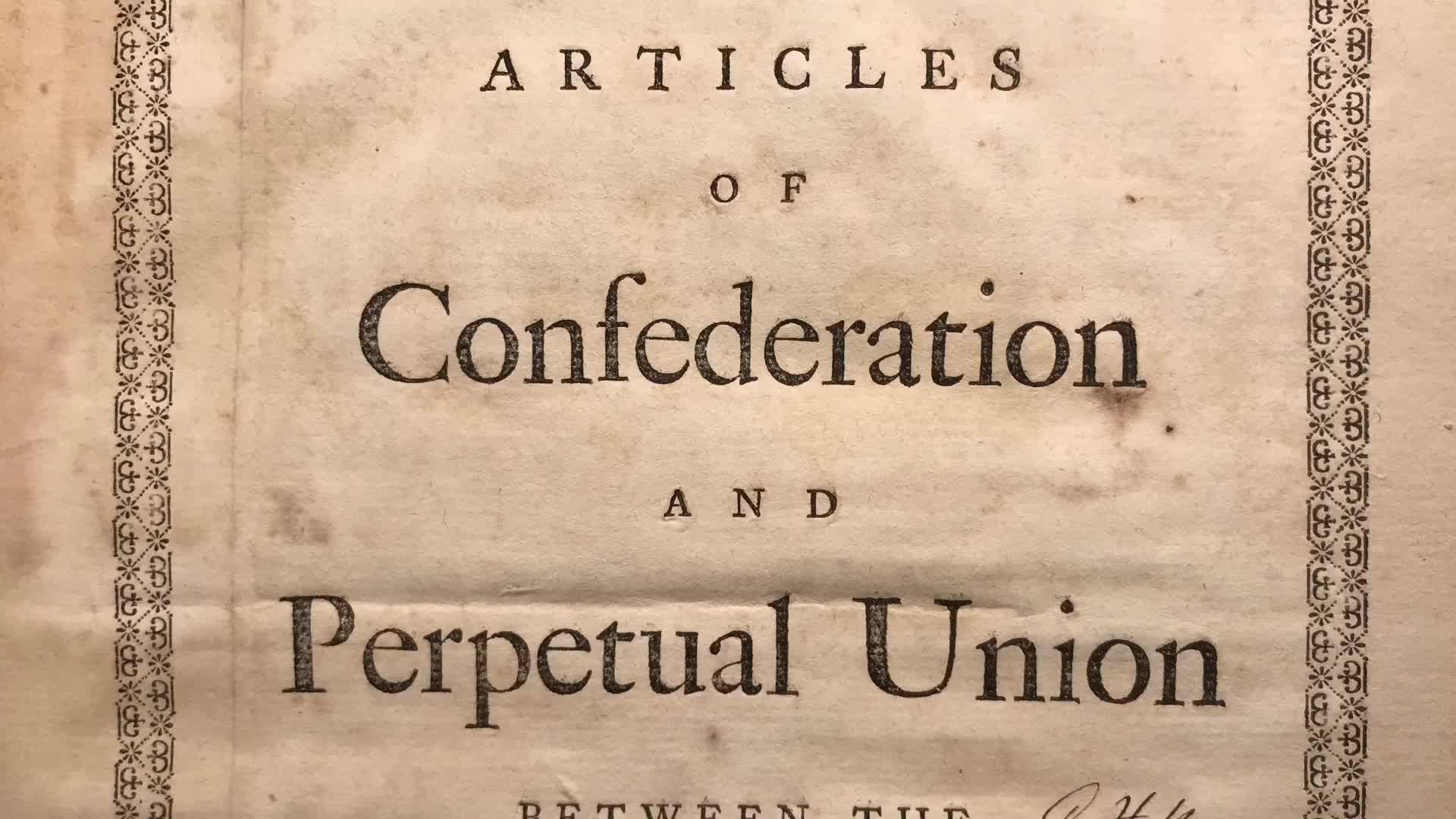
    Immediately after the victory of the young United States of America against Britain, leaders attempted a short-lived government under the Articles of Confederation and Perpetual Union. Anxious about the tyranny that Britain held over colonists, the confederated government was purposely weak with little authority and even lesser power to enforce regulation. It didn’t take long for issues to arise, leading to the confederated government being thrown out in favor of the republic and Constitution in 1788.

    There is very little queer or transgender US history written within these five years. The confederation was chaotic – after securing victory in the American Revolution, leaders were given the task to create a government for the people that would not lead to tyranny and completely separate from the monarchy-style governments that controlled Europe. In their hesitance to give the federal government power, the purposely-neutered American confederation could largely not govern individual states – leading to a spike in civil unrest during this period as seen in the Pennsylvania Mutiny, Shays’ Rebellion, the Paper Money Riot, and Doctors Mob Riot.

    Two of the most notable cases of civil unrest are Shays’ Rebellion and the Pennsylvania Mutiny since both aimed to ultimately overthrow the young confederated government. In 1783, the Continental Army threatened Congress situated in Philadelphia due to outstanding military debts. The Congress of the Confederation lacked any control of the military outside times of war, so the refusal of the Executive Council of Pennsylvania to halt the army’s protest forced Congress to leave Philadelphia and determine a new national capital. In 1786, Daniel Shays allegedly motivated his peers in Massachusetts over the debt crisis between farmers and merchants. Shays ultimately failed in their attempt to seize weaponry housed in the federal Springfield Armory – although his historical portrayal compared to the military members in Pennsylvania highlights the distortion of history. When the Continental Army won in Philadelphia, recounts are kind to their involvement; modern scholarship suggests that Shay was intentionally scapegoated to deflect from the corruption within Massachusetts that led to the unrest.

    Until recently, there have been very few attempts to overthrow the United States federal government after the confederation period. The only known case is the failed attempt in 1933 against Franklin D. Roosevelt and then recent events in the past decade by the right wing. The failed coup on January 6th, 2020 held similarities with most rebellions organized by civilians, whereas the current ongoing coup by the Department of Government Efficiency is more similar to the strategic coups organized by the United States government against other countries.

    While there is not much queer history recorded during this era, that doesn’t mean there isn’t anything to learn – history is a fantastic teacher to those willing to be students. Why are American conservatives seemingly more willing to overthrow democracy compared to the left? Why are general Americans still not ready for a large-scale overthrow?

    Conservatives are emboldened and genuinely believe they are righteous. While a minority of those who attacked the capitol believed they could have died, the majority likely believed that they had nothing to legitimately fear. Traditional conservatives align themselves with law enforcement and idolize the military – so it came as a surprise when security treated them as criminals as they ransacked D.C. MAGA conservatives associate with the further right, which begins to demonize law enforcement (and why Nazis also use the term ACAB). The crowd on January 6th was likely mixed with both types, with MAGA conservatives fueling mob mentality into inciting others into extreme action.

    The American left has overwhelming more in common with the general public, especially in terms of rebellion. They assume that the system, including both law enforcement and the military, is a tool to be used against them. Before positive change can be wrought or for the international community to intervene, protestors have to die for their cause. For that to occur, protestors must be willing to die for their cause – which means they must feel so desperate or hopeless that even death is better than living under their current conditions. It is at that point that the general public can be moved to great action; and while the majority of the American public disapproves of the Trump administration, they have not been impacted enough yet to act. However, Americans are rapidly climbing towards that path – the actions of Luigi Mangione were done because Mangione became disillusioned and desperate by the current political and healthcare system to put his life at risk, and the response by many Americans celebrating his actions further proves this.


    Knowledge Check

    1. True or False: Examples of transgender history during the American Revolution include Thomas(sine) Hall, Joseph Davis, and Anne Hutchinson.
    2. The first government of the United States was a _____.
      a. Republic
      b. Oligarchy
      c. Confederation
      d. Autocracy
    3. True or False: The riots on January 6th, 2020 were an attempted coup or overthrow of the government.
    ANSWER KEY
    1. FALSE / 2. C / 3. TRUE

    Check Out More Trans History

    Look through our history articles to explore transgender history throughout America.

    Further Reading

    DISCLAIMER: While the links below work at the time this article was originally published, they may not forever – especially when government officials are intentionally purging official reviewed research and censoring mainstream media.

    Ask the ‘Coupologists’: Just What was Jan. 6 Anyway? by Politico/Joshua Zeitz (2022)

    LGBTQIA+ Community Records by the National Archives (2025)

    Must’s Coup at the Treasury Has Been Ruled Illegal. Will That Stop Him? by Truthout/Katie Rose Quandt (2025)

    Policies and Problems of the Confederation Government by the Library of Congress (2025)

    Revolution: American Colonial Settlers Make a New Nation by Jonathan Ned Katz (2012)

    US History #8 and #9 and Black American History #9 by Crash Course

  • Trans History: American Revolution

    Trans History: American Revolution

    CONTENT WARNINGS: 🔫 War, 😱 Queer Panic, ✝️ Religion

    Liberty or Death, History and Present

    The American Revolution is the two decades between 1765 and 1783 that moved the British colonists to declare independence and establish the United States of America. Most Americans are familiar with battles like Lexington, Bunker Hill, Brooklyn, Fort Washington, and others – fewer are well-versed in the ideological and political movement that drove colonists to war.

    The war itself lasted from 1775 until 1783, marked by first shots fired in the Battles of Lexington and Concord. It is viewed as America’s ‘first’ war since previous conflicts between colonists and Native Americans, the Spanish, and the French were under British control. The American Revolution is also a great example of the key point “history is subjective” – had American colonists lost the war with Britain, history detailing their struggles would have been altered or lost even if the United States eventually got its independence centuries later like Canada. Since the United States won the Revolutionary War, our accounts of it are written to depict revolutionaries as heroes rather than the traitors they were seen as by Britain.

    The American Revolution is also one of our best examples of protest leading to action in North America – the next example won’t come for another hundred years through the Civil War. The current Trump era has been filled with questions on whether a second American civil war will break out due to the extreme ideological division inflamed by Make America Great Against rhetoric. What pushed American colonists to put their lives on the line for the sake of a better society? Until 1775, the colonists were a short fuse and a lot of gunpowder waiting to explode, but the sentiments then aren’t too far from what people are feeling today as the Trump administration plays heavily into fascism.

    “…The war is inevitable and let it come! I repeat it, sir, let it come. It is in vain, sir, to extenuate the matter. Gentlemen may cry, Peace, Peace but there is no peace. The war is actually begun! The next gale that sweeps from the north will bring to our ears the clash of resounding arms! Our brethren are already in the field! Why stand we here idle? What is it that gentlemen wish? What would they have? Is life so dear, or peace so sweet, as to be purchased at the price of chains and slavery? Forbid it, Almighty God! I know not what course others may take; but as for me, give me liberty or give me death!”

    Patrick Henry’s “Give me liberty or give me death!” speech delivered on March 23rd, 1775 to the Second Virginia Convention – one month before the start of the American Revolution.

    Until the Battles of Lexington and Concord, colonists were divided on whether to take up arms against Britain. Patrick Henry was one of many who argued with British loyalists on the perceived safety of remaining part of the British Empire – his words alone didn’t spark the Revolution. Instead, the Revolution is infamously marked by the first shots fired at Lexington and Concord. History doesn’t remember whether it was the colonists or British soldiers that fired first, but the resulting battle sparked overwhelming support by colonists to join the cause for independence over the injustice. Once the fuse had been lit, there was no going back – today, we are in a similar state of unease that will be exacerbated over the coming years of the Trump administration. If individuals become desperate enough to die because life under the status quo is unbearable, the spark may finally be lit again.


    The Escapades of Deborah Sampson

    The adventures of Hannah Snell, published in The Female Soldier, who enlisted in the British army and Royal Marines as her brother-in-law during the 1740s gave rise to similar people assigned female at birth who wanted to fight for a higher cause despite gender-based barriers. In the United States, the beginning of these stories starts with Deborah Sampson – a Massachusetts-born woman who enlisted in the American Revolutionary Army as a man named Robert Shurtleff. Sampson served a year and a half in the Continental Army before being discharged by General Henry Knox and excommunicated by the First Baptist Church of Middleborough on the strong suspicion of “dressing in men’s clothes, and enlisting as a Soldier in the Army” and having “for some time before behaved very loose and unchristian like.”

    At the very least, Sampson was an interesting person – after their discharge, they married Benjamin Gannett and had three children in Massachusetts. In 1797, Herman Mann published The Female Review, a semi-fictional biography of Sampson’s life as a soldier that included multiple romantic encounters between a cross-dressing Sampson and women. It’s noted that even if these romances are entirely fictional, their inclusion in a widely respectable book made these stories seem relatively acceptable despite the period. Most historians write Sampson as both heterosexual and cisgender since they resumed life as a woman after their military service – but it’s worth viewing their story as a genderqueer character that felt such passion for their country that they defied gendered roles of the church.

    While Sampson is the most written female soldier during the Revolutionary War, they weren’t the only ones. Anna Maria Lane of Virginia was another notable example who served alongside their husband, and Sampson and Lane’s service inspired hundreds more during the later Civil War.


    Rumors of Queer Debachery

    Merrymount and the colonies in Massachusetts weren’t the only places where queer attitudes were forming. In the early days of America, Richmond hid a network of individuals who would be identified as gay today. Most of these folks have been disregarded by historians for having intimate same-sex relationships – this notion has been used by cisgender heterosexual historians to assert straightness throughout the ages. These historians would fume that it is a stretch to propose any of these individuals fostered queer sentiments, which is why it’s just as important to consider that possibility.

    The values of colonial Americans are largely incompatible with our own today. Until recently, historians claimed intimate same-sex friendships were the product of the times. Today, people are more concerned that same-sex friendships will come across as queer due to anti-gay beliefs and toxic masculinity fostered during the Lavender Scare. Colonists could do anything short of sexual intercourse and not be considered homosexual since it was socially acceptable to be emotional. What if those men and women existed in a society where both emotionality and queerness were socially accepted? Without fears of execution and hell looming over them, they would have been likely to experiment with queerness common today – the only reason queer and transgender people ‘exist recently’ is because it is safe enough for them to be open.

    In 1625, Richard Cornish was the first English colonist executed in the New World for sodomy for making a sexual advance on one of his crewmates in Virginia. Letters between Alexander Hamilton and John Laurens were purposely not published by Hamilton’s son J.C. for the sake of his father’s reputation, later commented on as romantic by Dr. Allan McLane Hamilton in the 1890s – despite that intimate same-sex friendship would have still been socially acceptable during McLane’s era.

    Friedrich Wilhelm von Steuben was a German-born American officer who reformed the Continental Army but was ridiculed as being likely homosexual – who interestingly worked with his “ardent admirers” Alexander Hamilton and John Laurens. Steuben’s experiences differ from those of Lieutenant Frederick Gotthold Enslin, documented as the first United States soldier court-martialed for “attempting to commit sodomy” with another soldier in the Continental Army and told “never to return.” This contrast between Enslin and Steuben shows that while queerness was unacceptable in colonial America, the young United States was willing to look past Steuben’s affairs due to his military experience and class.

    Portrait of Friedrich Wilhelm von Steuben by Charles Willson Peale, 1780

    In 1771, eventual President John Adams was appointed as the attorney for Lendall Pitts against John Gray when Pitts injured Gray out of outrage when he found out the young woman he had been flirting with was actually a man. Even though the presiding judge Thomas Hutchinson and Adams tried to condemn Gray by citing a Massachusetts law from 1696 that prohibited crossdressing, the jury found Pitts at fault for the damages he inflicted on Gray. This is perhaps the earliest case of gay and trans panic as a legal defense in the Americas, even if it didn’t work in Pitts’s favor.

    The young United States of America was infatuated with the governments and heroics of ancient Greece and Rome, which is why the foundational principles of our current democracy are misrepresented as Greek and Roman ideas rather than the more similar governments of Native Americans that inspired Benjamin Franklin. This tradition of obsession with Greece and Rome has followed us through the centuries – albeit ironically since both ancient Greece and Rome found queerness as socially acceptable before the Christianization that came with their downfall. Their teachers taught these great leaders as righteous, straight, and ultimately admirable – the reality of Greece and Rome’s queerness wouldn’t be uncovered for centuries. Under a Christian retelling of history, these American leaders followed and kept queer stories out of the history books at every possible turn.

    Up until this point, British history was American history; British religion was American religion. The social movement that fueled the war for independence was based on the belief that Americans needed to carve out their own country, values, and history separate from Britain. William Blackstone’s Commentaries on the Laws of England was published for the first time in America in 1772, informing colonists of the deep crimes associated with queerness in his section on “crime against nature, committed either with man or beast.” Blackstone cited Leviticus 20:13 about “a crime not fit to be named; peccatum illud horribile, inter christianos non nominandum” with penalties as a crime against nature with “deeper malignity” than rape.

    Rivington’s New-York Gazetteer, which was published throughout New England from 1773 until 1775, contained a story about Mary Frith on September 7th, 1775 under Curious Sketches of Singular Characters. While the story contains inaccuracies, it describes the real-world fence that ruled the London underworld as a cutpurse. Frith went by several names (Mary, Moll, and Mal) and lived an exceedingly eccentric life, and regularly ignored social boundaries by publicly dressing as a man, smoking a pipe (Frith is regarded as the ‘first female smoker of England’ since only men used pipes), and performed as a man on stage at the Fortune Theatre despite British law. The Gazetteer writes that Frith was “a woman of a maſculine ſpirit and make, who was commonly ſuppoſed to have been a hermaphrodite, practiſed, or was inſtumental to almoſt every crime and wild frolic which is notorious in the moſt abandoned and eccentric of both ſexes… It was at this time almoſt as rare a ſight to ſee a woman with a pipe, as to ſee one of the ſex in man’s apparel.”

    AUTHOR’S NOTE: Old English often uses the letter ſ instead of “s” in modern English. The quotes used in this article are copied as much as possible according to their published text.

    On the other side of America, Spaniards were regularly writing about the Native American communities they were trying to forcibly convert through their missions. On his expedition with Juan Bautista de Anza, Jesuit Father Pedro Font wrote: “Among the women I saw some men dressed like women, with whom they go about regularly, never joining the men. The commander called them amaricados, perhaps because the Yumas call effeminate men maricas. I asked who these men were, and they replied that they were not men like the rest, and for this reason they went around covered this way. From this I inferred they must be hermaphrodites, but from what I learned later I understood that they were sodomites, dedicated to nefarious practices. From all the foregoing I conclude that in this matter of incontinence there will be much to do when the Holy Faith and the Christian religion are established among them.” Francisco Palóu reported similar findings in 1777 among the missions he founded, “Two laymen arrived at the house of a convert, one of them in the usual clothing, but the other dressed like a woman and called by them a Joya [Jewel]… When they were rebuked for such an enormous crime, the layman answered that the Joya was his wife!”


    The Life of the Public Universal Friend

    One of the most notable transgender figures from the American Revolution was the Public Universal Friend (PUF), born Jemima Wilkinson in Rhode Island to a Quaker family. The Friend suffered severe illness (likely typhus) in 1776 at the age of 24 – upon recovering, they claimed they had died and been reanimated as a genderless evangelist upon their new name as the Friend. From that day onward, the Public Universal Friend shunned their birth name and gendered pronouns as they preached throughout New England.

    The Friend purposely identified as neither male nor female. “I am that I am,” they replied when asked about their gender. When a man criticized the Friend for dressing in men’s clothing, they responded, “There is nothing indecent or improper in my dress or appearance; I am not accountable to mortals.” Given the time period, the Friend’s mannerisms infuriated others who took to writing scandalous papers on the Friend being a manipulative woman and fraudster. It’s important to note the prior experiences of nonbinary colonists before the Friend, like Thomas(sine) Hall – even though the Friend was disowned by the religious community they grew up in, their gender identity was accepted more as a preacher than Hall’s.

    A painting of the Public Universal Friend

    Their followers became the Society of Universal Friends, which followed a theology similar to Quakerism that stressed the importance of free will, opposition to slavery, and support of sexual abstinence. While the Society ceased to exist after the 1860s after the death of the Friend and their closest followers, they had founded the town of Jerusalem upon acquiring land in western New York. The Friend would preach sermons with long sections of scripture without the use of a Bible, and their theology resonated with Free Quakers and other individuals disillusioned by mainstream Quakerism during the revolutionary period. They taught that women should “obey God rather than men,” arguing that anyone regardless of gender could gain access to God through universal salvation. The Society called for the abolition of slavery with the Friend persuading followers to free enslaved people – which is why several formerly enslaved Black Americans joined the Friend’s congregation. Their religious meetings were kept public and housed and fed visitors of all backgrounds, including Native Americans.

    At its height, the Society of Universal Friends had hundreds of followers – it’s estimated that around 300 people joined the Friend in Jerusalem alone, and their message reached thousands through their journeys in New England and the Mid-Atlantic. Their teachings on peace weren’t necessarily radical for the time given similar messages by other leaders throughout the First Great Awakening, but their nonbinary identity made their story unique.


    Charlotte d’Éon: Transgender Spy

    D’Éon (known as Charles, Charlotte, and Chevalière d’Éon de Beaumont) was a French diplomat, soldier, and spy who gathered intelligence against England and Russia after fighting in the Seven Years’ War. They were born into a poor noble family, leading them to study civil and canon law in Paris during the 1740s before later becoming appointed as a royal censor at the age of 30. D’Éon became a spy under the Secret du Roi employed by King Louis XV in 1756.

    Chevalier d’Éon wearing the chivalric Order of Saint Louis

    For over half of d’Éon’s life, they lived as a man – save for one account when d’Éon infiltrated the court of Empress Elizabeth of Russia as a woman. Despite likely being biologically male and being raised as a man, d’Éon claimed being assigned female at birth and wrongly raised male due to inheritance laws to the court of King Louis XVI in 1777. The court recognized d’Éon as legally female and permitted to return to France if d’Éon dressed appropriately in women’s clothing and remained in Tonnerre – later preventing Mademoiselle d’Éon from joining French troops in aid of the American Revolution.

    Now, it’s important to note that this series is centered on US transgender history – d’Éon was not American, nor did she ever come to North America. However, her story did make it to the colonies – the Pennsylvania Ledger published a translation of d’Éon’s farewell letter to the public on January 28th, 1778. The Ledger wrote, “On Tueſday the firſt of July laſt, a judgement at the tribunal of the King’s Bench to decide my ſex. In conſequence I keep, with regret, my word with the publick, I leave with pain my dear England, where I believed I had found tranquillity and liberty, to retire to my native country, to be near to an Auguſt Maſter, whoſe protection and goodneſs will prove a greater aſſurance of tranquillity, than all the Magna Chartas of this Iſland… It will then be the proper time and place to offer all my reaſons againſt the three witneſſes that gave evidence on my ſex.” This lone publication comes right after d’Éon was recognized as a woman by France, but also establishes that d’Éon was known to American colonists – and many other newspapers and magazines published similar stories in the following years.

    There’s a ton of information detailing d’Éon’s life – and since I don’t want to take away from American history, check out the following sources if her story and broader European transgender history interest you.

    While both the stories on d’Éon and Mary Frith take place abroad, they’re still notable in the larger context of transgender American history. Until this point, there is little to zero mention of gender-diverse individuals in colonial America. Transgender history is instead gleaned through colonial studies on gender non-conforming Native Americans and the Europeans that resented them and the rare occasional court document taking an individual to trial for defying societal norms. In a period just as short as the Great Awakening, colonists have publications on Deborah Sampson, Mary Frith, the Public Universal Friend, and d’Éon – as well as numerous queer cisgender individuals. Why are these stories suddenly appearing in print?

    TRANS HISTORY KEY POINT
    History is censored.
    History is written by a minority who control the narrative. If the writers disagree with reality, they can literally rewrite history – after a certain point in time when no one is around to remember reality, their revised history will be left to tell the story.

    Religious leaders of the time would have likely argued the influx of gender diversity was a product of sin, resulting from colonists becoming lax in their relationship with the divine after the Great Awakening. An alternative answer is that these stories were considered too inappropriate under British rule – so these stories were only able to be printed once the strictly policed presses of New England were controlled by Americans. In Europe, gender diversity was neither new nor necessarily uncommon even if it was condemned – it’s likely that British rulers purposely censored the information and literature sent overseas throughout the hundreds of years before colonists declared their independence.


    Knowledge Check

    1. Deborah Sampson, a woman from _____, enlisted in the American Revolutionary Army under the name Robert Shurtleff.
      a. Virginia
      b. Massachusetts
      c. Georgia
      d. Maine
    2. True or False: Colonists were undecided on revolution until the Battles of Lexington and Concord.
    3. Fill in the Blank: New England was home to _____, a genderless evangelist who grew up in a Rhode Island Quaker community.
    4. The case Gray v. Pitts is considered to be one of the first instances of _____ in North America.
      a. Jury Nullification
      b. Set Precedent
      c. Gay Panic
      d. None of the Above
    5. True or False: Charlotte d’Éon was a transgender French spy who assisted in the American Revolution.
    ANSWER KEY
    1. B / 2. TRUE / 3. THE PUBLIC UNIVERSAL FRIEND / 4. C / 5. FALSE

    Check Out More Trans History

    Look through our history articles to explore transgender history throughout America.

    Further Reading

    DISCLAIMER: While the links below work at the time this article was originally published, they may not forever – especially when government officials are intentionally purging official-reviewed research and censoring mainstream media.

    Colonial America: The Age of Sodomitical Sin by Jonathan Ned Katz (2012)

    Gay American History by Jonathan Ned Katz (1976)

    LGBTQIA+ Community Records by the National Archives (2025)

    Moll Cutpurse by Britannica (2025)

    Revolution: American Colonial Settlers Make a New Nation by Jonathan Ned Katz (2012)

    The American Revolution by the Library of Congress (2025)

    The Case of Chevalier D’Eon by Rictor Norton (2025)

    US History #7 and Black American History #8 by Crash Course

  • Trans History: The First Great Awakening

    Trans History: The First Great Awakening

    CONTENT WARNINGS: ✝️ Religion, 👩 Sexism

    Divine America

    In the 1730s, Protestant Christianity was in full swing as evangelicalism took hold in Britain and the American colonies. The Great Awakening, which would forever alter the course of American religion, renewed spiritual devotion – especially within Puritanism and Presbyterianism. It was at odds with American Enlightenment, the movement of radical philosophical ideas that led the colonists to revolution against the British Empire since the Enlightenment and soon-to-be American government were nonreligious and non-denominational.

    The Great Awakening, which lasted until the 1740s, is a subset of colonial history already covered in a previous article. Instead of retelling transgender-related history already covered, this piece sets the stage by explaining the fundamental religious background those mindsets drew from. There are also modern connections that can relate to today’s political climate. Scholars theorize that we are amid a Fifth Great Awakening preceded by others in the 1740s, 1800s, 1890s, and 1960s.

    George Whitefield preaching to the crowd during the First Great Awakening.

    New Ideas for a New World

    Compared to organized religion in Europe, the Great Awakening brought ideas that challenged centuries-long notions. Regardless of what denomination one identified with, religion was formal and institutionalized—you couldn’t be saved from damnation without direct guidance from the Church of England or the Catholic Church. The Great Awakening prompted the forbidden question: Can Christians save themselves from faith alone?

    This question changed the course of Christianity in the United States. While organized religion through churches is still valuable across all denominations, American Christianity especially values self-salvation over tithes or church attendance. The Great Awakening proposed that all people are born sinners, but can be saved through maintaining a direct and emotional connection with God. Before these ideas, salvation was something ‘bought’ by donating enough time or money to a church.

    Despite these radical ideas, the Great Awakening also cemented strict ideas about gender. Settlers sailed to North America in search of religious freedom to pursue faiths obstructed in Britain – but they were ironically intolerant of Christian denominations different from their own. Puritans, Lutherans, Quakers, Baptists, Anglicans, and other subsets of Christians did not get along – which contributed to more colonies being founded when groups became too divided. Something they all had in common, however, was a tendency to morally surveil each other – evidenced by the use of the judicial system to execute during the 1692 Salem Witch Trials.

    There’s also a layer of hypocrisy within the Great Awakening and the ideas it bolsters – one of its core tenets is the duty each individual holds to achieve self-salvation from the damnation of hell. However, religious revival intertwines itself with organized religion as seen with the misuse of the court system by religious fanatics in Salem. The ideas behind the Great Awakening pose one’s personal connection and morality as superior to authority figures, but religious enlightenment pushes individuals to seek scripted guidance from authority figures like traveling preachers and then use religious teachings to enforce morality-based law onto others.

    Without the Great Awakening, Puritanism might have died out in America. Religious fervor was steadily declining in the colonies, and figures like Jonathan Edwards and George Whitefield used to instill fears of hell by harping on sloth and other deadly sins. The dominant branches of Christianity utilized an “all or nothing” approach to morality, pushing gender-diverse individuals either to the closet or the courts like Thomas(sine) Hall. Gender variance undoubtedly existed during the Great Awakening, but the political climate obsessed with moral purity pushed individuals to secrecy while the historians of the time knowingly kept queerness out of documents as much as possible.

    TRANS HISTORY KEY POINT
    History is subjective.
    Any history class outside of high school will make this point – history books are written by the victors, so they control the narrative of how great they were and how terrible their victims were. Good students of history acknowledge this subjectiveness.


    Miss Preacher: Religion Among Women

    The Great Awakening denied women the ability to openly preach or take leadership roles, but it encouraged women to write about their religious enthusiasm in diaries and memoirs, such as in the cases of Hannah Heaton and Phillis Wheatley. A prominent example of this is the life of Sarah Osborn, a Protestant writer from Rhode Island who traveled in colonial America preaching ideas of the Enlightenment – even though both the Great Awakening and Enlightenment were male-dominated. Osborn’s thoughts were in line with the thinking of the time – she disagreed with liberal humanism in favor of Calvinist self-salvation.

    Religious thought was one of the few socially acceptable paths for women to philosophize and write alongside men, even if they were not allowed to publish their works. Evangelism “sought to include every person in conversion, regardless of gender, race, and status” (Taylor) even though it incited conflict between “Old Lights,” traditional and orthodox thinkers, and “New Lights,” who sought the teachings of the Awakening. However, moral purity instilled strict gender roles that delegated women to be nothing more than homemakers doting on their husbands and children. These roles would be largely unchallenged until the first wave of feminism despite the impact American women had on the history and politics of the forming United States.

    The only exception to this is Quakerism, which had a significant role in inspiring the minds of early feminism – in Quaker circles, women were invited to speak during official meetings, publish their writing, preach, and question authority. The schisms of gender and colonial religion highlight how disconnected North America was during British rule – even though all American colonies ultimately reported to Britain, one colony could have laws completely different than another based on religious creed.

    THINK PIECE: Great Awakenings or religious revivals happen every 30 to 45 years. As mentioned at the beginning of this article, the last one began in the 1960s – putting America on track for a Fifth Great Awakening. Transgender rights are the focus of this wave, alongside reproductive rights, police brutality, and other ideas that have been inserted into mainstream religion. What can history teach us about previous religious revivals to combat this one?


    Knowledge Check

    1. Fill in the Blank: _____ referred to individuals who subscribed to the radical ideas presented during the Great Awakening.
    2. According to preachers during the Great Awakening, the most important factor in spiritual salvation was…
      a. charitable donations to the Church.
      b. a personal relationship with God.
      c. being born into a righteous family.
      d. acts of kindness unto the unfortunate.
    3. True or False: During the Great Awakening, women were encouraged to preach in all thirteen colonies.
    4. Which of the following themes are true about the Great Awakening?
      a. Gender roles were deepened, putting men further into leadership positions and women as homemakers.
      b. In circumstances where queerness occurred during the Great Awakening, it was quickly punished and censored.
      c. Despite the focus on self-salvation, the Great Awakening revitalized organized religion.
      d. These are all true themes about the Great Awakening.
    5. It is theorized that the United States is undergoing a _____ Great Awakening.
    ANSWER KEY

    1. NEW LIGHTS / 2. B / 3. FALSE / 4. D / 5. FIFTH

    Check Out More Trans History

    Look through our history articles to explore transgender history throughout America.


    Further Reading

    DISCLAIMER: While the links below work at the time this article was originally published, they may not forever – especially when government officials are intentionally purging official reviewed research and censoring mainstream media.

    Anti-Trans Hate: Part of the 5th Evangelical ‘Great Awakening’? by Riki Wilchins (2024)

    Colonial America: The Age of Sodomitical Sin by Jonathan Ned Katz (2012)

    Enlightenment by Britannica (2025)

    Gay American History by Jonathan Ned Katz (1976)

    Great Awakening by The History Channel (2018)

    LGBTQIA+ Community Records by the National Archives (2025)

    The Colonial Experience by US History (2022)

    Trans Bodies, Trans Selves edited by Laura Erickson-Schroth (2014)

    US History #5, #6 and Black American History #7 by Crash Course

  • Trans History: Colonial Era

    Trans History: Colonial Era

    CONTENT WARNINGS: ⚔️ Colonization, 🚻 Misgendering, 🙅 Lack of Consent

    Native American History & Colonial Attitudes

    Europeans were far from the first people in the Americas. Some scholars believe up to 18 million Native Americans populated North America alone before Columbus made contact with the Bahamas, known to the Indigenous people as Guanahani. Colonialism marks the exploitation and settlement of Europeans in North America from 1607 to 1765 through the overseas powers of Great Britain, France, Spain, Portugal, the Netherlands, Russia, and Sweden.

    Native American cultures have a rich history in oral storytelling – which is why little of their history was formally written down. History was taught to new generations through spoken narratives that also brought lessons about cultural beliefs. However, when the unthinkable happened and Europeans warred with Native Americans over land, slaves, and wealth, histories were lost to time. Instead, we are left today with fragments retold by surviving tribes alongside the revised history told by European colonists.

    Fragmented history informs us that, by our modern understanding, Native Americans were definitely queer. The term used today to refer to third-gender individuals in Native communities is two-spirit, a pan-Indian word that applies to any tribes when they lack the language in their Indigenous tongue to describe the experience. Researching the two-spirit identity is the best way to start learning about pre-colonial LGBTQIA+ history.

    “It is estimated that 155 tribes across Turtle Island [North America] embraced a multi-gendered culture. The expanded conceptions of identity in these societies seem to have overshadowed sexuality. While homosexual relationships were common, they were not inherent.” – PRISM, “Homosexuality in the Pre-Colonial Americas.” June 11th, 2024.

    The rest of our current knowledge of Native American history and attitudes towards LGBTQIA+ ideas comes from the European colonizers who wrote down what they saw, heard, and interpreted. These writers called Native Americans who transgressed traditional gender roles “berdache” and “passing women” offended when they witnessed both men and women live outside of their small-minded norms on gender. These terms are outdated and considered deeply offensive – they were used negatively against Native Americans as Europeans forcibly converted them to Christianity. Still, these accounts affirm the existence of transness even when it is written out of history – from the Navajo nádleehi to the Zapotec muxe, transgender people have always persisted.

    Photo of Hastiin Klah of the Diné or Navajo, who lived in the 1800s as a nádleehi person.
    Vogue México 2019 cover featuring Estrella Vazque, a self-identified muxe.

    More interestingly, European accounts condemning two-spirit Native Americans tell us more about Europeans during the colonial period. Beyond these condemnations, there is no evidence of transness in early America. Fixated on their survival, most colonists made poor history writers – but most of these settlers were deeply religious, pushed into sailing across the ocean in pursuit of religious freedom separate from the dominating Church of England and Catholic Church. The repulsion documented most by British and Spanish colonizers affirms that they knew of transness – settlers were morally outraged by the deviants that claimed the Americas home since they were informed of the immorality of transness and other LGBTQIA+ identities by religion overseas. It was during this same period that molly houses flourished in Britain – taverns, public houses, and coffeehouses where queer and gender-nonconforming people met to socialize and meet possible sexual partners. LGBTQIA+ relationships were deemed illegal as a capital offense from 1533 onwards from the Buggery Act passed by King Henry VIII, which is why British molly houses were the frequent targets of raids and blackmail during the 1720s like queer bars were in 1960s America. European colonizers knew of transness, and they learned to keep accounts of gender-diverse behavior as sparse as possible when writing down history.

    “We know and have been informed without room for doubt that all [the Indigenous people] practice the abominable sin of sodomy.” – Hernando Cortés in his first letter back to Spain in 1519, translated by Bayard J. Morris.

    “Young men must cease to go about in female garments, to make a livelihood by such cursed lewdness.” – Bernal Díaz del Castillo on the demands made by Cortés to the Native Cempoala, translated by John Gibson Lockhart.

    “The sodomite is an effeminate – a defilement, a corruption, filth; a taster of filth, revolting, perverse, full of affliction. He merits laughter, ridicule, mockery; he is detestable, nauseating. Disgusting, he makes one acutely sick. Womanish, playing the part of a woman, he merits being committed to the flames, burned, consumed by fire. He burns; he is consumed by fire. He talks like a woman, he takes the part of a woman.” – Friar Bernardino de Sahagún on the local Nahua he was trying to convert to Christianity in the Florentine Codex, translated by Arthur Anderson and Charles Dibble. Sahagún wrote the passage stating the above is what the Nahua did to queer people, although later revisits to the texts Sahagún based his information on show he purposely mistranslated the Nahau as shown by Kimball’s translation of the same passage in 1993.

    TRANS HISTORY KEY POINT
    History is censored. History is written by a minority who control the narrative. If the writers disagree with reality, they can literally rewrite history – after a certain point in time when no one is around to remember reality, their revised history will be left to tell the story. Remember this point when considering that primarily white cisgender heterosexual men of relative wealth were the only ones writing for much of history – the lack of transgender history in their books does not disprove transness, but rather affirms that they purposely censored reality.

    The European settlers of North America were deeply religious – the contract agreed upon by the men on the Mayflower stated their journey was “for the glory of God and advancement of the Christian faith.” As a result, colonial America was founded largely on the Puritan faith and their idea of the heterosexual cisgender nuclear family. Colonists had strong beliefs on gender and what they assumed to be natural and moral order of the world – early Puritans used gender norms as the basis for the governments created in North American colonies, pushing men to leadership positions and women towards submissive roles to “please [their] husbands and make him happy.”

    The current most common two-spirit flags

    Colonizers were distraught by Native Americans’ fluid gender roles and society that included third genders. Further evidence that Europeans were knowledgeable on gender diversity comes from the Bible – while European Christianity punished queerness, third-gender roles have been documented as part of the innate human experience. Isaiah 56:3-5, Matthew 19:10-12, and Acts 8:26-40 relate to eunuchs, individuals who were traditionally assigned male at birth but were accepted in society similar to two-spirit folks since they held roles within their pre-Christian religions. The power that eunuchs held during Biblical times directly relates to the verses written in the Bible to condemn them since those holding the pen wanted to demean their power and claim it for themselves.

    In La relación de Álvar Núñez Cabeza de Vaca, explorer and colonizer Cabeza de Vaca wrote of his overland journey from Florida to Mexico from 1528 to 1536 – this became the first published narrative of European exploration within the modern United States. He describes several encounters with what he referred to as hombres amarionados impotente, or impotent effeminate men – Native individuals who were biologically male but lived and worked as women. These encounters are further affirmed by the writings of Jacques Marquette, the first European who visited the Upper Mississippi when he observed “men who do everything women do” while traveling in modern Illinois between 1673 and 1677. Marquette wrote, “I know not through what superstition some Illinois, as well as some Nadouessi, while still young, assume the garb of women, and retain it throughout their lives. There is some mystery in this, For they never marry and glory in demeaning themselves to do everything that the women do. They go to war, however, but can use only clubs, and not bows and arrows, which are the weapons proper to men. They are present at all the juggleries, and at the solemn dances in honor of the Calumet; at these they sing, but must not dance. They are summoned to the Councils, and nothing can be decided without their advice. Finally, through their profession of leading an Extraordinary life, they pass for Manitous,-That is to say, for Spirits,-or persons of Consequence.” At the same time, Spanish missions in the Southwest were committing a “gendercide” of all Indigenous people who failed to conform to Eurocentric gender norms (United States National Park Service, 2016) as written by Deborah A. Miranda in “Extermination of the Joyas: Gendercide in Spanish California.”

    Jacques Le Moyne gives us another perspective on the Native American culture – he was an artist who arrived in Fort Caroline in 1564 to help René Laudonnière colonize Florida. Although Laudonnière failed, Le Moyne succeeded in his own way by depicting Native American life and culture through his drawings. One of these drawings was “Enjoyments of Hermaphrodites,” where Le Moyne wrote a travel memoir of his journey – although the engraving was nearly lost to history. It remains one of the earliest known depictions of Native Americans, yet it presents gender-diverse and intersex individuals in a more positive light that Indigenous communities would have seen them at the time.

    While these are some of the notable examples, they are far from the only ones – Hernando de Alarcon wrote of “three or foure [Native] men in womens apparell” while surveying California in 1540. Renne Goulaine de Laudonniere wrote four accounts from 1562 to 1567 of intersex or two-spirit Native Americans he came across in Florida, like Le Moyne. Nearly all written retellings of the transness that colonists encountered are condemnation: Juan de Torquemada (1609), Francisco Coreal (1666), Pierre Liette (1702), Joseph Francois Lafitau (1711), Pierre Francois Xavier de Charlevoix (1721), Pierre Francois Xavier de Charlevoix (1721), Georg Heinrich Loskiel (1750), and Jean-Bernard Bossu (1751) all write similar versions of history over the great depths of sin that Indigenous Americans are addicted to as they engage in gender-diverse behaviors incompatible with European norms.


    The Case of Thomas(sine) Hall

    Civil documents dating to the 1620s tell the story of Thomas(sine) Hall, an indentured servant who caused a scandal in Jamestown due to their purposefully genderfluid expression. The Spanish wrote significantly more than British colonizers, but Hall’s story was committed to history when they were accused of sexual misconduct – their biological sex became a focal point when rumors circulated of them having an affair with Virginia’s former governor’s maid, which was punishable as a criminal offense if Hall was biologically male. In response to being asked why they wore feminine clothing, Hall replied, “I goe in womans apparel to get a bitt for my Catt.” (Brown 1995)

    Once the accusation was made, residents claimed that Hall’s gender expression and tendency to have sex with people of all genders were causing disorder in the community. However, the community lacked an official local court or church to determine Hall’s biological sex, so the authority to determine Hall’s sex assigned at birth was left to married women of the village who came to Hall’s home at night multiple times while they slept to observe Hall’s genitalia.

    These married women determined that Hall lacked a “readable set of female genitalia,” giving the responsibility instead to Thomas(sine) Hall’s plantation master, John Atkins. After inspecting Hall while they slept, Atkins agreed with the women that Hall was biologically male since they had “a small piece of flesh protruding from [Hall’s] body” (Brown). Atkins directed Captain Nathanial Bass to punish Hall – but Bass confronted Hall directly and asked bluntly if they were a man or a woman.

    A drawing often attributed as a depiction of Thomas(sine) Hall, dated 1640 by Hollar

    Hall responded that they were both but admitted they had a non-functional 2.5-centimeter penis. In today’s terms, this means Thomas(sine) Hall was intersex and would have likely identified with terms like nonbinary and genderfluid. In colonial terms, Hall was legally protected since male incompetence was classified as being the female sex and not being a “proper man,” so they could not be prosecuted for allegedly having sex with the governor’s maid.

    However, the villagers of Jamestown were not pleased with this decision. They argued Hall should be treated like similar individuals of “dual nature” sex in Europe, where Hall would be forced to choose to be a man or a woman as their gender regardless of biological sex. Hall’s case was sent to the higher Quarter Court, presided over by Governor John Pott on April 8th, 1629. While previous individuals classified as “dual nature” or intersex were forced to adopt either a permanent male or female identity, Hall was a new and truly unique case for colonial America. As the court ruled, “hee is a man and a woeman” – Hall had dressed as both genders throughout their entire life, and the Quarter Court could not determine if Hall was “more male” or “more female.” Instead, the court ruled that Hall was to dress in clothing that symbolized this confusion: “Goe clothes in man’s apparell, only his head to bee attired in a coyfe and crosscloth with an apron before him.” In the end, Hall proved that intersex people existed both in Europe and North America – while Hall was the first to be given the ruling to dress androgynously, they were certainly not the first individuals of “dual nature sex” to be seen in court. After the ruling in 1629, nothing further is known of Hall’s life.


    Crossdressing Colonists

    Hall was far from the only American settler that caused panic due to gender-diverse behavior. Later, in 1652, Joseph Davis was charged by the court of New Hampshire for “putting on women’s apparel and going from house to house in the night time with a female.” Massachusetts summoned Dorothie Hoyt to the Salem Court “for putting on man’s apparel,” but fled from the county before being caught and didn’t appear in court. These cases pepper the civil documents of colonial America – Mary Henly’s case in 1692 directly contributed to the anti-crossdressing law Massachusetts passed in 1696. It’s also worth noting that Massachusetts, and specifically Massachusetts Bay Colony, were established because the colonists firmly believed they made a “covenant with God to build an ideal Christian community,” – which is why they were among the first to criminalize sodomy by whipping, banishment, and execution as a sex crime in 1631.

    “The cultural inclusion of individuals who assumed different genders in some Native American societies stands in contrast to the general lack of recognition within the white-dominated American colonies in the 17th and 18th centuries. To the extent that individuals who cross-dressed or who lived as a gender different from the one assigned to them at birth were acknowledged in the colonies, it was largely to condemn their behavior as unnatural and sinful…

    “Relatively few instances of gender nonconformity are documented in the colonial and postcolonial periods. A number of these cases that became known involved female-assigned individuals who lived as men and whose birth gender was discovered only when their bodies were examined following an injury or death. Fewer examples of male-assigned individuals who lived as women are recorded, perhaps because they had less ability to present effectively as female due to their facial hair and physiques.” – “Trans Bodies, Trans Selves” on transness in early America by Genny Beemyn in 2014.

    In 1637, Massachusetts brought Anne Hutchinson to trial for hosting regular religious meetings in her home despite the protocol for such to be held in male-controlled churches. Her trial lasted until 1648, ending with Hutchinson being banned from her community. While her story fits strongly within feminist history, it’s also worth including with transgender history – there is no way to fully know how, in the modern day, Hutchinson would have identified with modern gender. At the very least, we know from court records that she defied the established gender norms that rooted her during the 1600s through her work preaching to locals in her community regardless of gendered requirements. Today, Hutchinson’s act of defiance to lead in faith would still cause trouble in conservative religious circles that hold strict beliefs on gender roles – making her act to purposely lead meetings in her colonial period revolutionary.

    Massachusetts is the stage for many traces of LGBTQIA+ history in early America. The religious objection that manifested during the Great Awakening obstructed history elsewhere in the colonies, which will be covered in a later article. In comparison, Massachusetts wasn’t particularly remarkable to hold so much of transgender history during this time – it was overwhelmingly Puritan and actively persecuted non-Puritans from their colonies, such as the dissenting Quakers who were whipped, executed, and driven out. Despite this, Thomas Morton called Massachusetts home when he founded the colony of Merrymount that would become Quincy. It may have been the 1620s, but Merrymount celebrated both interracial marriage and same-sex desire – and fostered near atheist ideas in published anti-Puritan work Morton wrote like New English Canaan, which became the first banned book in the present-day United States.

    Considered the first school textbook of colonial America, the New England Primer (1687) was published with approved religious-based prayers and instruction for students, stating that “God created man, male and female, after his own image, in knowledge, righteousness, and holiness, with domination over the creatures.” Relatedly, sodomy laws were written and enforced throughout the American colonies and militia by 1714, which would remain in place entirely unchallenged until 1925.

    While not as common as in later American history, individuals assigned female at birth joined male trades under masculine identities – the following newspaper clipping details one such case in a Massachusetts port in 1756. The clipping also mentions Hannah Snell, an English soldier who joined the British army as a man under their brother-in-law’s identity of James Gray in 1747. Snell’s military career took off after joining the Royal Marines as a cabin boy and came out willingly later before petitioning the Duke of Cumberland for their military pension. Not only was Snell honorably discharged, but the Duke agreed to officially recognize their military service and grant their pension.

    The time difference between Snell and the story in Massachusetts further implies that Snell’s adventures as “The Female Soldier” inspired many individuals assigned female at birth to pursue similar paths under male identities. While not all of these individuals would have identified as transgender today, such as Snell themselves, since they openly identified as a woman outside of their military career, some of them certainly would have – and this tradition dates thousands of years, as evidenced by would-be transgender men who purposely lived their entire lives under male identities as monks during the Medieval period.

    In 1764, we have evidence of another American tradition that would become common later on through the story of Deborah Lewis. An article was published in Newport Mercury in Rhode Island, detailing a warrant issued by the governor due to Lewis being assigned female at birth but began openly dressing as a man in public and aiming to marry a local widowed woman. Compared to later cases, Lewis caused a stir due to remaining in the community they grew up in – other stories often circle transgender men who traveled far from home under new identities.


    Language Matters

    Overseas, William King authored the mock-heroic poem The Toast in 1732 – which he originally wrote to demean his opponents suing him over a Galway estate. By 1736, The Toast was being published throughout Great Britain in four books. Even though it’s unlikely The Toast ever made it to the colonies, it currently holds the title as the first published work to contain the word “lesbian” since King used the work to allude to the story’s heroine Mira being the Countess of Newburgh and a woman attracted to other women. Culture is flexible, and the relationship between Great Britain and the American colonies meant settlers surely knew of the word if it was common enough for King to use it in a published work, even if it wouldn’t be published in American literature until later.

    Knowledge Check

    1. Thomas(sine) Hall was a genderfluid colonist who caused local scandal in _____.
      a. Virginia
      b. Pennsylvania
      c. Massachusetts
      d. Maryland
    2. The modern term used to describe third-gender Native American identities is _____.
    3. ‘The Female Soldier’ centers on the adventures of Hannah Snell, who was a…
      a. lesbian spy working against the French government.
      b. crossdressing sailor for the Royal Marines.
      c. intersex merchant under the East India Company.
      d. literate female journalist reporting on important military battles.
    4. True or False: The Quarter Court ruled Thomas(sine) Hall was truly both man and woman but required Hall to dress androgynously.
    5. Who wrote the following quote: “Womanish, playing the part of a woman, he merits being committed to the flames, burned, consumed by fire. He burns; he is consumed by fire. He talks like a woman, he takes the part of a woman.”
      a. Bernal Díaz del Castillo
      b. Hernando Cortés
      c. Jacques Marquette
      d. None of the Above
    ANSWER KEY

    1. A / 2. TWO-SPIRIT / 3. B / 4. TRUE / 5. D

    Check Out More Trans History

    Look through our history articles to explore transgender history throughout America.


    Further Reading

    DISCLAIMER: While the links below work at the time this article was originally published, they may not last forever – especially when government officials are intentionally purging official-reviewed research and censoring mainstream media.

    A Map of Gender-Diverse Cultures by PBS (2023)

    Chronological Database of Transgender and Gender-Variant U.S. Histories by Clair Kronk (2020)

    Colonial America: The Age of Sodomitical Sin by Jonathan Ned Katz (2012)

    Digital Transgender Archive, 1500 – 1765

    Encyclopedia of Gender and Society by Jodi O’Brien (2009)

    Gay American History by Jonathan Ned Katz (1976)

    Gay/Lesbian Almanac by Jonathan Ned Katz (1983)

    LGBTQ America by the National Park Service (2016)

    Traditional Indigenous Terms, Two-Spirit by Wikipedia (2025)

    Trans Bodies, Trans Selves edited by Laura Erickson-Schroth (2014)

    US History #1, #2, #3, #4 and Black American History #1, #2, #3, #4, #5, #6 by Crash Course