Shelter is a necessary human right that influences physical and emotional well-being. Individuals without safe and stable environments are prone to increased stress, health problems, and poorer quality of life.
What is Homelessness?
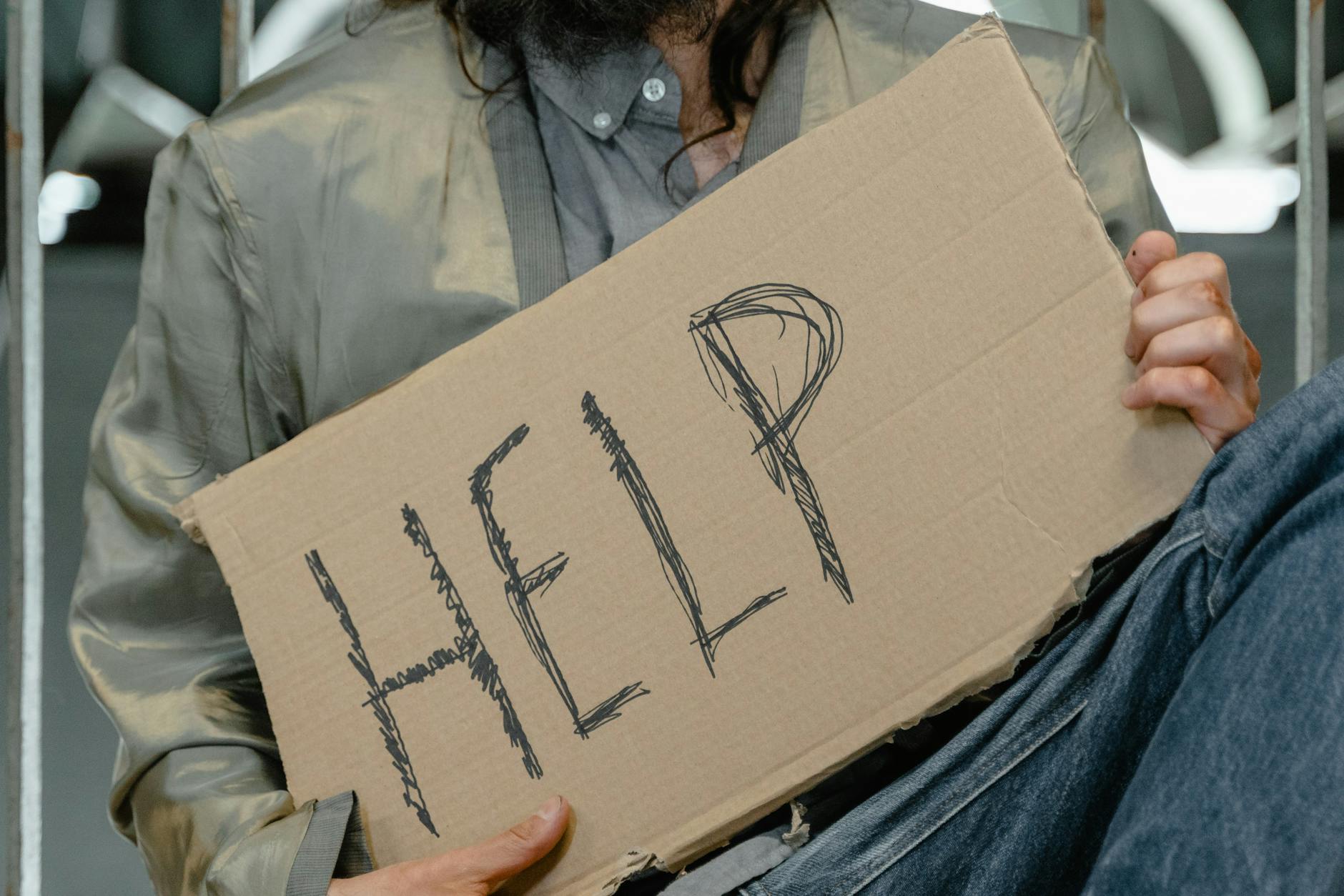
Individuals without stable, safe, and functional housing are considered homeless. It’s one of the most visible social problems – it exists in some capacity in every single country throughout the world, but it’s one of the most common crises that the general public ignores. These are people who live outside, in cars and RVs, tents, or otherwise have no permanent place of residence.
When talking about homelessness, related terms like houselessness and the state of being unhoused come up. Unhoused and houseless are terms that activists have begun using in recent years to reestablish the humanity that unhoused people have since most people subconsciously reject houseless people as their peers. The word “home” has a more personal connotation, whereas “house” applies just to a structure. To quote the common saying, if “home is where the heart is,” then homeless people do have homes since they still maintain a sense of self while unhoused – they just don’t have shelter.
On the other end of the spectrum, terms like houseless and unhouse aren’t always popular since some activists perceive them as virtue signaling under the belief that exact language doesn’t matter as much as resolving the crisis at hand. Like all identifying language, it’s best to ask individuals in your local community what they prefer to be called: some might prefer being labeled as homeless, others might ask to be called a person experiencing houselessness.
Other terms used to describe homelessness include squatters, refugees, vagrants, hobos, and tramps. The act of squatting is often political, where an individual or community purposely occupies a property they do not own, rent, or otherwise have lawful permission to use. Refugees are those who are forced to flee their home country out of safety, whereas internally displaced people (IDPs) are individuals who are forced to leave their home communities but remain in that country. The last three terms (vagrant, hobo, tramp) are all considered derogatory due to the negative way they’ve been used throughout the centuries.
There are four main types of homelessness: transitional, episodic, chronic, and hidden. Houselessness is a spectrum that doesn’t discriminate based on age, race, gender, sexuality, or ability.
Most homelessness is classified as transitional, or a brief state of homelessness due to a major life change or catastrophic event such as job loss, a health condition, divorce, domestic abuse, substance misuse, etc. Transitional houselessness is categorized as individuals experiencing housing instability for under one year. These people often (but not always) have jobs but can’t afford housing and other expenses – leading them to sleep in cars, outside, or couch surfing. Statistically, transitional homelessness consists of younger people who are harassed when seeking alternative housing. Due to their circumstances, these individuals rarely access homeless services – making them difficult to track or collect information on.
Individuals who experience at least three periods of homelessness within the last year are labeled episodic homelessness. These people are often associated with disabilities, substance misuse, and mental health conditions that make them more prone to housing instability. While less likely to have stable or permanent employment, individuals experiencing episodic homelessness often have seasonal or minimum-wage jobs. Without adequate resources and support, episodic homelessness can easily evolve into chronic homelessness.
Homelessness that has occurred for over a year is classified as chronic homelessness, especially if the individual has a disabling condition. Statistically, these individuals are often older, unemployed, and live on the streets or other unsafe places. Additionally, these folks are more likely to have a disability, mental health condition, or addiction that restricts their ability to climb out of homelessness. It is worth noting the phrase “the sidewalk is quicksand;” in countries like the United States, it is extremely easy to become unhoused and to escalate from transitional to chronic homelessness due to the hostile culture and resentments attached to being unhoused.
Hidden homelessness refers to individuals who purposely live with others temporarily because they lack a permanent home. They’re considered hidden compared to the other three types since they rarely access housing resources or support, so they aren’t included in traditional houselessness data. These individuals are often younger and turn to friends, family, and neighbors to take shelter due to an inability to pay rent or afford other living expenses – but they can be further categorized as transitional, episodic, or chronic depending on how long, how often, or why they are experiencing housing instability.
By the Numbers: How Common is Homelessness?
Housing instability is difficult to compare reliably because it requires countries to self-report data and there are no consequences or motives for lying versus reporting honestly. It’s also difficult to track homelessness due to qualifiers that countries may use (ex: who exactly is ‘unemployed’ in the United States?), as well as other variables like hidden homelessness where a large portion of the houseless population doesn’t access social services and therefore can’t be counted by tracking data.
According to the United States Department of Housing, approximately 770,000 people were considered homeless in 2024 – which comes out to about 0.2% of the American public. The US Census found that 11.1% of Americans live in poverty, which accounts for 36.8 million people. 48 states criminalize homelessness, and unhoused individuals are arrested for sleeping outside or panhandling in the majority of the country – which was affirmed by the 2024 Supreme Court ruling in City of Grants Pass v. Johnson. Even though homeless people technically hold the same civil rights as other Americans, they are targeted and harassed by law enforcement, legislation, and other members of the general public. The following chart is daily averages based on self-reported information throughout the world:
COUNTRY
HOMELESS POPULATION
HOMELESS PERCENTAGE
United States
771,000
0.22%
Canada
235,000
0.57%
Mexico
14,000,000
10.89%
Brazil
281,000
0.13%
United Kingdom
380,000
0.56%
Ireland
14,000
0.27%
Spain
29,000
0.06%
France
330,000
0.49%
Germany
263,000
0.31%
Italy
96,000
0.16%
Switzerland
2,200
0.03%
Sweden
27,000
0.26%
Australia
122,000
0.46%
New Zealand
102,000
1.96%
Russia
11,000
0.01%
South Korea
9,000
0.02%
India
1,770,000
1.24%
Japan
3,000
0.00%
Kenya
20,000
0.04%
Egypt
2,000,000
1.77%
South Africa
56,000
0.09%
As noted above, these figures are only rough estimates and self-reported – even though the United States has a relatively low percentage compared to Canada, the United Kingdom, or Australia, any American will cite how pervasive homelessness is in their communities regardless of how urban or rural it is. In countries like the US, homeless individuals are more likely to be arrested and imprisoned rather than counted for in these figures and given social services. Countries like Germany, France, and Spain have higher amounts of refugees seeking safety from persecution, which are included in their statistics. There are very few places like Japan and South Korea that have genuine near-zero rates of homelessness, although they still experience poverty and other social issues.
What Causes Homelessness?
There isn’t one sole reason why homelessness occurs and there isn’t one sole way to resolve it either. For some, homelessness is caused due to low wages and high living expenses that make it impossible to find a place to rent; others have difficulty maintaining an income due to a disability, mental illness, or drug addiction. Gentrification and unfair housing policies force families out of their homes, and countries without strong welfare safety nets or mutual aid communities fail to prevent the poverty that leads to becoming unhoused.
While homelessness is inherently a housing problem, it is not only a housing problem. It’s impacted relational poverty, where unhoused individuals lose their family, friends, and community as society grows to see them as a burden that doesn’t belong. As such, all models that aim to resolve homelessness must reconnect homeless people as equal members of society. Otherwise, it is nearly impossible for chronically homeless people to escape their circumstances.
Surviving the Night: Emergency Shelter
If possible, overnight shelters are the best emergency option for those experiencing homelessness since they provide safety and protection from exposure to the weather. These shelters are temporary and generally only allow individuals to stay for one night at a time, so they aren’t great for building financial stability. Overnight shelters typically have specific intake hours but serve as a vital resource for those in critical need – in some communities, overnight shelters also act as warming and cooling centers to prevent hypothermia and heat exhaustion.
Throughout most of the United States, 211 serves as the free three-digit hotline to connect individuals with social services including emergency overnight shelters. This service is provided in all US states, Washington D.C., and Puerto Rico and uses a network of nonprofit agencies to support users with emergency crisis care, shelter, financial assistance, food programs, and healthcare. The Homeless Shelters Directory also hosts an online directory that can be accessed without telephone service, although their range and information are more limited than local 211 providers.
211 works under the assumption that you have access to a telephone with local network coverage – although some regions have 211 services available through online chat or mobile app. Most libraries will offer free phone services to patrons, as well as some businesses, and internet-based apps like WhatsApp allow users to make calls and send texts while connected to free internet such as in Walmart, coffee shops, and other community spaces.
Several government programs provide free cell phones if individuals meet certain income requirements or participate in other federal programs like SNAP, Medicaid, or SSI, such as the Federal Lifeline Program. Generally, unhoused individuals just have to submit proof of a government-issued ID, social security card, and/or birth certificate to be approved for a Lifeline cell phone.
Another safe option for emergency shelter is doubling up, which refers to temporarily living with friends or family rather than on the street. Doubling up is often more stationary than overnight shelters, but still has similar challenges due to overcrowding, lack of privacy, and stress. On the other hand, one’s ability to double up is dependent on their connections to friends and family members who are willing and able to share space.
The CDC estimates that 40% of homeless people live entirely unsheltered, such as in a car, outside, or other place considered unsafe for humans to reside. Individuals live in parks, bridges, subways, and makeshift camps to take care of their basic needs while carrying essential items with them like clothes, toiletries, blankets, and identification. Due to the exposure, living rough is unsafe compared to other alternatives from the risk of crime, violence, and weather. Despite this, some individuals prefer it to housing shelters since it provides more freedom than the rules and requirements shelters enforce. The legality of sleeping rough varies by region since the Supreme Court decision in City of Grants Pass v. Johnson upheld the constitutionality of arresting and imprisoning unhoused individuals for sleeping outside.
Surviving Tomorrow: Primary Needs & Beyond
Basic needs must be taken care of before people can become financially stable; it’s difficult to look past the night and find employment when you’re hungry and don’t know where you’ll be sleeping. Transitional shelters, as well as the methods described for overnight shelter and sleeping rough, fulfill the basic requirements for shelter and sleep – although transitional shelters provide an additional layer of safety and security.
Transitional shelters, also referred to as interim shelters, allow unhoused people to reside for six to 24 months. These agencies provide significantly more comprehensive services than overnight shelters, such as regular food, employment assistance, case management, and counseling. Due to this, transitional services and related homeless shelters have entry requirements, applications, and stricter rules than overnight facilities. “Continuum of Care” agencies receive federal and state funding to provide local care to unhoused people, as well as connect them to larger programs geared to promote financial stability. The same resources like 211 and overnight agencies are the most reliable and up-to-date on nearby transitional shelter programs and case management.
In cities with high homeless populations, mobile hydration units are installed to provide easy access to clean water. Most regions throughout the world have public tap water available through water fountains at parks, businesses, and other community spaces, although this water is normally unfiltered and can contain pollutants. While businesses are likely to reserve water as customer-only, most community centers, nonprofit organizations, homeless shelters, and libraries have readily available water sources. Both overnight and transitional shelters have in-depth knowledge of resources in their communities, but unhoused community members generally share their local tips.
Both hot meals and pantry items with long shelf lives are necessary to feed unhoused people regularly. Soup kitchens provide free or inexpensive meals to their communities (housed or unhoused) – while the name implies they only serve soup, soup kitchens actually provide a large variety of meals based on charity. Similarly, locally owned restaurants and businesses are more likely to donate extra food both to their communities directly as well as to shelters. On the other end of the spectrum, food banks and pantries provide food for individuals to take with them and eat later.
The USDA National Hunger Hotline is available every Monday through Friday at 1-866-348-6479 to provide callers with information on emergency food options, government assistance programs, and social services in their communities. The Hunger Hotline also operates an automated text service at 914-342-7744.
Feeding America is the national network of food banks, pantries, and related programs throughout the United States. Their website allows users to virtually search for pantries locally based on their zip code without needing a cell phone, which is typically required for 211 programs and the Hunger Hotline.
Public schools and childcare centers throughout the United States are required to have free and reduced meal options for students during the regular school year via the National School Lunch Program, School Breakfast Program, and Special Milk Program. However, these programs are not always enough due to their limited accessibility and eligibility requirements that cause many students to accrue debt by buying lunch meals – which is why some districts and advocates support universal school meal programs to provide food to all students.
Summer Food Service Programs (SFSPs) and SUN Meals provide free meals to youth in low-income areas through a network of charitable or nonprofit organizations when schools are otherwise closed for instruction. The US Department of Agriculture has an online map for youth-related meal programs, although details on programs must be directed to local agencies.
Some school districts operate Breakfast After the Bell programs, where students are given free meals during their first-period classes to ensure all students have access to meals.
The USDA also provides after-school snacks and meals through the National School Lunch Program (NSLP) and Child and Adult Care Food Program (CACFP) where youth are provided meals to enrolled students at participating public schools.
The Supplemental Nutrition Assistance Program (SNAP), also called food stamps, is a government program in the US that provides income for meals to low-income individuals. Money from SNAP can be used at participating supermarkets, farmer markets, and retailers throughout the country in addition to other programs like food banks.
The USDA maintains a national directory of farmer markets, which allow farmers and local retailers to sell products to their communities – often with government programs like SNAP and WIC.
The Special Supplemental Nutrition Program for Women, Infants, and Children, or WIC, is a federal program through the USDA that provides meals, nutrition education, breastfeeding support, and medical services for new mothers, young children, and other eligible caregivers. Each state has individual rules on the income necessary to be eligible, which can range from 100% to 185% of the Federal Poverty Limit.
While there are no federal or government programs for clothes, most charities and nonprofit organizations maintain individual programs to provide free clothes, blankets, pads and tampons, toiletries, condoms, and other essentials to better the health, safety, and well-being of their communities.
Health emergencies don’t stop when you’re homeless – if anything, they’re more likely to happen. As mentioned in my medical resources post, there are options available for low-income and unhoused people to receive care:
The National Association of Free and Charitable Clinics has a complete list of over 1,400 clinics that provide free primary care and preventative services in the United States. These clinics can be used by anyone regardless of income status or need, and similar programs exist for dental and vision care.
Federally Qualified Health Centers (FQHCs) are federally funded health centers and clinics that provide care on a sliding scale regardless of your ability to pay. Some free and charitable clinics are FQHCs, but not all FQHCs are free and charitable clinics – the US Department of Health and Human Services has an online directory of FQHCs for users to find a clinic local to them.
In addition to primary care, FQHCs often hold community events for anyone in the public to receive limited preventative care like annual check-ups, immunizations, and screenings.
FQHCs and similar organizations offer non-emergency medical transportation (NEMT) to provide free transportation to medical appointments based on income status – but you’ll have to check with your clinic for details.
Free and Charitable Pharmacies operate under the same model as free and charitable clinics to dispense prescription drugs and services for free to their communities.
While it doesn’t provide prescription medications for free, GoodRX is a free website and mobile app that provides users with massive discounts to mark down costs to near manufacture costs at over 75,000 pharmacies across the United States, including at major retailers like Walmart, CVS, Costco, and Kroger.
Special Populations & Extra Services
Certain groups of people are considered high risk for homelessness and other issues like addiction and mental illnesses, which is why additional programs and services exist to serve these needs. The following groups are the most common special populations served, but they’re not the only marginalized group at an increased risk for homelessness.
Veterans make up one of the largest groups within America’s homeless population, and account for about 13% of unhoused adults. Out of those veterans, half of them served in the Army followed closely by former Navy and Marines members. The United States spends over half of its annual budget on the military, but none of the military budget goes towards veterans – instead, it covers current salaries, equipment, facilities, and research. The Military-Industrial Complex (MIC) relies on low-income individuals to enlist for active benefits like healthcare and college education, but it fails to serve its veteran community. Veterans already have an increased risk of mental health issues and substance abuse while they attempt to transition to civilian life, leading them to become prone to homelessness if they are unable to secure a safety network with their loved ones and community. The following programs are national services provided via the Department of Veterans Affairs Homeless Programs to combat veteran homelessness, but are only applicable to veterans who were honorably discharged – veterans with dishonorable discharges are considered ineligible for VA services, but they can still use homeless programs for non-veterans.
The National Call Center for Homeless Veterans can be reached at 877-424-3838, which connects unhoused and at-risk veterans with housing solutions, healthcare, community employment, and other support services. They also operate the Homeless Veterans Chat for 24/7 confidential online support.
HUD-VASH is a collaborative program between the US Department of Housing and the Department of Veterans Affairs to provide free rental assistance vouchers for veterans to afford privately owned housing.
Low-income veterans and those at risk of becoming unhoused can use SSVF (Supportive Services for Veteran Families), even if they’re not eligible for HUD-VASH.
The Homeless Providers Grant and Per Diem (GPD) Program funds transitional housing and service centers for veterans through state, local, and tribal governments throughout the United States. The GPD Program allows veterans to stay up to 24 months while they’re seen by caseworkers to find alternative and more permanent housing.
The Domiciliary Care for Homeless Veterans (DCHV) Program is integrated with the Mental Health Residential Rehabilitation and Treatment Programs to provide residential care for veterans with eligible illnesses, challenges, or rehabilitative needs.
Veterans can find employment and vocational training under Homeless Veteran Community Employment Services (HVCES), which uses local community organizations and employers to give homeless veterans financial stability.
For those needing extra assistance, the Compensated Work Therapy (CWT) program allows homeless veterans to perform transitional work while preparing for competitive employment and HVCES.
The HCHV Program, HPACTs, and HVDP provide free healthcare, dental care, and case management to homeless veterans.
The American Legion is the largest US veterans organization that maintains programs for over 1.6 million members. Even though they are not owned by the federal government or VA, The Legion is only available for honorably discharged veterans.
The National Coalition for Homeless Veterans is a national organization that is not operated by the federal government and Department of Veterans Affairs, making it more eligible to serve dishonorably discharged veterans than official VA programs.
38% of all domestic violence victims become homeless at least once in their lives, and nearly all homeless women have experienced severe physical or sexual abuse at some point. Survivors are often required to choose between ensuring an abusive relationship or becoming homeless since their housing situation is commonly tied to their relationship. Further, it’s not unusual for abusive partners to monitor and restrict their victim’s finances. As a result, many victims of abuse choose not to leave their partner due to the fear and instability that fleeing would bring.
The National Domestic Violence Hotline is supported by the US Department of Health and Human Services to operate a 24/7 telephone line, text service, and online chat to victims of domestic abuse and allies. The Hotline also maintains a directory of providers for users to locate help in their local communities.
Although The Salvation Army has a controversial history with LGBTQIA+ people, the entire organization has a long-standing reputation for assisting victims of domestic and sexual abuse find temporary shelter. Their programs provide rent and utility assistance, food, addiction support, counseling, housing, and community outreach.
The Violence Against Women Act (VAWA) is a federal law that regularly updates practices regarding domestic and sexual abuse throughout the country to match best practices. It also provides a large amount of funding that is used by shelters centered on victims of abuse while experiencing homelessness or need other support services.
The National Network to End Domestic Homelessness is a social change organization that works within policy and movements to create a world where domestic violence no longer exists, and also operates WomensLaw – a free online tool for anyone needing easy-to-understand legal advice on abuse.
StrongHearts Native Helpline provides 24/7 anonymous support for Native Americans and Alaska Natives who are impacted by domestic and sexual violence. The Tribal Resource Tool is an online directory of services available to Native survivors.
RAINN, or the Rape, Abuse & Incest National Network, is the largest anti-sexual violence organization in the United States and operates the National Sexual Assault Hotline at 800-656-4673, which is available to call 24/7 or message through online chat.
The Department of Defense Safe Helpline is a specialized service for members of the DoD community affected by sexual assault, giving them one-on-one support and resources through their call center. The DoD Safe Helpline is managed by RAINN to help those in the intersection of sexual and domestic violence while being an active or former member of the United States military, available by phone, online chat, mobile app, and forum.
The National Human Trafficking Hotline is operated by the US Department of Health and Human Services to allow victims of human trafficking as well as those concerned about trafficking in their communities to report anonymous tips. The Hotline’s referral directory provides users with an online database of anti-trafficking programs and organizations throughout the country based on their location.
Approximately 10% of youth experience homelessness at a similar rate to veterans. Out of those youth, over 90% of them are between the ages of 18 to 24 – although, as mentioned previously, these individuals are the least likely to use homeless services and remain uncounted and hidden from the general homeless population. Many of these young people age out of the foster system, are LGBTQIA+, or are otherwise kicked out from their family homes with nowhere to go – leading them to become unhoused as soon as they meet the minimum age to be cast aside according to federal law.
Covenant House is the largest charity in North and Central America that provides shelter for unhoused young people and survivors of human trafficking. Their shelters accept individuals between the ages of 18 to 24 around the clock in nearly all major cities in the US.
Boys Town is a nonprofit organization with several locations around the United States that exists as one of the largest family care organizations in the nation that facilitates residential care in family-style homes to support at-risk youth regardless of gender.
Safe Place is a national youth outreach and prevention program for young people under the age of 18 in need of immediate help and safety. They have locations across the country and can be accessed by text for professional confidential help.
YMCAs and YWCAs often operate homeless shelters and other services for youth in their communities in major cities, similar to programs run by other religious organizations.
The National Runaway Safeline is the national communications system for runaway and homeless youth in the United States. Their call center provides 24-hour information on youth-related issues and services and can be reached by telephone, text, online chat, and forum. Their Home Free program partners with Greyhound Lines to transport runaway, homeless, and exploited youth to stable locations such as family homes, homeless shelters, transitional living programs, and other alternative living arrangements.
True Colors United is an agency centered on LGBTQIA+ and BIPOC unhoused youth since 40% of homeless youth identify as queer or transgender. As an advocacy organization, True Colors United guides policy on the federal, state, and local levels to be more inclusive when creating a world without homeless youth.
The Runaway and Homeless Youth Prevention Demonstration Project (RHY-PDP) provides federal funding to youth homelessness programs that serve individuals ages 22 and under to increase community resources and services available.
The Basic Center Program and Runaway and Homeless Youth Act grants funding to community-based organizations to give short-term emergency shelter, food, clothing, and medical care to young people under the age of 18.
Similarly, the Transitional Living Program is authorized by the Runaway and Homeless Youth Act to provide funding to organizations for living arrangements and shelter to youth between the ages of 16 to 22 while also giving access to life skills, education and vocational training, counseling, healthcare, and employment assistance.
The Maternity Group Homes for Pregnant and Parenting Youth Program is a federal service for pregnant and parenting youth between the ages of 16 and 22 who are experiencing homelessness to increase access to social services.
The Street Outreach Program supports organizations centered on unhoused youth, runaway youth, and street youth to help them find stable housing and social services to prevent sexual and physical exploitation.
The Foster Youth to Independence Initiative gives housing vouchers to young people between the ages of 18 to 24 in collaboration with public child welfare agencies to provide additional financial assistance.
Other federal youth-related homeless programs can be found at youth.gov, which contains current services operated by the United States government.
People who are at risk of losing their primary residence within 14 days and do not have the resources to find another living arrangement are classified as imminently homeless. Imminently homeless individuals may not be able to have the full range of services provided to fully unhoused individuals, but they are still able to apply for programs to better their support systems through various social services.
As mentioned previously, not all marginalized groups who are at an increased risk of homelessness have special services to combat their risk of being unhoused. Some regions may have programs and shelters specially catered for these causes, but they’re not nationwide. Some of these groups include LGBTQIA+ people, Black Americans, Native Americans, disabled people, and low-income households.
Additional Homelessness Resources
Alliance for Period Supplies hosts a network directory of organizations throughout the United States that provide free period products like pads and tampons.
American Job Centers is a service sponsored by the US Department of Labor to provide free assistance to job seekers looking for employment or training.
American Sexual Health Association operates Yes Means Test, a free tool that allows users to find free and confidential STD testing throughout the country based on their zip code and CDC information.
Ample Harvest maintains a national database of farmers and community gardens that donate their surplus food to those in need, similar to food pantries and banks.
Benefit Finder gives customized information on various government benefits and welfare programs to individuals in need, simplifying the process of researching programs.
Civil Rights Corps is a nonprofit organization that gives case litigation and policy information related to low-income and homeless individuals, who often don’t have the resources to find alternative options.
Community Action Partnership is a membership organization for agencies and groups that use federal funding to support individuals in need. Their map directory connects users with local organizations in their communities.
Continuum of Care (CoC) are programs supported by the US Department of Housing and Urban Development to improve communities throughout the country and end homelessness. CoC funding can be used for homelessness prevention, supportive services, transitional housing, and permanent housing.
Dress for Success is an international organization that connects women with free clothing and tools to become financially stable through employment.
Emergency Rental Assistance Program (ERAP) are state and local programs that can be located via 211 to help people at risk of becoming imminently homeless.
Eviction Lab is a research institution that tracks evictions throughout the United States to give individuals and their communities the tools necessary to confront unfair renting and housing practices.
Fair Housing Assistance Program (FHAP) funds state and local agencies to administer fair housing laws as determined by the US Department of Housing and Urban Development and requires cities to ensure fair housing regulations.
Food Not Bombs is a network of autonomous chapters that share free vegetarian food with those in need through grassroots activism in support of ending war and poverty around the world. Their directory map links users with chapters in their communities.
Habitat for Humanity provides safe and affordable homes to low and moderate-income individuals based on their eligibility requirements, which require users to attend training and seminars, volunteer, or physically help during the building process of their future home.
Housing and Urban Development (HUD) Resources is a federal agency through the United States government to administer national housing and development laws. HUD operates dozens of programs to improve local communities, and their offices can be located through their virtual map.
Job Corps is the US’s largest free residential career training and education program for low-income individuals between the ages of 18 to 24, maintained by the US Department of Labor.
Justia is a free collection of legal guides that explains laws, legal services, and policies around the world in everyday terms.
LawHelp is a program of Pro Bono Network to bring the power of law to everyone regardless of education or class. In addition to explaining the law in everyday terms, LawHelp and Pro Bono Net also provide legal assistance to immigrants via Immi and direct users to free legal documents as needed through LawHelp Interactive.
Legal Services Corporation acts as the largest funder for civil legal aid for low-income Americans. As a publicly funded nonprofit established by Congress, LSC provides funding for civil cases like loan repayment, personal injury lawsuits, contract disputes, and class action lawsuits to individuals traditionally unable to sue on their own.
Low-Income Home Energy Assistance Program (LIHEAP) is administered by the US Department of Health and Human Services to provide federal funding assistance to households regarding energy and utility costs.
Meals on Wheels is a national nonprofit organization that coordinates communities to deliver meals to individuals at home who are unable to purchase or prepare their own meals.
Modest Needs provides short-term financial assistance to households in temporary crisis considered ineligible for other social services due to living just above the poverty level.;
Money Management International is a free resource for financial education, providing easy-to-understand information and counseling on debt relief, housing services, and budgeting.
Naloxone for All is a network of affiliated programs throughout the United States that provide free naloxone as a means to avoid opioid overdose and harm reduction in affected communities. Their directory map connects users with mail programs in their state.
National Alliance to End Homelessness is a nonpartisan organization that works with federal and local agencies to create an online hub of homeless-related resources and policies to support unhoused individuals and their communities.
National Center for Homeless Education is operated by the US Department of Education to give training and information to organizations throughout the nation that interact with homeless populations.
National Coalition for the Homeless is a national network of groups centered on ending and preventing homelessness that also has a strong focus on serving the immediate needs of unhoused people. Their resources help imminently and currently homeless individuals connect with programs in their area.
National Employment Law Project is an advocacy organization that works with policymakers to improve the lives of workers across the country.
National Foundation for Credit Counseling connects individuals with certified credit counselors for free to improve their money management, debt payment plans, and credit scores.
National Homelessness Law Center uses the law and litigation to ensure unhoused individuals in the United States are treated humanely and are aware of their legal rights.
National Housing Law Project advances housing justice in low-income communities by fighting for the legal rights of tenants and low-income homeowners. NHLP’s resource center directs users to federal programs and laws like tax credits, rental assistance, vouchers, and public housing.
National Network for Youth is a youth-centered homeless agency that works in communities with young people at risk of becoming unhoused through service providers and welfare organizations in the United States.
National Skills Coalition hosts a number of networks to connect job seekers with the training necessary to fill skilled jobs like healthcare, software, plumbing, and manufacturing.
Operation HOPE uplifts communities through their programs to improve money management and create financial freedom.
Planned Parenthood is the largest reproductive health services provider in the United States. Although not an FQHC, Planned Parenthood has several safety nets in place to see patients regardless of their ability to pay. In addition to screenings, gender-affirming care, and abortion services, Planned Parenthood also provides free condoms, emergency contraception, and sexual education – including trained counselors available via online chat.
Projects for Assistance in Transition from Homelessness (PATH) is operated by the US Substance Abuse and Mental Health Services Administration to fund programs for unhoused individuals with mental illnesses, which includes housing, healthcare, job training, education, mental health counseling, and outreach in all US states and territories.
Propel App connects individuals using United States welfare programs like EBT and SNAP with additional tools, discounts, and benefits via their free mobile app partnered with the White House and other federal organizations.
Reddit is a social media platform that operates through thousands of forums (referred to as subreddits) for users to find related communities and discussions. Relevant health subreddits include: r/homeless, r/almosthomeless, r/vagabond, r/vandwellers, r/Survival, r/urbancarliving, r/StealthCamping, r/transitions, r/povertyfinance, r/Assistance, r/jobs.
Second Chance Employment refers to employers who will hire and provide career advancement to people with criminal records, who are traditionally denied jobs and therefore at an increased risk of homelessness.
Senior Farmers’ Market Nutrition Program (SFMNP) is a USDA program to provide low-income seniors with locally grown produce similar to SNAP and WIC programs at farmer markets.
ShelterApp is a mobile app available for Android and Apple devices – although it can also be accessed through non-mobile devices through its web function. The app displays shelters and resources for homeless youth across the entire United States (as well as other services for individuals in Colorado).
SkillUp America is a US nonprofit that helps individuals find high-opportunity employment through job training and career advice, regardless of their current education level.
Supplemental Security Income (SSI) provides monthly income to individuals with disabilities who have little other financial resources. SSI is different from SSDI (commonly referred to as “disability”), which requires a minimum recent work history but has no income requirements whereas SSI has no work history requirements but has income limitations.
Temporary Assistance for Needy Families (TNAF) is a federally funded and state-operated program that provides economic stability and security to low-income households that meet their eligibility requirements.
Unemployment Insurance (UI) refers to the number of programs handled by the US Department of Labor and state agencies to provide benefits to eligible workers who have become unemployed through no fault of their own while securing alternative employment.
United Way operates 211 to mobilize communities to serve those most vulnerable – in the event phone contact is not possible, United Way allows users to locate their local United Way agency through their website.
Volunteers of America is the largest comprehensive human services organization in the United States and uses their affiliate chapters to provide mental health, family services, food, clothing, affordable housing, and emergency shelter to individuals in need.
Weatherization Assistance Program (WAP) gives funding and resources to low-income households to become more energy-efficient and lower energy costs via tax credits and rebates.
While not a focus of this article, it’s important to note that health is holistic. Health isn’t the state of just not being sick – it is a commitment to take care of all aspects of your health, including your physical health, mental health, social health, environmental health, etc.
Types of Medical Healthcare
The human body is complex, which is why so many different healthcare fields exist. Providers spend years learning their practice to give the best care possible to their patients. However, knowing the difference between types of providers helps – you don’t need to go to a specialist whenever you want a flu shot.
The healthcare provider that you see most often is likely a primary care provider. These individuals serve as the first point of contact for most people’s health needs, usually employed at community health clinics, offices, and hospitals. Primary care providers (PCPs) cover a variety of health concerns to improve access to continuous and comprehensive care in their communities. From vaccinations and yearly checkups to routine screenings, PCPs manage the daily health concerns of the public – referring out to specialists as needed.
For health concerns that can’t be treated easily by a PCP, patients are directed to specialists who have additional training in their field. Most specialists work from private practices, clinics, and hospitals to see individuals as needed. In the United States, individuals often need to be referred by a PCP before they can be seen by a specialist – although there are exceptions like gynecology specialists generally don’t need referrals. The referral system ensures patients see the correct specialist for their condition, as well as make sure their treatment will be covered by insurance.
As noted above, a majority of preventative services can be done with a PCP – and many can also be accomplished through a retail clinic as described below. Preventative healthcare refers to free or low-cost services like immunizations, cancer screenings, and STD/HIV testing. PrEP, birth control, diabetes screening, and depression exams also fall under preventative care, which must be covered by all healthcare insurance plans in the US – even if you haven’t met your deductible. However, preventative care is only able to be covered for free or low cost through your plan if you get it from a PCP or another approved provider.
Walk-in clinics located in retail stores, supermarkets, and pharmacies are called retail clinics, convenient care clinics, or nurse-in-a-box. Retail clinics are usually operated by physician assistants and nurse practitioners rather than fully fledged doctors, providing low-cost care for uncomplicated minor illnesses and preventative services. Compared to PCPs, fewer services are provided for free or covered by insurance – but the quantity of retail clinics keeps their costs substantially low and accessible even when community health clinics and hospitals aren’t available. Common US retail clinics include CVS, Walgreens, Target, Walmart, and Kroger, which offer a range of care for colds, flu, allergies, burns, sprains, UTIs, health screenings, physical exams, and vaccinations.
Healthcare services provided virtually, such as through video call, remote monitoring, or the phone, are known as telehealth. Telemedicine may not be fully available through all medical providers and conditions, but allows patients to save time and resources when physical visits aren’t doable. Most providers offer telehealth in some fashion, such as allowing patients access to virtually message their providers. As such, telehealth is a substitute for PCP and specialist care – services like vaccinations and laboratory exams require in-person visits.
Occasionally, care is needed due to an emergency even if there isn’t time to see a primary care provider. PCPs and specialists require appointments and aren’t viable for immediate or life-threatening emergencies. Urgent care clinics serve as the middle ground between PCPs and emergency care and are the best option for minor illnesses, injuries, or other conditions that can’t be resolved by a retail clinic and can’t wait for an appointment. These clinics have set hours where anyone can walk in for care, including basic labs and X-rays, with shorter wait times and lower costs than emergency departments. In comparison, emergency departments treat life and limb-threatening health conditions for anyone who needs immediate medical attention. They’re staffed 24/7 with physicians, nurses, and specialists best suited for severe situations – but can be notoriously expensive in the United States. A number of PCPs have same-day care options for non-emergencies that don’t require an appointment similar to urgent care clinics.
What Exactly is Healthcare Insurance?
Even in countries with universal healthcare, medicine isn’t free regardless of whether the patients have to pay themselves or it’s covered by government taxes. Universal healthcare refers to health systems that provide care to all people regardless of their ability to pay – but there are four major types of health systems. The majority of countries use one of the major systems, while the United States uses all four in some capacity.
Most often referred to as socialized medicine, the Beveridge model was created in the United Kingdom through the work of Sir William Beveridge and Nye Bevan through the National Health Service (NHS). Reformed welfare services and the NHS were promised in Bevan’s successful campaign against Winston Churchill to give British citizens better medical treatment through taxation. True Beveridge models provide healthcare almost entirely through the government and taxpayer dollars, where medical facilities are government-owned and providers are employed by the government.
Societies with Beveridge models usually see healthcare as a responsibility of the government the same way roads and schools are funded by the government. Economically, the government’s service removes competition within the healthcare market and purposely keeps costs low. Since the Beveridge model provides treatment to all citizens regardless of income, it’s one of the main universal healthcare systems used throughout the world. Countries that use some form of the Beveridge system include the United Kingdom, Spain, Cuba, and New Zealand. In the United States, we use the Beveridge model to operate medical services within the Department of Veterans Affairs, Indian Health Service, and Federal Bureau of Prisons.
The Bismarck model earned its name through the work of German chancellor Otto von Bismarck, who created a new healthcare system after a series of economic crises in the German Empire. In true Bismarck models, healthcare is privately funded through insurance companies – which are paid by employers and employees through mandatory payroll deductions to reimburse private medical facilities for their care. In the majority of Bismarck systems, a percentage calculated by the government is taken from citizens’ income – which most citizens use for the public healthcare system managed by non-profit organizations to keep medical costs low. Additionally, the government’s involvement in the calculation prevents price inflation in the market.
Most Americans use a version of the Bismarck model, where commercial healthcare insurance is provided by an employer to finance treatments. Other countries that use the Bismarck system include Germany, France, and Japan. Unlike other countries with the Bismarck model, a strong criticism is that the United States does not keep medical costs low due to the overbearing market commercial insurance has on treatment due to the lack of government involvement.
Another version of socialized medicine comes from the national health insurance model, which combines the Beveridge and Bismarck systems. In the NHI model, the government funds medical treatments through taxation (like the Beveridge system) at mostly private healthcare facilities (like the Bismarck model). NHI is another type of universal healthcare since the government is single-payer and does not use commercial insurance.
Canada is the world’s primary example of the NHI model, although many other countries use the NHI system in some capacity rather than true Beveridge or Bismarck models like South Korea, Australia, and Italy. Americans who use Medicaid or Medicare operate under an NHI model since the Centers for Medicare and Medicaid Services is the single-payer government agency that covers medical treatments provided by private healthcare companies.
In low-income countries, there are very few resources to provide its citizens with strong healthcare – medical treatment is only given to citizens who can pay to receive that care, and no care is given to those who cannot afford it under the uninsured healthcare model. Some exceptions exist, such as free vaccines or charitable nonprofits that provide services – but comprehensive care is limited to those who can afford it.
Countries that operate on the uninsured healthcare model include Nigeria, Armenia, and Cambodia. Millions of Americans also fall under the uninsured model and are expected to pay for medical care at clinics, urgent care centers, pharmacies, and laboratories unless they have another form of insurance.
Okay, but how do I navigate insurance?
Compared to other countries, healthcare is disproportionally more expensive in the United States. The US is the only high-income country in the world that does not guarantee health coverage to all its citizens, relying on the majority of people to purchase commercial insurance – which is notorious for denying care, regardless of how medically necessary it may be.
Additionally, American healthcare insurance does not promise fewer medical bills since commercial insurance uses contract loopholes like deductions – a minimum amount of medical expenses individuals have to pay every year before insurance companies will begin covering the cost. Breaking an arm in the United States will cost you up to $16,000 if you don’t have healthcare insurance – and may still be pricey with insurance. In any high-income country, the cost of breaking that same arm can be as low as zero. Outside of the United States, costs only accrue if you choose to use a private doctor rather than the public health system. This comparison can be made to any medical procedure – like childbirth, cancer treatment, diabetes management, abortion services, surgeries, and so forth. Worst still, the United States managed to have the worst quality of healthcare among high-income countries.
NOTE: Individuals can be covered by more than one healthcare policy as listed below. In other words, having commercial healthcare insurance does not prevent you from also having WIC if you are eligible under your state’s standards. Young people can be covered by both their parents’ healthcare insurance as well as Medicaid. Generally speaking, people are encouraged to use and apply for as many benefits as they are eligible for.
Medicaid: Healthcare for Low-Income Households
Each US state and territory has its own requirements for Medicaid, a joint federal and state program that provides free health coverage to low-income individuals. The Modified Adjusted Gross Income formula calculates the maximum income a household or individual can make and still qualify for Medicaid, which uses various income types like salaries, investments, pensions, and child support to determine someone’s need level for where they live.
In 10 US states, single adults are not allowed to qualify for Medicaid – only families, the elderly, and those living with disabilities can qualify for Medicaid. These states include Alabama, Florida, Georgia, Kansas, Mississippi, South Carolina, Tennessee, Texas, Wisconsin, and Wyoming – which are ironically some of the poorest states in the country that offer very few opportunities for individuals to grow their economic status. Every other state qualifies individuals for Medicaid if they make up to 138% of the Federal Poverty Level – making the maximum income limit $20,782.80 for 2024. For each additional member of the household, like children, the maximum limit increases. Additionally, citizenship status is not necessarily required eligibility – some states like Colorado, Illinois, California, and Georgia cover immigrants based on their own qualifications. Click here to search for Medicaid results relevant to where you live, or visit the federal Medicaid and CHIP Scorecard to review your state’s Medicaid policies compared to other states.
CHILDREN’S HEALTH INSURANCE PROGRAM (CHIP) CHIP is a Medicaid program that extends federal and state funds for comprehensive health insurance for uninsured children – originally implemented to cover American youth with household incomes too high for traditional Medicaid but too low to have commercial insurance.
As with Medicaid, states are given flexibility to design their CHIP programs and the eligibility requirements to apply. Most states begin CHIP coverage when families make 133% of the Federal Poverty Limit, although there is a great deal of range compared to Medicaid – eligibility changes whether the child is an infant, between the ages of 1 to 5, or 6 to 18 and some states like New Mexico, California, Iowa, and New Hampshire cover families up to 380% of the FPL. CHIP-eligible households can still be eligible for traditional Medicaid if they meet their state’s standards. Similar to Medicaid, immigrant status does not affect CHIP eligibility if state requirements allow non-citizens to apply.
Unlike commercial insurance (which covers youth under their parent’s insurance until age 26), young people lose CHIP and become uninsured upon reaching 19. On their nineteenth birthday, young people are able to apply for general Medicaid coverage if they are eligible under their state’s requirements or pursue an insurance alternative.
WOMEN, INFANTS, AND CHILDREN (WIC) TheSpecial Supplemental Nutrition Program for Women, Infants, and Children (WIC) is a federal program through the US Department of Agriculture to provide healthcare and food assistance to low-income pregnant women, breastfeeding women, and children under the age of 5. All states must cover households making between 100% to 185% of the Federal Poverty Limit, although many states automatically cover people already using welfare programs like SNAP, Medicaid, and TNAF.
Caregivers like fathers, grandparents, and foster parents are also eligible for WIC programs since WIC aims to support any and all major caregivers with young children. Pregnant people are able to be covered by both CHIP and WIC, as well as Medicaid – women are covered by either CHIP or Medicaid in addition to WIC in all states beginning at 138% of the FPL. Like Medicaid and CHIP, immigrant status does not affect WIC eligibility if state requirements allow non-citizens to apply.
MEDICARE Not to be confused with Medicaid (as defined above), Medicare is a federal healthcare program that provides care to both people with disabilities as well as older people ages 65 and older. Like Medicaid, Medicare is managed federally by the US Centers for Medicare and Medicaid Services – but unlike Medicaid, it does not have any income requirements. All individuals who meet either the age or disability requirement are eligible, although the amount of assistance given can vary based on household income.
As a federal service, Medicare covers hospital care, outpatient services, private plans, and self-administered prescription drugs through well-defined program guidelines. Since it is not run through individual states, Medicare is less flexible than programs like Medicaid and CHIP but has less discriminatory variation. Similar to the above programs, non-citizens are eligible for Medicare if they meet the basic Medicare requirements and meet a residency requirement of lawfully living in the United States for at least 5 years.
Special Status: Veterans, Native Americans, and Prisoners
Unlike the programs in the previous section, which use the National Health Insurance model, healthcare coverage for veterans, Native Americans, and prisons use the Beveridge system.
VA HEALTHCARE Individuals who have served in the armed forces and have not received a dishonorable discharge are eligible for healthcare offered through the US Department of Veterans Benefits. Generally, veterans become eligible after serving at least 24 continuous months or serving prior to 1980. Current service members are eligible for TRICARE, the healthcare program run by the Department of Defense. In both programs, family members of active service members and veterans are eligible for coverage. There are no minimum income requirements for eligibility, given that veterans and their families meet the standard service needed for coverage.
VA healthcare provides comprehensive coverage to veterans, similar to Medicaid. As a Beveridge model of healthcare, veterans have the choice to use their public benefits and healthcare coverage or choose a private provider – typically, VA healthcare only covers providers through the public system as approved by the government but gives veterans the ability to choose private professionals using other coverage like commercial insurance or Medicaid.
INDIAN HEALTH SERVICES All Native Americans who are recognized within a Federally recognized tribe are eligible for healthcare coverage through the Indian Health Service, a federal agency that operates within the US Department of Health and Human Services. As a Beveridge program, individuals are allowed to receive alternative coverage for non-IHS providers similar to the VA healthcare system. Once approved by the IHS, individuals are fully covered for services regardless of income. However, individuals lose their IHS eligibility if they are not residing in an official IHS district, such as a reservation – which denies Indian Health Services to many Native Americans who live in urban areas.
INCARCERATED INDIVIDUALS Individuals currently serving a term in prison or jail are classified as incarcerated, which prohibits them from using Marketplace healthcare insurance – the commercial standard for healthcare in the United States. Further, while inmates can apply for Medicaid coverage, they cannot use Medicaid for any medical care while incarcerated.
Most facilities, even if they are accredited by the National Commission on Correctional Health Care or the American Correctional Association, enforce copays on inmates which are disproportionally high compared to the amount of income incarcerated people can make while serving time. On average, inmates make between $0.25 to $0.86 per day – while a single sick visit might be $13, which deters most inmates from receiving care. The federal law only states that jails and prisons must provide care based on previous court cases, and does not regulate its quality or cost – to further case law, more lawsuits must be filed, which are intentionally difficult for incarcerated individuals to pursue.
The Marketplace: Healthcare for America
The Healthcare Insurance Marketplace, also known simply as the “Marketplace,” is the primary place most Americans find commercial healthcare insurance if they do not fall into one of the above categories like Medicaid, CHIP, Medicare, IHS, VA, TRICARE, etc. It originated from the 2010 Affordable Care Act or Obamacare – while it has been altered slightly, it gives millions of Americans the ability to choose their coverage. The Marketplace also determines eligibility for other government healthcare programs, such as Medicaid.
The Marketplace displays all available insurance options based on demographics and income status to users, listing available benefits alongside prices. Anyone at least 18 years old and not currently incarcerated is eligible for the Marketplace as long as they are lawfully living in the United States and not eligible for Medicare. As commercial plans, each insurance has individual contracts with varying deductibles, copays, and limitations.
Similar to Marketplace insurance, the majority of US employers are required to offer their employees private healthcare insurance options. Like Marketplace plans, private insurance plans vary in nature – the primary difference between them is that anyone can use insurance through the Marketplace, while employers use private plans to give very similar options to Marketplace coverage. Only small employers with 50 or fewer full-time employees can opt to not provide a private healthcare plan to their staff, according to the Affordable Care Act.
Common Healthcare Barriers
Due to the complexities described above, healthcare isn’t easy for all people to receive in the United States. Cost is one of the leading barriers in American healthcare since the potential expenses associated with both the care itself and healthcare insurance put off seeing medical providers as needed. Generally, this leads to fewer individuals receiving regular comprehensive and preventative care – prompting them to only instead pursue treatment in life-threatening emergencies. As such, many health-centered organizations have programs and initiatives to provide services:
Free & Charitable Clinics provide primary care and preventative services through nonprofit facilities, most often funded through grants and private donors. There are over 1,400 healthcare clinics that fall under this within the United States, which can be used by anyone regardless of income status or need. The National Association of Free & Charitable Clinics maintains a complete list relevant to the US, and similar programs exist for dental and vision care.
Federally Qualified Health Centers (FQHCs) refer to federally funded nonprofit health centers and clinics that provide services on a sliding scale, regardless of your ability to pay. Some free and charitable clinics are FQHCs, but not all FQHCs are free and charitable clinics – their status is determined by the amount of federal funding they receive to operate. The US Department of Health and Human Services maintains an online directory of FQHCs that provide primary care to those with Medicaid, Medicare, CHIP, or are otherwise unable to afford healthcare. FQHCs also regularly host community events where anyone in the public can receive limited preventative care like annual check-ups, immunizations, and screenings.
Direct Primary Care (DPC) is a new model of US healthcare that cuts out the use of insurance companies, instead having patients pay monthly membership fees directly to the healthcare facility rather than the insurance company. These fees give individuals access to unlimited primary care visits and lab work – but these practices don’t accept any forms of insurance, Medicaid, or government programs. Several websites, like the DPC Alliance, have online directories of DPC facilities around the country.
Free & Charitable Pharmacies are community pharmacies that use their nonprofit status to dispense prescription drugs and services for free through the same models used for free and charitable clinics.
GoodRx is a free website and mobile app that provides users with discounts for prescription drugs at over 75,000 pharmacies across the United States, including major retailers like Walmart, CVS, Costco, and Kroger. The site also serves as a price comparison tool, allowing users to find the lowest price possible for their medication. While pharmacies that accept GoodRx coupons almost always accept insurance, they do not accept insurance when used with GoodRx – which is why the website and app are best for individuals needing medication outside of insurance coverage.
Rx Outreach is a nonprofit online pharmacy that delivers medication via the mail regardless of insurance or citizenship status. Similar to GoodRx, Rx Outreach aims to make prescription medication affordable to all individuals in the United States by providing an alternative to commercial insurance and inflated medication prices.
Even communities with infrastructure to off-put costs associated with healthcare struggle with transportation barriers. A lack of public transportation and lengthy travels physically bar individuals from receiving healthcare, especially in rural communities. Relatedly, most healthcare facilities operate during the same hours that the majority of individuals work – forcing them to request off work for medical appointments, as well as potentially lose income. Some initiatives and programs proposed to resolve these barriers include:
Improved public transportation improves more than just healthcare. Greater access to buses, subways, cable cars, trolleys, and other forms of public transit create an increased quality of life in all communities, regardless of whether it’s a major city or a rural area.
FQHCs and similar health-centered organizations offer non-emergency medical transportation (NEMT) to provide free transportation for medical appointments based on income status or use of Medicaid or Medicare through agencies like Uber Health and Transdev. Some healthcare insurance companies also provide NEMT as an added benefit policy on top of transportation services offered by healthcare facilities.
Telehealth and remote appointments allow individuals to get medical care, even if they live in a ‘healthcare desert’ and don’t have transportation. While telemedicine doesn’t apply to all care and screenings, it’s a basic step that brings individuals back into receiving healthcare.
While smaller healthcare practices operate during traditional work hours, many larger facilities and health organizations have later hours available. These hours are purposely set with working adults in mind, giving them the freedom of receiving care without having to request time from work and their pay.
While not as universal as the other healthcare barriers mentioned, approximately 22% of people in the United States do not speak English as their first language at home. In rural areas, there is very little (if any) translation services available, which leads to miscommunication and worse health outcomes between patients and providers. Similarly, native English speakers lack healthcare literacy – the American healthcare system is complex, which pushes individuals away from receiving regular care.
FQHCs are required to provide translation services under Title VI of the Civil Rights Act and are not allowed to rely on patients with limited English proficiency to translate for them. These services may require advocacy in rural settings but are mandated by federal law to improve healthcare access through the use of bilingual staff, on-site interpreters, and telephonic interpretation services.
Healthcare providers should use common language that patients understand regardless of their education or background. While not a required practice, this difference sets good compassionate doctors from the rest of the crowd.
The healthcare industry is steeped with centuries of discrimination and a lack of cultural understanding plays another major role in preventing individuals from receiving healthcare. Discrimination and bias related to race, immigration status, gender identity, and sexual orientation are considerable barriers to healthcare that isolate people from getting necessary care from trusted medical professionals they trust.Half of all transgender people report healthcare discrimination where a provider has used demeaning language against them or refused care entirely. Queer people experience disrespect at twice the rate that straight cisgender adults do with healthcare providers. These rates increase exponentially when other factors, like race, ethnicity, disability, and citizenship status, are accounted for.
All providers have ongoing educational requirements to continue practicing medicine, although the amount and type of continuous training varies by state. Regulations regarding the amount of training healthcare providers must continuously keep up-to-date on is necessary to ensure that providers use medically accurate and culturally competent information.
Finding a Doctor Who Works
Everyone deserves to see a primary care provider, and they deserve to feel safe and respected while doing so. A substantial proportion of the US population has anxiety regarding going to the doctor, which pushes them from receiving preventative care on time. While most people find doctor’s offices nerve-wracking because of the potential of hearing bad news, marginalized people like people of color and LGBTQIA+ people get anxiety due to previous bad experiences.
It’s easier to find affirming doctors compared to LGBTQIA+-friendly retail clinics: even the smallest American towns (such as those with populations with 1,000 or fewer) have their own Reddit pages and Facebook groups. Doctors and providers that work from community clinics have detailed reviews through sites like Google, and research into their policies is relatively straightforward. To find a provider this way, you can either search through your healthcare insurance options and check the reviews of each available option, or find a recommended doctor by other people local to your community and then see how your medical coverage can apply.
This is not the case with retail clinics, since they’re normally large corporations with nationwide brand names – Walgreens, CVS, and Walmart have official policies that forbid anti-LGBTQIA+ discrimination when seeing patients, but it’s harder to keep track of the actual practices of local stores. The staff that work at retail clinics have little to no continuous training requirements compared to other providers and sometimes just need a high school diploma or certificate for their role, which associates them and retail clinics with a lower quality of care and personal relationship than traditional providers. While it’s always difficult to report harassment, large-scale organizations are notoriously so; the assumption is that any retail provider can be discriminatory, and will continuously get away with it until someone gets through the red tape involved in reporting their ill behavior.
It’s common practice to prepare before a medical appointment, especially if you have anxiety around it. Write down questions you have and list any concerns you’re having. You are fully allowed to ask about procedures, tests, and practices – and your doctor should take time to listen to your concerns. Going back to the above point, reviews matter: anyone can potentially provide healthcare if they have the time and resources to get a license, but not everyone has the compassion necessary to be a good doctor.
You’re allowed to bring loved ones to your appointments, regardless of whether it’s a family member, significant other, or close friend. As long as they have your permission, it’s up to you if they stay in the waiting room or come with you to the doctor’s office. Having a loved one present while seeing a provider can bring comfort, accountability, and support – they’re there with you in the event you experience discrimination and can repeat any questions or concerns you have.
Make medical appointments during times that won’t increase your stress. If you’re prone to being anxious at the doctor, avoid trying to squeeze in your visit during your 30-minute lunch break and opt for a less busy time.
You have the right to hear a second opinion about major medical procedures and diagnoses. Each doctor is an individual with their own expertise, so it’s not uncommon to look for a second opinion if your symptoms aren’t improving or if your regular provider is unsure about what treatment options are best. Even though most providers get frustrated by people misleading themselves through online self-research, almost everyone searches symptoms, diagnoses, and treatments on the internet – and your provider should listen to your concerns and questions.
Resources
340B Drug Pricing Program is a federal initiative to disperse national funding to provide comprehensive health services and medications. The program intended to provide deep discounts and financial assistance to hospitals serving vulnerable communities by mitigating inflated prescription drug costs. However, retail pharmacies have contracted with 340B hospitals to exploit the program and charge further increased costs to consumers while profiting from the program’s discounts.
American Academy of Family Physicians (AAFP) is a large organization that sets medical standards for family medicine and primary care. The Neighborhood Navigator coordinates and connects patients with over 40,000 social services via their zip code database, ranging from programs related to food, baby supplies, housing, transit, education, employment, and more.
American Academy of HIV Medicine is an independent organization for healthcare professionals dedicated to HIV care and prevention. In addition to credentialing, the Academy offers up-to-date educational materials, data, and guidance on HIV/AIDS.
American Public Health Association is a professional membership and advocacy organization for healthcare providers in the United States, dating back to its founding in 1872.
CancerCare serves as the leading organization in the United States that offers free, professional support services and information to the public on cancer. CancerCare manages support groups, counseling, resource navigation, educational workshops, publications, and financial assistance – as well as an advice column for users to post cancer-related questions.
CaringInfo, a program under the National Alliance for Care at Home, is an education and resource hub for end-of-life care. The organization provides support tools for patients, their families and caregivers, and healthcare professionals needing assistance navigating serious and terminal illnesses.
Centers for Disease Control and Prevention (CDC) is the official national public health agency of the United States that operates under the Department of Health and Human Services to control, prevent, and treat disease, injuries, and disability in the general public. The CDC is staffed by the current presidential administration to tackle ongoing health concerns and educate the American public.
Drugs.com is a pharmaceutical encyclopedia that provides free information on drugs, side effects, and interactions – as well as a pill identifier and a phonetic search engine. It’s considered the most widely visited and up-to-date site for medication information.
Federal Office of Rural Health Policy (FORHP) is the national agency under the US Department of Health and Human Services to provide healthcare to rural communities, which include approximately 61 million people.
Get Covered Connector is a free tool for users to find assistance regarding their healthcare insurance through nonprofits and community coalitions local to their zip code. The site lists organizations available by telephone, virtual appointment, and in-person visits as well as whether the organization is considered LGBTQIA+ friendly.
GLMA Health Professionals is the world’s largest and oldest association of LGBTQIA+ healthcare professionals. The Association has free educational materials and training for providers, as well as a detailed online directory of LGBTQIA+ friendly providers at lgbtqhealthcaredirectory.org.
GoodRxis a free website and mobile app that provides users with discounts for prescription drugs at over 75,000 pharmacies across the United States, including major retailers like Walmart, CVS, Costco, and Kroger.
Greater Than AIDS is a program under KFF (formerly known as The Kaiser Family Foundation or Henry J. Kaiser Family Foundation) to provide the latest information about HIV and other STDs to underserved populations. Under its partnership with the CDC, Greater Than AIDS connects users to HIV services for testing, prevention, and treatment, as well as other related conditions like Mpox.
Health Resources and Services Administration (HRSA) is a national agency under the US Department of Health and Human Services to improve healthcare access to individuals considered medically vulnerable, isolated, or otherwise uninsured. The HRSA operates a number of programs to help individuals receive medical care, which are also included within this section like Healthy Start and the Ryan White HIV/AIDS Program.
Healthy Start is an HRSA program for maternal and child health that connects new mothers with services for transportation, education, and housing assistance. By guiding individuals to existing programs through their directory, Healthy Start combats infant death while also eliminating health disparities.
Human Rights Campaign is the largest LGBTQIA+ lobbying organization in the United States and maintains a wealth of resources related to queer and transgender health – including topics like the Affordable Care Act, healthcare rights, discrimination reporting, best practices for healthcare professionals, and their Healthcare Equality Index. The HEI conducts an annual survey of healthcare facilities across the country and ranks their policies and practices regarding LGBTQIA+ identities.
Lambda Legal is an American civil rights organization that uses litigation and public policy to promote LGBTQIA+ equality in US law. One of their resource collections centers on healthcare and related information and news on LGBTQIA+ healthcare.
LGBTQ+ Healthcare Directory is a free online database maintained by GLMA Health Professionals and the Tegan and Sara Foundation to connect users with information on local LGBTQIA+-friendly healthcare providers.
Mayo Clinic is a not-for-profit medical group that provides free medical educational materials in addition to the real-world medical procedures they perform at their clinics. Their site search engine uses the expertise of over 3,000 physicians, scientists, and researchers to inform users about diseases, symptoms, and medical tests.
MedlinePlus is an official service of the National Institutes of Health (NIH) and National Library of Medicine (NLM) to provide high-quality and relevant health information that’s easy to understand. It is the world’s largest medical library and contains over 7 million journals, books, studies, reports, and microfilms that provide free access to various health topics, medical terms, diseases, drugs, exams, and genetic health information.
Medscape is a news site that’s considered a go-to for clinicians and medical professionals around the world – as well as everyday patients. The site and its membership are completely free and offer up-to-date medical news, drug development updates, and information on clinical trials.
MyHealthfinder is a service of the US Department of Health and Human Services to provide Americans with reliable information on wellness and prevention tools, including medical screenings and vaccinations. The site uses basic information from users to recommend best practices to stay healthy.
National Coalition for LGBTQ Health is a medical advocacy organization that seeks to improve the health of LGBTQIA+ people through education and research. In addition to news and information about general health, the Coalition also maintains a Mpox resource center for up-to-date guidance.
National LGBT Cancer Network is a resource site for cancer-related information and tools focused on LGBTQIA+ people. The Network runs multiple peer-support groups over online platforms such as Zoom and maintains a resource library on clinical information and screenings.
National LGBT Cancer Project was founded alongside Out with Cancer as the first national LGBTQIA+ cancer survivor support and advocacy organization in the United States. The Project covers a range of cancer topics in addition to their clinical trial search and resource library.
National LGBTQIA+ Health Education Center, a program of the Fenway Institute, provides educational resources and consultation to healthcare organizations interested in better serving LGBTQIA+ people. Their webinars, learning modules, and publications help further the continued education of healthcare professionals.
National Maternal Mental Health Hotline is a free and confidential service available 24/7 through the HRSA for new and expecting mothers. Services are available in both English and Spanish via telephone or text.
Organ Procurement and Transplantation Network Modernization Initiative is a federal program under the HRSA to increase funding related to organ transplants. The Health Systems Bureau manages the OPTN Dashboard, which makes data about organ transplants available to anyone in the United States.
Orphanet is a specialized encyclopedia of rare diseases and conditions, featuring information on over 6,000 rare diseases. While less used than sites like MedlinePlus, Orphanet contains data on both rare conditions as well as exceptionally rare drugs.
Out2Enroll connects LGBTQIA+ people and their families with any and all healthcare coverage options through the Affordable Care Act, including Medicaid, Medicare, and commercial insurance. O2E helps users compare plans based on LGBTQIA+ factors, like gender-affirming care or coverage for same-sex partners.
OutCare is a nonprofit health organization that creates comprehensive resources, support, and educational materials to lead to equitable LGBTQIA+ health outcomes in the United States. The OutList Provider Directory sorts LGBTQIA+ affirming providers for users to locate by zip codes local to their communities. The free OutCare Saving Program provides discounts for prescription medications at smaller pharmacy retailers compared to GoodRx. OutCare also offers paid research opportunities, peer support, mentorship, training, and webinars.
Point of Pride supports transgender and nonbinary health through a variety of programs, such as their trans surgery fund and HRT access fund. Other Point of Pride funds include the electrolysis support fund, thrive fund (for prosthetics, wigs, voice training, and other services traditionally considered medically unnecessary by insurance companies, and chest binder/femme shapewear fund.
Poison Help, also known as Poison Control and the National Capital Poison Center, provides users with free information and resources about common poisons in over 100 languages through their mobile app, virtual chat, and telephone hotline.
PubMed contains over 37 million medical publications through the National Library of Medicine to provide users with free access to biomedical literature around the world.
Reddit is a social media platform that operates through thousands of forums (referred to as subreddits) for users to find related communities and discussions. Relevant health subreddits include: r/medical, r/AskDocs, r/AskHealth, r/Ask Vet, r/askdentists, r/medical_advice, r/Healthcare_Anon, r/medicine, r/HealthInsurance.
Ryan White HIV/AIDS Program (also known as the HIV/AIDS Bureau) is the official US entity for HIV primary care, medications, and support services for low-income individuals living with HIV. The Bureau provides funding to local and state HIV organizations to better serve the general public.
Rx Outreach is a nonprofit online pharmacy that delivers medication via the mail regardless of insurance or citizenship status. Similar to GoodRx, Rx Outreach aims to make prescription medication affordable to all individuals in the United States.
SAGE is the United State’s largest advocacy and services organization for LGBTQIA+ elders. In addition to their HearMe app that provides queer and transgender elders with chat support, SAGE also operates an action coalition, Long-Term Care Equality Index (LEI), housing initiative, cultural competency training program, financial stability program, meal program, sexual wellness program, and the National Resource Center on LGBTQ+ Aging.
Smart Patients is an online community that connects patients and their families with others affected by similar illnesses and conditions. While few paths are identical, Smart Patients offers users the ability to not walk their journeys alone through online support.
Substance Abuse and Mental Health Services Administration (SAMHSA) is an agency within the US Department of Health and Human Services that leads national efforts on behavioral health and substance abuse. SAMHSA Certified Community Behavioral Health Clinics (CCBHCs) operate similarly to FQHCs to provide care to people regardless of income status.
Trans Health Project is operated by Advocates for Trans Equality and contains detailed guidance for users to navigate health insurance coverage best for their comprehensive healthcare.
Trans Legal Health Fund is a service of the Transgender Law Center to provide transgender people with the financial resources necessary when facing investigation, arrest, or prosecution for seeking gender-affirming care.
US Department of Health and Human Services is a group of federal agencies aiming to enhance public health for Americans. The HHS administers over 100 different programs across its agencies, including healthcare coverage, social services and TANF, research, training, preventative care, public health and safety, and emergency response plans.
WebMD, which also owns Medscape, is one of the most visited websites for credible medical information. Like other sites listed, WebMD has a directory for information on diseases, medications, and symptoms – and also has a database of doctors through doctor.webmd.com.
World Health Organization is a United Nations agency that leads global efforts to expand universal health coverage and emergencies so that everyone can attain the highest level of health regardless of where they live.
World Professional Association for Transgender Health (WPATH), formerly known as the Harry Benjamin International Gender Dysphoria Association, is the leading medical association on best practices for transgender health and provides professional and educational research for evidence-based medicine to best serve transgender and nonbinary people around the world.
No one should struggle alone – mental health is important to your overall wellness. Find resources and tools here to get connected with help.
If you are thinking about harming yourself or others, please get immediate support. The National Suicide Prevention Hotline has call, text, and online chat options available for free confidential support 24/7/365 for anyone in crisis.
Hotlines
Most hotlines have three things in common: 1. They’re available to call 24/7. 2. They’re 100% confidential. 3. They’re free.
Depending on the organization’s size, a hotline may not always be available – but the major ones like 988 are. Remember that hotlines are confidential, not anonymous; unless specified otherwise, hotlines will use non-consensual active rescue and send emergency personnel to your location if they believe you are at risk.
What does it mean to be mentally healthy?
Health is often defined as the lack of being sick – that was the definition that has been for centuries. It wasn’t until 1948 that the World Health Organization gave it a radical new meaning: “Health is the state of complete physical, mental, and social well-being and not merely the absence of disease or infirmity.“
WHO purposely reframed how we view health – by defining it as a state of general well-being rather than “not being sick,” people become empowered to take care of themselves before getting sick. Depending on who you ask, health is made of several dimensions like physical, mental, social, emotional, environmental, and spiritual – the idea is that we should be taking care of all aspects of our health to be happy, healthy, and safe. It’s difficult to maintain relationships if you can’t get out of bed, it’s hard to avoid getting sick if your job or house is in a polluted area, and it’s tough managing your anxiety if you’re unable to socialize with people you care about.
According to WHO, mental health is the state “that enables people to cope with the stresses of life, realize their abilities, learn well and work well, and contribute to their community.” Some aspects of mental health are influenced by our genetics, like our likelihood of conditions like schizophrenia, bipolar disorder, or obsessive-compulsive disorder; other aspects are influenced by life experiences like depression and anxiety.
Trauma-informed care is a relatively new approach to health that rephrases the question of “What’s wrong with you?” to “What happened to you?” Even for medical professionals, it’s easy to disregard people acting out – but every single person has a story, and a multitude of life experiences and struggles has shaped who they are and why they’re acting out. Take the following examples to visualize the effects of trauma and how trauma-informed care betters outcomes.
EXAMPLE #1
Michael is a homeless man trying to get approved to stay in a local shelter. The staff working on Michael’s paperwork asks a lot of questions that he doesn’t know the answer to. Frustrated, he lashes out and yells at the worker.
Response A The worker is offended and doesn’t understand why the situation escalated so quickly. Since this paperwork is critical in letting Michael stay in their long-term shelter, they assume Michael is either on drugs or doesn’t want to put in the work required to stay there. They might even assume Michael is ungrateful!
Response B The worker is offended but understands that homeless people have a lot of traumatic experiences that make them prone to stress. The lack of stable housing causes anxiety, and homeless individuals are much more likely to have PTSD and suffer assault than housed individuals. Michael behaved inappropriately, but the staff’s knowledge of trauma-informed care allowed them to recenter the conversation and de-escalate before making assumptions about Michael.
EXAMPLE #2
Ruth is a lesbian woman working retail. She is approached by an older customer, who wants to make small talk while they shop – Ruth obliges but becomes tense when the customer begins talking about their day at church. Abruptly, she cuts the conversation off and leaves. The customer, confused, tells a supervisor about their strange interaction.
Response A The supervisor is annoyed that Ruth left the customer mid-conversation, assuming that she has poor customer service skills and purposely failed to help the customer do their shopping. The supervisor might even assume that Ruth was judgmental and acted out because she disapproved of the customer’s faith.
Response B While the supervisor is annoyed that Ruth failed to help the customer, they know LGBTQIA+ people have a lot of traumatic experiences related to religion. Since Ruth is a lesbian, religious discussions may cause her stress and anxiety, even if the conversation would have been lighthearted. Ruth reacted inappropriately, but her supervisor’s knowledge of trauma-informed care allowed them to recenter their thinking before making assumptions about Ruth.
EXAMPLE #3
Julius is a Black man who is stopped by a police officer while walking home from work. The officer asks him a lot of questions, making Julius increasingly anxious as he tries to get home to his daughters.
Response A The officer sees Julius’ growing anxiety and assumes he is hiding something. Julius doesn’t answer their questions fully, wrings his hands, and doesn’t make eye contact with the officer – making them suspicious. The officer assumes that Julius is likely committing some criminal activity, and escalates the situation by searching him.
Response B The officer sees Julius’ anxiety but understands that Black Americans have a lot of traumatic experiences with law enforcement. Since Julius is Black, interactions with police officers may make him prone to stress and anxiety – even if he hasn’t committed any crime. The officer’s understanding of trauma-informed care allowed them to reframe how they saw Julius, de-escalating the conversation before jumping to assumptions.
Mental health is affected by trauma, which takes many different forms. Poverty, violence, and inequality are some of the most common reasons individuals develop risky behaviors and mental health conditions – which is why treating and managing mental health is challenging.
DEPRESSION According to Gallup, 29% of Americans will have depression in their lifetime and 17.8% of Americans currently have depression. Some of the most common characteristics of depression include:
The inability to take interest or pleasure in activities (officially known as anhedonia)
A change in eating behaviors, such as an increased or decreased appetite
A change in sleeping behaviors, such as sleeping too much or too little
A constant state of fatigue
Low self-esteem
Feelings of worthlessness
Excessive or inappropriate feelings of guilt
Recurring thoughts of death and/or suicide
Difficulty thinking or concentrating
However, no two depressions are the same. Symptoms of depression vary drastically based on the individual and don’t lessen the struggle you’re experiencing.
Generally, women and people with estrogen-dominant bodies are more likely to feel sad whereas men and people with testosterone-dominant bodies are more likely to feel angry or irritable. While women have higher reported rates of depression, men are more likely to commit suicide – it’s assumed men and women experience depression at equal rates, but women are more likely to seek help compared to men.
Similarly, depression symptoms also vary by age group – but depression affects everyone regardless of age. Adults speak more often about feelings of worthlessness, sadness, and the inability to enjoy past hobbies while children tend to act out, express feelings of anger, and isolate themselves. Teenagers fall in between these two spectrums, with a focus on social withdrawal and isolation as well as feelings of worthlessness and low self-esteem. Additionally, children and teenagers are less capable of making life changes to improve their situation – if their depression is caused by bullying or abuse, they’re unable to make the changes necessary to improve their environment. These are also difficult for adults to do, but adults’ ability to seek help and make hard choices makes adult depression easier to confront.
Types of Depression-Related Conditions
Major Depressive Disorder (MDD) is the most common and severe type of depression, also referred to as clinical depression or unipolar depression.
Treatment-Resistant Depression (TRD) is a subset of MDD or other depression disorders where symptoms fail to respond to at least two different antidepressants. Medical treatment for depression varies greatly on the individual and their brain chemistry, as well as environmental factors that may be affecting their mental health – but TRD occurs when traditionally prescribed SSRIs, SNRIs, and NASSAs don’t work.
Melancholia makes up about 25% of depression disorders and is difficult to treat since it doesn’t respond as well to SSRIs or counseling compared to MDD. Melancholia is characterized by slowed movements, thoughts, and speech worst in the morning.
Psychotic Depression is another subtype of MDD where clinical depression is combined with the symptoms of psychosis such as hallucinations, delusions, or a break with reality.
Prenatal Depression is a depressive mood disorder that develops during pregnancy. Approximately 10% of pregnant people will experience prenatal depression, influenced by the hormone changes during pregnancy.
Postpartum Depression (PPD) is a similar subset of MDD to prenatal depression but begins within four weeks after delivery. Roughly 16% of pregnant people experience PPD in the first three months after delivery which is linked to the chemical, social, and psychological changes associated with having a baby.
Persistent Depressive Disorder (PDD), also known as dysthymia, is a long-term but less severe form of depression that lasts two years or longer. However, it is possible to have both MDD and PDD at the same time, referred to as “double depression.”
Atypical Depression is a subset of both PDD and MDD when traditional depression has atypical symptoms that do not meet the strict criteria requirements within the DSM.
Disruptive Mood Dysregulation Disorder (DMDD) is a childhood depressive disorder diagnosed in people between the ages of 6 to 18, associated with frequent and intense anger outbursts and irritability.
Stress Response Syndrome is the official term for “situational” depression, referring to the depression individuals feel while managing stressful or traumatic situations like death, divorce, or job loss.
Bipolar Disorder is sometimes called “manic depression,” and has extreme swings of high energy to depressive periods. There are two types of bipolar disorder: Bipolar I consists of manic periods that last at least a week and regular depressive episodes; Bipolar II has less intense manic periods that last at least four days and need less depressive episodes to qualify.
Cyclothymic Disorder is a relatively mild mood disorder with mood swings between mild depression and mania compared to bipolar disorder.
Premenstrual Dysphoric Disorder (PMDD) is a mood disorder that regularly occurs alongside someone’s period. PMDD is different than premenstrual syndrome since it causes more draining emotional and physical symptoms.
Seasonal Affective Disorder (SAD) is a type of mood disorder that occurs at the same time each year. While most people associate SAD with winter, it can also occur during the summer.
STRESS Trauma and stress can create mental health conditions even if no other disorders manifest – although depression and anxiety often appear in people who have stress conditions. Stress-related disorders are tied to one’s environment and traumatic events and appear after shocking, scary, or life-threatening experiences. Some common symptoms of stress disorders include:
Extreme feelings of fear or helplessness
Anxiety
Flashbacks or nightmares
Feeling numb or detached from one’s body
Avoiding situations, places, or other reminders related to the traumatic event
Stress disorders differ from anxiety disorders because they have a known trigger or traumatic event. While most anxiety disorders cause stress, they do not all have singular causes in the same manner. Like depression disorders, no two stress disorders are the same. The amount of stress needed to cause stress disorders or PTSD in one individual is completely different than the amount of stress needed for someone else – varied journeys do not lessen one’s struggle.
Types of Stress-Related Conditions
Acute Stress Disorder (ASD) is a short-term condition that manifests within the first month after a traumatic event. ASD is shorter reaction lengths than PTSD since PTSD requires reactions to last four weeks or longer.
Post-Traumatic Stress Disorder (PTSD) is a long-term disorder that develops after experiencing or witnessing a traumatic event. While most people associate PTSD with war, other experiences can also cause it – like abuse, bullying, death, car accidents, physical illness or disability, and natural disasters. The main difference between ASD and PTSD is not the traumatic event itself, but the length of symptoms.
Complex Post-Traumatic Stress Disorder (CPTSD) results from chronic trauma, like prolonged child abuse or domestic violence. CPTSD differs from PTSD because PTSD generally develops from short-term trauma and one-time events.
Prolonged Grief Disorder (PGD), or complicated grief, is long-lasting grief that occurs after a loved one dies. For adults, PGD generally manifests within at least six months of death, whereas PGD shows up within 12 months for children and teenagers.
Stress Response Syndrome or adjustment disorders are very short-term emotional and behavioral reactions to stress. Stress response syndrome doesn’t always have depressive symptoms – although some people may experience adjustment disorders such as situational depression.
Reactive Attachment Disorder (RAD) is a childhood condition where a child does not form healthy emotional bonds with their parents or caregivers, often due to emotional neglect or abuse.
Disinhibited Social Engagement Disorder (DSED) is a behavioral disorder that manifests in young children who have difficulty forming emotional bonds with others. Children with RAD are more withdrawn, whereas those with DSED are disinhibited and often impulsively social with strangers while unable to form deeper bonds.
ANXIETY For most people, anxiety is a normal emotion. Anxiety is a natural way for humans to react to stress, alerting us when there’s potential danger. People worry about health, money, family problems, etc. – anxiety disorders differ from everyday anxiety. They’re overwhelming, long-lasting, and interfere with daily life, typically worsening over time regardless of a ‘reason’ to worry. Some of the most common characteristics associated with anxiety include:
Headaches, muscle aches, stomachaches, or other unexplained pain
Sleep problems such as difficulty falling or staying asleep
Excessive feelings of worry or dread
Frequent or unexpected panic attacks
Irrational worry, fear, or aversion to a specific object or situation
Being easily annoyed or irritated
Unjustified fear that people will judge you negatively
Feelings of restlessness
Feelings of low self-esteem or self-consciousness
Stress and anxiety disorders are the most common mental health conditions that cause physical illness in addition to emotional and mental distress. While stress and anxiety are helpful for specific situations, they damage the body if you remain stressed or anxious long-term.
Types of Anxiety-Related Conditions
Generalized Anxiety Disorder (GAD) is associated with constant daily worry that’s difficult to control. GAD is a comorbid disorder that is often accompanied by other anxiety disorders like PD, OCD, or substance misuse.
Panic Disorder (PD) is defined as when someone has had at least two panic attacks – a very sudden and physical feeling of fear that’s described as feeling like a heart attack or stroke. 1 in 3 people will have at least one panic attack in their lifetime, although only 3% of people have PD.
Obsessive-Compulsive Disorder (OCD) causes repeated unwanted thoughts or urges that cause someone to do certain actions over and over again. OCD causes genuine distress and interferes with daily life, which is the defining of all mental disorders. Technically, OCD was reclassified in 2013 and no longer officially an anxiety disorder, although it is comorbid with anxiety disorders.
Obsessive-Compulsive Personality Disorder (OCPD) is not an anxiety disorder, but rather a personality disorder that causes individuals to be excessively preoccupied with control, perfectionism, and organization.
Social Anxiety Disorder, also known as social phobia, causes immense stress in everyday social situations. Public speaking is uncomfortable for most, but social anxiety disorder makes daily interactions limited due to intense anxiety.
Selective Mutism is an anxiety disorder that causes total or near-total inability to communicate in certain situations. It is most common in young children, but can affect teenagers and adults – it’s different than deliberating choosing not to talk since it’s caused by stress that prevents the individual from communicating.
Separation Anxiety Disorder (SAD) is a childhood condition that causes someone to become fearful and nervous when away from home or separated from a loved one like a parent or caregiver.
Phobia-Related Disorders create fear or anxiety that’s so severe that it consistently and overwhelmingly disrupts daily life. All phobias are anxiety disorders, although they generally do not have their own separate diagnoses.
Substance-Induced Anxiety Disorder is a condition that develops as a direct result of substance use where anxiety forms after using drugs and/or alcohol. Even though substance misuse is comorbid with many mental illnesses, substance-induced anxiety disorder is a unique and separate anxiety condition.
Sleep Disorders affect one’s ability to get the rest needed, influencing the quality of sleep, duration, and ability to fall asleep. The International Classification of Sleep Disorders categorizes various conditions, which are caused by both anxiety and physical conditions.
SUBSTANCE MISUSE Also known as drug addiction or substance use disorder (SUD), substance misuse is a condition where an individual is unable to control their use of a drug – legal or illegal. Once addicted, you continue using a drug despite the harm it causes your physical and emotional health. Some of the most common symptoms of SUD include:
Intense urges or desires for a drug
Needing a larger dosage of a drug to get the same effect
Taking larger dosages of a drug than you intended
Feeling you must use a drug regularly, such as daily or several times a day
Spending money on a drug, even if you can’t afford it
Making sure you always have a supply of a drug
Failing to meet social, recreational, or work responsibilities due to drug use
Continuing drug use despite the problems it is causing in your life or physical and psychological health
Doing behaviors that you normally wouldn’t do to get a drug, such as stealing
Doing risky behaviors while under the influence of a drug, like driving
Failing in attempts to stop using a drug
Experiencing withdrawal symptoms when you attempt to stop using a drug. Symptoms of withdrawal include:
Depression
Anxiety
Irritability and agitation
Trembling and/or tremors
Muscle pains and aches
Loss of appetite
Fatigue
Sweating
Nausea
Vomiting
Confusion
Insomnia
Paranoia
Seizures
SUD exists on a spectrum and may be mild, moderate, or severe – no matter where you are, know that SUD is treatable and you are worth getting help. Addictions and SUD occur due to how drugs fundamentally change how your brain functions over time. Most drugs release dopamine, a naturally occurring chemical that’s great in small amounts but becomes problematic when substances overexpose your brain and body to it. Due to the symptoms of withdrawal and how difficult it is to overcome SUD, professional help is almost always required.
PSYCHOSIS Less people are as familiar with psychosis disorders as they are with depression, anxiety, and substance use disorders. They’re often described as “losing touch with reality” where an individual has difficulty recognizing what is real and what isn’t. Psychosis may be less understood, but that doesn’t mean you aren’t worthy of support. Common characteristics associated with psychosis disorders include:
Delusions, or false beliefs that you cannot recognize as false
Hallucinations, or sensory experiences you cannot recognize as false
Disorganized thinking or speech, especially when not linear, goal-directed, or logical
Disorganized, unpredictable, or inappropriate behavior
Decrease or loss of normal functioning, like expressing emotions or talking
Mental health conditions are most often comorbid, referring to the increased likelihood you will develop additional disorders due to already having a condition. This is similarly true for psychosis disorders – however, unlike other mental health conditions, psychosis disorders have a strong genetic or biological base compared to depression or anxiety disorders.
No two psychosis disorders are the same, and the symptoms someone may have can change over time. While counseling is a primary intervention in other mental health conditions, medications like antipsychotics are the main intervention for those struggling with psychosis conditions.
Types of Psychosis-Related Conditions
Schizophrenia is the most common psychosis disorder where an individual struggles in daily life due to delusions and hallucinations. Previously, schizophrenia used to be categorized as either paranoid or catatonic – but today, it’s seen as a spectrum of conditions like the ones below.
Schizophreniform Disorder is a short-term psychosis disorder that lasts fewer than six months. The deciding difference between schizophrenia and schizophreniform disorder is that schizophrenia is a chronic and life-long condition whereas schizophreniform disorder subsides in six months or less.
Schizoaffective Disorder combines the conditions associated with mood disorders and schizophrenia – people with schizoaffective disorder experience depression and mania in addition to their psychosis.
Schizotypal Personality Disorder (STDP) is a personality disorder associated with intense discomfort with social interactions while also holding distorted views of reality. However, unlike schizophrenia, people with STDP do not have psychotic hallucinations and delusions but still struggle with recognizing reality.
Brief Psychotic Disorder (BPD) refers to psychotic symptoms that last for a very short amount of time, usually spanning a month or less. BPD can be triggered by an obvious stressor, postpartum, or without a known cause. It consists of the same hallucinations and delusions that impact other psychosis disorders, with individuals typically recovering completely afterward.
Delusional Disorder is a psychosis condition that only has delusions manifest – other symptoms associated with psychosis like hallucinations and disorganized thinking, speech, and behavior aren’t present in delusional disorder.
Medical Condition-Related Psychotic Disorder occurs due to another medical condition, the major symptoms of delusions and hallucinations appearing alongside someone’s illness. This type of psychosis can happen from a variety of illnesses, but the most common are:
Parkinson’s Disease
Alzheimer’s Disease and Dementias
Delirium
Head Injuries
Brain Tumors
Stroke
Substance-Induced Psychotic Disorder or drug-induced psychosis is a condition where any psychotic episode is triggered after the use of a substance. This can include taking too much of a certain drug, having an adverse reaction, experiencing a withdrawal, or if the individual has underlying mental health issues.
Postpartum Psychosis (PPP) is a mental health emergency that causes hallucinations, delusions, paranoia, or a break from reality within six weeks after giving birth. PPP is reversible but dangerous due to the high chance the individual may harm themselves, others, or their child.
Other conditions that can include short to medium-term symptoms of psychosis include major depressive disorder, bipolar disorder, obsessive-compulsive disorder, body dysmorphic disorder, post-traumatic stress disorder, and communication disorders as well as Autism.
EATING DISORDERS Behaviors that create unhealthy relationships with food are referred to as eating disorders – mental health conditions that cause severe and persistent emotional distress around eating. If unresolved and untreated, eating disorders can be life-threatening. There are several types of eating disorders that cause people to eat large amounts of food, eat non-food items, throw up after eating, count calories, limit food groups, and excessively exercise. Common characteristics associated with eating disorders include:
Restricting food and/or calorie intake
Eating large amounts of food in a short amount of time
Eating non-food items like chalk, dirt, or paint
Avoiding or restricting food groups
Purging eaten food by vomiting, using laxatives, or exercising excessively
Fear of gaining weight
Having a distorted self-image
Hiding food or throwing it away
Withdrawal from friends and social activities
Due to the nature of eating disorders, they also present physical or medical symptoms if untreated. Physical signs include:
Mood swings
Fatigue
Fainting and/or dizziness
Thinning hair or hair loss
Drastic weight changes
Hot flashes
Disordered eating causes people to believe that food is an enemy and shameful. Some people develop eating disorders because their food intake feels like the only thing they can control, others perceive themselves as fundamentally flawed because they aren’t a certain body size. Historically, eating disorders were associated with only white women and girls – but disordered eating can affect anyone regardless of gender identity, sexual orientation, race, ethnicity, age, or background. Unrealistic cultural standards put pressure on everyone to fit in – women are more associated with traditional disordered eating behaviors like restricting food intake, binging, and purging, while men’s disordered eating is more associated with excessive exercise.
Types of Eating Disorder-Related Conditions:
Anorexia Nervosa is the most well-known eating disorder, which has a primary focus on restricting the amount of food or calories as much as possible. In addition to mental health, the dangerous complications associated with anorexia are malnutrition – which can cause irreversible organ damage, loss of bone mass, and cardiac arrest.
Bulimia Nervosa prompts individuals to both consume large amounts of food in a short period and purge the food through vomiting, laxatives, diuretics, diet pills, and excessive exercise. While most people with bulimia appear to be healthy and have a normal weight, it manifests differently in each individual – some people have a larger binging aspect, while other individuals may believe they are ‘binging’ despite eating a normal amount of food. Common complications associated with bulimia nervosa include erosion of the teeth and throat lining as well as gastrointestinal problems.
Binge Eating Disorder (BED) is the most diagnosed eating disorder, even though most people do not recognize BED as disordered eating. BED is characterized by chronic and compulsive overeating that interferes with your mental, emotional, and physical well-being.
Other Specified Feeding or Eating Disorder (OSFED), previously known as Eating Disorder Not Otherwise Specified (EDNOS) is a catch-all classification for serious eating disorders that do not neatly fit into the above diagnoses. The following is a list of OSFED examples:
Atypical Anorexia Nervosa, which meets all of the traditional criteria for an anorexia nervosa diagnosis other than the individual being at or above an “average” weight.
Low Frequency/Limited Duration Binge Eating Disorder, which meets all of the traditional BED criteria for diagnosis but manifests at a lower frequency and/or for less than three months.
Low Frequency/Limited Duration Bulimia Nervosa, which meets all of the traditional criteria for a bulimia nervosa diagnosis other than manifesting at a lower frequency and/or less than three months.
Purging Disorder causes recurring purging behaviors through vomiting, laxatives, diuretics, diet pills, and excessive exercise but does not manifest as binge eating. Purging disorder is similar to bulimia nervosa without the binging or overeating aspect.
Night Eating Syndrome causes recurring episodes of excessive food consumption at night, such as after being awakened from sleep. Night eating syndrome is similar to BED but only occurs at night.
Unspecified Feeding or Eating Disorder (UFED) is the general diagnosis given to individuals who present with disordered eating behaviors but do not meet the criteria of any other traditional or OSFED criteria.
Avoidant/Restrictive Food Intake Disorder (ARFID) causes an individual to limit the amount or type of food they consume, also referred to as ‘selective eating disorder.’ Unlike other eating disorders, ARFID is not often associated with distorted self-image or attempts to lose weight but instead anxiety about the consequences of eating like choking.
Orthorexia creates an excessive fixation with the quality of one’s food as one focuses on “healthy” and “cleaning” eating by avoiding artificial additives and specific ingredients. The DSM does not officially diagnose orthorexia as its own diagnosis, although it has many of the same negative complications as disorders like anorexia, bulimia, and BED.
Rumination Disorder or merycism is a feeding and eating disorder where an individual regularly regurgitates undigested food. Unlike bulimia nervosa, the food is then chewed, swallowed, or spat out and does not involve any nausea or retching. Rumination syndrome can be both an intentional and learned action as well as an unintentional motor condition.
Pica is an eating disorder where an individual compulsively swallows non-food items that have no nutritional value or purpose. It is often harmless but poses severe risk if certain items are swallowed if they are dangerous or toxic.
The list above is not comprehensive – they’re just the most common mental health struggles that people experience. I didn’t get into personality disorders, disruptive behavior disorders, or conditions associated with neurodivergence like Autism, ADHD, or sensory processing issues.
Professional Help: How to Get Counseling
The healthcare insurance system makes getting professional help for mental health difficult – it’s not always covered by insurance companies due to a singular focus on physical health and profit. Mental health is an important aspect of maintaining your overall wellness.Know you are worthy of getting help – if there are problems that are stopping you from functioning well or feeling good, professional help may be needed.
Remember, if none of the following sections fit your current needs, hotlines and warmlines always offer free mental health counseling through trained professionals.
Support Groups
Compared to other professional help options, support groups are often the most cost-effective or cheapest. Support groups are recurring gatherings of people who are experiencing common issues like depression, substance misuse, grief, etc. Over time, support groups give people the ability to share their experiences while getting support, encouragement, and comfort from the group.
Mutual Support Groups are peer-led, where the groups are led by some of the members trained to be facilitators but don’t give professional advice. These groups allow individuals to share their experiences and what is working best for their mental health issues, inspiring others to do the same. Mutual support groups are almost always free to join.
12-Step Programs use the support group formula developed by Alcoholics Anonymous, where people struggling with substance misuse form peer-led groups. Like mutual support groups, 12-step groups are free – however, unlike mutual support groups, they utilize religion as a core aspect of their programming.
Therapy Groups are led by a mental health professional who brings together a group of people who are struggling with similar mental health issues. Unlike mutual support groups and 12-step programs, therapy groups provide professional advice and counseling in a group setting. Some therapy groups may be free, while others may have a cost – the cost of therapy groups is typically lower than individual sessions.
Online Support Groups provide the same services as mutual support groups and therapy groups in an online format through video calls and messaging. Mutual support groups often provide services for free, while online therapy groups may require a small cost to offset the professional care provided.
Support groups offer safe places to learn coping skills with a focus on self-care – however, they’re not for everyone. Each support group is run differently, but all groups should have clear rules and personal boundaries to allow everyone (regardless of whether you’re a regular or a first-time) to share, feel at ease, and stay on topic through the facilitator.
Previously, you had to have access to in-person therapy to get mental health support – that’s no longer the case. Today, you can receive professional counseling without leaving your home from the comfort of your phone, computer, or any other device connected to the internet.
Virtual counseling is a type of telemedicine, treatment is provided remotely through phone calls, video calls, messaging, and tracking monitors. Users connect to a provider through an app or software for one-on-one counseling sessions with a trained professional. While there are online support groups, this section focuses on individual therapy – see the above section for support groups.
Like all forms of counseling, web-based therapy isn’t for everyone. For the most budget-friendly option, peer-led support groups are the best option. Some online therapy platforms accept health insurance to cover costs, but it’s often more challenging to get your insurance company to reimburse virtual counseling. The quality between virtual and in-person counseling is drastic – which is why the research hasn’t shown whether web-based therapy is right for everybody. Lastly, online therapy programs are more likely to have unlicensed providers – these may have lower costs, but there is always liability in receiving care from someone without a proper license.
There are several ways to find a therapist near you – but not all of them will get you relevant results with licensed, qualified professionals. Generally, when beginning the search for an in-person therapist, you’ll want to keep these things in mind:
Licensure. Every state has a list of requirements that therapists must complete to become licensed.
You can find counselors that practice without licenses – but it’s unadvised since licensure promises that your therapist is qualified and up-to-date on inclusive and effective therapeutic methods.
Healthcare insurance companies, as well as Medicaid, require counselors to be licensed to provide coverage.
Insurance Coverage. If costs are a factor in your search, you’ll want to keep your healthcare insurance or Medicaid plan in mind while looking for a counselor.
The American insurance industry is a mess to navigate – insurance plans don’t cover every provider, so you’ll have to go through your plan to find out what counselors are considered “in-network.” Most therapists will list what insurance providers they accept, but that doesn’t mean your insurance will consider that therapist “in-network” and applicable to actually covering costs.
More restrictions may apply – insurance plans might only cover a set number of sessions or just pay part of the fee.
Without insurance coverage, you will be expected to pay for each visit. Some therapists and agencies offer sliding scales for those paying without insurance, cutting down the cost significantly.
Relatability. Most people value connecting with their therapist – which applies to virtual counseling as well.
Therapists will tell you upfront about the type of counseling they provide (CBT, humanistic, mindfulness, psychotherapy, etc.) as well as their specialties, such as if they focus on religion-based approaches, LGBTQIA+ issues, people of color, or children. There are hundreds of mental health issues, and there are just as many ways to practice therapy.
Some counselors have more experience with grief and depression, whereas others may be more experienced with anxiety and PTSD.
Like virtual counseling, professional in-person therapy is also provided one-on-one between yourself and your counselor. Instead of visiting online via the phone or an app, you’ll meet for your visit at your counselor’s office for the length of your appointment.
Many people have bad experiences with previous counselors, turning them away from mental health professionals entirely. Just like how there are good doctors and bad doctors that practice medicine, there’s also a range of individuals that provide therapy. There’s no singular approach or counselor that’s right for everyone.
A lot of people still misunderstand self-care – despite what social media has led you to believe, self-care isn’t just treating yourself. It’s an active commitment to take care of yourself, which is harder than it sounds. If you don’t take care of yourself, you’ll eventually burn out.
Remember that health isn’t just the absence of being sick. Health is the state of complete physical, mental, and social well-being and not merely the absence of disease or infirmity – so self-care is the act of taking care of all aspects of your health. Self-care looks different for each person, based on what your mind and body need and your background, culture, and experiences. Fancy chocolates and bath bombs might be self-care for one person and totally not work for someone else – that’s normal!
Having a self-care plan helps ensure good mental health, even if you’re unable or don’t want to seek professional help or a support group. Since self-care is a personal practice, it’s a more ‘DIY’ approach to mental health.
Physical self-care focuses on taking care of your body and medical health. You should get an appropriate amount of sleep each night, eat a balanced diet, drink enough water, take your prescribed medications, and get out to exercise.
Feel like there’s something wrong with your physical self-care but don’t know where to start? This game/guide gives you easy questions to practice the basics.
Occupational self-care refers to making sure you’re taking care of yourself while working. You need to know your limits – it’s perfectly okay to say no to things, so don’t overcommit and burn out. Regularly give yourself goals that you can realistically achieve, lend on others for support, and delegate as needed. Make sure you have set boundaries that keep your work and personal life separate.
Environmental self-care centers on how your physical surroundings also influence your health – it’s difficult to stay healthy if you live in a heavily polluted neighborhood. Get involved with your community by volunteering, voting, or donating to a local cause, or practice self-care by cleaning up your living spaces to be organized, fresh, and greener.
Financial self-care is whether you have the financial security to maintain your health – not being certain of your income causes a lot of stress. Individuals with low incomes are more likely to have health problems, but building a financial safety net is difficult. Check your spending trends, job benefits, set realistic money goals, and start saving. Give yourself time to think whether you need to pursue a different job or industry, or if disability is a better option for what you can do.
Social self-care revolves around your relationships and whether you’re maintaining healthy connections with family, friends, and your community. Set boundaries and think about whether any of your relationships are toxic. Make plans to purposely spend time with others, regardless of it’s online, at home, or doing something fun like a workshop or game night. Remember that social media isn’t bad – it’s a very real way to connect with people virtually, but is only helpful in moderation.
Intellectual self-care builds your skills and keeps your mind active. Read about topics that interest you, watch some new documentaries, research new podcasts to listen to, or commit to taking one of your hobbies to the next level. Intellectual self-care is all about creative and critical thinking!
Emotional self-care is the most known type of self-care other than physical self-care – meditate, talk to a mentor or friends about your struggles, or go for a walk. Emotional self-care might be practicing mindfulness, but it can also be playing video games or watching a comfort movie.
Spiritual self-care refers to the sense of purpose that most people need to connect with their inner values and goals. Even if you’re not a religious person, you can practice spiritual self-care by purposely self-reflecting on where you are right now in life, whether you’re content, and where you want to be in the future.
Another important aspect of self-care is finding things that calm you – most people will suggest journaling, but it can be anything including listening to music, drawing, making bracelets, watching your favorite TV show, or playing video games.
Make a list of your current coping skills, and expand it while also cutting out negative mechanisms. Coping skills are the strategies we use to deal with stressful situations – so we all have some. Common unhealthy coping skills range from substance abuse and anger outbursts to overworking and self-harm. There are five main types of coping skills, but there isn’t one that’s superior or better for you – it’s good to learn about them all and add those that work to your mental health toolbox.
Problem-based coping has you take things into your own hands – it’s an active approach where you identify exactly what’s stressing you, come up with ideas to change your circumstances, and take action with a reasonable solution.
Emotion-based coping focuses on processing emotions and reducing your internal distress. These skills reframe your thoughts and are helpful when dealing with situations you can’t control.
Religion-based coping uses rituals like prayer to deal with stressful circumstances, using the feeling of connecting to a higher power to relieve anxiety. Like meaning-making coping, religion-based coping is great for extreme situations to give us purpose in grim times.
Meaning-making coping has you reframe the situation to look for silver linings, especially useful like religion-based coping to deal with especially grim circumstances like natural disasters. By finding meaning in your experiences, you’re given purpose despite the threats you’re facing.
Social support coping connects you to mentors, friends, and peers to get through your current struggle. Talking to a mentor about your stress reduces the anxiety you’re experiencing, going to a support group makes you feel not alone, and cooking meals for a neighbor can make you feel valued.
It’s important to have a range of coping skills. There’s no singular type of coping skill that’s superior to the others, and they can become negative if not practiced in moderation. Too much problem-based coping will likely lead to you creating additional problems; too much emotion-based coping makes you too reluctant to change circumstances where you can make a difference. Religion-based coping can become negative if you’re putting off dealing with situations for the sake of saying it’s God’s will; too much mean-making influences you to become too optimistic in a world where a dose of rationality is needed to make change.
EXAMPLE OF COPING SKILL APPROACHES Tristan opens up his email to find his annual performance review. He’s surprised to see that the review states he is below average in several areas, even though he had thought he had been performing well. As a result of this email, Tristian is anxious and frustrated.
By taking a problem-based coping approach, Tristian goes to his boss to talk about what he can do to improve his performance. It makes him nervous to talk to her directly about it, but they develop a clear plan and Tristian feels confident about his ability to succeed.
Tristian opts for an emotion-based coping approach, spending his lunch break reading a book to distract himself from making catastrophic predictions that he’ll be fired. After work, Tristian exercises and plays video games as a way to feel better – allowing him to think about the situation more clearly.
For a religion-based coping approach, Tristian goes to his local church after work to pray. He reflects on his purpose and relationship with a higher power by talking to his pastor, reducing his anxiety.
Tristian pursues a meaning-making approach, looking for silver linings in his situation after work. He reflects on the meaning of his work and whether it makes him feel fulfilled. Thinking about his job options gives Tristian hope, empowering him to make new decisions to impact his life.
A social-based coping approach has Tristian meeting up with friends after work for dinner, where he vents about the review and the emotions he is experiencing. His friends alleviate his fears of being fired and give him advice to improve his performance.
When practicing self-care, it’s important to regularly set goals and priorities. What do you want to accomplish right now? What about in the next year, or the next decade? Having both short-term and long-term goals is good for your emotional health – as long as they’re realistic enough that they can be completed with a bit of work.
Figure out what you’re feeling. There are hundreds of emotions, so don’t just label it as ‘bad.’ Some emotions feel bad, while others make us feel good – but there’s a purpose in each emotion and a need for us to feel all of our emotions in some capacity. To process what you’re feeling, you have to take a moment and really think about what your mind and body are experiencing – take a walk, journal it out, or talk to someone you trust.
Feelings Wheel, a useful tool to help you process big emotions like “sad,” “angry,” or “bad” into digestible chunks.
Make a list of people you trust. Everyone should have at least two or three people in their life that they can talk to in an emergency – someone you wouldn’t be embarrassed, uncomfortable, or self-conscious telling you were having anxious, angry, or suicidal thoughts. These people need to be there when you need to vent or sort out your feelings – which is why they’ll be in your support system, as mentioned later.
And yes, treat yourself. Every so often, take the time to get yourself something that you’ve been wanting – whether it’s your favorite snack, a video game, or new art supplies. Rewards help motivate us and give us something to look forward to.
Safety plans are pre-written strategies for when you’re struggling with your mental health. It can be difficult to think of healthy coping mechanisms when you’re having suicidal thoughts or urges to self-harm, but not enough people take the time to make a plan of their own. Here’s a generic safety net template, provided by Vibrant Emotional Health. Continue reading and I’ll break down each section.
Before beginning, there are three key things to keep in mind:
Keep your safety net doable. Don’t put warning signs that are too difficult for you to recognize, don’t include strategies that will be too overwhelming and hard while in crisis, and don’t put supports that you won’t feel comfortable talking to about your crisis. For your safety net to work, you have to keep it tailored to what suits you.
It’s not written in stone. Skills being written down don’t mandate to you do them as soon as a crisis hits – remember that your safety plan should be flexible. You can add and change items as needed.
You don’t have to finish your safety plan in one sitting. These take a lot of emotional energy, so it’s natural to need to take a break before completing your safety net. Complete the parts you can, and come back to it later.
STEP #1: WARNING SIGNS How will you know when to use your safety plan? Prevent yourself from a full mental health spiral by thinking about the emotions you feel as you get overwhelmed. What thoughts, actions, or places trigger those feelings? Write down as many as you can think of – here are some common ones:
Feelings of hopelessness
Feeling the urge to cry
Feeling the urge to self-harm
Isolating yourself
Having intrusive thoughts
Not eating
Racing heart and/or shaking
Mood swings, anger, and agitation
Increased alcohol or drug use
Neglecting personal care or hygiene
The key here is to hone in on how you feel right before you feel suicidal or have the urge to self-harm. That’s easier said than done, so take caution in avoiding overwhelming yourself as you complete this step.
STEP #2: COPING STRATEGIES What can you do to keep yourself safe? These actions are things you can do on your own to feel better in the moment, no matter how small. Your safety net’s coping strategies should include healthy coping mechanisms, which may require research on your part if you’ve never thought about what coping skills are best for you.
For times of crisis, emotion-based coping approaches work best compared to problem-solving ones – most of these skills involve distracting yourself to reduce the amount of distress you’re feeling, whereas most problem-based coping skills cause short-term stress as you tackle your problems head-on. Like step one, write down as many as you can think of. Some common healthy coping strategies include:
Watching funny or inspirational videos
Journaling or writing poetry
Listening to music
Doing a puzzle
Playing video games
Drawing, painting, or doing an artistic skill you enjoy
Going for a walk or run
Spending time with a pet
Writing down positive affirmations
Mindful meditation with breathing exercises
There are are hundreds of coping skills – pick out at least ten that revolve around hobbies and activities you genuinely enjoy. Most of these coping skills will distract you in some capacity from thinking about your trigger – although some might focus on it, reframe the situation, or just reflect. However, remember tip #2: keep these skills doable, since you’ll be attempting them while potentially having a mental health crisis.
STEP #3: DISTRACTIONS What people and places take your mind off of your problems? A critical note here is that these should distract you from your overwhelming thoughts in the event that Step #2 is no longer possible. Unlike Step #4, these people can be anyone – they don’t need to know what you’re going through or if you’re having thoughts of self-harm unless you want them to.
Write down at least three people or places. These people might be friends that are fun to hang out with, whereas places here might be good at distracting you like playing at a video game arcade. Make sure you write down the contact information (ex. phone number, social media @) for anyone listed and the addresses for any locations.
STEP #4: SUPPORTS Who do you feel safe and comfortable enough to tell when you are having suicidal thoughts or the urge to self-harm? These are people you shouldn’t feel embarrassed to have these discussions with since you’ll likely be past steps two and three at this point.
List at least three people who will be supportive of you in a time of need – like a mentor, close friend, partner, family member, or even a higher power. Don’t list people that lower your mood, so prioritize individuals that are supportive and make you feel better even if they’re less fun than those in Step #3.
It’s important to include more than one person in case they’re not reachable. Like step #3, make sure you write down their contact information – in the worst scenario possible, you might be borrowing a cell phone or computer to reach out to them so you won’t have your saved details.
STEP #5: PROFESSIONALS Who are the mental health professionals and agencies that you trust to take care of you? These are your last resorts, assuming that steps #2-4 didn’t work and you’re still in crisis. These folks are therapists, crisis hotlines, and urgent care teams.
At this point, you may be at risk of being hospitalized if you’re in danger of harming yourself or others. Some hotlines don’t use nonconsensual rescue, but most do since suicide prevention agencies will use law enforcement when needed if they genuinely believe you may kill yourself. The most common agency to list here is 988, or the National Suicide Prevention Hotline – although there’s more listed in TSP’s resource section. Write down the contact information for any local therapists or mental health agencies around you, as well as the phone numbers, text lines, and websites of any national agencies.
STEP #6: ENVIRONMENT
Unlike the previous five steps, Step #6 is actually done ahead of crisis. What can you do now to limit your access to danger later? Reflect on what items you regularly have around you that could be used to harm yourself.
Common tactics here include limiting access to firearms, sharp objects, lighters/matches, and drugs. It’s also a good idea to have a method listed to reach out to someone listed in Steps #4 and #5, like a backup phone or wifi spot. If possible, be open with those you live with that you want to take an active approach to your mental health by creating this safety net – and let them know to check in on you in case you go into crisis.
BONUS STEP: OTHER EMERGENCIES Your safety net is versatile, so consider also adding other factors for non-mental health crises. At the very least, make sure you have the 988 number for the Suicide and Crisis Lifeline on your safety net as well as 911 for other major emergencies – or the relevant hotlines for the country you’re in.
This is also a great place to include the nearest homeless shelters near you – list at least three, putting in the research ahead of time in case something were to happen in a potential worst-case scenario. Information like fire department, law enforcement, and medical emergencies will be transferred when dialing 911, so it’s your discretion to add them or not. Each person is unique, so your potential crises are too – take time now to think about the potential emergencies you could encounter and how you can fit them into your safety net.
Lastly, write down at least five reasons for living. These can be goals, photos, or objects and it doesn’t matter how ‘small’ they seem. Any reason that keeps you alive is worth writing down, regardless of whether it is a person or pet you love, a TV show you want to finish, or a concert you want to see one day.
Once finished, download an electronic copy of your safety net and keep it on your phone in an easy to access to place. Consider keeping additional copies on a computer or online like Google Drive or iCloud. Then, keep a physical version of your plan in a wallet or other place you have regular access to.
Disclaimer: Most of these rights are centered on United States law. Please research your local laws and community organizations if you reside outside the US.
Glossary & Definitions
If there’s one thing people can agree on regarding the law, it’s that the legal system uses many confusing words with zero context for everyday people. Here are the top terms lawyers and legal experts want you to know.
PLAINTIFF
A person or group who initiates legal action by bringing up a lawsuit, claim, or complaint to court against someone else. Their job is to present their case, provide evidence, and seek some type of legal remedy – but they bear the “burden of proof,” which means they have to demonstrate that the defendant is responsible.
Plaintiffs are in civil cases – court cases usually over money, injury, or personal rights between two groups. Criminal cases are led by government entities and use prosecutors instead of plaintiffs. In other words, anyone can be a plaintiff and go to civil court – only people representing the government such as “The United States of America” or “The State of Ohio” can lead criminal cases as prosecutors.
DEFENDANT
A person or group that a lawsuit has been filed against – someone else has filed legal action against you. In contrast to plaintiffs, defendants are in both civil and criminal cases and are given the task of defending themselves in court to undermine the plaintiff or prosecution’s allegations.
JURISDICTION
Whether or not a judge, court, or law has authority based on geographic location, subject matter, or the parties involved.
GEOGRAPHIC JURISDICTION is based on the physical boundaries a law or court has power over. A court in Florida has the authority to pass judgment regarding a law in Florida, but they don’t have the authority to pass judgment on a case in Georgia. The legal system is separated into the federal (or national) level, state level, and local level – which is further separated into districts (also known as regions), counties, towns, and even neighborhoods. On the other end of the spectrum, cases involving international laws, wars, or countries themselves are judged in international court. Remember broad categorieslike international and national/federal refer to rights and laws that apply to everyone in the country, state rights and laws affect people who live in a specific state or territory, and local laws only apply in certain regions like cities or counties.
SUBJECT MATTER JURISDICTIONis based on the subject matter the court case is actually about. Not all courts are equal – even if they’re considered to be at the same level. There are specific courts for family law, tax law, criminal law, intellectual property law, etc. For example, family law courts can’t pass judgment over intellectual property cases and vice versa.
PERSONAL JURISDICTION makes geographic jurisdiction more complicated. Personal jurisdiction applies to individuals when they break a law or commit some grievance – even if they’re physically outside of the geographic jurisdiction of that law. Prosecutors have to prove that they have a right to pursue personal jurisdiction cases that reside outside of their geographic boundaries. Within current events, personal jurisdiction is the most common force behind crimes and penalties put upon people seeking abortions or gender-affirming care across state lines.
ORIGINAL/APPELLATE JURISDICTION is based on which courts get to pass judgmentover a case first. Original jurisdiction refers to courts that have the authority to hear a case first, whereas appellate jurisdiction is reserved for courts that have the authority to review the decisions made by lower original courts. Appellate courts can reverse cases or require a re-trial if they believe something went wrong the first time, but they don’t judge cases on their own.
DUE PROCESS
The minimum legal requirements that legal systems have to provide to ensure fair and impartial decisions. In the United States, this means individuals do not lose their right to life, liberty, or property without a fair hearing – individuals must be given the opportunity to present evidence, confront witnesses, and have legal representation.
DISCOVERY
The process where parties involved in a lawsuit exchange information and evidence related to a case. Within the pre-trial phase of a lawsuit, both sides of a case are entitled to gather and review facts, documents, and testimonies for their argument. The discovery process is meant to ensure a fair and transparent case with the best chance for a negotiable outcome.
PRECEDENT
A legal decision that sets a standard for future similar cases. Precedents are most common within common law systems like the United States compared to civil law systems like the European Union. Courts are still allowed to make decisions different than previous cases, but they have to argue why they are choosing to rule differently – precedent is one of the foundations within our legal system meant to create consistency and predictability.
STATUTE OF LIMITATIONS
The time limit a legal claim or lawsuit must be filed to be considered valid. Claims have expiration dates, detailed by the subject matter, jurisdiction, and law – you have a set maximum time to file for alleged harm or risk your claim becoming lost. Statutes of limitations exist to provide certainty and finality to the law – as time passes, evidence is often lost and memories fade into less concise testimonies.
PRO BONO
Legal services that are provided for free or at a reduced rate to those in need. Pro bono work is most often performed by attorneys who want to provide aid to those who can’t traditionally afford it – like workers’ rights, immigration, civil rights, and criminal defense. It’s encouraged by most legal organizations and bar associations since it benefits the common good by allowing legal experts to give back to their communities.
And in case that wasn’t enough legal jargon for you, the Administrative Office of the United States Courts maintains an extended glossary of legal words on their website.
Everyone is equal, regardless of race, color, language, religion, politics, or national origin.
Everyone has the right to live in freedom and safety.
Everyone has the right to be free from slavery.
Everyone has the right to be free from torture.
Everyone has the right to be recognized by the law.
Everyone is considered equal before the law.
Everyone has the right to a fair trial.
Everyone has the right to be presumed innocent until proven guilty.
Everyone has the right to seek justice.
Everyone has the right to freedom from arbitrary arrest, detention, and exile.
Everyone has the right to privacy and freedom from attacks on their reputation.
Everyone has the right to movement.
Everyone has the right to seek asylum.
Everyone has the right to a nationality.
Everyone has the right to marry and have a family, or not to.
Everyone has the right to own property.
Everyone has the right to freedom of thought, conscience, and religion.
Everyone has the right to strike, as well as just and favorable conditions at work.
Everyone has the right to equality between men and women.
Everyone has the right to choose and accept work.
Everyone has the right to be treated with humanity in detention.
Everyone has the freedom from arbitrary expulsion, including non-citizens.
Everyone has the freedom from child exploitation.
Everyone has the right to public service and to take part in the government.
Everyone has the right to social security.
Everyone has the right to work, equal pay, protection from unemployment, and the right to unionize.
Everyone has the right to rest and leisure.
Everyone has the right to freedom of expression and opinion.
Everyone has the right to peaceful assembly and association.
Everyone has the right to a decent standard of living, which includes food, clothing, housing, medical care and health, and social services.
Everyone has the right to education.
Everyone has the right to undertake scientific and creative research.
Everyone has the right to culture, art, and science.
Even though the United States is a member of the United Nations, it’s only agreed and ratified FIVE human rights treaties: the Convention against Torture and Other Cruel, Inhuman, or Degrading Treatment or Punishment (1994), the International Convention on the Elimination of All Forms of Racial Discrimination (1994), the International Covenant on Civil and Political Rights (1992), Protocol to the Convention on the Rights of the Child on the Involvement of Children in Armed Conflict (2002), and Protocol to the Convention on the Rights of the Child on the Sale of Children, Child Prostitution, and Child Pornography (2002). The United States has signed but not fully ratified the International Covenant on Economic, Social, and Cultural Rights (1977), Convention on the Elimination of All Forms of Discrimination Against Women (1980), Convention on the Rights of the Child (1995), and Convention on the Rights of Persons with Disabilities (2009) – and failed to sign many, many others. This is largely why the United States has a growing list of human rights violations according to the international courts.
Did you know you can file a human rights violation?
If you believe any of your international rights as listed above have been violated, you’re entitled to file a formal complaint with the United Nations – regardless of whether you’re just one person, an entire community, or an organization. Filing a complaint is the first step in creating documentation that wrongdoing is taking place – we live in a world filled with bureaucracy, and the United States is one of many countries that would ideally like to erase any history of its wrongdoing. Complaints filed apply if your country is simply a member of the United Nations, regardless of whether they’ve ratified or signed a human rights treaty. As of the time of this article, there are 201 countries around the world – and 193 of them fall under this status as members of the UN.
Federal laws apply throughout the entire United States, regardless of state or territory – or whichever country you’re living in. In addition to international rights, these laws and rights also apply – but there is no singular list since there are hundreds of laws passed each year. The following is a condensed version of rights guaranteed by the US Constitution and Bill of Rights.
Everyone has the freedom of religion, speech, press, assembly, and petition.
Everyone has the right to not house soldiers during times of peace.
Everyone has the right to a fair trial among their peers in both criminal and civil court and cannot be penalized for the same crime twice.
Everyone has the right to not be a witness against themselves under oath.
Everyone has the right to a speedy and public trial with an impartial jury.
Everyone has the right to confront witnesses against themselves in court.
Everyone has the freedom from excessive bail and fines as well as cruel and unusual punishments.
Everyone has the right to become the President of the United States, as long as they are native-born United States citizens.
Everyone has the right to vote, as long as they are a United States citizen, regardless of race, color, gender, or class.
Everyone has the right to bear firearms and form militias.
Everyone has the right to property, home, and self and cannot be searched without a warrant or probable cause.
Everyone has the right to not be deprived of life, liberty, or property without a fair trial.
Everyone has freedom from property being taken for public use without fair compensation.
Everyone has the right to be fully informed of alleged crimes held against them.
Everyone has the right to legal representation and counsel, even if they cannot afford one.
Everyone has the right to serve as a member of Congress, as long as they are United States citizens.
Everyone has the freedom from slavery outside of criminal punishment.
Rights explicitly granted in the United States Constitution have the greatest authority: the Constitution is used to determine whether various laws, ordinances, and orders passed are legal. If a court believes a law goes against the Constitution, that law will be made void. However, amendments (or official revisions/additions) to the Constitution are difficult to make – they require a two-thirds majority vote in Congress and must be ratified by three-fourths of US states. The Constitution has the greatest amount of power, followed by court cases decided by the Supreme Court, then national laws passed in Congress, executive orders through the President’s administration, and finally state and local laws. Given the power of the Constitution, an Equal Rights Amendment has been proposed on and off since 1971 to cement many of the rights given (and taken away) by court cases like Roe v. Wade, Loving v. Virginia, Lawrence v. Texas, and Obergefell v. Hodges.
Know Your Federal LGBTQIA+ Rights
🍆SAME SEX ACTIVITY
LEGAL
Same-sex sexual activity has been federally decriminalized since 2003 when sodomy laws were ruled unconstitutional by the Supreme Court in Lawrence v. Texas. As a result, all anti-sodomy laws in the United States were rendered unenforceable regarding private, consensual settings. Additionally, sodomy laws were removed from the United States military in 2014 through the repeal of “Don’t Ask Don’t Tell.” Other relevant court cases include National Gay Task Force v. Board of Education andUnited States v. Marcum.
Disclaimer: Lawrence v. Texas was one of the named cases by the US Supreme Court to be revisited and possibly overturned after the overturn of Roe v. Wade. In the event Lawrence v. Texas was overturned, any type of sex not meant for procreation or reproduction would automatically be criminalized in states and territories that did not repeal their sodomy laws before 2003. This includes Florida, Georgia, Louisiana, Massachusetts, Michigan, Mississippi, North Carolina, South Carolina, Oklahoma, Kansas, Kentucky, and Texas.
Although there are no federal laws protecting LGBTQIA+ people’s access to equal domestic and sexual violence programs, all US states have included clauses giving equal rights to those programs to unmarried individuals, regardless of sexual orientation or gender identity.
🔞AGE OF CONSENT
LEGAL
The age of consent refers to the minimum age an individual must be to consent to sexual activity. Some age of consent laws depend on the exact age of those involved, while others depend on whether there is a difference in power and authority. Additional exceptions apply if someone is unable to give consent due to duress, substance use, illness, or developmental disability.
The federal age of consent is 18 – although the federal limitation rarely applies. The federal age is only used in cases where the sexual activity involved federal property, if state lines were crossed, or if the solicitation was online. Instead, the age of consent varies (typically between the ages of 16 to 18) based on state. More exemptions exist to state age of consent laws, such as Romeo and Juliet laws which place the age of consent as low as 13 in some states. The only state with an age of consent higher than 18 is the state of Washington, which has a general age of consent of 16 but an additional law barring sexual relationships between school teachers, administration, and other employees with students under the age of 21.
All US states have an equal age of consent for both heterosexual sex and queer sex, placing LGBTQIA+ people within the same laws and protections regarding statutory rape. This is not necessarily the case elsewhere in the world – in 2019, the age of consent for cisgender heterosexual teenagers in Chile was 14 while the age of consent for LGBTQIA+ teenagers was 18.
Lastly, there are several federal laws that regulate the distribution of sexual materials. The Communications Decency Act of 1996 bans the electronic access of obscene material to anyone under the age of 18, whereas Title 18 United States Code Section 1470 outlaws material through the US mail system, interstate, or foreign commerce to those under 16. These laws and restrictions also penalize minors, who can be charged for sexting other minors or possessing sexual material of themselves.
💃PERFORMANCE
MOSTLYLEGAL ✅
There are currently no federal bans or restrictions on drag performance – throughout most of the United States, drag performance is regulated the same as other non-sexual dance and performance arts with specific limitations for when (and if) a drag performance is sexual. At the time of this article, six states have enacted laws to potentially restrict drag performances. —
Arkansas = SB 43 (2023) purposely uses language to potentially restrict drag performance as an “adult” or “sexual” business but does not explicitly ban drag.
Florida = SB 1438 (2023) purposely uses language to potentially restrict drag performance as an “adult” or “sexual” business. However, SB 1438 has been blocked by federal court since June 2023 as unconstitutional HM Florida-Orlando v. Florida) – but Florida plans to override and appeal this ruling.
Montana = HB 359 (2023) explicitly restricts drag performance and is used in conjunction with HB 234 (2023) to also restrict other LGBTQIA+ content via obscenity law. However, HB 359 has been blocked by federal court since July 2023 as unconstitutional (Imperial Sovereign Court et al v. Knudsen).
North Dakota = HB 1333 (2023) purposely uses language to potentially restrict drag performance as an “adult” or “sexual” business.
Tennessee = SB 3 (2023) and HB 9 (2023) explicitly restricts drag performance. However, SB 3 and HB 9 have been unenforceable since a federal court order in March 2023 and ruling in June 2023 as unconstitutional (Friends of George’s Inc. v. Mulroy) – but Tennessee may still choose to override and appeal this ruling.
Texas = SB 12 (2023) purposely uses language to potentially restrict drag performance as an “adult” or “sexual” business. However, SB 12 has been blocked through federal court rulings in August 2023 and September 23 as unconstitutional (Woodlands Pride et al v. Colmenero et al, Vortex Repertory Co. et al v. Colmenero et al) – but Texas may still choose to override and appeal this ruling.
Most material in the United States is evaluated by the “Miller test” from Miller v. California, Smith v. United States (1977) and Pope v. Illinois (1987). Courts use the Miller test to determine whether a material is legally permissible in the United States if
The average person would find the material erotic, lascivious, abnormal, unhealthy, degrading, shameful, or morbid using contemporary adult community standards,
The average person would find the material offensive using contemporary adult community standards,
AND the average person would find the material has zero serious literary, artistic, political, or scientific value.
Material (sexual or otherwise) can only be banned in the United States if it fulfills all three components of the Miller test – although material can be restricted to ensure it cannot be accessed by minors.
Other major rights and court cases related to drag bans and performance censorship include One, Inc. v. Olesen andManual Enterprises, Inc. v. Day, which use the Miller test to permit adult LGBTQIA+ material in the United States.
Jim Obergefell, the named plaintiff in Obergefell v. Hodges, speaking outside of the Supreme Court.
In 2022, President Joe Biden signed the Respect for Marriage Act into law, giving additional protection to same-sex and interracial marriage in the event that Obergefell v. Hodges or Loving v. Virginia is overturned in the same manner as Roe v. Wade by the Supreme Court. It also repealed the 1996 Defense of Marriage Act, which barred same-sex couples from receiving the same marriage benefits heterosexual couples received such as Social Security and tax benefits. However, the majority of states (31 in total) have statutory or constitutional bans on same-sex marriage if the protections of the Respect for Marriage Act and Obergefell v. Hodges were lost.
Although there are no federal laws protecting LGBTQIA+ people’s access to equal domestic and sexual violence programs, all US states have included clauses giving equal rights to those programs to unmarried individuals, regardless of sexual orientation or gender identity. Further, the Violence Against Women Act supports all survivors of intimate partner violence, domestic violence, sexual assault, or stalking – regardless of sexual orientation or gender identity. VAWA grants access to various violence programs, such as crisis centers, legal aid, education, support groups, hotlines, counseling, housing, etc. VAWA agencies cannot discriminate against LGBTQIA+ people, just as they cannot discriminate against race, national origin, religion, or disability.
VAWA agencies are open to all men, women, and nonbinary people affected by sexual and domestic violence. Another client complaining about being around a transgender person does not give the program an excuse to discriminate – alternative accommodations can be made, but cannot limit services based on a “heckler’s veto.”
The type and amount of information an adoptive family receives from the birth family is regulated at the state level, as are putative father registry laws. The Adoption and Safe Families Act of 1997 sets federal minimum requirements on adoption procedures, while the Multi-Ethnic Placement Act of 1994 federally prohibits discrimination based on race, color, or national origin and the Indian Child Welfare Act ensures tribal rights and involvement in Native American adoptions. Despite not being a federal law, the Interstate Compact on Placement of Children is a statutory agreement between all US states regarding the transfer and placement of children between states, and all US states have safe haven laws to protect birthmothers the ability to legally and confidentially relinquish newborns in designated locations.
Nondiscrimination in adoption services based on sexual orientation or gender identity is not protected by the federal government – and while same-sex couples are permitted to adopt in all US states, each state has its own rules regarding discrimination and who is qualified to adopt a child. The majority of adoption agencies deem couples eligible based on their personal standards of what is in the best interest of the child, although Fulton v. City of Philadelphia establishes legal protection against anti-LGBTQIA+ discrimination in government-sanctioned foster care agencies.
Biological children of US citizens are automatically given United States citizenship, regardless of whether their own citizenship is through birthright or naturalization. This does not necessarily apply to children born abroad from naturalized citizens, although this is currently protected through the court decisions in Mize-Gregg v. Pompeo and Kiviti v. Pompeo.
Transgender individuals are not automatically covered by the same protections as same-sex couples. There are no federal laws that protect custody rights or discrimination in child-related custody. Custody is determined by family law based on the “fitness” of each parent to raise a child during separation, which varies based on the local court deciding over the case. While a parent being transgender has not been shown to cause any harm to a child or their upbringing, transgender status is often discriminated against in court based on “mental or social harm” to the child to take away custody and visitation rights.
🤫CENSORSHIP
ILLEGAL ✅
There are no federal restrictions that censor LGBTQIA+ topics, issues, or identities, also known as “Don’t Say Gay” laws. The First Amendment Right to Freedom of Speech grants protection at all levels, including public, private, and professional.
The recent spike of anti-LGBTQIA+ curriculum laws has created censorship within public schools in certain states such as Alabama, Florida, Indiana, Louisiana, Mississippi, Oklahoma, and Texas. Montana, Arizona, Arkansas, and Tennessee do not fully censor LGBTQIA+ topics in school but instead require parental notification for an opt-out program of instruction. These laws are largely based on repealed Section 28 of the British Local Government Act 1988 which prohibited material and figures in the government from “intentionally promoting” LGBTQIA+ identities and topics. As of the time of this article, all LGBTQIA+ censorship laws related to minors and education, such as the above “Don’t Say Gay” laws and book bans target schools and libraries that interact with young people. These censorship laws have not gone to federal court, but their legality varies on the court’s distinction between educators’ right to free speech and develop curriculum versus states’ right to mandate censorship.
The majority of anti-LGBTQIA+ censorship not related to education in the United States is done privately by corporations rather than legislation out of fear of losing business contacts in countries with LGBTQIA+ censorship laws in place, such as China and Russia. The Hays Code, or Motion Picture Production Code, was the main censorship guideline that prevented LGBTQIA+ portrayals in media – however, the Hays Code was not official legislation, but rather guidelines followed by the film industry as a whole until the Hays Code was abandoned in 1968.
🏫EDUCATION
LEGAL ✅
Within United States public schools, LGBTQIA+ students have the federal right to speak openly about their gender identity and sexual orientation under the First Amendment Freedom of Speech and Tinker v. Des Moines (1969). Additionally, LGBTQIA+ students have the federal right to form queer student-led organizations like GSAs (Gay-Straight or Gender-Sexuality Alliances) in public schools that facilitate extracurricular activities via the Equal Access Act of 1984 and Colín v. Orange Unified School District (2000) – all students and student organizations must have the same access and opportunities, regardless of sexual orientation, gender identity, or political affiliation. These rights are maintained even in states like Florida, Indiana, and North Carolina where “Don’t Say Gay” laws are in place – while some states are regulating the ability of school staff to discuss LGBTQIA+ issues with students, students have the well-established right to express themselves. The majority of legal issues involving students should be directed at GLSEN, Lambda Legal, or the ACLU.
In a similar vein, public schools that allow students to wear clothing with written messages or graphics (ex. T-shirts, buttons, hats) must not discriminate based on the message unless it can prove the message is verbally abusive, promotes illegal drug use, is especially lewd or profane, or will cause genuine and substantial disruption to teaching. As supported by the 2012 decision in Couch v. Wayne Local School District, schools are not allowed to censor or ban students’ materials because they include an LGBTQIA+ theme unless they ban all clothing and materials that contain messages entirely.
The federal courts have set a high bar for what schools are allowed to censor as “disruptive,” and the burden of proof falls on the school to prove. While LGBTQIA+ topics might be controversial, Hatcher v. DeSoto County Board of Education (2013) proved controversial topics are not disruptive enough to warrant censorship. The threats and harassment by other students, parents, or teachers also do not qualify for the federal standard for censorship within public schools and schools are not allowed to veto a student-led LGBTQIA+ organization on that basis, as determined by Nabozny v. Podlesny (1996), Flores v. Morgan Hill Unified School District (2003), and Romer v. Evans (1996). Instead, these court decisions set the federal regulation that public schools are required to intervene and take disciplinary action against the harasser since “there is no constitutional right to be a bully” and there is no “heckler’s veto” regarding the law. Like non-LGBTQIA+ students, queer students have the same right to report harassment and bullying as well as for their schools to intervene on their behalf.
United States public schools are not legally allowed to enforce gender-based dress codes based on biological or assumed sex – while schools are allowed to require dress codes, public schools are required by federal law to allow students to choose any of the dress options available despite associated gender roles through Title IX of the Education Amendments of 1972. File a Title IX violation here.
LGBTQIA+ students hold the same rights to attend school functions (such as school dances, field trips, athletic games, etc.) as their cisgender heterosexual counterparts, per the federal case Fricke v. Lynch (1980) through the understanding of same-sex relationships as a type of free speech. As mentioned above, schools are additionally required to intervene in the event of harassment by other students, parents, or teachers – abusive, violent, and intolerant speech is not covered within the free speech given to public schools, and schools have the responsibility to intervene. Further, public schools are barred from punishing LGBTQIA+ students and relationships more heavily than cisgender heterosexual ones on behaviors such as public displays of affection.
“To rule otherwise [in Fricke v. Lynch] would completely subvert free speech in the schools by granting other students a ‘heckler’s veto,’ allowing them to decide through prohibited and violent methods what speech will be heard. The first amendment does not tolerate mob rule by unruly school children… the school does have an obligation to take reasonable measures to protect and foster free speech, not to stand helpless before unauthorized student violence.”
The Family Educational Rights and Privacy Act requires public schools to keep personal identifying information about students private – including sexual orientation and gender identity. School staff are not allowed to share students’ medical histories or information with other students, teachers, parents, etc., and doing so is seen as putting the student in potential danger and outing them. However, parents and legal guardians have the additional right to access and view school records of their minors until the end of high school – which is why some US states have enacted laws requiring school staff to out LGBTQIA+ students to their parents or guardians, even if they are not legally allowed to share that information elsewhere.
It is up to each state’s discretion whether to require school staff to use chosen names and pronouns of transgender and nonbinary students, or ban such use and require staff to use legal names and pronouns as correlated based on their sex assigned at birth. There are no federal laws or court cases that protect transgender students in this way, although there may be executive orders depending on the presidential administration. Legal names and medical information only have to be used on a select few documents and are not required for the vast majority of items. While it is best practice to use the chosen name, title, and pronouns on transgender students’ paperwork, emails, uniforms, and other identifying information, the United States currently has no binding requirements to mandate their use on the federal level. While most consider purposely misgendering or deadnaming transgender students as harassment and discrimination, this has not been specifically coded into any laws or federal cases. Most public schools use outdated systems that make updating student information to reflect chosen identities difficult, but a task being complicated does not warrant denying a student’s rights.
While many states have explicit laws regarding bullying and harassment of LGBTQIA+ students, all American public school students are protected from bullying on the basis of their sexual orientation or gender identity through Fricke v. Lynch, Nabozny v. Podlesny, Colín v. Orange Unified School District, Henkle v. Gregory, and Flores v. Morgan Hill Unified School District. Public schools have a legal duty to intervene when witnessing any form of bullying, harassment, and other forms of discrimination – including anti-LGBTQIA+ bullying. Failure to do so has been well-established as negligence to student safety, regardless of whether the harassment occurred during school hours, on a field trip, the bus ride from school, afterschool functions, or official online spaces.
Transgender students have the right to use the restroom at school that best aligns with their chosen gender identity, and cannot be forced to use the restroom based on their sex assigned at birth – the federal case Whitaker v. Kenosha Unified School District established this right for both gender-segregated restrooms and locker rooms. Additionally, transgender students are protected under the Equal Access Act and Title IX of the Education Amendments of 1972. Despite this, several states have banned transgender people from using the restroom consistent with their gender identity in school spaces, including K-12 schools, colleges, and government buildings – although these bans have not been judged for their constitutionality in the Supreme Court. Additionally, each state has varying laws on whether transgender students must “prove” their ability to use the restroom or locker room of their choice – which may include medical diagnoses or transition-related care. Gender-affirming medical care such as hormone replacement therapy and puberty blockers are not legal in all US states and are the primary focus of the 2025 Supreme Court case United States v. Skrmetti. Under the Equal Access Act, all gender-neutral restrooms must be of the same standard as gender-segregated restrooms – best practices guide schools include allowing transgender and nonbinary students to choose to use gender-neutral restrooms rather than requiring them, although this is not encoded into any laws or court cases.
On January 29th, 2025, President Donald Trump signed the executive order “Ending Radical Indoctrination in K-12 Schooling.” This order goes directly against many of the established protections, laws, and court rulings that an executive order alone cannot overrule. Like most of Trump’s executive orders, it will be contested in order as states sue the administration’s overreach on state governance.
Trump’s executive order attempts to force a federal “Don’t Say Gay” rule into all American public schools since his administration deems LGBTQIA+ identities as radical indoctrination. The order also outlaws all inclusive training that support diverse students and punish school staff that support students’ social (non-medical) transition by using their chosen name and pronouns. All executive orders take time to be fully implemented, and nearly all of the administration’s orders are unenforceable and will be changed in some way during the lawsuit process.
As mentioned under Censorship, some states have laws that outlaw LGBTQIA+ topics within public schools – also known as “Don’t Say Gay” or “No Promo Homo” laws. While most of these laws have tried to ban LGBTQIA+ educators and Gay-Straight/Gender-Sexuality Alliances, they have only been able to restrict LGBTQIA+ topics from being officially discussed in class – sexual orientation and gender identity are protected within Employment below and GSAs are covered within students’ right to free speech and assembly. Other states, such as Illinois, have curriculum mandates that require public schools to teach inclusive history and sex education in public schools at the same time “Don’t Say Gay” states increasingly ban books that contain LGBTQIA+ themes, characters or color, or other controversial topics. While these laws have not been taken to the Supreme Court, LGBTQIA+ students should have the right to inclusive education and materials under the Equal Access Act, since LGBTQIA+ resources and online materials like campuspride.org, glsen.org, or gsanetwork.org should not be banned on school internet or devices unless non-LGBTQIA+ resources are similarly regulated.
Due to the decision in Bostock, sex-based harassment under the Civil Rights Act includes anti-transgender remarks, jokes, and derogatory comments. Invasive personal questions as well as repeated and/or intentional use of the wrong name and pronouns also fall under the federal protections of the Civil Rights Act. Employers are not allowed to disclose your LGBTQIA+ status without your consent, and cannot prevent you from being out.
While the United States does not have any federal protections or legislation for LGBTQIA+ people beyond those Supreme Court cases, the US Equal Employment Opportunity Commission currently bans sex-related discrimination related to sexual orientation or gender identity – however, like all federal agencies, this policy can be revoked relatively easily depending on the presidential administration similar to the number of executive orders currently protecting LGBTQIA+ employment.
Upon Donald Trump’s return to office, all federal agencies were ordered to implement transgender bathroom bans at government buildings in January 2025. This is not an executive order – while it will negatively affect transgender people accessing care, it has no role in the employment protections currently covered by Bostock.
Outside of this use, religious exemption laws protect minority religions from discrimination – such as allowing Muslims or Sikhs to maintain grooming habits in US prisons. The foundation of religious exemption is to protect marginalized groups who practice faiths other than dominant Christianity, although religious exemption laws have been extremely warped in the United States to give excess power to Christians.
🏘️HOUSING
LEGAL ✅
While there are no explicit laws regarding LGBTQIA+ people, sexual orientation and gender identity have been well-understood as included in housing anti-discrimination guidelines. The US Department of Housing and Urban DevelopmentOffice of Fair Housing and Equal Opportunity bans discrimination against LGBTQIA+ people and protect queer and transgender people from unfair evictions and denials of housing. If you believe you have experienced housing discrimination, you can file a report with the Department of Housing and Urban Development.
Federal discrimination law also applies to residential service programs and temporary shelters. Homeless shelters cannot refuse to admit someone because they are LGBTQIA+, and cannot deny services and programs offered to cisgender heterosexual members.
In Braschi v. Stahl Associates Co. (1989), same-sex couples were given housing and rent control protection as “family” or “household” units under housing law, regardless of marriage status.
🪖MILITARY
LEGAL ✅
Queer people have been allowed to openly serve in the United States armed forces since the repeal of Don’t Ask Don’t Tell in 2011. Additionally, queer individuals have been granted equal access to military services and veterans benefits since the official pardon of anti-LGBTQIA+ dishonorable charges by President Biden in October 2024. Queer active members and veterans in need of assistance or support should contact Military OneSource.
Transgender individuals have been allowed to serve in the United States military since 2021 after the repeal of the Trump administration ban in 2017 – although this ban is expected to go back into effect when Trump returns to office. The services and veterans benefits transgender members can get vary – although they should be granted equal access to both the military and their benefits for serving, the Trump ban(s) places them under dishonorable discharge and therefore ineligible for veteran status. Additionally, the services given to transgender service members are unequal, since the Veterans Administration has issued its final ruling that gender-affirming care is not covered as of February 2024.
Everyone assigned male at birth, including transgender women, is required to register with the national military conscription service known as the Selective Service within 30 days of turning 18. Failure to do so can result in up to five years in prison and $250,000 in fines. People assigned female at birth, including transgender men, are not required to register with the Service – although they may opt-in due to the federal ruling in National Coalition for Men v. Selective Service System. However, transgender men who do not register with the Selective Service will have difficulty using government services and programs such as Medicaid, SNAP, and college assistance and will be required to obtain a Status Information Letter to receive government benefits. In the event the draft is resumed, any/all transgender people may file a claim for exemption from military service if they receive an order to report for examination.
On January 27th, 2025, President Donald Trump signed the executive order “Prioritizing Military Excellence and Readiness.” This order reinstated the transgender ban in all branches of the United States armed forces since transgender identity was deemed incompatible with the Trump administration’s perception of honorable military conduct. It is currently unclear if the discharges associated with this order will be dishonorable. In the event that a draft is enforced by the United States, transgender individuals are permitted to dodge service through their gender identity status.
💔CONVERSION THERAPY
LEGAL ⛔
The pseudoscientific practice of attempting to change someone’s sexual orientation or gender identity is known as conversion therapy. There are no federal laws regarding conversion therapy, although there have been multiple attempts to both enforce and ban conversion therapy.
Over half of US states and territories have at least partial bans on conversion therapy’s use on minors – as well as more than 100 cities with additional laws protecting young people from the harmful effects of conversion therapy. Only one district, Washington D.C., bans conversion therapy entirely for both minors and adults.
Conversion therapy laws only affect licensed practitioners, not unlicensed or religion-based providers – although some states have additional protections against unlicensed and religious practitioners.
🤕HATE CRIME PROTECTION
SOMEWHAT LEGAL ⚠️
Also known as bias crime laws, hate crime laws prohibit and prosecute crimes based on opposition/hostility against a protected class such as race, color, religion, or national origin. In 2009, sexual orientation and gender identity were added to federal hate crime law under the Matthew Shepard and James Byrd Jr. Hate Crimes Prevention Act.Brandon v. Richardson County also established that law enforcement officers have a legal responsibility to protect LGBTQIA+ people when reporting hate crimes. Wisconsin v. Mitchell ruled that increased penalties on hate-based crimes are constitutional – which became federal law in 1994 with the passage of the Violent Crime Control and Law Enforcement Act.
The law makes a distinction between hate speech and speech that is broadly protected under the First Amendment. Most hateful speech is generally protected under the First Amendment, it becomes illegal and prosecutable if it can be proven to incite violence, hostility, or discrimination based on race, religion, ethnicity, national origin, sexual orientation, gender identity, or disability. Unless it is proven as such, hate speech cannot be lawfully censored, punished, or unduly burdened by the government. The limitations and protections of hateful speech were a primary focus in Snyder v. Phelps, establishing the limits of non-violent hate speech in private and public settings.
Gay panic dense, trans panic defense, and homosexual advance defense is a victim-blaming legal defense strategy where a person claims to commit a violent crime against an LGBTQIA+ person because they allegedly made an unwanted sexual advance on them. The defense holds that the defendant was so offended or frightened that they were forced into attacking violently. The related trans panic defense is most often employed by cisgender heterosexuals who reacted violently upon learning their lover is transgender. There are no national bans on gay and trans panic defense, and the legal defense strategy can be employed in the majority of states that have not enacted their own ban.
SmithKline Beecham v. Abbott Laboratories ruled that jurors cannot be removed from a case due to their sexual orientation or gender identity, giving LGBTQIA+ Americans federal protection from jury discrimination.
🟥HIV/AIDS
SOMEWHATLEGAL ⚠️
There is no federal criminalization of human immunodeficiency virus (HIV), although many states have laws criminalizing HIV and its potential transmission due to the 1990 requirement in the Ryan White CARE Act that forced states to place criminal regulations on HIV to remain eligible for federal funding. Several efforts have been made to repeal all state criminalization laws, but they have all died in Congress despite overwhelming evidence since 1990 that HIV criminalization is ineffective in reducing transmission. At the time of this article, there have been no federal or Supreme Court cases that have brought the constitutionality of HIV criminalization to court – the closest was Rhoades v. Iowa in 2014, which was settled by the state-level Iowa Supreme Court.
Approximately half of US states have HIV criminalization laws, which penalize people living with HIV if they “potentially expose” other people to the virus. Even though HIV criminalization has been proven ineffective and disproportionally targets marginalized people, these laws range from misdemeanors to felonies attached to lifelong sex offender registry.
HIV and AIDS are considered a disability under the Americans with Disabilities Act, giving federal protection from all aspects of disability-related discrimination to anyone living with HIV/AIDS, as well as protections under Section 504 of the Rehabilitation Act of 1973 and Section 1557 of the Affordable Care Act. These protections cover employment, housing, and other aspects of living. United States employers are only allowed to ask potential employees if they are capable of performing tasks associated with the job, such as lifting heavy boxes, and cannot legally ask any applicant if they have a disability or medical condition. It is the employee’s right to (and if) tell an employer that they are living with HIV, such as to get workplace accommodations. Employers can only refuse to hire someone due to their HIV status if they can objectively prove they would be a direct threat to others during routine job duties, which usually only applies to healthcare. Lastly, employers must keep medical and disability information confidential – they are not allowed to tell other staff or employers about your HIV status. These protections are further ingrained through the decisions in Taylor v. Riceand Matter of Matthew Cusick and Cirque du Soleil.
The Americans with Disabilities Act makes anti-HIV discrimination in healthcare settings illegal. Medical providers are expected and required to use universal precautions on every patient they treat, so there are no additional or special protective procedures required to work on patients living with HIV. Depending on the state, a healthcare provider could argue religious exemption to refuse to treat a patient living with HIV based on the assumed sexual orientation or gender identity of the patient, but only if their practice does not use any government funding – people living with HIV are protected due to their disability status in hospitals, clinics, social service agencies, drug treatment centers, nursing homes, doctors’ offices, dentists’ offices, daycares, public pools, and fitness gyms. Healthcare insurance companies, Medicaid, and employers cannot discriminate because of HIV status and must provide the same standard of care as given to other employees, although this protection does not apply to people who obtain healthcare insurance without an employer.
The Fair Housing Act also covers the right to health and safety at home, and landlords cannot discriminate against people living with HIV. According to federal law, landlords must make reasonable accommodations as deemed medically necessary for tenants with HIV.
👮PRISON
SOMEWHATLEGAL ⚠️
Compared to the rest of the public, those held in government custody such as in prison or jail have the least amount of rights. Even rights such as protection from enslavement are not guaranteed to United States prisons, due to the intentional language in the Thirteenth Amendment: “Neither slavery nor involuntary servitude, except as a punishment for crime whereof the party have been duly convicted, shall exist within the United States, or any place subject to their jurisdiction.”
While incarcerated individuals have a variety of rights listed below, the only rights maintained within the US Constitution are First Amendment rights. Prison officials are entitled to open non-privileged mail directed to inmates without probable cause or a warrant to preserve order, discipline, and security – although they are not permitted to censor portions they find merely controversial or rude, as decided in Thornburgh v. Abbot.Other than nudity, prisoners have the right to receive books, magazines, newspapers, and other mail as long as it does not affect prison safety. Prison officials cannot bar friends and relatives from buying you books or magazine subscriptions, and both you and the sender have the right to be notified if your mail will be censored or rejected. Mail cannot be censored because it is critical of the prison or its officials (Procunier v. Martinez), and prisons cannot ban mail simply because it contains material downloaded from the internet.
In the majority of the United States, inmates are not allowed to vote. The only districts where incarcerated individuals maintain their right to vote from jail or prison are Washington D.C., Vermont, and Maine. Most states reinstate voting rights after release, although felony convictions can further restrict individuals’ right to vote after completing their sentence. 10 states permanently strike voting rights from convicted felons in select cases.
Inmates are protected under the Due Process Clause of the Constitution from unauthorized and intentional deprivation of their personal belongings but are not given reasonable privacy and are liable to be searched at any time by prison officials. Strip searches must not be done in full view of other prisoners, and searches should only use staff of the same gender identity as the inmate unless there is an emergency. Federal laws protect the religious rights of prisoners, and prison officials must give objective proof that giving religious accommodation is dangerous to deny it. Officers cannot impose religious beliefs and cannot give special preference based on religion.
Both those detained pre-trial and convicted people incarcerated must be housed in humane facilities, and maintain the right to be free of “cruel or unusual punishment” through the Eighth Amendment. Before conviction, detainees must be treated as innocent while awaiting trial and cannot be “punished.” The limitations of what counts as cruel or unusual punishment are based on court discretion and are not in any explicit guidelines. Many correctional facilities place LGBTQIA+ in solidarity confinement to protect them from violence – however, inmates cannot be placed into solidarity against their will for more than 30 days, and inmates in protective solidarity must still have access to programs, privileges, education, and work opportunities to the fullest extent possible.
Incarcerated individuals are protected from sexual crimes and harassment under the Prison Rape Elimination Act. This also includes LGBTQIA+ inmates, and sexual orientation and gender identity have been classified as reasons to give inmates additional protection under the Prison Rape Elimination Act since the Supreme Court ruling in Farmer v. Brennan. The Eighth Amendment gives prison officials the legal obligation to protect prisoners from physical and sexual assault, including from other prisoners and prison officials. As elaborated in Farmer, officials aware of possible assault can be found violating the Eighth Amendment if they fail to take action. While prison officials are allowed to use force, they are not permitted to use force to cause harm – officers are only authorized to use force to maintain prison order. Additionally, the Prison Rape Elimination Act requires all prisons and jails to make individualized housing placements for all transgender and intersex inmates, including when assigning them to male or female facilities, and all inmates have the right to request a private shower according to the PREA.
Inmates cannot be racially segregated in prison except in objective circumstances for preserving prison security.
Being in prison does not take away your right to file official complaints and reports. Inmates maintain their right to report prison conditions and have access to court systems. The Prison Litigation Reform Act allows inmates to file lawsuits in federal court, although they must pay their own court filing fees and can be dismissed if the courts find their lawsuit to be “frivolous,” “malicious,” or false.
Disabled inmates hold their rights under the Americans with Disabilities Act of 1990, and prisons must allow equal access to programs and facilities to qualified inmates. You have the right to have reasonable modifications to policies and procedures, and you are entitled to auxiliary aids and services like sign language interpreters, captioning, videophones, readers, Braille, and audio recordings. Prison officials are only allowed to deny accommodations if they can prove it would create immense an financial burden to the program or would create a safety risk that cannot be mitigated.
All incarcerated people have the right to appropriate and adequate mental healthcare and are further given the right to a hearing if they are to be moved to a mental health facility. However, federal law does not protect inmates from being forced to take anti-psychotic drugs before a hearing.
Lastly, inmates are entitled to adequate medical care to treat both short-term and long-term conditions. Prison and jail staff must evaluate transgender detainees for gender dysphoria within a reasonable timeframe, and diagnoses and treatments for gender dysphoria must be delivered according to accepted medical standards. Prisons are not allowed to instate general bans on types of treatments, such as hormone replacement therapy or gender confirmation surgery. Inmates also must have access to abortions as well as prenatal, pregnancy, and postpartum care – and cannot be forced to pay before receiving necessary medical care. Those in incarceration also have the right to refuse sterilization or other unwanted birth control.
The Transgender Offender Manual contains the most up-to-date policies regarding transgender inmates, created by the US Department of Justice and the Federal Bureau of Prisons. However, the TOM is subject to change depending on the presidential administration, so many of the following policies and rights may change as Trump resumes office. The TOM requires transgender inmates to be assigned an associate warden to ensure they have access to services and programs, similar to case management, and prisons that house transgender prisoners should have additional training required among staff. As of the time of this article, incarcerated transgender individuals are housed on a case-by-case basis to best ensure the inmate’s health and safety rather than biological sex assignment or surgery status. Prison officials are strictly prohibited from deliberately or repeatedly misgendering transgender inmates, and transgender prisoners must be allowed to choose the undergarments and accommodations best aligned with their gender identity.
Upon his first day back in office, President Donald Trump signed the executive order “Defending Women from Gender Ideology Extremism and Restoring Biological Truth to the Federal Government” on January 20th, 2025. The order attempts to force transgender people to be housed in prisons based on their sex assigned at birth and ban any form of gender-affirming care like hormone replacement therapy from being offered to them. However, this order has already been blocked and requires more details regarding its legality.
🩸BLOOD DONATIONS
LEGAL ✅
Under the policy of the United States Food and Drug Administration and American Red Cross, anyone who has not had anal sex with any new or multiple partners in the past three months is allowed to donate blood. Additionally, potential blood donors must not be taking any anti-HIV prevention medication such as PrEP or PEP, and must not have ever tested positive for HIV. If the donor meets these guidelines, they may donate blood, tissue, and organs regardless of sexual orientation or gender identity.
Before 2023, the United States had strict limitations that barred LGBTQIA+ people from donating since the policies targeted individuals based on sexual orientation. In 2023, the FDA removed its sexual orientation-based restriction and instead uses a standardized questionnaire to approve or deny potential donors based on the latest research of HIV transmission risk. However, the current policy from the FDA and American Red Cross still discriminates against polyamorous individuals and makes no distinction between casual hook-ups and committed, exclusive relationships with multiple partners.
At this time, individuals who have ever had HIV or AIDS are ineligible to donate blood, even if their viral load is undetectable or untransmittable.
📜GENDER DOCUMENTS
MOSTLYLEGAL ✅
Transgender rights, such as the right to legal name and gender marker updates or gender-affirming care, are determined at the state level. There are no federal laws or guidelines related to the legal documents of transgender people in the United States. National documents, such as passports and Social Security cards, reflect the information used on state identification such as birth certificates and driver’s licenses.
For information on how to change your legal name or gender marker on court orders, birth certificates, or driver’s licenses, visit Advocates for Trans Equality’s Document Center. Their “Name Change, Driver’s License, & Birth Certificates” section gives detailed steps needed in all US states and territories.
Name Changes To change your legal name, you must file paperwork with your local court and appear before a judge. Unless you are filing for a name change due to marriage or divorce, your request will be categorized as a “court order name change.” After submitting your paperwork and paying your filing fee, you’ll be given a court date where you will explain your request to a judge – there are lots of reasons people change their legal names, so there aren’t as many limitations.
Half of US states require you to publish your upcoming name change in a local newspaper or related organization. These publication laws are meant to give notice to debt collection agencies and create a paper trail regarding your identity. Also, about half of the United States has additional barriers for individuals with criminal records.
To change your name on any of the other legal documents below, you must have a signed copy of your court order name change. Without it, you will be unable to change the legal name on your other identification items.
Birth Certificates 25 states, plus Washington D.C. and Puerto Rico, issue updated birth certificates with the gender marker aligned with your gender identity without medical requirements. You can only get a birth certificate update from the state where you were born, unlike driver licenses and state IDs. 16 states have written or unclear policies that require transgender people to have a gender affirmation surgery to update their birth certificate’s gender marker – although the “gender affirmation surgery” varies on state and can refer to any medical treatment such as hormone replacement therapy or bottom surgery. Consular Records of Birth Abroad for American citizens born outside of the United States uses self-attestation to update gender markers in the same process as passports are updated.
Washington, Oregon, California, Nevada, Utah, Colorado, New Mexico, Illinois, Michigan, Maine, Vermont, New York, Rhode Island, Connecticut, New Jersey, and Washington D.C. allow residents to use M, F, or X on their birth certificates.
Texas, Oklahoma, Kansas, Florida, Tennessee, Montana, and North Dakota fully ban transgender people from updating their birth certificates.
Driver License/State IDs 21 states, plus Washington D.C., issue updated driver licenses with the gender marker aligned with your gender identity without provider certification. The rest of US states and territories require provider certification – a process where a certified professional signs off on your transition and progress via a letter to be shown when updating your license. You can only get an updated driver’s license or state ID in the state you currently reside in, unlike birth certificates.
In addition to Washington D.C., 22 states allow residents to use M, F, or X on their driver’s licenses.
Texas, Florida, Kansas, and Tennessee fully ban transgender people from updating their driver’s licenses.
Social Security Card While Social Security cards only show a name and do not physically show any gender marker associated with their owner, it has gender data that needs to be updated alongside other documents. Your updated court order name change, birth certificate, and/or driver’s license/state ID will be used to update this form. If available in your state, X gender markers can be used on federal documents.
Updating your gender associated with your Social Security card is easy – it’s based on self-attestation, where you confirm that you are changing your card to match your gender identity.
Legal name updates to Social Security has a longer process, where your updated forms above are used to update your Social Security card. If applicable, your name and gender information on Medicare will also be updated when your Social Security is updated.
Additionally, the IRS will be automatically updated on your gender marker and/or legal name change when you update Social Security. Your next tax filing will use your new name and gender marker. To avoid issues, make sure your employer updates your W2 and payroll information to eliminate potential discrepancies.
Voter Registration Your voter registration must match your legal name as associated with your state ID or driver’s license. As such, your ability to update your legal name or gender marker will depend on whether your state allows updates to either your birth certificate or driver’s license.
While not all states require ID to vote, your name information must match the records on file for your vote to be cast. Your gender identity and presentation do not need to match your name, photo, or gender marker listed on your ID. Updates to voter registration can almost always be completed online, and can often be done while also updating your driver’s license or state ID.
Healthcare & Benefit Programs The rules for updating your legal name and gender marker on state benefit programs like EBT/SNAP and Medicaid vary by state – like Social Security, there is an associated gender marker attached to your information even if one is not printed on your forms and ID.
You will also need to update healthcare insurance and Medicaid as needed. It is important to note that your insurance company and Medicaid base your eligibility to receive covered healthcare services as the gender marker associated with your account. Due to this reason, many transgender people update their name with healthcare insurance and Medicaid, but not their gender marker so that they can continue receiving care needed based on their sex assigned at birth (ex. hormone replacement therapy, cancer screenings). Healthcare insurance plans are not supposed to ban coverage based on sex, but that does not mean discrepancies will not affect your potential care.
Bank Accounts & Lending You will need to update all bank accounts and credit agencies of your legal name change using your court order name change. Failing to do so quickly may affect your credit score or payment methods. Since these updates largely use only your name and not gender marker, they are easier to complete.
While updating your financials, you should also update loans and agreements – as well as estate plans, trusts, wills, power of attorney, and advance directives.
Passport Changes to your national passport require a certified copy of your court order name change as well as a passport photo and your most recent passport. Like Social Security, gender markers are updated based on self-attestation and give you the option to select M, F, or X to best reflect your gender identity. You do not need a birth certificate or state ID to update your gender marker, making passports the easiest to update to reflect your identity – although this is subject to agency discretion and the presidential administration.
President Donald Trump signed “Defending Women from Gender Ideology Extremism and Restoring Biological Truth to the Federal Government” on January 20th, 2025. This executive order rescinded all gender-affirming updates regarding passports (although it does not include other federal documents like social security) and bans the use of “X” gender markers, requiring the use of one’s “God-given sex” on identity documents. However, this order has been difficult to enforce beyond excluding X markers – passport offices across the country are currently overwhelmed while they create new processes.
Selective Service As mentioned under Military, all people assigned male at birth are required to register with the national military conscription service known as Selective Service within 30 days of turning 18. People assigned female at birth can opt-in for Selective Service but are not required to register – although transgender men may encounter barriers and difficulty using government programs without registering with the Service.
You are required to update the Selective Service of any legal name changes until your 26th birthday, which is done with the Change of Information Form (SSS Form 2) at any United States Post Office or Embassy. Updates to gender markers are inapplicable since the Selective Service only uses the gender you were assigned at birth and does not update gender information.
Immigration Documents For any immigration document, you will need your court order name change to update your legal name. To update your gender marker, you can either use a driver’s license, birth certificate, passport, court order, or other government-issued document or get a provider certification letter from a licensed professional. Some immigration documents may allow you to bypass the provider certification and instead use self-attestation, while others may documents such as certificates of naturalization or certificates of citizenship require certification.
🏳️⚧️GENDER-AFFIRMING CARE
LEGAL ✅
Roughly half of the United States requires gender-affirming care as a prerequisite to updating legal forms such as birth certificates or driver’s licenses. Gender-affirming care refers to a range of medical treatments, such as hormone replacement therapy, puberty blockers, top surgery, bottom surgery, etc. Like Gender Documents, gender-affirming care is determined on the state level and there are currently no national restrictions or protections on it.
24 states ban gender-affirming care such as hormone replacement therapy and puberty blockers for minors under the age of 18, regardless of medical diagnosis or parental permission. However, the constitutionality of these laws will be determined by the ruling in United States v. Skrmetti. Even though these laws target minors, they often affect transgender adults as well – Missouri attempted to ban gender-affirming care for anyone with a mental health diagnosis, even though a mental health diagnosis was required as a prerequisite to have gender-affirming care. Elsewhere, transgender adults are affected by the mass wave of medical providers leaving anti-transgender states to continue their practice in sanctuary states.
On the opposite side of the political spectrum, 14 states and Washington D.C. have “shield laws” that give sanctuary status to anyone seeking gender-affirming care or abortion services. In response, some states have attempted to criminalize transit between states for care – although this is directly in violation of the US Constitution and Americans’ right to travel freely between states.
While employers are not allowed to discriminate based on gender identity or sexual orientation and are required to offer all their employees healthcare insurance, not all healthcare insurance companies cover gender-affirming care. 24 states and D.C. require transgender-related services to be covered by healthcare insurance plans and Medicaid, while the rest of the country has no requirement to include gender-affirming care. Health plans are not allowed to have blanket exclusions or limits on trans-related care. Medicare fully covers medically necessary care, veteran programs cover some, and the coverage provided by Medicaid is determined by each state. At the time of this article, Arkansas and Mississippi are the only US states to ban insurance companies from covering gender-affirming care entirely – which will have to be tested in court for constitutionality. For those living in areas without healthcare insurance coverage, IRS Publication 502 allows medical expenses to become tax-deductible if they are not paid by any insurance or third party, including gender transition services.
The majority of healthcare providers are not allowed to discriminate or claim a religious exemption in treating LGBTQIA+ people due to the high likelihood that their practice or hospital takes some sort of government funding. Due to this, providers are not allowed to refuse treatment, force unnecessary examinations, refuse access to gender-segregated restrooms, refuse counseling or referrals, isolate you, require conversion therapy, or generally harass you due to your sexual orientation or gender identity.
Like all LGBTQIA+ rights, transgender healthcare is a direct target for the Trump administration upon his resumption of office. During his 2024 presidential campaign, Trump promised to sign an executive order banning gender transition at any age through federal agencies, including Medicaid.
On January 28th, 2025, President Donald Trump signed the executive order “Protecting Children from Chemical and Surgical Mutilation.” While executive orders often carry the power of federal law, they do not override the US Constitution, federal statutes and laws, or established legal precedent – nor do they have the longevity of passed laws. The order bans gender-affirming care being covered by state Medicaid programs for anyone under the age of 19, including puberty blockers and hormone replacement therapy.
🚽BATHROOMS & PUBLIC SPACES
MOSTLYLEGAL ✅
Bathroom bills are the common term used about anti-transgender legislation that criminalizes transgender people who use the restroom as their gender identity rather than the sex assigned at birth. Bathroom bills fall under public accommodation, meaning these laws apply to any group, business, organization, or building that serves the public regardless of whether they are publicly or privately funded. Currently, public accommodations must adhere to the federal guidelines under Title III of the Americans with Disabilities Act and Title II of the Civil Rights Act of 1964 – but since the Civil Rights Act does not list gender identity as a protected category, bathroom bills seek to target the vulnerability of the law until their constitutionality is tested in court.
REFUGE is a free online directory of safe restrooms for transgender, intersex, and gender-nonconforming people available on desktop, Android, and Apple devices. It’s a great community resource that uses personal submissions to create a network of safety.
There are 14 states that have bathroom bills in place – the overwhelming majority of these states force transgender people to use the restroom as their sex assigned at birth regardless of transition status or expression at K-12 schools and result in up to six months of jail time and $500 to $1,000 in fines. These bathroom bills do not affect restrooms not within K-12 schools or the majority of public life – and as mentioned in Education, transgender and nonbinary students have the federal right to use the restroom as their aligned gender identity per Whitaker v. KenoshaUnified School District, but these school bathroom bills have not been successfully taken to court.
Out of those 14 states, North Dakota, Louisiana, Mississippi, Alabama, and Ohio also ban transgender people from using the restroom in some government-owned buildings, such as colleges and universities. These more aggressive anti-transgender laws have gained over the past year and have also not been tested for constitutionality.
At the time of this article, two states make it a criminal offense to use the restroom other than as the sex you were assigned at birth.
Florida’s HB 1521 and SB 1674 allow for residents of Florida to report “non-compliance” by transgender people to the state government. Those convicted fact a second-degree misdemeanor charge, 60 days in jail, and fines up to $500 per offense. The Facility Requirements Based on Sex Act bars transgender people in approximately 20% of private establishments, over 50% of public facilities, and 60% of state-licensed facilities – including K-12 schools, colleges, universities, correctional institutions, domestic violence shelters, healthcare facilities, homeless shelters, state government buildings, assisted living facilities, massage establishments, optical and vision centers, pain management clinics, pharmacies, and substance abuse treatment facilities. The Act makes an explicit exception for intersex people receiving prescribed gender-affirming care from a doctor, and unlike other bathroom bills, makes zero exceptions for transgender people who have had gender affirmation surgery or updated their birth certificate. There are currently three active lawsuits that are challenging the Act’s legality: Doe v. Florida, Smith v. Orange County Public Schools, and ACLU v. Florida.
Utah enacted HB 257, also known as Sex-Based Designations for Privacy, Anti-Bullying, and Women’s Opportunities. Like Florida, everyday citizens and officials have a confidential tip line for reporting “non-compliance” by transgender people who do not use the restroom as the sex they were assigned at birth. Unlike Florida’s law, HB 257 only bars transgender people from changing rooms and locker rooms in government-owned buildings – not restrooms – and restrooms, locker rooms, and changing rooms within Utah public schools. In contrast to Florida, Utah’s bathroom criminalization law does not affect any non-public buildings or private businesses. Depending on the situation, violations of HB 257 can result in between $2,500 to $10,000 in fines and up to 15 years in prison. Additionally, HB 257 requires people to present proof of their birth certificate and gender-affirming surgery if challenged while using the restroom.
The Equal Employment Opportunity Commission holds federal guidelines that employers cannot deny an employee equal access to a bathroom, locker room, or shower that corresponds to that employee’s gender identity. While the EEOC is a federal agency and liable to change its guidelines, restroom access in the workplace has been relatively asserted in federal court.
All luggage and passengers must be screened by the Transportation Security Administration when boarding United States aircraft – airports are public spaces that often present additional challenges to transgender people. While TSA restricts a number of items during the screening process, medical equipment, prostheses, binders, packers, and other assistive devices are allowed. Passengers have the right to opt out of advanced imaging technology scanners for thorough pat-downs – AIT devices detect bodily anomalies based on assumed gender and often pick up prosthetics and binding garments. Pat-downs must be done by a TSA agent of the same gender as the traveler’s gender expression (not IDs or boarding passes). In the event a TSA agent is unsure of your gender presentation, they must ask you discreetly and respectfully which gender you’d prefer. You should never be required to lift, remove, or raise an article of clothing to reveal a prosthetic item, and travelers should never be asked to remove prosthetics, breast forms, or binding items.
🏀SPORTS
SOMEWHATLEGAL ⚠️
The legal right to participate in competitive sports (amateur or professional) varies by state legislation. There are no federal protections for LGBTQIA+ people’s rights to sports outside of education – non-academic sports hold their own league policies based on organizational beliefs and state law.
However, while in school, the US Department of Education has stated LGBTQIA+ people are protected under Title IX of the Education Amendments Act since sex discrimination disproportionally affects gay and transgender students. However, Chevron USA Inc. v. National Resources Defense Council overruled that gender identity and transgender people are not inherently included within athletic Title IX protections. As such, transgender people’s access to sports is in constant legal fluctuation. To participate in competitive school athletics, transgender students must be approved by their state guidelines if applicable – such as getting certified by the state athletics agency. Approval is not needed for noncompetitive athletics such as school clubs or physical education classes.
On February 5th, 2025, President Donald Trump signed the executive order “Keeping Men Out of Women’s Sports.” This order mandates that Title IX cannot be used to include transgender people in academic-related sports, including both public K-12 schools and colleges for competitive and non-competitive athletics. While there is no news yet of lawsuits, many states and organizations will likely take this order to federal court due to its overreach in individual state policy.
While signing this executive order, Trump also declared that transgender people would not be allowed to compete at the US-hosted Olympics in 2028. The International Olympic Committee has not yet given a statement about this claim, although it is critical to note that the President of the United States has zero authority the international event despite it being held within US borders. Given any nation’s leader control over the rules of the Olympics would destroy the fairness of the games.
🏅INTERNATIONAL OLYMPIC COMMITTEE As of 2021, individual sports within the Olympics determine their guidelines on whether transgender athletes can compete. Therefore, if athletes qualify under their sports guidelines, they qualify to compete in the Olympics without any additional restrictions – however, each sports federation has the power to create its own policies regarding transgender inclusion despite current scientific research.
Until 2021, the IOC used the 2015 International Olympic Committee Transgender Policy – a set of policies that most Olympic sports federations and leagues still use despite the 2021 change. The Policy states all transgender and nonbinary athletes are welcome to compete without any specific surgeries required or government documents proving their legal gender has been recognized.
Transgender men and individuals assigned female at birth have no limitations or qualifications to compete within the men’s category; transgender women and those assigned male at birth must demonstrate a total testosterone level in serum below 10 nmol/L for at least 12 months before their first competition and maintain those levels throughout the Olympics.
🏃CROSSFIT Transgender athletes are allowed to compete in competitive events such as the CrossFit Games – to do so, athletes must have their gender marker legally changed to correspond with their gender identity on an identifying document such as a birth certificate or driver’s license. CrossFit has maintained this policy since 2019.
Transgender men and individuals assigned female at birth have no additional requirements to compete, while transgender women and individuals assigned male at birth must demonstrate a total testosterone level in serum below 10 nmol/L for at least 12 months before their first CrossFit competition and maintain those levels during competition.
⚾MAJOR LEAGUE BASEBALL All athletes must be assigned male at birth to compete in Major League Baseball, and MLB has no exceptions for transgender athletes. While MLB has a strong anti-harassment policy that includes sexual orientation and gender identity, transgender men and people assigned female at birth are not eligible to play within the league. Other baseball and softball leagues are more lenient regarding trans competitors, such as Minor League Baseball.
🏏MAJOR LEAGUE CRICKET Transgender athletes are barred entirely from playing competitive cricket due to a decision in 2023 by the International Cricket Council. The rules by ICC technically state that only transgender women who have gone through male puberty are ineligible, but Major League Cricket has banned transgender competitors as a whole.
Before 2023, transgender players were able to compete – Danielle McGahey was the only trans athlete to play before the rule was changed by the ICC.
🏉MAJOR LEAGUE RUGBY World Rugby does not allow transgender women to compete in any capacity within their leagues. Transgender men and individuals assigned female at birth are only eligible to compete if they can provide adequate medical documentation of their transition.
USA Rugby uses the 2015 IOC Transgender Policy, allowing transgender competitors that fall within those guidelines.
International Gay Rugby is fully inclusive of transgender competitors within their leagues.
⚽MAJOR LEAGUE SOCCER There are no written policies regarding transgender athletes within Major League Soccer. However, MLS would likely use the practices adopted by Major League Baseball of the 2015 IOC Transgender Policy. Similarly, no policies have been set in other soccer leagues such as FIFA – although this is not the case in NWSL, as detailed later.
The US Soccer Federation oversees American competitors in the Olympics and openly allows transgender players to compete as long as they submit sufficient documentation that their gender identity matches legal or medical standards. This policy is up to interpretation and does not strictly follow the 2015 IOC format.
🚗NATIONAL ASSOCIATION FOR STOCK CAR AUTO RACING There are no restrictions or policies that limit transgender competitors in professional races like NASCAR, Formula 1, the Grand Prix, etc. since races are not sex-segregated. While not common, transgender racers are welcome to participate – such as former motorsports champion Terri Leigh O’Connell.
🏀NATIONAL BASKETBALL ASSOCIATION There are no restrictions or policies that limit transgender competitors in the National Basketball Association. NBA guidelines actually permit anyone to compete regardless of gender identity if they have the necessary skill. The NBA and WNBA are accepting of LGBTQIA+ players, unlike the NCAA and NAIA.
🏈NATONAL FOOTBALL LEAGUE There are no restrictions or policies that limit transgender competitors in the National Football League. NFL guidelines allow for anyone to compete regardless of gender identity – however, NFL players are selected from college teams which generally do not permit transgender athletes in any capacity.
🏒NATIONAL HOCKEY LEAGUE There are no restrictions or policies that limit transgender competitors in the National Hockey League. NHL guidelines actually permit anyone to compete regardless of gender identity if they have the necessary skill. Only three cisgender women have broken into the male-dominant league: Manon Rhéaume, Hayley Wickenheiser, and Kendall Coyne.
USA Hockey oversees American competitors in the Olympics and consists of hundreds of co-ed programs not restricted by gender. In 2019, USA Hockey created the policy that transgender individuals (men, women, and nonbinary individuals) can continue to compete in non-restricted co-ed programs. Players may compete in sex-segregated programs such as Men’s Hockey or Girls’ Competitive Hockey by providing documentation of at least one year of HRT or puberty blockers.
🥍NATIONAL LACROSSE LEAGUE Transgender players are openly allowed to compete within the National Lacrosse League, as noted by the NLL policy that inclusion is a core principle of the sport. Transgender athletes are allowed to compete in sex-segregated leagues that correspond with their gender identity, although specific leagues may have requirements for legal or medical documentation.
⚽NATIONAL WOMEN’S SOCCER LEAGUE As of 2021, transgender men and anyone assigned female at birth who has begun hormone replacement therapy are ineligible to compete in the National Women’s Soccer League. Transgender women and individuals assigned male at birth are allowed to compete within the NWSL under the 2015 IOC Transgender Policy guidelines.
🏐PRO VOLLEYBALL FEDERATION There are no restrictions or policies that limit transgender competitors in the Pro Volleyball Federation, the leading professional volleyball league in the United States.
USA Volleyball oversees American competitors in the Olympics and updated their policy in 2021 to require all transgender competitors ages 13 and older to submit lab reports of their testosterone levels to be considered. If approved, transgender players are allowed to compete within their federation.
⛳PROFESSIONAL GOLFERS’ ASSOCIATION OF AMERICA Transgender athletes are allowed to compete in the Professional Golfers’ Association of America by submitting proof of their current gender status, such as an updated legal certificate or ID or medical reports on their hormone replacement therapy. However, leagues outside of the PGA (such as the NXXT) may have their own rules that limit transgender competitors.
US Golf Association still enforces the outdated 2003 IOC Stockholm Consensus that requires transgender competitors to submit proof of genital surgery to be considered eligible to play within the USGA.
🏒PROFESSIONAL WOMEN’S HOCKEY LEAGUE The Premier Hockey League or Professional Women’s Hockey League allows transgender competitors to play without any medical or legal documentation. Transgender women are eligible to play if they have been “living in their transgender identity for a minimum of two years,” transgender men are eligible if they are approved to use testosterone by the PWHL/PHL, and nonbinary individuals are eligible if they fall into either of the above categories assigned to transgender men and women.
🥊ULTIMATE FIGHTING CHAMPIONSHIP The Ultimate Fighting Championship and its competitions allow transgender athletes to compete under the 2015 ICO Transgender Policy guidelines. Transgender fighters are subject to strict testosterone monitoring during competitions, along with other drug tests administered to all fighters in the UFC.
🥏ULTIMATE FRISBEE ASSOCIATION There are no restrictions or policies that limit transgender competitors in the Ultimate Frisbee Association. Compared to other sports USA Ultimate has one of the most inclusive competitive sports policies and allows transgender players to self-attest their gender category to compete in the men’s, women’s, or mixed division.
🏀WOMEN’S NATIONAL BASKETBALL ASSOCIATION There are no restrictions or policies that limit transgender competitors in the Women’s National Basketball Association, permitting transgender athletes as long as they have the necessary skill. However, very few transgender athletes have made it to the WNBA – the only trans player thus far is Layshia Clarendon with the Indiana Fever.
This is in opposition to the policies of the NCAA and NAIA: The National Collegiate Athletics Association requires transgender players to submit medical documentation of suppressed testosterone levels throughout the season; the National Association of Intercollegiate Athletes entirely bans transgender competitors who have begun medical transition in any capacity. 🥎WOMEN’S PROFESSIONAL FASTPITCH LEAGUE There are no restrictions or policies that limit transgender competitors in the Women’s Professional Fastpitch League, especially since they are a relatively new league. However, they are expected to take the same policy approaches as used in volleyball.
🥊WORLD BOXING ASSOCIATION In 2022, the World Boxing Association installed its policy that transgender athletes must compete in separate divisions from cisgender men and women, utilizing a newly created transgender division. Due to this ruling, transgender fighters are banned from playing in cisgender divisions.
USA Boxing oversees American competitors in the Olympics and enforces the outdated 2003 IOC Stockholm Consensus that requires transgender competitors to submit proof of genital surgery to be considered eligible to play within USA Boxing.
🥋WORLD KARATE FEDERATION There are no restrictions or policies that limit transgender competitors in the World Karate Federation. Instead, regulations are left to the discretion of individual tournaments and schools. As a general rule, transgender people are welcome to compete as long as they compete fairly as their gender identity.
USA Karate oversees American competitors in the Olympics and uses the 2015 IOC Transgender Policy regarding transgender competitors.
⚧️INTERSEX
LEGAL ✅
Intersex people are included in the same anti-discrimination protections as other LGBTQIA+ people. Intersex people are explicitly included under the US Department of Health and Human Services and Affordable Care Act, federally covering intersex identities within health and social services. Title IX of the Education Amendment also protects intersex people from discrimination and harassment in higher education.
There are no federal or state laws that prohibit non-consensual medical interventions/surgeries on intersex infants. In the United States, medical professionals reserve the right to perform “normalizing” genital surgeries on intersex infants – with or without the express consent and knowledge of the parents. Since 1996, the American Academy of Pediatrics has held the position that such surgeries and interventions are necessary for the benefit of intersex people.
The US Department of State will issue nonbinary or “X” passports for intersex and nonbinary individuals seeking to have their documents corrected. For additional information, review Gender Documents above.
🗳️VOTING
LEGAL ✅
You have the legal right to vote in United States federal, state, and local elections if:
You are a United States citizen.
Some areas allow non-citizens to vote in local elections, such as San Francisco, Washington D.C., and Burlington.
Citizens living abroad still have a right to vote in US elections, including citizens who were born abroad and have never lived in the US. Voter eligibility is determined by where you or your parents were last registered to vote within the United States.
You meet your state’s residency requirements.
Homeless individuals are still entitled to vote in the United States. Any mailing address complies with federal and state law to vote, including homeless shelters.
You are at least 18 years old on or before Election Day.
Nearly every state allows 17-year-olds to register in advance if they will be 18 by Election Day.
Some states allow 17-year-olds to vote in primaries before their 18th birthday if they will be 18 by Election Day.
You are registered to vote by your state’s registration deadline. Each state has its own deadlines for early voting, absentee voting, and in-person voting.
You do not have the legal right to vote in the United States elections if:
You are not a United States citizen, regardless of whether you are a permanent legal resident. Some cities allow non-citizens to vote in local elections, but you must be a US citizen to vote in all state and federal elections.
You are a United States citizen but are residing in a US territory. Citizens in territories can vote in general elections but cannot vote for president.
Most (but not all) states prevent people currently incarcerated in jail or prison from voting. A select few states remove the right to vote permanently if you have a felony conviction.
Some states prevent people with disabilities from voting.
Federal law dictates that all first-time voters bring ID when voting, regardless of whether they registered by mail, online, or in-person. Each state has its own policies on whether additional identification is needed to cast your vote – even if it’s not your first time. Accepted forms of ID include driver’s licenses, state ID cards, passports, military IDs, college/school/work IDs, vehicle registration cards, leases, mortgages, house deeds, credit/debit cards, social security cards, Medicaid cards, Medicare cards, health care insurance cards, civic union and professional membership cards, utility and medical bills, school transcripts, bank statements, firearm registration cards, pay stubs, pension statements, and official mail from any government agency. Even if you do not have a form of ID, you may still be able to vote via a provisional ballot. You have the right to vote with a provisional ballot even if your name has a discrepancy or you are not in the poll book.
US elections allow voters to cast their ballots either in person or by mail. The United States does not have any elections that are online. Your polling place is the physical location assigned to you based on your mailing address, where you will go to vote in federal, state, and local elections. To find your polling place, go to vote411.org. Eligibility to vote by mail or absentee voting is determined by state – mailed ballots must be postmarked or hand delivered to an election authority within two weeks of Election Day.
As long as you are in line, you maintain the right to vote – even after the polls officially close. You also have the right to request a new ballot if you make a mistake and to understand your ballot in the language you are most familiar with.
You have the right to be free from voter intimidation and coercion. Examples of voter intimidation include aggressive questions about your citizenship, criminal record, or qualifications to vote, false and misleading signs, and spreading false information about voting.
References: Important Cases on LGBTQIA+ Rights
The following is a list of noteworthy or landmark cases decided by the United States courts. Since the United States uses a common law system, it utilizes previous court decisions to make many of its future rulings.
One, Inc. v. Olesen(1958). As a spinoff of the Mattachine Society, ONE was one of the earliest LGBTQIA+ publications in the United States – but they were deemed unmailable by the US Post Office Department and Federal Bureau of Investigation in 1954 under the Comstock Act of 1873, which was the federal standard for obscenity laws until 1973. The US Supreme Court ruled ONE did not violate any obscenity laws, upholding the constitutional protection for pro-LGBTQIA+ writing and publications. Additionally, One, Inc. v. Olesen was the first Supreme Court ruling related to LGBTQIA+ issues.
Manual Enterprises, Inc. v. Day (1967). During the height of the Lavender Scare and end of the Comstock Act, a great number of LGBTQIA+ publications came under attack as obscene – including physique modeling magazines by H. Lynn Womack, which were deemed unmailable due to obscenity. The 6-1 decision by the Supreme Court legalized the use, sale, and mailing of gay nude pornographic magazines.
Tinker v. Des Moines (1969). Five students in Des Moines, Iowa wore black armbands in protest of American involvement in the Vietnam War, which prompted the school to create a policy to suspend such political messaging. The Supreme Court ruled in favor of the students, establishing the Tinker Test as the minimum standard a school must prove that free speech is disruptive before it can be censored. In the 7-2 ruling, the Court stated, “It can hardly be argued that either students or teachers shed their constitutional rights to freedom of speech or expression at the schoolhouse gate.”
Boutilier v. Immigration and Naturalization Service (1967). Clive Boutilier was denied American citizenship after revealing to the Immigration and Naturalization Service that he had been arrested for consensual same-sex activity in New York City, which he was later deported back to Canada on the basis that homosexuality was an exclusion criterion to legally enter the United States as a “psychopathic personality.” Since homosexuality was not removed by the American Psychiatric Association from the Diagnostic and Statistic Manual until 1973, it was viewed as a mental disorder – leading the Supreme Court to uphold the decision to deport Boutilier and the exclusion criteria of the Immigration and Nationality Act of 1952. This was later changed by legislative revisions in the Immigration and Nationality Act of 1965, Immigration Reform and Control Act of 1986, and Immigration Act of 1990.
Baker v. Nelson (1971). The original case that led to marriage equality through Obergefell v. Hodges in 2015, where Richard John Baker and James Michael McConnell applied for a marriage license in Minnesota but were denied for being a same-sex couple. They were the first to argue marriage equality was not forbidden by the US Constitution but was rather supported by various rights such as the First and Fourteenth Amendments. While the Supreme Court dismissed Baker v. Nelson, it set the stage for the arguments used in support of marriage equality.
Miller v. California (1973). Marvin Miller was arrested for violating California Penal Code 311.2(a) for operating a mail-order pornographic film and book business, viewing the material as obscene and illegal based on the previous Supreme Court rulings Memoirs v. Massachusetts and Roth v. United States. Eventually, the Supreme Court overturned Miller’s criminal conviction and established the Miller Test – a new federal standard for obscenity that overtook the outdated Comstock Acts of 1873. From 1973 onward, the Supreme Court has evaluated material as obscene or not if it meets all three of the following criteria: 1. the average person finds the material arousing based on contemporary community standards, 2. the average person would find the material as objectively offensive, AND 3. the work has zero serious literary, artistic, political, or scientific value.
Roe v. Wade (1973). Norma McCorvey (also known as Jane Roe) filed a lawsuit in Texas after she was denied an abortion since Texas law only permitted abortion as necessary to save the mother’s life. Roe v. Wade set a national precedent that the Fourteenth Amendment guaranteed Americans a right to privacy under the Due Process Clause in a 7-2 vote, which further entitled Americans to the privacy of an abortion. Prior to its overturn in 2022, Roe v. Wade was used as the foundation for many other major cases through the right to privacy and the Fourteenth Amendment’s guarantee of “life, liberty, and property.”
Doe v. Commonwealth’s Attorney of Richmond (1976). Two men anonymously challenged the sodomy law in Virginia by arguing the First, Fifth, Eighth, and Fourteenth Amendments protected their constitutional rights, making Doe v. Commonwealth’s Attorney of Richmond the first Supreme Court case to deal with sodomy laws. Even though the court upheld the sodomy law as constitutional and valid, it set the stage later for Lawrence v. Texas by applying the same principles of personal privacy as Roe v. Wade.
Fricke v. Lynch (1980). Cumberland High School denied Aaron Fricke the ability to take his same-sex partner to prom due to “real and present threat of physical harm to [Fricke], [his] male escort, and to others.” The federal court ruled that free speech entitles students to bring the date of their choice to school functions, including LGBTQIA+ students since the law does not side with violence. Cumberland High School failed to pursue the “least restrictive alternative” over denying Fricke’s rights, which would have included “determining the need for or logistics of additional security.” Fricke v. Lynch became a foundation that violent counter-protestors do not hold a “heckler’s veto” in overruling others’ rights.
National Gay Task Force v. Board of Education (1985). Oklahoma enacted a state law in 1978 that educators could be fired for engaging “in public homosexual conduct or activity” since it would render them unfit to hold the position as a teacher, student teacher, or teacher’s aide. The case ended with a tied 4-4 vote in the Supreme Court where the law was partially upheld and struck down.
Bowers v. Hardwick (1986). Michael Hardwick was arrested for felony-charged sodomy in Atlanta, Georgia, which he sued with representation from the ACLU that the arrest and law violated his right to privacy under the Fourteenth Amendment. The Supreme Court ruled in a conflicted 5-4 vote that the Fourteenth Amendment did not include sodomy, even if that sexual activity was between consenting adults. Despite the ruling, Hardwick argued, “there must be a rational basis for the law, and that there is none in this case other than the presumed belief of a majority of the electorate in Georgia that homosexual sodomy is immoral and unacceptable. This is said to be an inadequate rationale to support the law. The law, however, is constantly based on the notions of morality, and if all laws representing essentially moral choices are to be invalidated under the Due Process Clause, the courts will be very busy indeed.”
Webster v. Doe (1988). The National Security Act of 1947 authorized the Director of the Central Intelligence Agency to terminate any employee as deemed necessary at their discretion in the security interests of the United States. Former CIA employee John Doe alleged that he was terminated due to his sexual orientation since he had only received “excellent” and “outstanding” employee performances before being fired and CIA Director William J. Casey cited Doe’s homosexuality as a threat to national security.
In re Guardianship of Sharon Kowalski (1991). Sharon Kowalski was left paralyzed after being hit by a drunk driver, and placed in the guardianship of her father despite her requests to be placed into the care of her same-sex partner Karen Thompson. Kowalski’s father denied Thompson visitation and moved Kowalski to a nursing home 200 miles away, prompting Thompson to appeal the order. After a long battle, Thompson was given guardianship – becoming the first case establishing partner rights between same-sex couples before marriage equality.
Wisconsin v. Mitchell (1993). After discussing the anti-Black sentiments in the film Mississippi Burning with other Black Americans, Todd Mitchell incited a race-driven assault on a local white teenager walking home. Mitchell was convicted of aggravated battery with a raised sentence due to Wisconsin law increasing the penalty since it was committed based on race, religion, color, disability, sexual orientation, national origin, or ancestry. Mitchell appealed, arguing the hate crime law violated his First Amendment rights – but the Supreme Court eventually ruled Wisconsin’s reasoning for the increased penalty was in line with antidiscrimination law since Mitchell had committed the crime out of race-based bias, cementing the legal difference between hate crimes and First Amendment rights.
Farmer v. Brennan (1994). Dee Farmer was a transgender woman convicted of credit card fraud and incarcerated in men-only prisons, based on federal prison guidelines that placed transgender prisoners based on their medical transition status. Farmer was beaten, sexually assaulted, and potentially exposed to HIV, prompting her to file a lawsuit that the wardens and prison officials violated her Eighth Amendment rights by ignoring her need for safety despite knowing the increased vulnerability she had as a trans woman. The Supreme Court ruled 9-0 that the “deliberate indifference” to substantial risk of harm to an inmate made prison officials liable under the Eighth Amendment, becoming the first Supreme Court decision that directly addressed sexual assault in prisons.
Hurley v. Irish-American Gay, Lesbian, and Bisexual Group of Boston (1995). The Irish-American Gay, Lesbian, and Bisexual Group of Boston was denied the ability to participate in the city’s public celebration and mark for St. Patrick’s Day and Evacuation Day. The Supreme Court sided with the South Boston Allied War Veterans Council that they were allowed to exclude certain organizations on the basis that they remained as a private group that did not receive city funding and had the right to control the public message told by their event. This decision created a legal difference between events organized officially by government entities versus private organizations.
Romer v. Evans (1996). Richard Evans was joined by other LGBTQIA+ individuals throughout Colorado to sue over the voter-approved initiative on Amendment 2, which prevented all cities, towns, and counties in Colorado from recognizing LGBTQIA+ people as a protected class under anti-discrimination law. The Supreme Court decided in a 6-3 vote that Amendment 2 was unconstitutional under the Equal Protection Clause of the Fourteenth Amendment. While Romer v. Evans did not require states to include sexual orientation and gender identity within anti-discrimination law, it established that banning their inclusion was irrational according to the law.
Nabozny v. Podlesny (1996). Jamie Nabozny was bullied and physically harassed by classmates because of his sexual orientation, and his school failed to intervene on the basis that Nabozny’s decision to be out instigated verbal and physical abuse. With representation from Lambda Legal, Nabozny brought a lawsuit against both his former school district and numerous school officials for failing to protect him as a member of a discernible minority group under the Fourteenth Amendment. The federal court sided with Nabozny, awarding him $962,000 in damages. Additionally, Nabozny v. Podlesney became the foundational case alongside Title IX of the Education Amendments of 1972 for other anti-LGBTQIA+ bullying cases.
Oncale v. Sundowner Offshore Services, Inc. (1998). Joseph Oncale was repeatedly humiliated and assaulted by his coworkers at Sundowner Offshore Services, eventually quitting after his supervisors refused to intervene. He filed a complaint, arguing that he had been discriminated against in his work due to his sex – but his claim was originally denied because the court believed sex-related harassment only applied to discrimination between men and women, and Oncale was harassed by his male coworkers on the Gulf of Mexico oil rig. The Supreme Court voted unanimously to reverse this decision, stating that sexual harassment and discrimination can occur between members of the same sex and be done without ‘sexual desire’ under Title VII of the Civil Rights Act of 1964.
Baehr v. Miike (1999). Three same-sex couples filed a lawsuit when they were denied marriage licenses in Hawaii, which gained large-scale media attention through the nine years the lawsuit took place. While Baehr v. Miike granted same-sex couples the right to marry for a short time, this was quickly reversed by the federal Defense of Marriage Act. DOMA was written and passed to federally define marriage as the union of one man and one woman, created out of anti-LGBTQIA+ fear that Hawaii’s marriage equality would require other US states to recognize same-sex marriages under the Full Faith and Credit Clause of the United States Constitution.
Boy Scouts of America v. Dale (2000). James Dale was expelled from his position as assistant Scoutmaster when Boy Scouts of America officials read in an interview with Dale at Rutgers University that he was gay. In response, Dale filed a lawsuit for discriminating on the basis of sexual orientation – however, the Supreme Court ruled 5-4 that the Boy Scouts of America had the right to so under the First Amendment right to expression despite New Jersey anti-discrimination law on the basis that the Boy Scouts of America was a private organization. This national policy stayed in place until 2014 when queer youth were no longer banned from the organization and in 2015 when the ban on queer adults was further removed.
Baker v. Vermont (2000). Following the temporary success of Baehr v. Miike, LGBTQIA+ advocates in Vermont sued that same-sex couples were denied the benefits given to cisgender heterosexual couples through marriage. The Vermont Supreme Court ruled in favor of the advocates, requiring the state to implement a legal alternative to give same-sex couples the same rights and benefits. Baker v. Vermont is not a federal or Supreme Court case, but it established the use of civil unions to give LGBTQIA+ couples the same rights as traditional marriage did.
Colín v. Orange Unified School District (2000). The Orange Unified School District Board gave Anthony Colín and Heather Zeitin the option to finally form their student gay-straight alliance club on the condition they change the club name. Colín, Zeitin, and the GSA sued the district for being forced to go through additional barriers and requirements not placed on other student organizations at their school. The federal court ruled that the Equal Access Act granted the GSA the same rights as all other clubs at their school and that additional barriers could not be placed on some clubs and not all.
Brandon v. Richardson County (2001). JoAnn Brandon sued the Richardson County Sheriff in Nebraska for his abuse and willful negligence surrounding the murder of her transgender son Brandon Teena, with assistance from Lambda Legal. Despite his duty to protect witnesses, Sheriff Charles B. Laux took it upon himself to notify Brandon Teena’s rapists that he had pressed charges against them and took no steps to protect him from his later murder. The Nebraska Supreme Court found Laux liable both for his negligence and the abuse he committed himself against Brandon Teena. While not a federal or Supreme Court case, Brandon v. Richardson County was a high-profile case that led to the Local Law Enforcement Hate Crimes Prevention Act of 2009 which was combined to create the federal Matthew Shepard and James Byrd Jr. Hate Crimes Prevention Act.
Henkle v. Gregory (2002). After publicly coming out as gay in ninth grade, Derek Henkle was consistently harassed by other students. Failing to intervene as appropriate against the bullies, the school blamed Henkle for coming out and transferred him to two other schools before choosing to require Henkle to take GED courses at a local community college instead of reprimanding the anti-gay harassers. Washoe County School District was sued for $451,000 in damages, which was agreed upon before the case went to trial. It was the largest pretrial award of its kind in the United States and proved that previous cases like Nabozny v. Podlesney had long-lasting effects on LGBTQIA+ student rights.
Lawrence v. Texas (2003). John Geddes Lawrence Jr. was arrested in his Texas apartment for sodomy, which he appealed through the right to privacy under the Fourteenth Amendment based on the notion that Americans have the personal autonomy to define their private sexual relationships with consenting adults. The Supreme Court ruled 6-3 that Texas’s sodomy law was unconstitutional, overruling all of the anti-gay sodomy laws still present throughout the nation and overturning the Supreme Court’s previous decision in Bowers v. Hardwick. Lawrence v. Texas is one of the most famous LGBTQIA+ court cases in the United States since it officially legalized same-sex activity throughout the country.
Flores v. Morgan Hill Unified School District (2003). Six students sued Morgan Hill Unified School District for repeatedly ignoring and minimizing student reports of anti-gay bullying. Morgan Hill Unified School District unsuccessfully tried to argue they had qualified immunity. The court ruled with the students, citing the students were members of an identifiable class protected under the Equal Protection Clause of the Fourteenth Amendment and the school district had fair warning and knowledge their behavior was unlawful based on previous cases related to anti-gay bullying. Flores v. Morgan Hill Unified School District is not a federal or Supreme Court case, but it is another landmark case used to protect LGBTQIA+ student rights. Flores also established that students merely perceived as LGBTQIA+ maintain the same right to protection as students who are LGBTQIA+.
Matter of Matthew Cusick and Cirque du Soleil (2004). After spending months training and clearing exams for a gymnast show Matthew Cusick was hired for by Cirque du Soleil, they fired him shortly before the show because he had HIV. The federal Equal Employment Opportunity Office Commission sided with Cusick, requiring Cirque du Soleil to pay Cusick $600,000 for illegal discrimination since the Americans with Disabilities Act protects all people with disabilities in the United States from employment discrimination – which includes HIV. Matter of Matthew Cusick and Cirque du Soleil was settled without a lawsuit but still established the protections people living with HIV have under disability law.
United States v. Marcum (2004). Even though Lawrence v. Texas overturned sodomy laws throughout the United States, it did not automatically overturn similar rules within the US military such as Article 125 of the Uniform Code of Military Justice. Air Force technical sergeant Eric P. Marcum was tried by court-martial for sodomy under Article 125 and sentenced to 10 years of confinement and a dishonorable discharge. Marcum appealed the ruling, and the Court of Appeals for the Armed Forces found that Lawrence applies to the military’s sodomy laws, and United States v. Marcum overturned the remaining sodomy laws in the nation. However, the court did not overturn Marcum’s conviction due to the supervisory authority he held over the subordinate he had sex with. While sodomy laws were finally overturned in the military, Marcum did not overturn Don’t Ask, Don’t Tell – the official US policy that supposedly protected closeted LGBTQIA+ service members from harassment while serving but also barred open LGBTQIA+ people from the military.
Finstuen v. Edmondson (2007). Oklahoma enacted an extreme law in 2004 that deemed children adopted by same-sex couples as orphans, even if they were adopted in other states where the adoption was legally sanctioned. The federal court struck down Oklahoma’s law as unconstitutional via the Fourteenth Amendment, protecting the rights of same-sex couples who adopt out-of-state in states where in-state adoption by LGBTQIA+ couples is illegal.
Benitez v. North Coast Women’s Care Medical Group(2008). North Coast Women’s Care Medical Group denied Guadalupe “Lupita” Benitez’s infertility treatment because she was a lesbian, claiming their religious beliefs entitled them to withhold care based on her sexuality. According to federal law, healthcare providers still have to uphold state civil rights laws – leading the California Supreme Court to rule that those engaged in business cannot use religious views to cause harm or discriminate despite how sincere their religious views may be. Benitez v. North Coast Women’s Care Medical Group was not a federal or Supreme Court case, but it was a landmark decision that set a precedent in religious exemption laws.
Taylor v. Rice (2008). Despite easily passing the application process, Lorenzo Taylor was denied employment by the United States Foreign Service because he had HIV. Taylor argued that the policy barring all HIV-positive candidates from government employment violated the federal Rehabilitation Act that prohibited federal government discrimination against disabilities. Shortly before the trial went to court, the United States Foreign Service changed its policy to allow people living with HIV to work. Taylor v. Rice never went to court, but Matter of Matthew Cusick v. Cirque du Soleil established Taylor’s right to work in the federal government in a non-military role.
Snyder v. Phelps (2011). Seven members of the Westboro Baptist Church were led by church founder Fred Phelps to picket the funeral of US Marine Matthew Snyder. Snyder’s father filed a lawsuit against Phelps and Westboro Baptist Church for intentionally inflicting emotional distress, while Phelps argued their picketing fell under appropriate use of their right to free speech and peacefully protest under the First Amendment. The Supreme Court made an 8-1 decision in favor of Phelps – cementing a right to “special protection” under the First Amendment, with specific considerations on whether the picketing done by Westboro did not disturb the memorial itself. Since Westboro and Phelps remained on public property 1,000 feet away from the service and did not physically force Snyder to read/hear their negative speech, they were protected by the right to free speech.
Couch v. Wayne Local School District (2012). High school junior Maverick Couch was threatened with suspension for wearing a T-shirt with a rainbow Ichthys (or “sign of the fish”) and the slogan “Jesus Is Not a Homophobe.” Couch had worn the shirt in solidarity with Day of Silence, a national protest in US schools to demonstrate the effects of silencing LGBTQIA+ students by bullying, but the school argued that Couch’s shirt was “sexual in nature and therefore indecent and inappropriate in a school setting.” Lambda Legal backs Couch in filing a federal lawsuit, forcing Wayne Local School District to agree to a settlement of $20,000 and allowing Couch to wear the shirt. While Couch v. Wayne Local School District never went to court, it utilized concrete rationale that Couch was protected by previous cases like Tinker v. Des Moines and the Equal Access Act of 1984.
Hollingsworth v. Perry (2013). Also known as Perry v. Schwarzenegger and Perry v. Brown, Hollingsworth v. Perry was a series of federal court cases over California Proposition 8, which tried to ban same-sex marriage through the state’s constitution. The Supreme Court ruled that same-sex marriage was permitted to continue under the decision that proponents of Proposition 8 did not meet the necessary requirements to appeal the original decision to overturn it.
United States v. Windsor (2013). Edith Windsor sought to claim federal estate tax exemption after her same-sex spouse Thea Spyer died, who had left her entire estate to Windsor. However, Windsor was barred by Section 3 of the Defense of Marriage Act which led her to sue the federal government in the US District Court for the Southern District of New York. The Supreme Court decided in a vote of 5-4 that Section 3 of DOMA was unconstitutional because it deprived liberty protected by the Fifth Amendment since the Constitution prevented the federal government from treating heterosexual marriages differently than legal or state-sanctioned same-sex marriages. While talked about less than Lawrence v. Texas and Obergefell v. Hodges, United States v. Windsor set the stage for Obergefell by dismantling DOMA the same day the decision for Hollingsworth v. Perry was also issued.
Hatcher v. DeSoto County Board of Education (2013). Amber Hatcher was threatened with “ramifications” by her principal if she participated in the student-led demonstration Day of Silence against anti-LGBTQIA+ bullying – and was suspended after being called to the dean’s office. A lawsuit was filed against the DeSoto County Board of Education, using the well-settled precedent that students maintain a right to free speech – which was resolved by the United States District Court for the Middle District of Florida. However, the litigation wasn’t completed until 2014 when the DeSoto County Board of Education finally agreed to institute new policies allowing students going forward to participate in GSA and Day of Silence, as well as expunge Hatcher’s student records.
SmithKline Beecham v. Abbott Laboratories (2014). While preparing for SmithKline Beecham v. Abbot Laboratories, Abbott had a juror removed due to their sexual orientation since the case was between two giant pharmacy corporations on anti-HIV medication – a drug that was being used to price gouge LGBTQIA+ people. Instead, SKB v. Abbott Laboratories became a case on whether sexual orientation should be included within protected criteria for jurors based on the 1986 ruling in Batson v. Kentucky where the Supreme Court decided jurors cannot be removed due to race. The federal court ruled that like gender and race, removing jurors based on sexual orientation violated the Equal Protection Clause of the Constitution similar to Batson.
Rhoades v. Iowa (2014). Nick Rhoades, a queer man living with HIV, was sentenced to 25 years in prison and lifetime registration as a sex offender after having a one-night stand with a condom in 2008. The other individual in the encounter, Adam Plendl, found out Rhoades’ HIV status through a friend later and contacted the police with the charge he had been unlawfully exposed to HIV. Even though a condom had been used and Plendl did not contract HIV, Rhoades received poor counsel from his attorney to plead guilty to the maximum sentence. Through assistance from Lambda Legal, Rhoades successfully overturned his conviction through the Iowa Supreme Court based on the evolving scientific understanding of HIV and its treatment. Rhoades v. Iowa was not a federal or Supreme Court case, which is why HIV criminalization laws still exist across the United States – but it informs best practices and sets precedents for taking down those laws.
Obergefell v. Hodges (2015). Multiple plaintiffs filed federal district court cases in Michigan, Ohio, Kentucky, and Tennessee which were combined into Obergefell v. Hodges whether same-sex couples were entitled to state-sanctioned marriage the same way as cisgender heterosexual couples. In a 5-4 decision, the Supreme Court ruled same-sex couples have a fundamental right to marry through the Fourteenth Amendment’s Due Process Clause and Equal Protection Clause, overruling all bans on same-sex marriage in the United States and overturning Baker v. Nelson. Further, Obergefell created the legal requirement in all US states and territories to give same-sex couples the ability to marry and have equal protections and benefits as given to different-sex couples.
V.L. v. E.L. (2016). In 2007, Georgia granted same-sex partner V.L. adoption and parental rights to the three biological children of her partner E.L. However, after moving back to Alabama, V.L. and E.L. broke up and E.L. blocked V.L. from visitation. V.L. filed a lawsuit for equal custody, but the Supreme Court of Alabama ruled that the adoption was invalid. The US Supreme Court issued a per curiam decision based on the Full Faith and Credit Clause of the Constitution that V.L. was entitled to visitation rights since E.L. had expressly consented to the adoption in Georgia and that states must recognize adoption rights of same-sex couples in other states.
Pavan v. Smith (2017). Lesbian couples Leigh and Jana Jacobs and Terrah and Marisa Pavan conceived children through anonymous sperm donors, but the State of Arkansas (where the children were born) only recognized and accepted the birth mothers for the children’s birth certificates. Arkansas law required birth certificates to use the names of only biological parents, including in cases of anonymous sperm donors and did not permit non-biological parents to do so. The Supreme Court ruled Arkansas’ law denied queer couples benefits that are inherent to marriage, which further violated Obergefell v. Hodges and granted same-sex couples the right to marital presumption.
Hively v. Ivy Tech Community College (2017). Kimberly Hively was an openly lesbian part-time adjunct professor at Ivy Tech Community College but came to the conclusion she was a victim of employment discrimination for her sexual orientation when she was denied the same full-time employment and promotions her colleagues received despite working for the college for 14 years. The federal court ruled 8-3 that Title VII of the Civil Rights Act of 1964 protects sexual orientation as a protected class, siding with Hively.
Whitaker v. Kenosha Unified School District (2017). Transgender high school senior Ashton Whitaker was denied permission to use the boys’ restroom at his school under the argument that Whitaker’s presence would violate the privacy rights of his male classmates. Using Title IX of the Education Amendments Act and the Equal Protection Clause of the Fourteenth Amendment, Whitaker successfully won over the federal court that Kenosha Unified School District had failed to provide substantial proof that other students or parents would be genuinely harmed in comparison to the harmed caused by denying his request. Whitaker v. Kenosha Unified School District established that anti-transgender discrimination falls within the protections of Title IX as a type of sex-related discrimination.
Masterpiece Cakeshop v. Colorado Civil Rights Commission (2018). Colorado bakery Masterpiece Cakeshop was sued for refusing to make a custom wedding cake for a same-sex couple due to religious objection, which violated Colorado’s anti-discrimination laws. The Supreme Court ruled 7-2 in favor of Masterpiece Cakeshop, establishing the owners had a right to exercise free speech and religion as a privately owned business under the precedent of Hurley v. Irish-American Gay, Lesbian, and Bisexual Group of Boston and Boy Scouts of America v. Dale.
Bostock v. Clayton County (2020). Gerald Bostock was fired from his county job after expressing interest in a gay softball league at work, which he sued over violating his rights under Title VII of the Civil Rights Act of 1964. The United States Supreme Court made a 6-3 decision siding with Bostock, using the same rationale as Hively v. Ivy Tech Community College that sexual orientation is a sub-set of sex-based discrimination and therefore protected within the Civil Rights Act of 1964. The decision was also made for R.G. & G.R. Harris Funeral Homes Inc. v. Equal Employment Opportunity Commission and Altitude Express, Inc. v. Zarda, which were presented to the Supreme Court the same day due to their related nature. R.G. & G.R. Harris Funeral Homes Inc. fired transgender employee Aimee Stephens after she gave them notice she would be taking leave for a gender affirmation surgery, arguing that the Religious Freedom Restoration Act enabled them to exercise their power as a religious organization. In Altitude Express, Inc., Donald Zarda was fired for alleged misconduct after telling a client he was gay. Combined, Hively, R.G. & G.R. Harris Funeral Homes Inc., Altitude Express Inc., and Bostock v. Clayton County established LGBTQIA+ identities as a protected class within Title VII of the Civil Rights Act of 1964, giving federal employment protection based on sexual orientation or gender identity.
Mize-Gregg v. Pompeo (2020). Even though same-sex couple Derek Mize and Jonathan Gregg were both US citizens, their daughter Simone was born in the United Kingdom via surrogacy, which the US State Department refused to apply birthright citizenship to her and instead her as a child born out of wedlock only permitted in the US through a three-month tourist visa. According to the Department, same-sex couples were treated as single parents, and Simone was only technically biologically related to Jonathan – who didn’t meet the five-year residency requirement from living abroad in the UK, despite being a natural-born US citizen himself. The federal court ruled with Mize-Gregg, viewing her citizenship as birthright since she was born to two married US citizens and giving same-sex couples the same rights given to different-sex couples under the Immigration and Nationality Act.
Kiviti v. Pompeo(2020). Similar to Mize-Gregg v. Pompeo, the US Department of State refused to recognize the natural-born citizenship of Kessem Kiviti since she was the daughter of married same-sex couple Roee and Adiel Kiviti. Kessem Kiviti was seen as a child born out of wedlock since she was born via surrogacy in Canada. Like Mize-Gregg, the federal court sided with Kiviti and granted Kessem her birthright citizenship, ruling that the State Department had been inappropriately applying the “born out of wedlock” requirement of the Immigration and Nationality Act to married same-sex couples.
Ely v. Saul (2020). The National Center for Lesbian Rights and GLBTQ Legal Advocates & Defenders filed a class action lawsuit for a number of same-sex spouses who were denied equal access to Social Security survivor’s benefits. According to pre-Obergefell v. Hodges marriage laws, same-sex couples did not meet the requirements to receive the same benefits awarded to cisgender heterosexual married couples. The district courts in Arizona and California ruled that same-sex spouses were entitled to Social Security benefits, giving the right to survivor’s benefits to LGBTQIA+ couples across the nation after the Social Security Administration withdrew its appeal and began processing the claims.
Fulton v. City of Philadelphia (2021). The Roman Catholic Archdioceses of Philadelphia, which operated the Catholic Social Services foster care agency for the city, held a policy that they automatically refused LGBTQIA+ people as potential foster families due to religious belief. Several foster couples, including Sharonell Fulton and Toni Simms-Busch, brought a lawsuit against the city and Catholic Social Services for discriminating based on sexual orientation. The Supreme Court ruled unanimously that the city of Philadelphia and Catholic Social Services had violated same-sex couples’ protection under the Free Exercise Clause of the First Amendment, making a legal distinction that government-affiliated and contracted services like foster care are not applicable to exclude LGBTQIA+ people due to freedom of religion.
303 Creative LLC v. Elenis (2023). Lorie Smith, owner of website development company 303 Creative, LLC, made up a fake claim over a gay man named “Stewart” who had contacted her to make a website for his and his partner’s wedding. In her story, Smith argued it was against her faith as a Christian to do so and wanted to make a public notice on her website that she was unwilling to create websites that promoted same-sex relationships. Despite this story being entirely fake, Smith used it to take Colorado’s anti-discrimination law to court to legalize the use of “No Gays Allowed” signage in private businesses. The Supreme Court ruled 6-3 in favor of Smith, under the argument that 303 Creative was a private business that could exercise its First Amendment freedoms. The entire 303 Creative LLC v. Elenis case was controversial since it was based on a fabricated story, and internet archival data show that Smith and 303 Creative had zero Christian messaging until after she filed the lawsuit.
United States v. Skrmetti (2025). Three transgender teenagers filed a lawsuit against the State of Tennessee regarding HB 1, which prohibited gender-affirming care such as hormone replacement therapy or puberty blockers for minors regardless of whether they had parental permission and an official medical diagnosis. In late 2024, United States v. Skrmetti was brought to the Supreme Court to decide the fate of all gender-affirming care bans for minors across the country – determining whether the anti-transgender sex discrimination in such legislation is about to outweigh states’ control of medical care post-Roe v. Wade.
Resources
Advocates for Trans Equality @ transequality.org / Trans-centered legal organization that provides case litigation, election endorsements, and policy lobbying. Formerly known as the National Center for Transgender Equality and Transgender Legal Defense and Education Fund, A4TE operates both the Trans Legal Service Network (which connects users with steps on updating legal names and gender markers by state) and Trans Health Project at transhealthproject.org (which guides users through the healthcare insurance process to access care).
AIDS United @ aidsunited.org / National policy and advocacy organization that provides support and guidance related to HIV and AIDS. Their policy action center and resources connect users with tools on HIV issues.
American Bar Association @ americanbar.org / Membership organization that hosts online directories of pro bono and other free resources. abafreelegalanswers.org provides virtual legal advice at no cost.
American Civil Liberties Union @ aclu.org / Human rights organization that has aimed “to defend and preserve the individual rights and liberties guaranteed to every person in this country by the Constitution and laws of the United States” since 1920. ACLU has chapters in every state that takes on court battles and campaigns, and their website hosts simplified guides on LGBTQIA+ rights, HIV, disability, prisoners, religious liberty, free speech, immigration, voting rights, and more.
Black & Pink @ blackandpink.org / Social justice and prison abolition organization that serves LGBTQIA+ people affected by the justice system. Black & Pink operates several programs to best transition queer and transgender people from detention into civil society with the best chance for stable outcomes – including their immensely popular pen pal program that connects LGBTQIA+ inmates.
Equality Federation @ equalityfederation.org / Non-partisan lobby and policy organization centered on LGBTQIA+ legislation throughout the United States. Their state legislation trackers allow users to find up-to-date information on recent pro and anti-queer bills.
Erin in the Morning @ erininthemorning.com / Independent transgender reporter who gives regular updates to LGBTQIA+ legislation throughout the United States on various social media platforms like TikTok, Bluesky, Instagram, etc.
Family Caregiver Alliance @ caregiver.org / Provides legal support and resources to family caregivers through planning, wellness programs, consultation vouchers, and ongoing digital support through the FCA CareNav. FCA also provides in-depth information about the legal rights and concerns of LGBTQIA+ individuals in the caregiving process.
FindLaw @ findlaw.com / Online legal dictionary and law directory, allowing anyone to research federal, state, or local laws as well as find relevant legal forms.
Gay and Lesbian Advocates and Defenders @ glad.org / Litigation defense that provides national representation to anti-LGBTQIA+ laws and cases. Also provides free and confidential legal assistance and referrals via GLAD Law Answers.
Gay, Lesbian, and Straight Education Network @ glsen.org / LGBTQIA+ organization that provides national support for queer and transgender students and educators in public schools. Offers case litigation and representation through its national and local branches, and provides state-by-state information at maps.glsen.org.
GLAAD @ glaad.org / American non-profit that works in media and legislation to ensure LGBTQIA+ people are fairly represented. Their accountability projects give media and entertainment industries guidance for LGBTQIA+ stories, as well as track the amount of representation versus censorship of queer identities in media per year.
Human Rights Campaign @ hrc.org / Civil rights organization that creates resources and guidance on LGBTQIA+ topics in addition to litigation and policy lobbying.
Immigrant Legal Resource Center @ ilrc.org / Network of attorneys, paralegals, and community-based advocates for immigrant justice within the United States. Offers legal information, ICE sightings and hotlines, a provider directory, and red cards to give immigrants easy access to show their rights regardless of language ability.
Immigration Equality @ immigrationequality.org / Legal assistance organization for LGBTQIA+ immigrants and immigrants living with HIV. Their Asylum Manual is a free resource over various laws, policies, and rights that apply to queer and transgender immigrants.
International Association of LGBTQ Judges @ lgbtqjudges.org / Worldwide collective of LGBTQIA+ judges that provides resources and funding to queer and transgender people aspiring to go into law.
International Lesbian, Gay, Bisexual, Trans, and Intersex Association @ ilga.org / Federation of nearly 2,000 organizations in over 160 countries around the world that work alongside the United Nations to ensure LGBTQIA+ people are given the basic human rights and dignity they deserve.
interACT @ interactadvocates.org / Youth-centered organization that works to end intersex human rights abuses across the world through legislation that values intersex bodily autonomy.
Justia @ justia.com / Collection of legal guides that explain laws, legal services, and policies around the world in everyday terms.
Lambda Legal @ lambdalegal.org / Advocacy and litigation organization that represents the interests of LGBTQIA+ people in the United States. Along with the ACLU and GLAD, Lambda Legal is one of the top organizations in the country fighting for queer and transgender rights.
LawHelp @ lawhelp.org / Program of Pro Bono Network to bring the power of law to everyone regardless of education or class. In addition to explaining the law in everyday terms, LawHelp and Pro Bono Net also provide legal assistance to immigrants via Immi and direct users to free legal documents as needed through LawHelp Interactive.
Legal Services Corporation @ lsc.gov / Independent nonprofit established by Congress to provide financial support and civil legal aid to low-income Americans. Their directory connects you to the nearest LSC-funded legal aid organization.
LGBTQ Victory Fund @ victoryfund.org / Political endorsement organization that supports LGBTQIA+ candidates seeking political office that align with pro-equality and pro-choice platforms.
Modern Military Association of America @ modernmilitary.org / Formerly known as the Servicemembers Legal Defense Network, Modern Military is the largest LGBTQIA+ military organization in the United States. Modern Military provides a variety of services, including litigation against anti-LGBTQIA+ laws.
Movement Advancement Project @ lgbtmap.org / Independent nonprofit think tank that ongoingly publishes research on LGBTQIA+ laws throughout the United States. MAP’s graphics offer general guidance on the number of protections or anti-LGBTQIA+ laws a state or territory has.
National Black Justice Coalition @ nbjc.org / The leading civil rights organization for Black LGBTQIA+ people in the United States, offering toolkits and resources in addition to political lobbying in favor of pro-queer and transgender rights.
National Center for Lesbian Rights @ nclrights.org / Despite the name, the National Center for Lesbian Rights is committed to advancing the civil and human rights of all LGBTQIA+ people through litigation, legislation, policy, and public education.
National Gay and Lesbian Task Force @ thetaskforce.org / The oldest national LGBTQIA+ rights organization in the United States that organizes census and voting campaigns as well as FedWatch, a network of over 400 organizations interested in federal policy advocacy.
National LGBTQ+ Bar Association @ lgbtqbar.org / National association of LGBTQIA+ lawyers, judges, law students, legal professionals, and affiliated legal organizations interested in promoting justice through diversity. The Association’s Affiliate Congress is a free directory of state voluntary bar associations for those seeking LGBTQIA+ legal counsel.
NMAC @ nmac.org /Also known as the National Minority AIDS Council, NMAC leads HIV policy and legislation related to communities of color. Their Advocacy 101 section guides users to become politically active and involved in local legislation with their elected representatives.
Nolo @ nolo.com/ One of the world’s largest libraries of consumer-friendly legal information, available entirely for free. Nolo provides free information on all areas of law, and continues to sell the same legal advice books that made them famous in the 1970s with easily understandable language.
Outright Action International @ outrightinternational.org / Advocacy organization dedicated to the LGBTQIA+ human rights movement throughout the world. Outright Action engages with the United Nations to develop global programs and initiatives towards creating a safer world for LGBTQIA+ people.
Pride Law Fund @ pridelawfund.squarespace.com / Funding service that sponsors legal projects and services, as well as education and outreach that promote the legal rights of LGBTQIA+ people and people living with HIV.
Southern Poverty Law Center @ splcenter.org / Racial justice organization that researches American hate groups and bias-related crimes. The SPLC’s Hate Map lists and reports recent hate-motivated crimes throughout the country, with information about relevant organizations and court cases.
Sylvia Rivera Law Project @ srlp.org / Collective founded to increase the political voice and visibility of low-income people and people of color who are transgender, nonbinary, intersex, or gender-nonconforming. SRLP’s programs and legal assistance are geared towards transgender people who are at risk of homelessness, have criminal records, or are immigrants.
Transgender Law Center @ transgenderlawcenter.org / Litigation organization that offers legal services and representation to transgender people in the United States. TLC has a number of programs for transgender immigrants, people living with HIV, people with disabilities, and people of color. Their Prison Mail Program also connects transgender people in prison, jails, state hospitals, and other forms of detention with legal services via TLC.
Trans Legislation Tracker @ translegislation.com / Independent research organization that tracks bills related to transgender and nonbinary people in the United States through the work of academics and journalists that publish the Trans Legislation Tracker’s data.
Vote411 @ vote411.org / Program by the League of Women Voters Education Fund that serves as a “one-stop-shop” for everything election-related with nonpartisan information. Vote411 provides guidance on general and state elections, as well as voter rights, election dates, absentee ballots, early voting, candidates, ID requirements, polling locations, registration, and more.
VOTE.GOV @ vote.gov / The official website of the United States on voter registration and information, operated by the General Services Administration and US Election Assistance Commission. Vote.gov gives detailed information about voting rights and requirements – including whether you are a first-time voter, college student, homeless, active military member, or have a felony conviction.
Williams Institute at UCLA @ williamsinstitute.law.ucla.edu / Independent research organization that conducts data on sexual orientation and gender identity in relation to law and public policy.
We all have to start somewhere – most people are born wanting to be kind and compassionate, but it takes work to undo the underlying negativity we’re taught. Here are some basic concepts to read about, regardless of where you are in your allyship and social justice journey. Or go directly to the end of the page to see resources.
Glossary & Definitions
Common terms that will be used in this post – and are thrown around in the social justice sphere. Not many people take the time to explain them, so here are the definitions as I will be using them.
SOCIAL JUSTICE
The belief that ALL people deserve equal economic, political, and social rights/opportunities. In an ideal world, everyone has an equal chance to be happy, healthy, and grow. However, both in current society and throughout history, there is social injustice: certain people get extra opportunities while others get less based on things outside of their control, like race, gender, class, ability, etc.
The goal of social justice is to remedy injustice, often by helping those experiencing injustice or getting rid of the causes that create injustice.
OPPRESSION VS. MARGINALIZATION
Both oppression and marginalization are big words used interchangeably in the social justice sphere. Oppression refers to the unjust or cruel use of authority and/or power whereas marginalization is the unjust treatment of a person or group based on identity.
The technical difference between the two is that oppression is carried out by the powerful (like governments) while marginalization can be done by anyone – including you and me. For more, continue reading and look for the “types of oppression” section of this article.
ALLYSHIP & ALLIES
Allyship is the practice of actively working to create social justice and end social injustice, even when particular injustices do not directly affect you. Allyship is active because it is not a fad that one does in their free time – it’s ongoing and often tiring, a commitment to calling out yourself and others when you purposely or unknowingly benefit from injustice.
There are a lot of words that people will use to get this message across – advocates, supports, allies, and so forth. The general idea is that to practice social justice and be a compassionate human, you have to commit to the practice even when it is difficult. If allyship was easy, injustice would not exist. Allies are not perfect people who will never do wrong – they’re humans who generally aim to create a better society and are willing to work to make that society a reality.
Identity Markers: Who am I?
To understand social justice and marginalization, you have to understand identity markers. Identity markers are parts of your identity or self – these markers are most commonly used to discriminate and harm people, but they also create community. They range from aspects like race and ethnicity to everyday hobbies.
Kimberlé Crenshaw’s theory of intersectionality is founded on the understanding of identity markers. Race, ethnicity, gender identity, sexuality, class, first language, religion, national origin, ability, age, and body size are just a FEW identity markers.
Remember: everyone has identity markers. As an exercise, I invite you to take a moment and think about which identities matter the most to you, and which matter less. For example, everyone has a racial identity, but how important is race to you? It is more or less important than your identity related to sexuality, gender, religion, or even your hobbies? There are no right or wrong answers, but understanding identity markers is an integral starting point since the majority of people never critically think about their identities. Those identities shape how you see the world – like if you think the world is fundamentally fair or if it’s warped by greed and cruelty.
The Five Fundamentals of Social Justice
When teaching social justice, I always emphasize five fundamental principles: human rights, resources, equity, participation, and diversity. I’ll be going over all of them later, but note that all five of these fundamentals are equally important. There’s no single principle that is more important than the others. Pursuing social justice means you are actively pursuing all five of these principles – if you don’t, you’ll create injustice later on.
Let’s Begin: Human Rights
Human rights are basic fundamental rights that every single person is entitled to solely because they are a person – regardless of where they’re from, the color of their skin, sexual orientation, gender identity, wealth, past crimes, ability to speak English, or anything else.
These are rights that do not need to be earned and cannot be lost – you were born entitled to these rights. Most of the world followed the Universal Declaration of Human Rights (UDHR), a document with 30 fundamental rights written in 1948 in response to WWII. It’s the most translated document in the world and available in over 500 different languages as well as a comic format and easy-to-understand simplified version. The UDHR isn’t comprehensive, but it outlines 30 basic principles that the majority of the world has agreed are integral to being human. Before it, the world didn’t have a consensus before the Holocaust that all people deserve a certain level of rights.
It’s also worth mentioning that the UDHR is a document through the United Nations. The UN does have power, but that power isn’t absolute since it cannot physically force countries like Russia, North Korea, or Iran to stop committing human rights violations. Instead, they offer guidance – like whether certain countries should be assisted in times of need, if trade should be barred, and they keep detailed documentation and accountability on world powers.
Making Change: Participation
In social justice, participation refers to whether everyone has access to voice their opinions/concerns AND if they can create genuine change. There are places in the world where people are denied the right to vote or be in public forums and town halls, and there are other places where their votes are meaningless and don’t create actual policy reform.
An example of the first type of participation injustice revolves around the United States territory of Puerto Rico, which is home to over three million people in the Caribbean. Like all US territories, Puerto Ricans cannot vote in presidential elections and have no federal representation in Congress – even though they’re considered United States citizens by birthright. Their tax dollars go towards federal legislation and projects, but they’ve been denied to become the 51st state despite voting in favor during referendums in 2024, 2020, 2017, and 2012. It has a similar vibe to the same reasons the United States originally went to war for its independence from the United Kingdom, but Puerto Rico’s residents are denied the ability to voice themselves.
An example of the second type of participation injustice is federal legislation passed and vetoed here in the United States. For the majority of real democracies, bills have a greater chance to become law if a greater number of voters favor that bill – and vice versa for unfavorable bills the general public dislikes. However, all bills discussed in Congress have a 30% chance of becoming law – regardless of whether Americans love or hate that bill. The average American has “a miniscule, near-zero, statistically non-significant impact” on laws. Instead, bills become laws in Congress based on the favorability of the United States’ upper classes – which is why even though the average American supports more accessible or universal healthcare, abortion protection, and same-sex marriage, Congress refuses to support those interests. The American public doesn’t support the idea of a national ban on TikTok, but large corporations like Meta fuel bills in Washington D.C do.
Stuff! Also known as… Resources.
Resources are the things we need to have happy, healthy lives BUT can run out because they’re finite. In my opinion, the simplest definition of resources is “stuff.” In a just society, everyone has equal resources regardless of who they are: every person has clean water, healthy food options, healthcare, housing, etc. Many countries have welfare programs and policies to disperse resources and discourage hoarding – like universal healthcare, free childcare, minimum wage, higher education, pensions, and income supplements.
In unjust societies, resources are hoarded and kept by a small number of people – often called the elite, upper class, or Top 10%. Those resources then become inaccessible to the general public, especially those in poverty. The two most common examples of resource injustice in the United States relate to housing and medicine – wealthy individuals and corporations purchase massive amounts of housing across the nation with the intent of renting out those properties or selling them at a higher price. The US doesn’t have a “housing shortage” because the houses don’t exist, the US has a shortage because houses are being hoarded by a small number of people intentionally raising prices as high as possible. On the other hand, medication can only be produced by licensed entities – and most medications in the United States are protected by corporation-owned patents. These companies have the power and authority to price medication at any price with the understanding that if a product is life-saving, then Americans will pay any price to not die.
Even though insulin costs $2-4 to produce, the average vial cost $275 in 2022 in the United States – astronomically higher than anywhere else in the world. The primary manufacturer of insulin, Eli Lilly, only lowered prices in 2024 due to public pressure and government intervention through the Inflation Reduction Act.
Equity, Not Equality
Both equality and equity are important – but the difference can be hard to grasp. We want equality, but we have to use equity to get there. Over the centuries, some groups of people have had more access to resources and freedoms than others, so they have built up wealth (aka generational wealth). To get society back on track and create a socially just world, we have to implement short-term equity to bring those without wealth to the same standard as the wealthy.
A real-world historical example of this is the wealth gap between Black and white families in the United States. As a general rule, white families have had over two hundred years to buy land, build businesses, and grow their families’ wealth – which has afforded them university degrees, political offices, and access to the stock market. I say general rule because this is a large generalization – there are millions of white Americans living in poverty, and not all white families can trace their roots to the birth of the US. On the other hand, Black families were not just kept in poverty but enslaved from birth until death – and the cycle continued with practices like predatory sharecropping that kept Black families in debt to their white landlords post-Civil War. In comparison, Black Americans have lacked the same opportunities to build their own generational wealth through buying land, creating businesses, going to university, etc.
Equality is great when talking about rights – everyone deserves the same treatment. It’s also great when we talk about the ideal society, where everyone has the same opportunities. It’s not great when talking about resources since things are already unequal due to history. In short, equality is giving all people the same exact resources and freedoms regardless of need while equity distributes resources and services based on need and circumstance. Resources are finite, so we have to ensure things go to those who need them most.
As an exercise, imagine Congress has approved a bill that aims to bring United States public schools technologically up-to-date with new Chromebooks for students to use while in class – since there’s only so much money approved by the bill, we have to decide the best way to divide up the funds and computers across the US. If we applied an equality-based outlook, every single public school in America would be given the same number of Chromebooks. The pro to this method is that it’s the fairest since it’s based on equality, but it’s not efficient at solving the problem: due to the American education system, there’s a LARGE gap in the quality and funding schools in rich suburban neighborhoods receive compared to schools in poor rural or urban neighborhoods. This method will give new computers to wealthy schools that already have resources and not enough computers to poor schools that are lacking. Yet, imagine if we went with an equitable approach and the Chromebooks were instead given to public schools based on need – wealthy schools would get significantly less due to their lack of need, while the gaps would be filled by supplying more computers to poorly funded schools. The equitable outlook has a greater positive effect and brings the education system closer to pursuing equality in the future by closing the gap.
You can apply this mentality with a lot of things – it’s how welfare is operated throughout most of the world, including the United States. S.N.A.P. (food assistance or food stamps) aren’t given to every single American – that would cost way too much money than the system can handle currently – so instead, it’s given to Americans based on income-related need. Government healthcare and Medicaid, disability and social security, Pell Grants for higher education, housing assistance programs, tax credits, and cash assistance are all operated based on equitable need.
Most people have seen the above image when beginning their journey in social justice and liberation. It takes the above theory and illustrates it nicely for viewers to interpret the difference between equality and equity. In the first panel, the reality of life is that some people hoard resources (the boxes or crates) while others are prevented by barriers (the fence). The second panel illustrates equality, where all three figures are given one crate to stand on to watch the match – but this only helps one of them, since the rightmost person is still barred. Through equity in the third panel, the crates are distributed based on need – so the tallest person stands on their own, while the shortest is given an additional crate, allowing all three of them to see the game. Finally, the fourth panel is the goal of social justice – to create a better world without injustice, where the barrier has been removed entirely.
Diversity is good, actually.
For a just society, we have to actively hear opinions from backgrounds different than our own. This includes different racial, religious, economic, sexual, and even political backgrounds. If a group of powerful people is lacking in diversity, you should ask why others are unable to participate.
Echo chambers harm everyone, and we all benefit from listening to alternative perspectives. By adding diversity, you’re able to develop and defend your own ideas. Ideas that don’t have room to be challenged are always faulty beliefs. Accidents and public scandals happen when diversity isn’t present – like when Amazon served its staff watermelon and Kool-Aid for Juneteenth or when your local store puts Chinese New Year merchandise for sale in preparation for January 1st. When power is diversified, those scandals and errors are able to be corrected before they make large-scale impact. That being said, it’s easy to ignore diversity in favor of filling positions with just anyone – and due to the history of inequality, “just anyone” tends to be cisgender, straight, white, Christian, and able-bodied in the United States.
It’s not a vacuum – social justice is connected!
Next, think about the following statement: “In 2020, 86% of CEOs in America were white cisgender straight men.” Why?
Let’s take the five principles of social justice and dissect this:
DIVERSITY. There is a lack of women, transgender people, queer people, and people of color in positions of power. Since most boards and high-level corporations are run by white cisgender straight men, they unconsciously make decisions that benefit people like them rather than others – like donating to organizations to end DEI or giving staff little maternity leave.
PARTICIPATION. As mentioned in the participation section, the wealthy have the largest effect on US laws – which includes CEOs. In comparison to the average American, CEOs get to participate in creating change more than anyone else – which influences the real laws that pass in Congress.
EQUITY. To be a CEO, you almost always have to have a high-level degree – which is something that other people don’t have equitable access to if they’re unlucky enough to be stuck in an underfunded school district without paths towards accessible higher education.
HUMAN RIGHTS. The wealthy don’t have to worry about access to basic things like healthcare, education, shelter, and food – the types of human rights that are not guaranteed in America, largely due to corporate lobbying. Rather than budget and worry about these needs, they can focus on higher education and career advancement.
RESOURCES. The university degrees and connections necessary to become a CEO require a lot of time and money – which white cisgender straight men have significantly more of on average than other groups. Time spent on studying and going to networking events doesn’t have to be spent on taking a second job to pay rent.
Allyship is not easy – but it’s a baseline skill to become a better person and a good activist. Real allyship is consistent and shouldn’t matter if anyone is watching you or if you’ll get more followers for posting your solidarity. You’re an ally because you’re a good person and want a better world, even if it might lose you followers.
Allyship requires the commitment to call injustice to attention – you have to want to change society to become better, especially when it’s inconvenient. Otherwise, your allyship is performative. The journey towards allyship is a lifelong practice accompanied by the decision to keep learning – even when you mess up. Good intentions are only valuable if they come with a willingness to accept mistakes and keep going. No one is a jerk for not knowing the latest politically correct term, especially if you’re committed to correcting yourself as needed.
Stereotypes, Prejudice, and Unconscious Bias
Believe it or not, stereotypes are generalized beliefs that try to keep us safe – we make broad assumptions based on previous experiences and information. Stereotypes are useful when we assume a brightly colored frog will probably be poisonous, that green bananas are not as sweet and tasty as non-green ones, or that a growling bear might maul us. And throughout evolution and history, stereotypes informed us that we should stick to people like ourselves since other groups within the Homo genus were less likely to take care of our needs and well-being.
Stereotypes become negative and unhelpful when applied to modern humans – which is when they warp into prejudice. An English woman in the Middle Ages might have held the stereotype that French people were aggressive and dangerous, fueled by the information told to her through the countless wars between England and France – and that stereotype likely kept her family safe and away from war during her lifetime. Today, that stereotype is counterproductive in a time of intercultural dialogue and diplomacy over violence. Instead, stereotypes influence us to think worse of people based on identity markers – like being Black, Asian, Latine, Indigenous, queer, transgender, disabled, female, or poor.
Unconscious bias is another term for implicit stereotypes, beliefs we fundamentally hold in our inner psyche despite knowing better. They’re ingrained from growing up in an unjust world, and we’re gradually taught these biases through our parents, extended family, friends, schools, religious mentors, coaches, bosses, colleagues, and communities. They’re unconscious because you rarely think about them and they’re as irrational and poorly formed as most of the unconscious self. It doesn’t even matter if you’re directly affected by a certain bias or stereotype – Black Americans commonly hold anti-Black unconscious biases, even if they’re counterproductive, and the same can be said for other marginalized groups.
If you’re curious about learning more about your own unconscious biases, Project Implicit is an international collective through Harvard University that lets you test for a variety of biases for free – like homophobia, Islamophobia, ableism, racism, sexism, transphobia, ageism, etc.
Three Types of Oppression: Oh My!
Oppression, or the unjust use of power, manifests in at least one of three ways: institutionally, culturally, or individually. Like the five fundamentals of social justice, no singular type of oppression is superior – they feed into one another, and all three must be combated if you want your allyship to make real change.
Individual Oppression
If an -ism (ex. racism, ableism, heterosexism.) is on a one-on-one level, it’s likely individual oppression – this is the type of oppression and discrimination that anyone can do regardless of identity, privilege, or power. Individual oppression is defined as the personal feelings, assumptions, actions, and behaviors any one person has/does toward others.
COMMON EXAMPLES OF INDIVIDUAL OPPRESSION:
Misgendering and/or deadnaming
Telling a sexist joke
Calling someone a slur or otherwise derogatory term
Crossing the street to avoid being near a person of color
Physically harming another person
Real-World Example of Individual Oppression While walking home with their groceries, queer couple Destiny and Addison are holding hands in public. A furious man storms up to them, calls them d*kes, and shoves them to the ground before he’s pulled away by bystanders.
The above example checks all the boxes for individual oppression – it’s a very localized example of one person acting out towards two other individuals based on his personal prejudices – and he doesn’t appear to have any remarkable power or authority.
Institutional Oppression
Also known as systemic oppression, institutional oppression is the type of cruelty most people envision when they discuss the injustices of the world. Institutional oppression is the laws, policies, and practices placed upon us by “institutions,” or groups, organizations, or people with immense power.
“Groups, organizations, and people with immense power” is vague – but it purposely includes a lot of people. Institutional oppression is carried out by political figures like members of Congress and the Supreme Court, but also local school boards, lobbying groups, and corporations. On the world stage, institutional oppression is a president or high-level official making cruel decisions on a whim – but systemic oppression looks different on the local level. In our everyday lives and communities, institutional oppression often masks itself in bureaucracy and red tape – but it’s easier to spot once you start asking why such barriers exist.
COMMON EXAMPLES OF INSTITUTIONAL OPPRESSION:
Laws prohibiting abortion or same-sex marriage
Businesses refusing to interview or hire Black names
Insurance companies requiring certain high-level diagnoses for hormone replacement therapy
Banks that refuse to give loans or mortgages to low-income households
Glass ceilings where minorities are barred from promotion
Real-World Example of Institutional Oppression Corporation™ makes an official policy that all transgender staff must use the restroom as their sex assigned at birth rather than the one that matches their gender identity while working.
This example could apply to a mega-business like Walmart or Amazon as well as a local store with only three employees – this is a classic example of institutional oppression because it’s a cruel policy being enforced by an entity with authority, such as a boss, business, board director, or corporation. Institutional oppression can be carried out by individual people, but it’s defined by the level of power someone has based on circumstance.
Cultural Oppression
Out of the three types of oppression, cultural oppression is the most difficult to grasp. It’s also referred to as structural oppression, and cultural oppression is the many -isms that influence our biases. Cultural oppression is the collection of beliefs from society about certain identities, such as people of color or LGBTQIA+ people. Most people are unable to directly contribute to cultural oppression – to do so, you have to have a good amount of power within public perception. Due to that, celebrities and the media have the most sway here – but it also includes religion and the stereotypes we hear from our families and communities growing up. Notice that cultural oppression tends to be in the middle compared to individual and institutional oppression: these figures have remarkably less power in creating laws, but they have power in influencing the way we think and feel.
COMMON EXAMPLES OF CULTURAL OPPRESSION:
Gender roles that expect women to take family-centric roles and wear makeup
Stereotypes that argue white neighborhoods are inherently safer than Black neighborhoods
Movies that contain problematic themes, like blackface or vilify transgender people
Real-World Example of Cultural Oppression The latest AAA video game makes record sales but contains anti-LGBTQIA+ themes where transgender people are shamed during a major quest line.
Both the video game itself and those who wrote and created the game are at fault for cultural oppression in this example. Its developers refused to alter the game’s transphobic themes – and each player that encounters the game will learn anti-LGBTQIA+ stereotypes from it, especially if they lack media literacy or critical thinking.
The Monster Known as Oppression
The most daunting aspect of social justice and learning about oppression is understanding how these three types of oppression feed themselves – it’s a cycle that benefits those in power to cause more cruelty. Religion uses cultural oppression to teach individuals in the public to demonize LGBTQIA+ people, whereas politicians are taught to cast out queer and trans people through cruel laws. Those laws and stereotypes teach everyday people that LGBTQIA+ people deserve this cruelty and discourage them from taking action. Or that as society teaches that whiteness is better than Blackness through racist biases, a popular online artist creates content that features whitewashing. As that content gets likes and shares, it influences individuals with racist undertones – and those individuals make up the stereotypes society has about Blackness.
“Every time a finger gets pointed at a person – whether they’re a Fortune 500 CEO or a high school student – we’re focusing on an -ist… Every campaign to “cancel” an -ist – whether successful or not – isn’t the same as addressing the system. It brings our attention away from the system and toward an individual within it.”
– “-isms, not -ists,” by It’s Pronounced Metrosexual/Sam Killermann
What is Privilege?
Privilege is the result of society and institutions valuing certain bodies over others, giving them unearned advantages based on identity. Since privilege is based on identity, it’s entirely outside of your control – no one gets to choose being born Black, able-bodied, cisgender, or queer. By that logic, no one can be an inherently bad person because of privilege.
Privilege is defined by “unearned advantages” – having a certain privilege does not mean you’ve never had to struggle. Most people have struggles in their lives, and everyone has at least one or two privileges and non-privilege. Instead, privilege is the fact you have not been weighed down by additional baggage tied to one identity. The purpose of allyship is to use privilege when appropriate to call out injustice – no one wants to make people feel bad for existing. Social justice exists to create equal opportunities for everyone, not enforce white guilt.
“We highlight how systems inequitably distribute power to some while withholding it from others – based on who we are. We refer to people who are granted disproportionate power as ‘privileged,’ ‘majoritized,’ ‘centered,’ etc. And those from whom power is withheld as ‘oppressed,’ ‘minoritized,’ ‘marginalized,’ ect. Now, nobody is only one of those two. We’re both, depending on which situation we’re in, and what dimensions of ourselves are brought to the forefront.”
The graphic is a great visual to frame privilege since it places various identities on a spectrum of power. With every identity that exists in the world, there’s one that is valued as superior and one that is seen as inferior. Consider your fluency in English – as one of the most dominant languages in the world, being a native speaker gives you unearned advantages in the English-speaking world. Non-native English speakers have relative privilege – they had the opportunity to learn English, setting them above non-speakers but under native English speakers. Individuals who don’t speak fluent English are the most marginalized and have difficulty navigating an English-dominant world like the United States.
Remember privilege is based on identity – someone might be marginalized because they’re Black, but privileged because they hold US citizenship by birth and identify as straight. There’s privilege based on disability, wealth, housing status, body size, sexual orientation, gender identity, language, citizenship, education level, race, ethnicity, religion, etc. If you’re still having difficulty understanding privilege, this comic does a great job illustrating it.
The Theory of Intersectionality
Make sure you thoroughly understand identity markers before tackling intersectionality – it’s easy to get lost. When people traditionally talk about oppression, they do so in vacuums – like -isms happen separately from one another and aren’t connected. Intersectionality is the belief that oppressions are all connected and people can have very different experiences based on how their personal identities intersect. The word “intersectionality” comes from the idea of a traffic intersection as a metaphor for oppression.
Our lives are shaped by our identities and relationships, which combine to create a very individual experience of the world, oppression, and privilege. Out of the 108 billion humans that have ever existed, there has likely never been a person exactly like you with the same combination. The following video is Kimberlé Crenshaw’s “The Urgency of Intersectionality,” which launched the theory of intersectionality out of academia and into the public consciousness.
Crenshaw uses the experiences of Black women in America to explain intersectionality – Emma DeGraffenreid was a real Black woman who was denied employment solely because she was a Black woman, but without intersectionality, she had no way to defend that claim.
DeGraffenreid attempted to work at General Motors, which did hire both Black and white workers – so DeGraffenreid wasn’t able to claim the discrimination was fueled only by racism. And General Motors hired women, so she wasn’t able to argue their decision was out of sexism. In reality, General Motors was using a combination of both racism and sexism simultaneously: the only Black workers hired by General Motors were men used for industrial and maintenance jobs, and the only women hired were white and worked secretarial and front-office jobs. It’s only when both of those facts are combined that you understand the lens of intersectionality – how the combination of one’s identities creates nuanced and individual experiences of oppression.
This theory can be applied across all identity markers and oppressions. Visualize three people in your head: one queer but financially well-off man named James, one straight but poor man named Devon, and one queer and poor man named Julio. Using intersectionality to just evaluate their experiences across classism and heterosexism, you can see the different struggles James, Devon, and Julio have. Devon might be lower class, but he isn’t targeted for his sexual orientation; James might be gay but he has plenty of money and resources. At the intersection of classism and heterosexism, Julio is affected by both being queer and poor – he’s less likely to get jobs, be approved by welfare programs, or even be accepted into housing due to his sexuality and wealth status. He likely has a greater barrier to HIV prevention and treatment and he’s unable to file lawsuits if he’s treated poorly.
Additionally, intersectionality also believes all oppressions are connected. Fascism doesn’t happen in a vacuum – there’s a reason why racists are almost always sexists and homophobes. Oppression exists to benefit those in power, whether it’s directly creating profit or simply maintaining the societal system that keeps people from rising up against them. The systems that spread sexism use the same formula as the systems that spread transphobia. Due to this, allyship and activism require us to be committed to combating ALL oppressions – not just the ones that directly impact you. It’s impossible to fully get rid of sexism if you align yourself with transphobia, especially since so much of the ideology underneath transphobia is inherently sexist. You won’t be able to eliminate racism from society without also coming to terms with queer rights and income inequality. At the end of the day, remember: Nazis want to get rid of everyone, it’s just a matter of when.
Allyship Resources
GENERAL ALLYSHIP Creative Equity Toolkit @ creativeequitytoolkit.org / Dozens of toolkits and self-guided lesson plans to teach yourself about allyship, equity, diversity, and inclusion – all provided for free through Diversity Arts Australia and The British Council. GLSEN @ glsen.org / LGBTQIA+ organization that centers on the rights of queer youth and GSAs (Gay-Straight or Gender-Sexuality Alliances) – one of their regular national events is Ally/Solidarity Week, which includes a ton of information aimed to teach others about social justice. Guide to Allyship @ guidetoallyship.com / A fantastic open-source starter that introduces you to many of the fundamentals of allyship, similar to this guide at the Trans Solidarity Project. Human Rights Campaign (HRC) @ hrc.org / One of the largest LGBTQIA+ organizations in the world, dating back to 1980. They constantly produce resources and info guides, which cover topics like general allyship to trans issues. It’s Pronounced Metrosexual @ itspronouncedmetrosexual.com / Free online resource hub meant to make all things social justice, gender, and sexuality-related easy to understand. Learning For Justice @ learningforjustice.org / Education space that works through the Southern Poverty Law Center to teach people through their online resources and pivot them towards building an inclusive, multiracial democracy for all of our futures. Movement Advancement Project @ lgbtmap.org / Nonprofit think tank that regularly creates infographics and resources on LGBTQIA+ rights and other social justice issues. Out & Equal @ outandequal.org / LGBTQIA+ organization that largely interacts with high-level businesses and corporations – that also creates toolkits, resources, and guides (most of which are free). PFLAG @ pflag.org / One of the United States’ biggest ally organizations, which provides support, educational material, and advocacy for both LGBTQIA+ people and those who love them. Social Justice Books @ socialjusticebooks.org / Literature resource that gives great recommendations for social justice and allyship-themed books. Straight for Equality @ straightforequality.org / A program operated by PFLAG that serves as a national outreach and education hub for anyone interested in learning more about LGBTQIA+ allyship. The Safe Zone Project @ thesafezoneproject.com / Another free online resource that includes introductory curricula, activities, and other resources for all. Co-written by the same author as It’s Pronounced Metrosexual. The Trevor Project @ thetrevorproject.org / A crisis and suicide prevention organization for LGBTQIA+ youth that also creates free guides and resources on allyship.
BISEXUAL+ ALLYSHIP American Institute of Bisexuality @ bisexuality.org / Operates a wealth of programs meant to educate both the general public as well as civic and professional organizations on bisexuality. Bi Foundation @ bi.org / Private foundation through the American Institute of Bisexuality that promotes understanding of bisexual+ topics, offering a large selection of articles and resources to choose from. Bi History @ bihistory.wordpress.com / Just like the rest of the LGBTQIA+ community, bisexuality dates back as far back as humanity – and Bi History is a great place to start learning about queer history. Bi Resource Center @ biresource.org / Organization that seeks to connect the bisexual+ community around the globe, and also provides plenty of resources in their info section. Bisexual Organizing Project @ bisexualorganizingproject.org / Resources offered by BOP, a group committed to building organizing skills among the bi+ community. Bi Survivors Network @ bisurvivorsnetwork.org / Regular chats and support provided by bi+ survivors for bi+ survivors. History of Pansexuality @ historyofpansexuality.carrd.co / Facts and information to learn if you’re interested in the long history behind pansexuality. Human Rights Campaign (HRC) @ hrc.org / HRC also provides resources and information specific to the bi+ community via their website. Queer Majority @ queermajority.com / Worldwide magazine that produces information, guidance, and critique on queerness. Still Bisexual @ stillbi.org / Advocacy organization that uses education and storytelling to foster public acceptance of bisexual+ identities. Teen Vogue @ teenvogue.com / The Trevor Project @ thetrevorproject.org / In addition to general allyship guides, The Trevor Project also has information centered on bisexuality – which explains the details of queerness, bisexuality, pansexuality, and similar identities along the spectrum. Unicorn @ unicornzine.com / LGBTQIA+ magazine that focuses on bisexual+ stories and information.
TRANSGENDER ALLYSHIP Advocates for Trans Equality @ transequality.org / Legal rights organization formerly known as the National Center for Transgender Equality and Transgender Legal Defense and Education Fund. Provides a variety of legal-based resources and information about trans identities. Human Rights Campaign (HRC) @ hrc.org / Additional resources and guidance by HRC about transgender allyship. It’s Pronounced Metrosexual @ itspronouncedmetrosexual.com / Free online resource hub, most of which covers gender-related allyship. Neopronouns @ neopronounss.carrd.co / General starting point for both common pronouns and less common neopronouns. PFLAG @ pflag.org / Educational materials, resources, and support on transgender and nonbinary issues through one of the largest allyship organizations in the United States. Pronouns @ pronouns.org / Practical resource on the basics of pronouns and how they’re used. Terrence Higgins Trust @ tht.org.uk / Health organization based in the United Kingdom that offers free sources and education on trans-related issues. The Proud Trust @ theproudtrust.org / LGBTQIA+ youth charity with free information for both adults and young people. The Trevor Project @ thetrevorproject.org / Resource hub on transgender identities, pronouns, and everything else related to supporting trans people. Trans Lifeline @ translifeline.org / Crisis hotline for transgender individuals that also provides trans-specific resources. Trans Student Educational Resources @ transstudent.org / Allyship and resource website with information on gender, pronouns, and basic trans allyship. Trans What? @ transwhat.org / Starter guide that explains the basics of trans identity to those completely new to the field.
INTERSEX ALLYSHIP 4Intersex @ 4intersex.org / Learn the basics of intersex allyship and human rights through #4Intersex, a project of interACT Advocates. A Gender Agenda @ genderrights.org.au / Australian organization that provides free resources online in addition to supporting intersex, transgender, and nonbinary individuals in Australia. Human Rights Campaign (HRC) @ hrc.org / Curated information and intersex resources by HRC, one of the largest LGBTQIA+ organizations in the world. interACT @ interactadvocates.org / Social justice group that empowers intersex youth through advocacy, public engagement, and community connection – interACT also offers a large selection of intersex resources and guides. Intersex Campaign for Equality @ intersexequality.com / Originally known as the United States branch of Organisation Intersex International, IC4E has grown to lead the fight for intersex human rights and creates educational materials for those interested in supporting intersex identities. Intersex Day Project @ intersexday.org / While the Intersex Day Project largely focuses on International Intersex Awareness Day and Intersex Day of Solidarity, IDP offers additional advice and references on intersex issues. Intersex Human Rights Australia @ ihra.org.au / National body in Australia that represents the needs of the intersex community, providing resources on allyship and bodily integrity. Intersex Initiative @ intersexinitiative.org / US-based organization that hosts a wide selection of basic intersex resources. Intersex Justice Project @ intersexjusticeproject.org / POC-led group that organizes resources for intersex-related protesting and justice. The Intersex Roadshow @ intersexroadshow.blogspot.com / Personal blog that details the real-life experiences of intersex writer Dr. Cary Gabriel Costello, offering advice and guidance on intersex allyship.
ASEXUALITY ALLYSHIP Aromantic-Spectrum Union for Recognition, Education, and Advocacy @ aromanticism.org / Community and advocacy organization with a collection of resources about aromanticism. Asexuality Archive @ asexualityarchive.com / A collection of information and articles related to asexuality. Asexuality Visibility and Education Network @ asexuality.org / The world’s largest asexual community, which maintains a massive resource library on the asexuality spectrum. Demisexual Resource Center @ demisexuality.org / Informative website that covers demisexual questions and advice. Human Rights Campaign (HRC) @ hrc.org / HRC’s introductory to asexual allyship, as well as graysexuality and demisexuality. The Ace and Aro Advocacy Project @ taaap.org / Asexual and aromantic resource-based organization that provides asexuality individuals with support in every aspect of life. The Asexuality Handbook @ asexuality-handbook.com / Free guide that explains the basics of asexuality for beginners, meant to be understandable, deep, and well-referenced. Free guide that explains the basics of asexuality for beginners, meant to be understandable, deep, and well-referenced.
QUEER PEOPLE OF COLOR ALLYSHIP African American Chronicles @ blackhistory.psu.edu / Collection of Black history and stories meant to fill the gaps in traditional education and allyship. Anti-Oppression Network @ theantioppressionnetwork.com / Online collection of resources to support grassroots allyship and activism for Indigenous Americans. Black Queer & Intersectional Collective @ bqic.net / Grassroots community organization that facilitates resources and zines for QTPOC allyship. Healthy Native Youth @ healthynativeyouth.org / Native-centered health and resources materials offered for free through their toolbox. Human Rights Campaign (HRC) @ hrc.org / Directory on several resource hubs through HRC about best practices on supporting communities of color. National Queer Asian Pacific Islander Alliance @ nqapia.org / LGBTQIA+ AAPI organization that works to develop resources to support and represent queer Asian Americans and Pacific Islanders. Native Appropriations @ nativeappropriations.com / Virtual forum that discusses Indigenous representations, stereotypes, cultural appropriations, news, and activism. Reclaiming Native Truth @ rnt.firstnations.org / National project to foster cultural, social, and policy change that empowers Native Americans. The Guide to Allyship @ guidetoallyship.com / A fantastic open-source starter that introduces you to many of the fundamentals of allyship, similar to this guide at the Trans Solidarity Project. Most of the topics listed within the guide are geared with Black allyship in mind. This is Indian Country @ thisisindiancountry.com / Movement organized by the American Indian College Fund to raise awareness about Indigenous lives and history. White Supremacy Culture @ whitesupremacyculture.info / Online and most current version of the original “White Supremacy Culture” from 1999, alongside resources and additional learning tools to continue your allyship.
More than one million people in the United States have HIV, and thousands will die from AIDS-related complications this year alone. Read on relevant hotlines and the resource directory here.
HIV MYTHBUSTING
Myth #1: Only gay men can get HIV.
Although men who have sex with men have historically had higher infection rates, anyone can become infected with HIV – in fact, a growing number of new cases in the United States are heterosexual.
Myth #2: I’d know if I had HIV.
Most people with HIV don’t experience major symptoms, and you can’t tell someone has HIV just by the way they look. 1 in 7 people with HIV don’t even know – which is why it’s important to get tested regularly, especially if you engage with higher risk behaviors like being sexually active or using injectable drugs.
Myth #3: HIV will kill you.
As long as you take your prescribed medication, people with HIV can (and do) live long, healthy lives just like everyone else. HIV only becomes deadly when left undiagnosed and/or untreated.
Myth #4: It’s OK to have unprotected sex if both partners have HIV.
Unprotected sex is still risky, even if all partners involved have HIV. This is because you can still get other STDs like chlamydia, gonorrhea, and syphilis – and even other strains of HIV.
Myth #5: Birth control prevents HIV.
Condoms and medications like PEP and PrEP are the only way to prevent HIV – birth control methods like the pill, IUDs, and implants do NOT prevent HIV or other STDs.
Myth #6: PrEP, PEP, and other medications are too expensive for me.
Many US states and Canadian provinces cover PEP and PrEP for free or have assistance programs to make them free/affordable. Check your region’s laws for detailed information or visit PrEPMAP.
What’s the difference between HIV and AIDS?
Acquired Immunodeficiency Syndrome (AIDS) is the final and most severe stage of HIV if unmanaged, which occurs when the body’s immune system is badly damaged because of the virus. In the United States, most people with HIV do NOT develop AIDS because taking HIV medicine as prescribed stops the progression of the disease.
How is HIV transmitted?
You can only get HIV by coming into contact with certain bodily fluids from a person with HIV who has a detectable viral load. These fluids are blood, semen (also known as cum), pre-seminal fluid (pre-cum), rectal fluids, vaginal fluids, and breast milk.
“Viral load” refers to the amount of HIV someone has, essentially. A detectable viral load means they have more than 200 copies of the human immunodeficiency virus per milliliter of blood, which means they will show up on an HIV test and can transmit HIV to others.
In contrast, an undetectable viral load is when someone has fewer than 200 copies per milliliter – and people with an undetectable viral load have a “zero risk,” “effectively no risk,” or “one percent or less” chance of transmitting HIV to other people even without regular precautions like condoms, PEP, or PrEP. You achieve an undetectable viral load by taking your prescribed antiretroviral therapy medication regularly.
HIV can not be spread by kisses, hugs, or sharing food. Some behaviors that put you at a higher risk of getting HIV include anal and vaginal sex and sharing needles, while things like kissing and oral sex have a statistically nonsignificant chance of transmitting the virus.
The only way HIV is transmitted from open-mouth kissing or biting is if both partners have broken skin since HIV is a bloodborne pathogen – which is why it’s extremely rare and considered little/no risk by the CDC. Lastly, while having other STD/STIs or alcohol/drug use doesn’t necessarily increase the risk of getting HIV, they’re risky behaviors that generally correlate with increased HIV transmission.
via US Centers for Disease Control and Prevention. Use the HIV Risk Reduction Tool to learn about your risk for HIV based on behaviors and practices.
Can I prevent HIV?
Yes! There are more tools than ever to prevent HIV. By learning methods to prevent HIV transmission, you’re taking the first step to helping end the HIV epidemic. Some methods to prevent HIV transmission include taking PEP (post-exposure prophylaxis) or PrEP (pre-exposure prophylaxis), limiting needle and drug equipment sharing, getting regularly tested, etc. For US readers, visit HIV.gov for official HIV-related care and prevention providers.
Post-exposure prophylaxis, aka PEP, is an anti-HIV drug that is started within 72 hours after possible exposure to HIV. It’s used in emergencies, like having a condom break during sex or sexual assault. PEP is taken for 28 days, and followed up with additional testing and labs for 3 months – and it’s more effective the sooner it’s taken after possible infection. In comparison to PrEP, PEP is like a “Plan B” for HIV meant for emergencies.
Pre-exposure prophylaxis, or PrEP, is an anti-HIV prevention drug that becomes effective after seven days of use. Unlike PEP, PrEP is best for individuals who have regular HIV risk, like people who have casual hookups, share needles, or don’t consistently use condoms. When taken correctly, PrEP reduces the risk of getting HIV from sex by 99% and reduces the risk of getting HIV from sharing needles by 74%. As a metaphor, PrEP is similar to birth control and prevents HIV long-term like how the birth control pill prevents pregnancy. US readers can use the PrEP Locator to find PrEP providers nationwide, and NASTAD has information about whether non-providers (like pharmacies) can prescribe PrEP based on state or territory.
Who is at risk for HIV?
Anyone can get HIV since HIV can affect anyone regardless of sexual orientation, gender, race, ethnicity, age, or where they live. However, certain groups of people in the United States are more likely to get HIV than others because of particular factors.
According to the CDC…
The majority of new HIV diagnoses occur in the US South, in comparison to other regions like the Midwest, Northeast, West, etc. Nearly half of all new cases in the United States come from the South, while the Midwest and Northeast have the lowest rate of new diagnoses.
Men who have sex with men (MSM, queer men, bi+ men, and so on) account for 67% of new cases. 22% of cases happen from straight or heterosexual sex today.
7% of new HIV diagnoses come from people who inject drugs and share needles.
HIV disproportionately affects communities of color, too – 37% of new diagnoses are Black and 33% are Latine.
Most new HIV cases come from people between the ages of 25 to 34, and the second highest age group was those 24 and under – who made up 20% of new diagnoses in 2022.
How can I tell if I have HIV?
The only way to know for sure that you have HIV is to get tested. Despite what some may think, you can’t “tell” if someone has HIV just by looking at them and most people with HIV don’t experience major symptoms. 1 in 7 people with HIV don’t even know they have it – which is why testing is so important. While it may be scary to get tested for HIV, HIV is not a death sentence – people living with HIV can have long, healthy lives just like people without HIV as long as they get connected with the tools and medications needed to keep their HIV managed. For US readers, visit HIV.gov for official HIV-related care and prevention providers.
The history of HIV/AIDS, via UNAIDS 2021.
How do I get tested for HIV?
Getting tested for HIV is just as important as getting a regular check-up – people can only start HIV treatment if they know they are living with the virus. The earlier someone is properly diagnosed with HIV, the earlier they can begin life-saving treatment to manage their HIV. People can (and do) live long and healthy lives with early HIV detection.
Remember: the only way to know for sure that you have HIV is to get tested. A substantial amount of people with HIV report having no symptoms – especially since the majority of symptoms early on in HIV infection are similar to the common flu. The CDC recommends everyone should be tested for HIV at least once in their lives, while individuals with additional risk factors (ex. queer or bi+ men, sex workers, people who share needles) should get tested at least once a year. Most people aren’t recommended to get tested every three to six months unless they’re at extreme risk for HIV. Getting tested is important in ending the spread of HIV, keeping people living with HIV safe and healthy, and protecting those you love from contracting HIV.
There are three types of HIV tests, which use either blood, oral fluid/saliva, or urine. HIV tests look for antibodies and antigens that your body will only produce if you have the human immunodeficiency virus – but it takes time for bodies to begin developing the antibodies and antigens after being infected, which is why there’s a window period between contracting HIV and when it’ll show up on tests. Some tests have smaller windows than others. The three types of HIV tests are…
ANTIBODY TESTS, which only check for HIV antibodies in your blood or oral/saliva sample. The majority of rapid HIV tests are antibody tests, as well as the only version of HIV self-tests approved by the United States Food and Drug Administration. As a general rule, antibody tests that use blood from a vein have a smaller detection window than those that use saliva or blood from a finger stick.
ANTIGEN/ANTIBODY TESTS, which looks for both HIV antibodies and antigens in the blood. Antigens are a protein of the virus and show up much faster than antibodies, and antigen/antibody tests are the most common type of HIV test done in US labs.
NUCLEIC ACID TESTS, also known as NATs or viral load tests, detect the amount of HIV present in someone’s blood – which is useful for monitoring the virus. NATs can detect HIV as soon as 10 to 33 days after infection, but they’re more expensive than antibody tests or antigen/antibody tests – so they’re used for monitoring HIV treatment more than they’re used for general testing and screening.
HIV tests are widely available, and it’s your choice whether you’d prefer to go directly to your normal doctor or healthcare provider – or if you’d rather get tested at a hospital, medical clinic, substance use program, or community health center. Visit gettested.cdc.gov to find an HIV testing site near you. And if going IRL isn’t your style, there are also approved HIV tests you can do on your own at home or mail-in. Rapid self-tests give your full results in roughly 20 minutes, while mail-in self-tests are later mailed to a healthcare provider for greater accuracy. Together TakeMeHome is a program under the CDC to provide free rapid self-tests to anyone at least 17 years old in the United States.
WHAT HAPPENS IF I TEST POSITIVE? Your at-home or rapid self-test is positive if you have two complete lines – one next to the “C” and another (even a faint line) next to the “T.” The presence of two lines means you may have HIV, and there are a lot of next steps – but first, take a deep breath and remember: you are not alone; medical treatments are available to help people live long, healthy lives; and having HIV does not mean that you have or will get AIDS. Learning that you may have HIV can be distressing, which is why OraQuick has a toll-free support line at 866-436-6527.
A clinic or healthcare provider will have to confirm your results, so you should visit a healthcare professional as soon as possible. If your results are confirmed, you’ll be give resources and information about HIV medication, treatment, and management, as well as counseling, case management, and connections to HIV support organizations and tools. Healthcare workers are duty-bound to keep all your medical information confidential unless you give them explicit permission to share it – so no one (including your family or workplace) needs to know about your test or your test results.
WHAT HAPPENS IF I TEST NEGATIVE? Your at-home or rapid self-test is negative if you have one complete line – right next to the “C.” To be negative, there should be no line (however faint) next to the “T.” If your result is negative and it’s been at least three months since your possible HIV exposure, you likely do not have HIV. Continue to maintain healthy and safe sexual habits like condoms and PrEP, and get tested as needed.
Remember that a negative at-home or self-test does not mean that you are not infected with HIV. Due to the window of time that it takes for HIV tests to detect HIV via antibodies and antigens, it’s possible to get a false negative HIV test.
What are my rights regarding HIV?
Rights for individuals living with HIV vary drastically depending on where you live in the world. Due to stigma, people with HIV are discriminated against at work, at home, and at the doctor’s office – knowing your rights is the first step in defending them.
In the United States, all individuals with HIV are protected by the Rehabilitation Act of 1973 and the Americans with Disabilities Act of 1990, which is enforced by the Department of Health and Human Services and the Office for Civil Rights. These laws prohibit any anti-HIV discrimination by healthcare and human services agencies that receive federal funding, as well as any discrimination by state or local governments – including services, activities, or programs provided by state or local governments. Anyone can file a report with the Office for Civil Rights online or by mail.
While many US states and territories require you to disclose your HIV status, you’re only required to disclose it to certain people. At the time of this article, thirteen states require you to disclose your status to potential sexual partners, while four require disclosure to anyone you share a needle with. Depending on the state, failure to disclose status can lead to life in prison. You do not have to disclose to anyone else – including your family or friends. While most American employers have the right to ask about your health in certain fields, you don’t have to disclose to your workplace in most cases. The Americans with Disabilities Act protects you from anti-HIV discrimination – which means hiring managers can’t ask you about your health and companies have to make reasonable adjustments as needed.
The Fair Housing Act makes anti-HIV discrimination in US renting and housing entirely illegal. No one can be legally denied housing, harassed, or evicted due to HIV status.
Also at the time of this article, people living with HIV cannot be denied healthcare in the United States. Healthcare insurance must cover pre-existing conditions like HIV and cannot cancel your policy because of a new diagnosis. The Affordable Care Act (also known as Obamacare) prohibits such discrimination within healthcare, and HIV medications, lab tests, and counseling have to be covered.
HIV-Related Care Hotlines
GLOBAL 🇺🇳 AIDS Healthcare Foundation @ aidshealth.org / 323-860-5200 / International nonprofit based in Los Angeles that operates a network of HIV services in over 40 countries across Latin America, Africa, Asia, and Europe. 🇺🇳 International Planned Parenthood Federation @ ippf.org / 202-987-9364 / Global healthcare provider that has been a leader in sexual and reproductive health for all since 1952. 🇺🇳 UNAIDS @ unaids.org / 41-22-595-59-92 / International agency that seeks to end AIDS as a public health threat by 2030 and has operated since 1996 to assist the United Nations in combating HIV and AIDS.
NORTH AMERICA 🇨🇦 Canadian AIDS Treatment Information Exchange @ catie.ca/ 416-203-7122 / The primary national information and resource center on HIV, Hepatitis C, and substance misuse in Canada. 🇺🇸 CDC-INFO @ cdc.gov / 800-232-4626 / Live support to help Americans find the latest and reliable science-based health information, including CDC guidance and resources. 🇨🇦 HIV and Sexual Health Infoline Canada @ sexualhealthontario.ca / 800-668-2437 / Free anonymous telephone and instant message service available in English and French on sexual health topics. Advice and counseling can be available for any Canadian resident, although services are specified for Ontario. 🇺🇸 HIV/AIDS/Hepatitis C Nightline / 800-273-2437 / US hotline providing support for people living with HIV or Hepatitis C as well as their caregivers. 🇺🇸 HIV Management Warmline / 800-933-3413 / Non-emergency telephone service for questions about HIV, antiretroviral therapy, HIV clinical trials, and laboratory evaluation in the United States. 🇺🇸 LGBT National Help Center @ lgbthotline.org / 888-843-4564 /Free and confidential peer-support, information, and local resources where volunteers help connect you to other groups and services in the US. Also maintains a coming out hotline, youth talkline, and senior hotline. 🇺🇸 National AIDS Hotline / 800-243-2437 / Federal hotline to refer the general American public to relevant state and local resources. 🇺🇸 National AIDS Treatment Advocacy Project @ natap.org / 212-219-0106 / Nonprofit corporations in the United States that educates individuals on HIV treatments on the local, national, and international level. 🇺🇸 National Clinician Consultation Center @ nccc.ucsf.edu / 833-622-2463 / Teleconsultation resource that educates US healthcare providers with information and answers on HIV and Hepatitis C. 🇺🇸 NIH Office of AIDS Research @ hivinfo.nih.gov / 800-448-0440 / Confidential answers to questions on HIV/AIDS clinical trials and treatment in the United States. 🇺🇸 PEPline / 888-448-4911 / Hotline for individuals interested in information about PEP, especially those who have been possibly exposed to HIV while on the job in the United States. 🇺🇸 Perinatal HIV Hotline / 888-448-8765 / Resource hotline available 24/7 in the United States for pregnant people living with HIV to find answers and tools. 🇺🇸 PrEPline / 855-448-7737 / Hotline about how to start, continue, or manage use of PrEP for HIV within the US. 🇺🇸 SAGE x HearMe @ sageusa.org / The United States’ largest and oldest organization dedicated to improving the lives of LGBTQIA+ older people. SAGE now offers supportive services and resources through the SAGE x HearMe app, formerly known as the SAGE LGBTQ Elder Hotline. 🇺🇸 The Trevor Project @ thetrevorproject.org / 866-488-7386 / The leading suicide prevention and crisis intervention organization centered on LGBTQIA+ young people in the United States. Offers 24/7/365 information and support to those ages 13 to 24 with trained counselors via call, text, or instant message. 🇺🇳 Trans Lifeline @ translifeline.org / 877-565-8860 / Transgender-centered crisis organization that does not use involuntary intervention/forced hospitalization to provide support to transgender people through fully anonymous and confidential calls within the United States and Canada.
LATIN AMERICA 🇯🇲 National HIV/STI Helpline @ hstu.moh.gov.jm / 876-536-9141 / Program under the Ministry of Health and government of Jamaica to implement and support HIV/AIDS response in the nation.
EUROPE 🇩🇪 AIDS-Hilfe Helpline @ aidshilfe.de / 0180-33-19411 / Telephone counseling provided via the telephone that answer provides information in Germany on HIV/AIDS. 🇷🇺 HIV Hotline @ стопвичспид.рф/ 8-800-555-49-43 / Hotline operated in conjunction with Russia’s STOP HIV/AIDS campaign to answer questions about HIV. 🇫🇷 Sida Info Service @ sida-info-service.org / 0-800-840-800 / Free confidential telephone service for anyone in mainland France or in affiliated overseas departments to get information regarding HIV. Callers from outside France should dial 00-31-1-41-83-42-77. 🇬🇧 Terrence Higgins Trust @ tht.org.uk / 0808-802-1221 / Telephone and live chat service for individuals residing in the United Kingdom seeking support and information about HIV.
ASIA 🇭🇰 AIDS Hotline / 852-2780-2211 / Counseling staffed by trained nurses for information about HIV and testing in Hong Kong. 🇮🇱 AIDS Task Force @ aidsisrael.org.il / 03-5619900 / Telephone and WhatsApp service for individuals in Israel seeking support and resources about HIV and AIDS. 🇭🇰 Gay Men HIV Testing Hotline / 852-21171069 / Free anonymous and confidential HIV testing service provided in Hong Kong by appointment and telephone. 🇷🇺 HIV Hotline @ стопвичспид.рф/ 8-800-555-49-43 / Hotline operated in conjunction with Russia’s STOP HIV/AIDS campaign to answer questions about HIV. 🇮🇳 National AIDS Control Organization Helpline @ naco.gov.in / 1097 / National Indian helpline that provides counseling and awareness on HIV/AIDS prevention, treatment, and education. 🇵🇭 National HIV and AIDS Hotline @ pnac.doh.gov.ph / 02-8651-7800 / National telephone support line for HIV and AIDS information in the Philippines, provided by the Department of Health and Philippine National AIDS Council. 🇹🇷 Positive Living Association @ pozitifyasam.org / 0216-418-10-61 / Support line in Türkiye to make up-to-date information about HIV accessible and connect people with relevant testing and prevention services.
AFRICA 🇳🇬 AIDS Helpline / 234-01-772-2200 / Toll-free hotline system for accurate and up-to-date information about HIV/AIDS in Nigeria. 🇺🇬 AIDS Information Centre @ aicug.org/ 256-39-3101893 / Healthcare network that leads HIV/AIDS treatment, prevention, and counseling throughout Uganda. 🇿🇦 National AIDS Helpline @ lifelinesa.co.za / 0800-012-322 / Emotional support counseling for HIV/AIDS in South Africa. 🇰🇪 National HIV and AIDS Helpline @ nhcsc.nascop.org / 0726-460-000 / Hotline operated by the National HIV Clinical Support Center to advise individuals in Kenya about HIV/AIDS.
OCEANIA 🇳🇿 Burnett Foundation @ burnettfoundation.org.nz / Free and confidential counseling for people living or affected by HIV in New Zealand, available by appointment. 🇦🇺 National HIV/AIDS Information Line / 1800-451-624 / Advice line that connects individuals to qualified sexual health nurses in Australia for confidential information about HIV, operated by the Sexual Health Info Link.
HIV & AIDS Resources
GLOBAL 🇺🇳 Global Network of People Living with HIV @ gnpplus.net / Network operated by people living with HIV for people living with HIV, regardless of geographic location. 🇺🇳 International AIDS Society @ iasociety.org / Research-based organization that develops holistic approaches to HIV/AIDS treatment and prevention. 🇺🇳 International Planned Parenthood Federation @ ippf.org/ Global healthcare provider that has been a leader in sexual and reproductive health for all since 1952. 🇺🇳 The Global Fund to Fight AIDS, Tuberculosis, and Malaria @ theglobalfund.org / Worldwide partnership to combat HIV, tuberculosis, and malaria and create healthy, safe, and equitable communities. 🇺🇳 UNAIDS @ unaids.org / International agency that seeks to end AIDS as a public health threat by 2030 and has operated since 1996 to assist the United Nations in combating HIV and AIDS.
NORTH AMERICA 🇺🇸 AIDS Drug Assistance Program@ adap.directory / Patient-centric project that provides HIV-related services and prescription medication to hundreds of thousands of people in the United States by linking individuals with their local state or territory agency. 🇺🇸 Asian Pacific AIDS Intervention Team @ apaitssg.org/ Grassroots AIDS service organization centered on Asian and Pacific Islanders with HIV, based in the United States. 🇺🇸 Bienestar Human Services @ bienestar.org / US community-based social services organization that caters to Latino Americans living with HIV, especially LGBTQIA+ Latino Americans. 🇺🇸 Black AIDS Institute @ blackaids.org / Think tank that aims to end the HIV/AIDS epidemic in the Black American community through awareness messaging, information, and robust programs. 🇨🇦 Canadian Aboriginal AIDS Network @ caan.ca / Agency in Canada that provides resources and tools to Indigenous and Aboriginal Canadians. 🇨🇦 Canadian AIDS Society @ cdnaids.ca / Grassroots network that leads community-based HIV/AIDS resources in Canada. 🇨🇦 Canadian AIDS Treatment Information Exchange @ catie.ca / The primary national information and resource center on HIV, Hepatitis C, and substance misuse in Canada. 🇨🇦 Canadian HIV/AIDS Legal Network @ hivlegalnetwork.ca / Network that promotes the human rights of people living with HIV/AIDS across Canada, which includes legal representation and legislation advisement. 🇺🇸 HIV. GOV @ hiv.gov / Offers information about HIV/AIDS prevention, treatment, and resources for anyone in the United States. 🇺🇸 HIV.GOV Service Locator @ locator.hiv.gov / Location-based search tool managed by the United States Department of Health and Human Services to allow anyone to find local HIV testing services, housing providers, health centers, PrEP, PEP, and other related needs. 🇺🇸 Latino Commission on AIDS @ latinoaids.org / Nonprofit organization in response to the critical unmet need for HIV prevention, treatment, and education in the Latino community in the United States. 🇺🇸 National Minority AIDS Council @ nmac.org / Advocacy nonprofit that provides training and resources catered to marginalized communities in the United States. 🇺🇸 National Native HIV Network @ nnhn.org / Indigenous-led network that mobilizes American Indians, Indigenous Americans, Alaska Natives, and Native Hawaiians towards community action. 🇺🇸 Positively Trans @ transgenderlawcenter.org / Program through the Transgender Law Center to support transgender people living with HIV in the United States. 🇺🇸 Positive Women’s Network @ pwn-usa.org / Advocacy and resource organization for women living with HIV. 🇺🇸 Ryan White HIV/AIDS Program @ ryanwhite.hrsa.gov / National services and resources for low-income individuals living with HIV in the US. 🇺🇸 TheBody.com Hotline @ thebody.com / News site based in New York that centers on publishing HIV-related information. 🇺🇸 The Well Project @ thewellproject.org / United States nonprofit that primarily supports women and girls living with HIV/AIDS.
LATIN AMERICA 🇺🇳 RedLA+ @ redlactrans.org / Network of organizations that focus on transgender people throughout Latin America, especially those who are living with HIV.
EUROPE 🇺🇳 AIDS Action Europe @ aidsactioneurope.org/ Regional network of over 370 NGOs, national networks, and community-based groups to support legislation related to HIV/AIDS in 47 different countries. 🇺🇳 European AIDS Treatment Group @ eatg.org/ Advocacy and research organization that responds to and develops HIV/AIDS-related initiatives. 🇬🇧 National AIDS Trust @ nat.org.uk / The primary HIV rights charity in the United Kingdom.
ASIA 🇺🇳 Asia Pacific Network of People Living with HIV @ apnplus.org / Peer-led organization that improves the quality of life for people living with HIV/AIDS in the Asia Pacific region. 🇮🇳 India HIV/AIDS Alliance @ allianceindia.org / Non-governmental organization that partners with various civic society, government, and community groups to support HIV prevention and treatment programs. 🇺🇳 Middle East and North Africa Harm Reduction Association @ menahra.org / Network of HIV/AIDS prevention and treatment organizations in 20 different countries across the Middle East and Northern Africa. 🇹🇭 MPlus Foundation @ mplusthailand.com/ Community-based sexual health and rights organization based in Thailand that works to end HIV discrimination and transmission. 🇹🇭 Thai Red Cross AIDS Research Centre @ trcarc.org / Research organization and health clinic that serves individuals with HIV/AIDS in Thailand.
AFRICA 🇺🇳 African Network for the Care of Children Affected by HIV/AIDS @ anecca.org / Reproductive health organization that serves people living in Uganda, Burundi, Ethiopia, Nigeria, Malawi, Tanzania, and South Sudan. 🇿🇦 Desmond Tutu HIV Foundation @ desmondtutuhivfoundation.org.za / Health organization that partners with various international research groups to develop community programs in South Africa. 🇺🇳 Middle East and North Africa Harm Reduction Association @ menahra.org / Network of HIV/AIDS prevention and treatment organizations in 20 different countries across the Middle East and Northern Africa. 🇿🇦 Treatment Action Campaign @ tac.org.za / Civic society organization based in South Africa that leads campaigns centered on improved healthcare for people living with HIV/AIDS.
OCEANIA 🇺🇳 Australian Federation of AIDS Organizations @ healthequitymatters.org.au/ Federation of HIV and LGBTQIA+ organizations in Australia and Oceania that provides policy expertise and resource support. 🇳🇿 Burnett Foundation @ burnettfoundation.org.nz / Formerly known as the New Zealand AIDS Foundation, the Burnett Foundation Aotearoa is a community-led response organization that tackles HIV throughout New Zealand. 🇺🇳 Pacific Sexual and Gender Diversity Network @ psgdn.org / Collective between the countries of Fiji, Samoa, and Tonga to advocate for the needs of people living with HIV, especially LGBTQIA+ people.
Seniors are integral members of their community and deserve equal rights, dignity, and opportunities. Read below for related hotlines and resources.
International
🇺🇳 AARP Resource Center @ aarp.org / 202-434-3525 / US-based organization that caters to adults ages 50 and older, providing tools, resources, and services for healthcare, community, and finances.
–
🇺🇳 HelpAge International @ helpage.org / 44-20-7278-7778 / Global nonprofit that works to improve the quality of life for older people across the globe in 98 different countries.
North America
🇺🇸 211@211.org / 211 / Referral and directory telephone service that connects callers with any/all resources that may be beneficial to their circumstance. 211 is available both in the entirety of the United States and Canada.
–
🇺🇸 Alzheimer’s Association Helpline @ alz.org / 800-272-3900 / Voluntary health organization that focuses on Alzheimer’s disease care, support, and research in the United States.
–
🇺🇸 ARCH National Respite Network @ archrespite.org / 703-256-2084 / US emergency care organization that provides services to children and adults with special needs.
–
🇺🇸 Caregiver Action Network @ caregiveraction.org / 855-227-3640 / Leading family caregiver organization in the US that connects and supports Americans caring for loved ones.
–
🇺🇸 Department of Aging @ hhs.gov/ 877-696-6775 / Agency under the US Department of Health and Human Services to serve older adults.
–
🇺🇸 ElderCare Locator @ eldercare.usaging.org / 800-677-1116 / Information and referral resource that connects older Americans with services, funded by the United States Administration on Aging.
–
🇺🇸 Elder Protection Center @ elderprotectioncenter.com / 877-353-3780 / Online resource for older adults in the United States to combat abuse, scams, and neglect.
–
🇲🇽 Instituto Nacional de las Personas Adultas Mayores @ gob.mx / 55-50880247 / Decentralized public body under the Federal Public Administration to coordinate, promote, support, foster, monitor, and evaluate programs for older adults in Mexico.
–
🇺🇸 Legal Services for Older Americans @ acl.gov / Program operated by the Administration for Community Living and United States Department of Health and Human Services to provide older adults with legal assistance regarding their rights.
–
🇺🇸 Medicare Helpline @ medicare.gov / 800-633-4227 / 24/7 assistance and advice on Medicare usage and programs in the United States.
–
🇺🇸 National Adult Protective Services Association @ napsa-now.org / 202-370-6292 / National nonprofit that coordinates services with local law enforcement and policy to prevent abuse, neglect, and exploitation of older adults in the United States.
–
🇺🇸 National Domestic Violence Hotline @ thehotline.org / 800-799-7233 / Leading organization in the United States for empowering survivors of domestic violence and abuse.
–
🇺🇸 National Elder Fraud Hotline @ ovc.ojp.gov / 833-372-8311 / Free resource and hotline operated by the United States Department of Justice and Office for Victims of Crimes to report fraud targeted at adults ages 60 or older.
–
🇺🇸 National Indian Council on Aging @ nicoa.org / 505-292-2001 / United States nonprofit that focuses on the needs of aging Indigenous Americans, American Indians, and Alaska Natives.
–
🇺🇸 Parkinson’s Foundation Helpline @ parkinson.org / 800-473-4636 / Telephone service for individuals with Parkinson’s disease as well as their families, friends, and healthcare providers to find out more information through their trained specialists.
–
🇺🇸 SAGE x HearMe @ sageusa.org / The United States’ largest and oldest organization dedicated to improving the lives of LGBTQIA+ older people. SAGE now offers supportive services and resources through the SAGE x HearMe app, formerly known as the SAGE LGBTQ Elder Hotline.
–
🇨🇦 Seniors’ Safety Line @ ontario.ca / 866-299-1011 / Confidential and free telephone resource for elder referrals, information, and support in Canada.
–
🇺🇸 Social Security Administration @ ssa.gov / Official agency of the United States government that administers welfare benefits such as retirement, disability, and Medicare.
–
🇺🇸 VA Benefits Hotline @ va.gov/ 800-827-1000 / General hotline and inquiries information about United States veterans benefits.
–
🇺🇸 Veteran’s Crisis Line @ veteranscrisisline.net / 988+1 / Crisis line for United States veterans operated by the national 988 suicide prevention hotline, specialized for serving veterans.
South America
🇧🇷 Disque 100 @ gov.br / Human rights hotline through the government of Brazil to report violations and abuse of marginalized communities, including older adults.
–
🇦🇷 PAMI Senior Support Line @ pami.org.ar / 138 / Social welfare organization in Argentina that provides comprehensive medical assistance to older adults and retirees.
–
🇨🇱 Servicio Nacional del Adulto Mayor @ senama.gob.cl / Official services provided by the government of Chile to support older adults.
Europe
🇫🇷 3977 @ 3977.org / 3977 / System for alerting and preventing elder abuse in France.
–
🇬🇧 Age UK Advice Line @ ageuk.org.uk / 0800-678-1602 / Confidential national telephone service for older people in the United Kingdom, as well as their families, friends, caregivers, and professionals.
–
🇸🇪 Äldrelinjen / 020-22-22-33 / Senior line for residents of Sweden needing someone to talk to for emotional support.
–
🇮🇪 ALONE National Support Line @ alone.ie / 0818-222-024 / National organization in Ireland that improves the physical, emotional, and mental well-being of older people through their various services and information tools.
–
🇪🇸 Fundación Amigos de los Mayores @ amigosdelosmayores.org/ 608-200-300 / Volunteery foundation in Spain that fights loneliness and social isolation among older people.
–
🇩🇪 Silbernetz @ silbernetz.org/ 0800-4-70-80-90 / Social services provided to elders in Germany looking for support and resources.
Asia
🇰🇷 Korean Senior Welfare Helpline @ mohw.go.kr / 82-44-202-3471 / Telephone support through the Ministry of Health and Welfare in South Korea directed at older adults.
Africa
🇿🇦 AGE-in-Action @ age-in-action.co.za / 021-426-4249 / Originally known as the South African Council for the Aged, AGE-in-Action represents older people while protecting their interests and wellbeing.
Oceania
🇳🇿 Age Concern New Zealand @ ageconcern.org.nz / 0800-65-2-105 / New Zealand charity that promotes the dignity, well-being, equity, and respect of adults over 65.
–
🇦🇺 Elder Abuse Helpline @ ag.gov.au/ 1800-353-374 / Telephone number that automatically redirects users with local services regarding elder abuse in Australia.
Need a safe space to talk? The following organizations and resources are geared toward young people and their needs.
International
🇺🇳 211@211.org / 211 / Referral and directory telephone service that connects callers with any/all resources that may be beneficial to their circumstances. 211 is available both in the entirety of the United States and Canada.
–
🇺🇳 Childline @ childline.org.uk / 0800-1111 / International organization based in the United Kingdom that provides free confidential services over the internet and telephone.
–
🇺🇳 Crisis Text Line @ crisistextline.org / 741-741 / Global nonprofit that provides free confidential text-based mental health support and crisis intervention in the United States, United Kingdom, Canada, and Ireland. While Crisis Text Line often interacts with youth, there is no age requirement or cut-off to use their services.
–
🇺🇳 It Gets Better Project @ itgetsbetter.org / Nonprofit that serves to uplift, empower, and connect LGBTQIA+ young people around the world.
North America
🇺🇸 Administration for Children & Families @ acf.hhs.gov / Official agency through the United States government that promotes the economic and social well-being of families, children, youth, individuals, and communities.
–
🇺🇸 Big Brothers Big Sisters of America @ bbbs.org / 813-720-8778 / Mentorship program in the United States that connects young people with meaningful connections with their adult volunteers.
–
🇺🇸 Boys Town @ boystown.org / 800-448-3000 / Housing and welfare agency for homeless youth and dysfunctional families in the United States.
–
🇺🇸 Break the Cycle @ breakthecycle.org / US-based organization that provides young people with educational tools and resources to end abusive relationships and cycles.
–
🇺🇸 Child Help USA National Child Abuse Hotline @ childhelphotline.org/ 800-442-4453 / Network of counselors to support those concerned about child abuse via supportive listening, trauma-informed practices, and diversity in their crisis intervention.
–
🇺🇸 DoSomething @ dosomething.org / 212-254-2390 / US organization that empowers young people with the tools and resources to create change in their communities and the larger world.
–
🇨🇦 Kids Help Phone @ kidshelpphone.ca / 800-668-6868 / Anonymous e-support and telephone service for kids, teens, and young adults in Canada.
–
🇺🇸 LGBT National Youth Talkline @ lgbthotline.org / 800-246-7743 / Confidential telephone service for LGBTQIA+ young people ages 19 and younger in the United States.
–
🇺🇸 love is respect @ loveisrespect.org / 866-331-9474 / National resource to disrupt and prevent unhealthy relationships among young people in the United States as a project of the National Domestic Violence Hotline.
–
🇺🇸 National Center for Missing and Exploited Children @ missingkids.org/ 800-843-5678 / Private nonprofit corporation that finds missing children and combats child victimization by working with families, victims, private industry, law enforcement, and the public.
–
🇺🇸 National Runaway Safeline@ 1800runaway.org / 800-786-2929 / National communications system for runaway and homeless youth in the United States, which caters to keeping young people as safe and healthy as possible in potentially dangerous situations.
–
🇺🇸 Partnership to End Addiction @ drugfree.org / 855-378-4373 / Youth-focused addiction prevention and treatment organization that supports individuals with substance misuse issues and their families in the United States.
–
🇺🇸 Polaris @ polarisproject.org/ 888-373-7888 / Survivor-centered movement to end human trafficking, which operates and runs the National Human Trafficking Hotline and maintains the largest human trafficking dataset in North America.
–
🇺🇸 Stop Bullying @ stopbullying.gov/ United States agency that utilizes the Department of Education, Department of Health and Human Services, and Department of Justice to prevent and respond to bullying.
–
🇺🇸 Stop It Now! @ stopitnow.org / 888-773-8368 / Program that provides free direct support and information regarding child sex abuse in the United States.
–
🇺🇸 Teen Line @ teenline.org/ 866-714-0090 / Anonymous and nonjudgmental space for teens in the United States to access peer-to-peer support, supervised by adult mental health professionals.
–
🇺🇸 The Trevor Project @ thetrevorproject.org / 866-488-7386 / Crisis service for LGBTQIA+ youth ages 13 to 24 in the United States.
–
🇺🇸 YouthLine @ theyouthline.org / 877-968-8491 / Free teen-to-teen crisis support available via telephone, text, online chat, and email in the United States.
Europe
🇫🇷 119 @ allo119.gouv.fr / 119 / The national hotline for children in France to address the physical, legal, emotional, and social needs of youth.
–
🇬🇧 HOPELineUK @ papyrus-uk.org / 0800-068-4141 / Confidential support and advice service that provides crisis counseling for youth ages 35 and under in the United Kingdom.
–
🇩🇪 Kinder-und Jugendtelefon / 116111 / Counseling nonprofit that provides support for children, young people, and parents in Germany.
Asia
🇭🇰 Parent-Child Support Line / 2755-1122 / Telephone service operated by Action Against Abuse to serve children, parents, professionals, and the general public to investigate child abuse.
Middle East / SWANA / MENA
🇵🇸 Sawa 121 / 121 / Free telephone service through the Sawa Foundation and European Union that gives victims of violence psychological support in the Middle East and Northern Africa.
Oceania
🇦🇺 Kids Helpline @ kidshelpline.com.au / 1800-55-1800 / Free 24/7 online and phone counseling service for individuals ages 5 to 25 in Australia.
Those who have served in the armed forces are eligible for additional services and benefits. Find out about relevant hotlines here.
North America
🇺🇳 211@211.org / 211 / Referral and directory telephone service that connects callers with any/all resources that may be beneficial to their circumstances. 211 is available both in the entirety of the United States and Canada.
–
🇺🇸 American Red Cross Military and Veteran Services @ redcross.org / 877-272-7337 / Confidential services provided to veterans and their families in the United States through their local, state, and national offices.
–
🇺🇸 American Veterans for Equal Rights @ aver.us / 678-596-1311 / Nonprofit organization that specializes in supporting LGBTQIA+ US veterans.
–
🇺🇸 Blue Alliance @ blue-alliance.org / US Charity that provides services and support to LGBTQIA+ veterans within the Air Force.
–
🇺🇸 DAV @ dav.org / 877-426-2838 / Organization that focuses on providing better services to disabled veterans within the United States.
–
🇺🇸 Department of Defense Safe Helpline @ safehelpline.org / 877-995-5247 / Secure, confidential, and anonymous crisis support for members within the military and larger Department of Defense community affected by sexual assault.
–
🇺🇸 Department of Labor Veterans’ Employment and Training Service @ dol.gov / 866-237-0275 / Service under the United States Department of Labor to enable veterans to find suitable and fulfilling work after service.
–
🇺🇸 Hire Heroes USA @ hireheroesusa.org / 844-634-1520 / Organization that connects United States veterans with employment support and various job opportunities.
–
🇺🇸 Military OneSource @ militaryonesource.mil/ 800-342-9647 / Official resource network for military members and veterans in the United States to access healthcare, education, counseling, transition care, and social services.
–
🇺🇸 Modern Military Association of America @ modernmilitary.org / 202-328-3244 / Advocacy organization for LGBTQIA+ service members and veterans within the US.
–
🇺🇸 National Call Center for Homeless Veterans @ va.gov / 877-424-3838 / Official service operated by the United States Department of Veterans Affairs for veterans who are currently homeless or at risk of becoming homeless.
–
🇺🇸 National Center for PTSD @ ptsd.va.gov / Official education service and resource directory for United States veterans and civilians wanting to find out more about the effects of PTSD.
–
🇺🇸 National Veterans Legal Services Program @ nvlsp.org / 202-265-8305 / Collective of attorneys that provide their legal expertise for free to United States veterans.
–
🇨🇦 Operational Stress Injury Connect @ veterans.gc.ca / 800-268-7708 / Official app by Veterans Affairs Canada to provide veterans with mental health education, management, and tools.
–
🇺🇸 Operation First Response @ operationfirstresponse.org / 888-289-0280 / Nonprofit charity in the United States that is committed to providing veterans and other first responders with emergency financial assistance.
–
🇺🇸 Real Warriors @ health.mil / 866-966-1020 / Program through the Defense Centers of Excellence for Psychological Health and Traumatic Brain Injury to provide information and resources on PTSD to United States veterans.
–
🇺🇸 SPARTA @ spartapride.org / Transgender veterans association that focuses on educating and advocating on transgender-related issues within the United States armed forces.
–
🇺🇸 Team Rubicon @ teamrubiconusa.org / 310-640-8787 / Veteran-led humanitarian organization in the United States that delivers disaster relief and aid across the country.
–
🇺🇸 Transgender American Veterans Association @ transveteran.org / 516-828-2911 / Transgender veterans organization in the United States that advocates for the rights and care for veterans.
–
🇺🇸 USA Cares @ usacares.org / 800-773-0387 / Emergency financial aid organization for United States veterans and their families.
–
🇺🇸 VA Benefits Hotline @ va.gov/ 800-827-1000 / General hotline and inquiries information about United States veterans benefits.
–
🇺🇸 VA Caregiver Support Line @ caregiver.va.gov / 855-260-3274 / Free number dedicated to providing information and support to caregivers, family members, friends, community partners, and veterans themselves.
–
🇺🇸 Vet Center Call Center @ vetcenter.va.gov / 877-927-8387 / Confidential call center for combat veterans and their families to find support about transitioning to civilian life.
–
🇨🇦 Veterans Affairs Canada @ veterans.gc.ca / 866-522-2122 / Official service through the government of Canada to provide benefits and services to veterans.
–
🇺🇸 Veterans’ Association @ va.gov / 800-698-2411 / Official United States agency that facilitates the benefits, services, and tools for veterans.
–
🇺🇸 Veteran’s Crisis Line @ veteranscrisisline.net / 988+1 / Crisis line for United States veterans operated by the national 988 suicide prevention hotline, specialized for serving veterans.
–
🇺🇸 Veterans of Foreign Wars Unmet Needs Program @ vfw.org / 866-789-6333 / Nonprofit American organization that provides financial assistance grants to actively serving military members for daily necessities.
South America
🇧🇷 Associação de Veteranos das Forças Armadas @ avfab.org.br/ 55-11-94235-1984 / Association based in Brazil to support veterans and their needs.
Europe
🇩🇪 Bundeswehr Social Welfare Services @ bundeswehr.de / 49-30-1824-24242 / National agency for armed forces and veterans in Germany.
–
🇬🇧 Combat Stress Helpline @ combatstress.org.uk / 0800-323-4444 / Registered British charity that offers counseling and treatment to veterans.
–
🇩🇪 Deutscher BundeswehrVerband @ dbwv.de / 030-259-260-0 / Non-partisan institution in Germany that represents the interests of veterans and reservists.
–
🇳🇴 Forsvaret Veteran Contact Point @ forsvaret.no/91-50-30-03 / Official page of the Norwegian Armed Forces and support services provided to veterans.
–
🇬🇧 Help for Heroes Support Line @ helpforheroes.org.uk / 0300-303-9888 / Welfare program for veterans in the United Kingdom to provide members with healthcare, mental health counseling, finances, education, and community.
–
🇫🇷 Office National des Anciens Combattants et Victimes de Guerre @ onac-vg.fr / Support agency under the Ministry of the Armed Forces in France to support and recognize veterans.
–
🇬🇧 SSAFA Forcesline @ ssafa.org.uk / 0800-260-6780 / Confidential telephone service that provides emotional support to veterans within the United Kingdom.
–
🇸🇪 Swedish Veterans Federation @ swedishveteran.com / Association in Sweden that raises money for veterans and their families.
–
🇳🇴 Veteran Forbundet SIOPS @ siops.no / 22-69-56-50 / Official veteran services agency under the government of Norway.
–
🇬🇧 Veterans Gateway @ gov.uk / 0808-802-1212 / Official support and welfare program by the United Kingdom for armed forces veterans and their families.
Asia
🇮🇳 Ex-Servicemen Welfare Department @ desw.gov.in / Service provided by the Indian Ministry of Defense to support veterans.
–
🇯🇵 Japan Self-Defense Forces Veteran Support Office @ mod.go.jp / 03-5366-3111 / Official site for the armed forces of Japan and support services for eligible veterans.
–
🇮🇳 Military Helpline India / 155306 / Service provided by the Indian Army to offer immediate support to soldiers and veterans.
Middle East / SWANA / MENA
🇮🇱 Israel Ministry of Defense Rehabilitation Department @ mod.gov.il / Agency under the government of Israel to protect and serve the nation as well as provide services to former members.
–
🇮🇱 Zahal Disabled Veterans Organization @ zdvo.org / 972-3-646-1603 / Registered nonprofit organization in Israel that legally represents wounded and disabled veterans.
Africa
🇿🇦 SAMVO Veterans Helpline @ samvo.international / International organization for service members and veterans of South Africa.
–
🇿🇦 South African Legion of Military Veterans @ salegion.co.za/ 021-689-9771 / Welfare organization that serves veterans of South Africa with case management and accommodation.
Oceania
🇦🇺 DEFGLIS @ defglis.com.au / Registered charity that supports and represents LGBTQIA+ veterans in Australia.
–
🇦🇺 Department of Veterans’ Affairs General Enquiries @ dva.gov.au/ 1800-838-372 / Support services to veterans in Australia.
–
🇦🇺 Open Arms Veterans and Families Counseling @ openarms.gov.au / 1800-011-046 / The leading mental health assessment and counseling provider for veterans in Australia.
–
🇳🇿 Return and Services’ Association Support Services @ rsa.org.nz/ 1737 / Mission by the government of New Zealand to support veterans and their families.
–
🇦🇺 Soldier On @ soldieron.org.au / Support agency in Australia that gives services to veterans and family members.
–
🇳🇿 Veterans’ Affairs New Zealand Helpline @ veteransaffairs.mil.nz / 0800-483-8372 / Primary agency that handles the benefits of New Zealand veterans.
Everyone deserves compassion and safety, including emergency shelter and other social services. Find tools and resources centered on houselessness below.
International
🇺🇳 211@211.org / 211 / Referral and directory telephone service that connects callers with any/all resources that may be beneficial to their circumstances. 211 is available both in the entirety of the United States and Canada.
–
🇺🇳 Travel’s Aid Hotline@ travelersaid.org / 866-201-7399 / International network of social service agencies, airports, and train stations that work to end homelessness and human trafficking around the globe.
North America
🇺🇸 Coalition for the Homeless Crisis Intervention Hotline@ coalitionforthehomeless.org / 888-358-2384 / One of the oldest advocacy and direct service organizations for the homeless in the United States, providing crisis care, housing, food, and job training.
–
🇲🇽 Consejo Ciudadano Para la Seguridad y Justica @ consejociudadanomx.org / 55-5533-5533 / Also known as the Safety Hot Line, Mexico’s primary non-emergency telephone center for those seeking support on various social issues.
–
🇺🇸 Disaster Distress Helpline / 800-985-5990 / National service that provides 24/7 crisis support within the United States for anyone experiencing emotional distress due to natural or human-caused disasters such as tornados, severe storms, hurricanes, floods, wildfires, earthquakes, droughts, mass violence, disease outbreaks, and community unrest.
–
🇺🇳 FEANTSA @ feantsa.org / 32-02-538-66-69 / International organization co-funded by the European Union to provide support to homeless individuals.
–
🇺🇸 Feeding America@ feedingamerica.org / 800-771-2303 / Nationwide network of food banks, food pantries, and meal programs in the United States.
–
🇺🇸 Homeless Shelter Directory@ homelessshelterdirectory.org / Network of local shelters and homeless services in the United States.
–
🇺🇸 Human Resources and Services Administration@ hhs.gov / The primary agency under the United States government for supporting the delivery of essential human services which operates and partners with 19 different federal agencies, state and local governments, and other service providers to help homeless individuals.
–
🇺🇸 Miracle Messages@ miraclemessages.org/ Nonprofit organization based in the US that provides social support systems to those experiencing homelessness, such as through their family reunification program, phone buddy system, and basic income pilots.
–
🇺🇸 National Coalition for Homeless Veterans@ nchv.org / 202-546-1969 / National organization focused on ending veteran homelessness in the United States by promoting and shaping legislation as well as managing a referral helpline for at-risk veterans.
–
🇺🇸 National Healthcare for the Homeless Council@ nhchc.org / 615-226-2292 / Human rights and social justice organization that manages a nationwide healthcare network for homeless individuals in the United States. Additional information about free and low-cost medical, dental, pharmacy, vision, and behavioral services can be found through the National Association of Free and Charitable Clinics at nafcclinics.org.
–
🇺🇸 National Runaway Safeline@ 1800runaway.org / 800-786-2929 / National communications system for runaway and homeless youth in the United States, which caters to keeping young people as safe and healthy as possible in potentially dangerous situations.
–
🇺🇸 Supplemental Nutrition Assistance Program@ usa.gov/ Formerly known as “food stamps,” SNAP is a US welfare program that provides food benefits to low-income families to supplement their grocery budget.
–
🇺🇸 Women, Infants, and Children@ fns.usda.gov / Special supplemental nutrition program for Women, Infants, and Children in the United States to provide federal welfare for low-income pregnant, breastfeeding, and non-breastfeeding people, as well as infants and children up to age five who are at nutritional risk.
Europe
🇫🇷 115 @ refugies.info / 115 / Emergency number in France that connects individuals with accommodation centers free of charge.
–
🇬🇧 Advice for Renters @ adviceforrenters.org / Charity organization that offers free housing advice, financial support, and mentoring for those living in the United Kingdom.
–
🇬🇧 akt @ akt.org.uk / 020-7831-6562 / British organization that specializes in providing emergency housing and services to LGBTQIA+ youth ages 16 to 25.
–
🇬🇧 Centrepoint @ centrepoint.org.uk / 0808-800-0661 / Youth homelessness charity based in the United Kingdom that works primarily with young people ages 16 to 25.
–
🇮🇪 Citizens Information @ citizensinformation.ie / Homeless information for those in Ireland, with large databases on agencies throughout the country.
–
🇬🇧 Crisis @ crisis.org.uk / National charity in the United Kingdom that helps homeless individuals find the resources and tools needed to thrive.
–
🇪🇸 HOGAR SÍ @ hogarsi.org / 911-108-984 / Social initiative and nonprofit organization in Spain that supports the needs of homeless individuals.
–
🇳🇱 Homeless Counter / 070-353-72-91 / Emergency shelter and social support for homeless people living in the Netherlands and at least 18 years old. Homeless individuals under the age of 18 should contact the Jeugd Interventie Team at 070-302-80-05.
–
🇮🇪 Homeless Dublin @ homelessdublin.ie / 1800-707-707 / Emergency accommodation for homeless individuals in Ireland.
–
🇬🇷 National Emergency Response Mechanism / 30-2132128888 / Service for homeless children or children who are unaccompanied or in otherwise precarious living situations.
–
🇳🇴 Nav @ nav.no / 55-55-33-33 / Emergency accommodation in Norway for those looking for a place to sleep for the next 24 hours.
–
🇬🇧 Samaritans @ samaritans.org / 116-123 / Charity that supports those in crisis in the UK, which includes assisting homeless individuals find necessary resources and aid.
–
🇧🇪 Samusocial @ samusocial.be / 0800-99-340 / Immediate help provided by mobile teams and emergency reception centers in Belgium to help homeless individuals.
–
🇬🇧 Shelter @ england.shelter.org.uk / 0808-800-4444 / Helpline agency that connects individuals with free legal advice and local referrals.
–
🇬🇧 StreetLink @ thestreetlink.org.uk / Website service for individuals sleeping rough in the United Kingdom, connecting them with their local council and outreach services.
–
🇬🇧 United Response@ unitedresponse.org.uk / Established charity that specializes in housing needs for individuals with mental health needs and disabilities such as autism, sensory impairments, and dementia.
Asia
🇯🇵 Moyai Support Centre @ npomoyai.or.jp / 81-03-0363-0137 / Social welfare service that helps people living in Japan find everyday essentials/housing and overcome financial hardship.
Africa
🇿🇦 National Shelter Movement of South Africa Helpline @ nsmsa.org.za / 0800-001-005 / 24/7 helpline in South Africa, with a focus on victims of domestic violence. Also available via text and WhatsApp.
Oceania
🇦🇺 Homelessness Australia @ homelessnessaustralia.org.au / Support and resource organization in Australia with a large database of local helplines and charities centered on helping homeless individuals.
–
🇳🇿 The People’s Project @ thepeoplesproject.org.nz / 0800-437-348 / New Zealand-based organization that fosters a housing-first approach in helping homeless individuals get back on their feet.