In 2015, Lili Elbe returned to mainstream conversation and discourse after Eddie Redmayne starred in The Danish Girl. Lili is one of the first individuals to undergo gender-affirmation surgery and serves as an important intersection of transgender history and women’s history.
March is Women’s History Month, and this post will explore Lili’s life and legacy. Historically, transgender women have been excluded from Women’s History Month, and there is a growing divide between Trans-Exclusionary Radical Feminists (TERFs) and transgender people.
Early Life as Einar Wegener
Lili was born under the name Einar Wegener to a pair of merchants on December 28th, 1882, in Vejle, Denmark. She was the youngest of four and had a turbulent childhood due to bullying by male peers.
Disclaimer: Exact dates surrounding Lili are cited differently based on the source. This is because some early biographies purposely changed key facts to protect their subjects’ identities.
She spent her early life in Denmark, where she studied art at the Royal Danish Academy of Fine Arts in Copenhagen, beginning at the age of 19. While attending the Academy, Lili met Gerda Gottlieb – the two fell deeply in love and were married in 1904.
Many of Lili’s biographies extensively discuss her relationship with Gerda. Throughout Lili’s life, Gerda was supportive and nurtured Lili through her transition despite coming from a conservative Lutheran family.
After graduating from the Royal Danish Academy, both Gerda and Lili worked hard to create art. Lili specialized in landscape paintings, and Gerda focused on fashion and book illustrations.


One day, Gerda requested Lili to crossdress and fill in as a model when Anna Larssen had been late – and the experience led Lili to discover how much she preferred wearing women’s clothing. The couple arranged for Lili to be Gerda’s primary model, and Gerda found early success in painting.


Gerda’s star model was anonymous until 1912, when a scandal broke upon the public, and Lili was outed. They moved from Denmark and traveled around Italy and France for several months before deciding to live in Paris due to its renowned LGBTQIA+ scene.
Becoming Lili: Social Transition in Paris
Compared to Copenhagen, Paris was sexually liberal, which fostered a thriving bohemian scene amongst Oscar Wilde, André Gide, and Paul Verlaine. Lili could walk the streets openly dressed as a woman and posed as Gerda’s sister-in-law.
Author’s Note: 19th Century Paris and the Bohemian LGBTQIA+ Scene
European LGBTQIA+ culture existed in a critical duality during the 1900s due to rapid social acceptance despite strict legal opposition, similar to present times. Major cities developed underground scenes that utilized coded symbols to circumvent anti-gay laws.
All French sodomy laws, which previously held the death penalty, were repealed during the French Revolution, and same-sex sexual activity between consenting adults was decriminalized. However, France still occasionally enforced gender expression, such as the use of permission de travestissement (translated as “crossdress permit”).
Lili found greater artistic success in Paris, and her paintings were accepted at the Salon d’Automne and Salon des Indépendants. Lili chose the name “Lili” at Anna Larssen’s suggestion, and she had begun regularly presenting as herself by the 1920s. These years allowed Lili to socially transition, appearing in public as a woman more frequently without fear of judgment.
Gender-Affirming Surgeries in Germany
In the late 1920s, Lili began consulting with medical professionals regarding her gender dysphoria with increasing frustration.
He was through with these bloodsuckers… Nobody understood what was wrong with him. But his sufferings were of the strangest kind. A specialist in Versailles had without further ado declared him to be an hysterical subject; apart from this he was a perfectly normal man, who had only to behave reasonably like a man to become perfectly well again; all that the patient lacked was the conviction that he was perfectly healthy and normal… Most people would probably have agreed [that he was “perfectly crazy”] for Andreas [pseudonym for Lili/Einar] believed that in reality he was not a man, but a woman.
In 1929, Lili was introduced to Dr. Kurt Warnekros by her friend Hélène Kann Allatini. Warnekros was a German gynaecologist and recommended that Lili visit Dr. Magnus Hirschfeld at the Institute for Sexual Research.

Lili wrote to her brother-in-law and sister, Thomas and Christiane Thomsen, to borrow money for the Warnekros’s treatment if her stored paintings were not enough. Thomas wrote back two days later, “Don’t worry. Whatever you need is at your disposal.”
Lili took the train from Paris to Berlin to meet with Warnekros and Hirschfeld. Hirschefeld agreed with Warnekros’s determination that Lili was a suitable subject for gender-affirmation surgery. After seeing a range of doctors in Berlin, Lili underwent a series of surgeries.
The first operation, a surgical removal of the testicles, was performed by Dr. Erwin Gohrbant. The operation went without a hitch, and Gerda met with Lili in Berlin during her recovery. As soon as Lili was well enough, Warnekros ordered the pair to leave for Dresden for the following surgeries.
After being admitted to Staatliche Frauenklinik, Lili underwent her second and third – a transplantation of ovarian tissue on her abdominal muscles and removal of the penis and scrotum. It was the second surgery that Lili referred to as “the day of her proper birth,” viewing it as the most crucial in her medical transition into a woman.

While Lili took notably longer to recover, these surgeries also went well without complications. Matron Margarette Leifert co-signed Lili’s request to the Copenhagen Ministry of Justice to legally recognize her as female under the name Lili Elbe, which Lili had chosen due to her surgeries in Dresden taking place on the Elbe River. By the end of spring in 1930, Warnekros had to leave to work for a few weeks away from Berlin. Lili chose to remain in recovery in Dresden while Gerda returned to Paris.

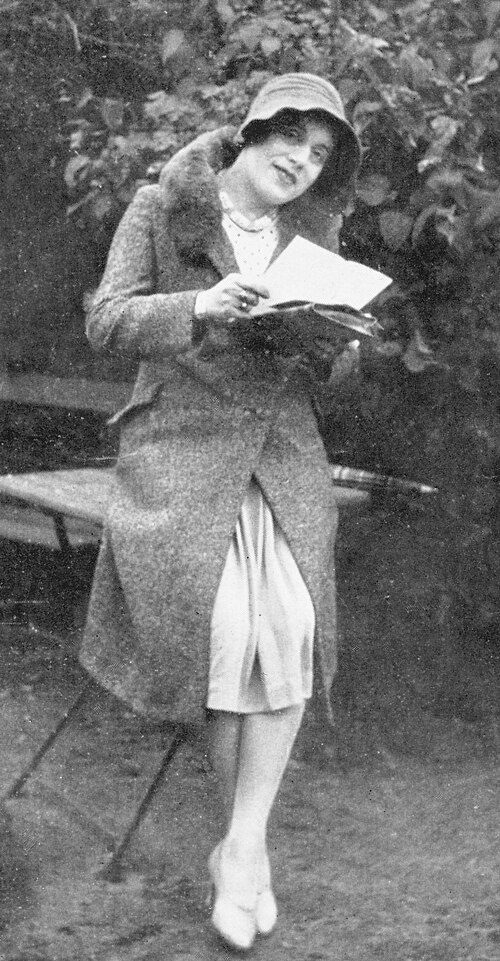
Near the end of summer, Gerda traveled to meet with Lili when she was discharged, going back to Berlin together. Lili found Berlin to be noisy and in stark contrast to peaceful Dresden, and internally struggled with how she ought to handle relationships from her lifetime as Einar. Right before Lili and Gerda returned to Denmark, Lili had a dream that Gerda would be happier with Fernando Porta, writing to him that Einar was dead and he should take care of the widowed Gerda.
Lili stayed with her older sister Christiane and her husband Thomas in suburban Copenhagen, while Gerda resided separately in town. During this period, Lili devoted herself to “freeing” Gerda from their previous marriage to allow Gerda to continue a free life. By October, Lili and Gerda were summoned to court by King Christian of Denmark, annulling their marriage.
After the annulment, Gerda left to meet with Fernando in Italy while Lili visited her brother Holger Wegener and sister-in-law Musse in her hometown of Vejle for a few weeks. Lili returned to Copenhagen and became even more introspective about herself and her legal rights to Einar’s legacy.
Love, Legacy, and the Final Operation
Despite Lili’s efforts, Gerda returned from Italy to Lili around the time Lili met Ernst Harthern, who would eventually publish Lili’s diaries after her death.
Although Lili wrote that Gerda wanted to marry Fernando “without delay,” Gerda still saw Lili as a lifelong partner. At times, Gerda and Lili went out as lesbian partners throughout their lives before the separation. Today, Gerda is understood as queer or bisexual despite her marriages to men. Before transitioning, Lili was closetly attracted to men but loved Gerda dearly.
Lili and Gerda hosted an exhibition of Einar’s paintings in Copenhagen, although this caused issues due to Lili’s lack of financial resources and inability to explain to the public what exactly had happened to Einar. Reluctantly, Lili agreed to a newspaper article regarding her transition – that article became viral around Europe and America, pushing Lili into a celebrity spotlight in March 1931 as Gerda married Fernando in Italy.

Lili’s childhood friend, Claude Prévost, met with her in Copenhagen after traveling from Paris. During their reconciliation, Claude proposed marriage to Lili. Lili accepted, although she believed she needed the advice of Dr. Warnekros first.
Lili traveled to Dresden, asking Dr. Warnedros if he believed she was strong enough for another operation. Although Lili had told Claude she simply wanted Warnekros’s advice, she now sought surgery to have biological children.
Death and the Publication of Man into Woman
Warnedros determined Lili would undergo a fourth and fifth operation, a uterus transplant and creation of a vaginal canal. Lili wrote to Ernst to begin editing her diaries into a book.
However, the operation developed a severe infection due to a lack of immunosuppressant medication, and Lili’s body rejected the transplant. In the final three months of her life, Lili purposely did not tell Gerda or Claude of the operation to prevent causing them stress.
When I myself am no longer here, I want my sad book of love to be my legacy, a testimony that I once lived. I imagine that this book will be read, read as few books are, by all who are unhappy in love, into whose hands it shall fall year after year, and I feel as if I could shake them all by the hand. And I have such an unspeakable longing; it is in fact the only longing that I have, to say farewell to all—oh, none can realize what ultimate peace this would be for me.
On September 13th, 1931, Lili died from cardiac arrest with the company of her brother Holger at Dresden. As her final wish, Lili was buried in Trinity Cemetery near Staatliche Frauenklinik.

Lili’s story is known due to Ernst’s publication of her diaries, “Fra Mand til Kvinde” or “Man Into Woman.” Ernst originally published the diaries in Danish in 1931, later translating them into their UK and US versions by 1933.

All of her Dresden medical documents were destroyed during an Allied bombing, and very little of the Hirschfeld Institute of Sexual Science survived targeted anti-transgender Nazi attacks.
Was Lili Elbe Intersex? Historical Debate and Lost Evidence
It is theorized that Lili might have been intersex and possessed both testicles and ovaries. However, confirmation of this has been permanently lost due to the bombing of Dresden, which would have included that information.
Cultural Legacy and Controversy
In 2000, David Ebershoff wrote The Danish Girl, a fictionalized account of Lili’s life and transition. Ebershoff’s book takes liberties in exploring Lili’s life since there are major gaps before Lili initially met Warnekros in Paris and began her diaries.
The book became a bestseller and won several awards, leaving the fictional Lili’s fate as a mystery on whether she lives or dies.

Gail Mutrux and Neil LaBute produced the film version of Ebershoff’s book in 2015, which was a fairly rocky year for transgender visibility during the aftermath of Caitlyn Jenner’s coming out and lead-up to Donald Trump’s first presidential run.
The Danish Girl won Best Supporting Actress at the Academy Awards as well as other professional awards at the Alliance of Women Film Journalists, Apolo Awards, Costume Designers Guild, Critics’ Choice Movie Awards, Detroit Film Critics Society, Empire Awards, Hollywood Film Awards, New York Film Critics Online, Palm Springs International Film Festival, San Diego Film Critics Society, Satellite Awards, Screen Actors Guild Awards, Venice International Film Festival, and Women Film Critics Circle.
Despite its success with critics, The Danish Girl’s film adaptation wasn’t necessarily received well by LGBTQIA+ audiences. The film was written with many forced feminization tropes, depicting Lili less as authentically transgender and more as a crossdressing man.
Audiences have been critical of The Danish Girl’s use of cisgender actor Eddie Redmayne as Lili since it worsened the depiction of Lili as a crossdressing man.
Tobias Picker produced Lili Elbe in 2023, an opera based on Lili’s life and the Man into Woman diaries. Unlike The Danish Girl, Picker purposely cast a transgender performer to play Lili – making Lucia Lucas the first transgender person to play a star role in American opera.
Bibliography & Further Reading
Bauer, Heike. The Hirschfeld Archives: Violence, Death, and Modern Queer Culture. Temple University Press, 2017.
Beachy, Robert. Gay Berlin: Birthplace of a Modern Identity. Alfred A. Knopf, 2014.
Caughie, Pamela L., Sabine Meyer, Rebecca J. Parker, and Nikolaus Wasmoen, editors. Lili Elbe Digital Archive. Loyola University Chicago Libraries, 2019–. Lili Elbe Digital Archive, www.lilielbe.org.
Currah, Paisley. Sex Is as Sex Does: Governing Transgender Identity. New York University Press, 2022.
Dreger, Alice Domurat. Hermaphrodites and the Medical Invention of Sex. Harvard University Press, 1998.
Ebershoff, David. The Danish Girl. Viking, 2000.
Gill-Peterson, Jules. Histories of the Transgender Child. University of Minnesota Press, 2018.
GLAAD. Where We Are on TV Reports. GLAAD, various years, www.glaad.org.
Harthern, Ernst (Niels Hoyer, ed.). Man into Woman: An Authentic Record of a Change of Sex. Translated from the Danish, Blue Ribbon Books, 1933.
Hirschfeld, Magnus. The Transvestites: The Erotic Drive to Cross-Dress. 1910. Translated and edited by Michael A. Lombardi-Nash, Prometheus Books, 1991.
Marhoefer, Laurie. Sex and the Weimar Republic: German Homosexual Emancipation and the Rise of the Nazis. University of Toronto Press, 2015.
Meyer, Sabine. Wie Lili zu einem richtigen Mädchen wurde: Lili Elbe zur Einführung. Transcript Verlag, 2015.
Meyerowitz, Joanne. How Sex Changed: A History of Transsexuality in the United States. Harvard University Press, 2002.
Picker, Tobias, composer. Lili Elbe. 2023.
Serano, Julia. Whipping Girl: A Transsexual Woman on Sexism and the Scapegoating of Femininity. 2nd ed., Seal Press, 2016.
Skidmore, Emily. True Sex: The Lives of Trans Men at the Turn of the Twentieth Century. NYU Press, 2017.
United States Holocaust Memorial Museum. Holocaust Encyclopedia, www.ushmm.org.