Indigenous Americans have existed in North America for nearly 30,000 years, several millennia before the arrival of Europeans. Gender-expansive identities have prevailed throughout human history; the thousands of years before colonization were no exception. These are some of the most notable and well-documented examples of transgender identities before 1492.
An Author’s Note on Language
The term “two-spirit,” which is commonly used to reference gender-diverse Native Americans today, did not exist before 1990. All terms used to explain gender variance, such as transgender, are relatively modern. Even though terms like transgender and gay did not exist during this time period, the fundamental ideas behind transgender identity have always persisted.
For ease of understanding, modern terms such as transgender and two-spirit will be used in this article when applicable.
Why is there so little Native American transgender history?
Europe began physically writing history around 1500 BCE, often attributed to the ancient Greeks several thousands of years after the Sumerians invented writing in Mesopotamia. While writing was commonplace in Europe and Asia, it was not amongst African and Native American cultures that preferred oral storytelling to distribute accounts of history.
Oral storytelling is immensely powerful, but less able to survive centuries of persecution compared to the writing systems Europeans employed to chronicle events. As a result, Europe and Asia have better preserved histories of transgender identities – but that does not mean transgender people did not exist in the Americas before European arrival.
Want to know more about colonial attitudes towards transgender identities? Read this article.
Abridged List of Gender-Diverse Indigenous Identities
The following is a list of SOME terms used by Indigenous communities to describe transgender-related experiences. The list is not comprehensive.
| Nation | Term | Literal (Loose) Translation | Modern Equivalent-ish | Reference |
|---|---|---|---|---|
| Acoma | Kokwi’ma | Womaned | Transfeminine | NCAI |
| Aleut | Tayagigux’, Shupan | Woman transformed into a man | Transmasculine | NCAI |
| Ayagigux’ | Man transformed into a woman | Transfeminine | NCAI | |
| Arapaho | Haxu’xan | Rotten bone | Transfeminine | NCAI |
| Arikara | Kuxa’t | Transfeminine | NCAI | |
| Assiniboine | Winktan | Transfeminine | NCAI | |
| Atsegwi | Yaawa | Transfeminine | IHS | |
| Brumaiwi | Transmasculine | IHS | ||
| Bella Coola | Sx’ints | Hermaphrodite | Any | Lang |
| Blackfoot | Ninauh-oskitsi-pahpyaki, Saahkómaapi’aakííkoan | Manly-hearted-woman | Transmasculine | NCAI |
| A’yai-kik-ahsi, Aakíí’skassi | Acts like a woman | Transfeminine | NCAI | |
| Cherokee | Nudale asgaya | Different man | Transfeminine | NCAI |
| Nudale agehya | Different woman | Transmasculine | NCAI | |
| Asegi | Any | NCAI | ||
| Cheyenne | Heemaneh | Halfmen-halfwoman | Nonbinary | NCAI |
| He’eman | Transfeminine | NCAI | ||
| Hetaneman | Transmasculine | NCAI | ||
| Chickasaw, Choctaw | Hatukiklanna | Transfeminine | NCAI | |
| Hatukholba | Transmasculine | NCAI | ||
| Chumash | Agi, ‘Aqi | Transfeminine | NCAI | |
| Cocopa | Elha | Coward | Transfeminine | NCAI |
| Warrhameh | Transmasculine | NCAI | ||
| Cree | ᐃᐢᑵᐤ ᑲ ᓇᐯᐘᔭᐟ, Iskwêw ka-napêwayat | A woman who dresses as a man | Transmasuline | NCAI |
| ᓇᐯᐤ ᐃᐢᑵᐏᓭᐦᐅᐟ, Napêw iskwêwisêhot | A man who dresses as a woman | Transfeminine | NCAI | |
| ᐄᓇᐦᐲᑲᓱᐦᐟ, înahpîkasoht | A woman living as a man | Transmasuline | NCAI | |
| ᐊᔭᐦᑵᐤ, Ayahkwêw | A man living as a woman | Transfeminine | NCAI | |
| ᓈᐯᐦᑳᐣ, Napêhkân | One who lives as a man | Transmasuline | NCAI | |
| ᐃᐢᑵᐦᑳᐣ, Iskwêhkân | One who lives as a woman | Transfeminine | NCAI | |
| Crow | Batée | Transfeminine | NCAI | |
| Bote, Bate, Bade | Not man, not woman | Nonbinary | NCAI | |
| Dakota Sioux | Winkta | Transfeminine | NCAI | |
| Flathead Salish | Ma’kali, me’mi, tcin-mamalks | Dress as a woman | Transfeminine | NCAI |
| Gosiute | Tuvasa | Transfeminine | NCAI | |
| Gros Ventre | Athuth | Transfeminine | NCAI | |
| Hidatsa | Miati | Woman compelled | Transfeminine | NCAI |
| Hopi | Ho’va | Hermaphordite | Transfeminine | NCAI |
| Huchnom | Iwap kuti | Transfeminine | IHS | |
| Illinois | Ikoueta | Hunting women | Transfeminine | NCAI |
| Ickoue ne kioussa | Hunting women | Transmasuline | NCAI | |
| Inca | Quariwarmi | Transfeminine | IHS | |
| Ingalik | Nok’olhanxodeleane | Woman pretender | Transfeminine | NCAI |
| Chelxodeleane | Man pretender | Transmasuline | NCAI | |
| Inuit | Angakkug | UW | ||
| Aranu’tiq | Nonbinary | UW | ||
| Kippijuituq | Transfeminine | UW | ||
| Sipiniq | Intersex, Nonbinary | NCAI | ||
| Isleta Tiwa | Lhunide | Transfeminine | NCAI | |
| Juaneno | Kwit | Transfeminine | NCAI | |
| Kanaka Maoli | māhū | Nonbinary | Outright | |
| Karankawa | Monaguia | Transfeminine | NCAI | |
| Kawaiisu | Hu’yupǐz | Transfeminine | IHS | |
| Klamath | Tw!inna’ek | Nonbinary | NCAI | |
| Kootenai | Kupatke’tek | To imitate a woman | Transfeminine | IHS |
| Titqattek | Pretending to be a man | Transmasculine | IHS | |
| Kumeyaay | Warharmi | Transmasculine | NCAI | |
| Kuskokwim River | Aranaruaq | Woman-like | Transfeminine | NCAI |
| Angutnguaq | Man-like | Transmasculine | NCAI | |
| Kutenai | Kupatke’tek | To imitate a woman | Transfeminine | NCAI |
| Titqattek | To imitate a man | Transmasuline | NCAI | |
| Laguna | Kok’we’ma | Man-woman | Transfeminine | NCAI |
| Lakota Sioux | wíŋkte | Wants to be like a woman | Transfeminine | NCAI |
| Bloka egla wa ke | Thinks she can act like a man | Transmasuline | NCAI | |
| Lassik | Murfidai | Hermaphordite | Any | Lang |
| Luiseno | Cuit, Uluqui | Transfeminine | NCAI | |
| Maidu | Suku | Dog | Nonbinary | IHS |
| Osa’pu | Woman | Transfeminine | IHS | |
| Mandan | Mihdacka | Woman | Transfeminine | NCAI |
| Maricopa | Ilyaxai’, yesa’an | Girlish | Transfeminine | NCAI |
| Kwiraxame | Girlish | Transmasuline | NCAI | |
| Mescalero Apache | Nde’isdzan | Man-woman | Transfeminine | NCAI |
| Métis | si kom di loo | Genderfluid | UW | |
| daañ li miljeu | Nonbinary | UW | ||
| Miami | Waupeengwoatar | The White Face | Any | Lang |
| Micmac | Geenumu gesallagee, ji’nmue’sm gesalatl | He loves men | Transfeminine | NCAI |
| Miwok | Osabu | Woman | Transfeminine | NCAI |
| Mojave | Alyha | Coward | Transfeminine | |
| Hwame | Coward | Transmasuline | ||
| Mono Western | Tai’up | Bachelors | Transfeminine | NCAI |
| Navajo | Nádleehi, Nádleeh, Dilbaa | One who is transformed | Any | PBS |
| Nevada | Tainna wa’ippe | Man-woman | Transfeminine | NCAI |
| Nuwuducka | Female hunter | Transmasuline | NCAI | |
| Nomlaki | Walusa, tohket | Hermaphrodite | Transfeminine | IHS |
| Nuxálk | Sx’ǐnts | Hermaphrodite | Transfeminine | IHS |
| Ojibwa | Ininiikaazo | One who endeavors to be like a man | Transmasuline | UW |
| Ikwekaazo | One who endeavors to be like a woman | Transfeminine | NCAI | |
| Agokwe, Agokwa | Man-woman | Transfeminine | NCAI | |
| Okitcitakwe | Warrior woman | Transmasuline | NCAI | |
| Omaha, Osage, Ponca | Mixu’ga | Moon instructed | Transfeminine | NCAI |
| Otoe, Kansa Kaw | Mixo’ge | Moon instructed | Transfeminine | NCAI |
| Papago, Pima | Wik’ovat | Like a girl | Transfeminine | NCAI |
| Paiute (Northern) | Tudayapi, tübas, moyo’ne, düba’s | Dress like other sex | Transfeminine | NCAI |
| Paiute (Southern) | Tuwasawuts, maipots, onobakö, töwahawöts | Dress like other sex | Transfeminine | NCAI |
| Patwin | Panaro bobum pi | He has two | Transfeminine | IHS |
| Pawnee | Ku’saat | Transfeminine | NCAI | |
| Piegan | Ake’skassi | Acts like a woman | Transfeminine | Lang |
| Pima | Wik’ovat | Like a girl | Transfeminine | Lang |
| Pomo | Das | Woman | Transfeminine | IHS |
| Tǃun | Transfeminine | IHS | ||
| Ponca | Mixu’ga | Hermaphrodite | Any | Lang |
| Potawatomi | M’netokwe | Supernatural | Transfeminine | NCAI |
| Promontory Point | Tubasa waip | Sterile woman | Transfeminine | NCAI |
| Waipu sungwe | Woman-half | Transmasuline | NCAI | |
| Quinault | Keknatsa´nxwixw | Part woman | Transfeminine | IHS |
| Tawkxwa´nsixw | Man-acting | Transmasuline | IHS | |
| Salinan | Coya | Gem | Transfeminine | NCAI |
| Sanpoil | St’a´mia | Hermaphrodite | Transfeminine | IHS |
| Sauk, Fox | I-coo-coo-a | Man-woman | Transfeminine | NCAI |
| Shastas | Gitukuwahi | Any | Lang | |
| Shoshone | Tuva’sa | Sterile | Transfeminine | NCAI |
| Tubasa | Woman-half | Nonbinary | NCAI | |
| Waipu sungwe | Woman-half | Transmasculine | NCAI | |
| Taíno | Guevedoche | Testes at 12 | Intersex | PBS |
| Takelma | Xa’wisa | Transfeminine | NCAI | |
| Tenino | Waxlha | Transfeminine | IHS | |
| Tewa | Kwido | Nonbinary | NCAI | |
| Tiwa | Lhunide | Transfeminine | IHS | |
| Tlingit | Gatxan | Coward | Transfeminine | IHS |
| Wⁿcitc | Boy whose sex changes at birth | Intersex | IHS | |
| Tsimshian | Kanâ’ts’ orMa̱hana̱’a̱x | Effeminate man | Transfeminine | IHS |
| Mi’yuuta | Mannish woman | Transmasculine | IHS | |
| Tübatulabal | Huiy | Transfeminine | IHS | |
| Ute | Tuwasawits | Man-woman | Transfeminine | NCAI |
| Wailaki | Clele | Transfeminine | NCAI | |
| Wappo | Wós | Transfeminine | NCAI | |
| Winnebago Ho-Chunk | Shiange | Unmanly man | Transfeminine | NCAI |
| Wishram | Ik!e’laskait | Transfeminine | NCAI | |
| Yana | Lô´ya | Transfeminine | IHS | |
| Yokuts | Tonoo’tcim, Lokowitnono, Tongochim, Tai’yap | Undertaker | Transfeminine | IHS |
| Yuki | I-wa-musp, iwap-naip | Man-woman | Any | Lang |
| Yuma Quechan | Elxa’ | Coward | Transfeminine | NCAI |
| Kwe’rhame | Coward | Transmasculine | NCAI | |
| Yup’ik | Aranu’tiq | Man-woman | Transfeminine | NCAI |
| Anasik | Different, distinct person | Transfeminine | NCAI | |
| Uktasik | Man-like | Transmasculine | NCAI | |
| Yurok | Wergern | Transfeminine | IHS | |
| Zapotec | Muxe | Transfeminine | PBS | |
| Zuni | Lhamana | Behave like a woman | Transfeminine | PBS |
| Katotse | Boy-girl | Transmasculine | NCAI |
Prefer to see your data visualized? This map, hosted on PBS, charts some notable gender-diverse identities across the world.
As of 2025, there are 574 federally recognized tribes in the United States, and thus, they are considered self-sovereign by the Bureau of Indian Affairs. This does not account for the massive loss of Indigenous life due to the arrival of Europeans and colonists, which accounts for approximately 96% of the total population dying from disease, warfare, displacement, and famine.
Each nation has an extensive history and layered culture, similar to the diversity of European countries abroad. Thousands of words identify and label individuals under the two-spirit umbrella.
The Arctic Circle
Northern Canada and Alaska are home to the Inuit, Yupik/Yupiit, and Aleut/Unangan peoples along the North Pole. Due to the harsh climate, Arctic communities rely on either hunting or fishing along the coast. All of these nations had language to identify trans-related experiences.
Compared to the binary mindset that Europeans held about gender, nations surrounding the Arctic Circle disagreed and believed gender to be expansive. In 2018, Meghan Walley of Memorial University elaborated, “Inuit gender is traditionally fluid and does not fit neatly into a binary framework. While complementary gender roles did exist, the extent to which they are based on biological sex remains unclear. Furthermore, mediatory spaces between these roles allowed people to transgress gender categories, swap roles, and assume a mixture of responsibility within their communities.”
The Inuit Nation used terms such as angakkug, aranu’tiq, kippijuituq, and sipiniq to describe gender-diverse identities. Similar to many other Indigenous Americans, Arctic nations believed in a more fluid gender system than the male-female binary: “…Aboriginal (First Nations, Metis, and Inuit or Indigenous) tribes, prior to colonization, maintained the belief in more than two genders, and that some Nations even identified up to six different gender categories… In most of the cases, such individuals were held in high esteem, being seen as having been given a gift from the Creator” (Meyercook & Labelle).
The First Woman: Uumarnituq and Aakulujjuusi of the Inuit
Knud Rasmussen recorded the Inuit story of Uumarnituq and Aakulujjuusi in 1929, a piece of folklore passed down through countless generations to explain gender and childbirth in Inuit communities. Rasmussen’s version is just one of many different retellings, so remember there are hundreds of variations.
After creating the land, sky, sea, and creatures of the world, the gods created the first two human men – Aakulujjuusi and Uumarnituq. These two men lived on a beautiful island, but they grew lonely over time as they saw bountiful populations of birds, fish, and animals.
Aakulujjuusi and Uumarnituq desired the company of other humans and wanted to have children, and they desired each other’s intimate company. Following the example of nature’s animals, Aakulujjuusi and Uumarnituq had sex. By some miracle, Uumarnituq became pregnant despite both he and Aakulujjuusi being cisgender men.
As Uumarnituq’s pregnancy continued, it became clear to him and Aakulujjuusi that Uumarnituq would be in trouble when it was time to give birth. Uumarnituq lacked the natal equipment to give birth to their child, and neither of the men knew of modern C-section techniques. However, Aakulujjuusi knew of a spell that he chanted at night, changing Uumarnituq from a man into a woman. Aakulujjuusi sang his irinaliuti, or magic song, “A human being here, a penis here. May its opening be wide and roomy. Opening, opening, opening!”Through those words, the man’s penis split open, and their son was born as the new family embraced in the light of day. In that moment of crisis, Uumarnituq became Earth’s first woman, and Aakulujjuusi discovered the magic power of irinaliuti (Bernard Saladin d’Anglure).
Gender Amongst the Yupik: The Strange Man and His Whale
The Yupik people of St. Lawrence Island have a similar story, titled “The Strange Man and His Whale,” which was documented by Grace Slwooko in 1979.
Within the region where the Yupik lived, between Alaska and Siberia, there was great consideration for people who expressed gender beyond their birth assignment. “When a man with a mustache is dressed like a woman, we (the Yupik) are careful not to make fun of him as instructed by our elders. The elders would say that such people were protected by the Maker of All. So to laugh at him would bring a curse to the thoughtless ones.”
Yupik families, similar to Inuit communities, with an unbalanced sex ratio of children (ex. four sons, zero daughters), were required to raise at least one of the children as the opposite sex until puberty. Upon puberty, the child could either assimilate into their sex assigned at birth or become a shaman.
There was a man who was the eldest of four brothers, raised as a girl, but continued to identify as a woman into adulthood past the point of puberty. The youngest of his brothers became frustrated that he and his other brothers had to share the meat collected from hunting. In their community, only men hunted – but if a man intentionally shirked his duties, he would not get a share of the community’s bounty. If he repeatedly shirked his duties, he would be expelled from the community entirely.
The youngest brother did not think his eldest brother deserved his portion of meat, since the communal rule states he must hunt with the men to be included, despite how the eldest brother performs tasks with the women of the community, such as sewing, cooking, and processing hides. So, violating the shamanic tradition regarding gender-expansive individuals, the youngest brother tried to persuade the other brothers to force their eldest brother to hunt.
When the eldest brother found out, his heart was broken. He went to the shore alone and cried and cried because his brothers had hurt his feelings.
After some time, the voice of the Maker of All gently asked the man as he cried, “Why is the woman crying?”
“My brothers complained about me not being out on the ice and sea with them at the hunts,” the man sobbed as he poured out his grief. “I am unable to go. I can’t! I can’t! I’m like a woman. How can I when I’m made like this?”
The Maker of All thought for a moment and then answered, “All right. I’ll see to it that you’ll get something.”
The eldest brother took comfort in this, returning home. It was not long before the man began to feel he was getting bigger in the stomach like a pregnant woman. His belly got bigger, and that frightened him terribly – how could the baby be delivered?
The Maker of All found the eldest brother crying again, and so it asked, “Why is the woman crying again?”
“If I’m going to have a baby, how is it going to be delivered?” the man asked.
“You go down to the sea and bury your face in your sleeves,” the voice instructed. “Rest there on the sea. You will not sink.”
The eldest brother hurried back to the shore, getting into the sea and burying his face in the sleeves of his coat. He floated, he cried, and somehow, a little whale was born.
The Maker of All solved the eldest brother’s problem in a way best suited for his special circumstance. Although he will continue to have a man’s body, he can affirm his feminine nature and perform women’s duties – and the baby whale will be a lure for his brothers to provide other whales and meat to the community. Thus, the eldest brother will not have to be hurt but will still be a boon to his community.
The eldest brother picked up the tiny whale and took it home. He loved it so dearly that he carved a wooden bowl and put water for it to swim in, but it was getting big fast and frequently needed larger bowls. When the whale became too big to keep at home, the eldest brother took his whale son to sea. When the whale son grew up, the eldest brother took a marker and dotted him with red spots to ensure the hunters knew not to harm his son.
The whale son loved to swim, sometimes going as far as the horizon. When the son returned, he would bring another whale that the eldest brother’s siblings would kill. He brought home many whales that created so much meat that the brothers became rich. The community was never short of meat, oil, or bones.
But one day, the whale son did not return home. The eldest brother waited and waited upon the shore, worried for his son. Days passed, but his son did not return. Becoming filled with grief, the eldest son buried his face in his sleeve and cried.
And like the times before, the voice of the Maker of All sounded, asking why the woman was crying. When the eldest brother explained, the Maker of All said, “You go out to the sea in your coat as you always do until you stop, but you will still be moving.”
The eldest brother did as he was told. He floated along the ocean, but did not see where he was going. When he finally stopped moving, the eldest brother looked up to find himself in a strange place – an entirely different village than the one he was from!
He approached the shore, seeing a tragedy as he walked up to the beach. The marked head of his son lay there, killed! But it was just his son’s head, and the eldest brother searched in vain to find his son’s body.
From afar, the eldest brother could see a village, so he followed the path to a house. He found a group of people telling stories to celebrate the great catch they had, humbly welcoming the eldest brother and asking him to tell them a story. The eldest brother told the story of how he had birthed and raised his whale son, who had been killed once he became too ambitious and swam too far from home. But when the village did not understand the eldest brother’s story, he left in tears – they had broken a sacred rule by killing an animal marked distinctively. After the eldest brother had left, a terrible thing began to happen to the hunters who had killed the whale son. They began to sweat and sweat. Horrified, the hunters looked at each other and found themselves getting smaller and smaller until they all turned to liquid (Bernard Saladin d’Anglure).
The Subarctic
South of the northernmost Arctic Circle, hundreds of tribes have called the subarctic region home throughout Alaska and Canada. Like the Inuit, Aleut, and Yupik to the north, subarctic nations were made of tough stuff to thrive in extreme conditions.
Subarctic cultures physically recorded a large amount of their stories, similar to Arctic tribes. Within Cree mythology, Wîsahkêcâhk was a hero and trickster used to explain nature. Wîsahkêcâhk was neither man nor woman. Oral tradition purposely depicted them as ambiguous and fluid – although Wîsahkêcâhk is usually assigned a (male) binary gender when the stories are documented in English.
Mandelbaum and The Plains Cree
Cree communities use a range of dialects within the Cree language, which descends from the Algonquian group. The Cree dialects have a large variety of words to discuss gender diversity, documented as early as the 1800s and compiled by David G. Mandelbaum in his 1940 work The Plains Cree. Unlike English and other European languages, Cree does not use gendered third-person pronouns like “he” or “she.” In reality, the Cree had many words to describe gender-diverse individuals like ᐃᐢᑵᐤ ᑲ ᓇᐯᐘᔭᐟ/Iskwêw ka-napêwayat, ᓇᐯᐤ ᐃᐢᑵᐏᓭᐦᐅᐟ/Napêw iskwêwisêhot, ᐄᓇᐦᐲᑲᓱᐦᐟ/înahpîkasoht, ᐊᔭᐦᑵᐤ/Ayahkwêw, ᓈᐯᐦᑳᐣ/Napêhkân, and ᐃᐢᑵᐦᑳᐣ/Iskwêhkân (Kai Pyle 2018, 2021).
While documenting his time with a Cree tribe, Mandelbaum wrote, “Berdarches usually became noted shaman. When asked whether he knew of any transvestite, Fine-Day [who Mandelbaum was interviewing] said, ‘They were called a·yahkwew. It happened very seldom. But one of them was my own relative. He was a very great doctor. When he talked his voice was like a man’s and he looked like a man. But he always stayed among the women and dressed like them… When he was finished [doctoring his brother], he said ‘I will have another name now. They will call me pîyêsiwiskwêw, Thunder-Woman…’ He wanted to be called pîyêsiwiskwêw because Thunder is a name for a man and iskwêw is a woman’s name; half and half just like he was.’”
Author’s Note: “Berdache” is considered an outdated and offensive term, originally used by European colonizers to describe various third-gender roles they saw in Indigenous American cultures.
Ozaawindib, Two-Spirit Chief of the Ojibwa
Ozaawindib (also known as Yellow Head) of the Ojibwa was described as agokwa or aayaakwe, the local terms for individuals who identified as female despite being assigned male at birth. Ozaawindib’s life was largely documented by John Tanner, who was captured during an Ojibwa ambush at age nine:
“Some time in the course of this winter, there came to our lodge one of the sons of the celebrated Ojibbeway chief, called Wesh-ko- bug, (the sweet,) who lived at Leech Lake. This man was one of those who make themselves women, and are called women by the Indians. There are several of this sort among most, if not all the Indian tribes. They are commonly called A-go-kwa, a word which is expressive of their condition. This creature, called Ozaw-wen-dib, (the yellow head,) was now near fifty years old, and had lived with many husbands. I do not know whether she had seen me, or only heard of me, but she soon let me know she had come a long distance to see me, and with the hope of living with me.”
Near the end of her life, Ozaawindib was given a medal by the United States government to declare her a prominent chief for negotiations. Given her immense contact with Europeans, Ozaawindib and her identity are well-documented – although many historians disconnect Ozaawindib from her gender diverse identity (Kai Pyle).
The Southeastern Woodlands
Several dozen tribes reside within the Southeastern Woodlands, which is loosely defined as the entirety of the modern Southeast. In contrast to other ethnographic classifications, Southeastern Woodland cultures share a high proportion of cultural traits with other regions. The most notable tribes include the Cherokee, Chickasaw, Creek, and Seminole.
Cherokee, Asegi Udanto, Strange
Asegi udanto was the Cherokee term for all individuals who fell outside the gender binary, literally translating to “strange.” Within Southeastern Woodland tribes, gender played an important part in established societal roles – but gender wasn’t a rigid assignment strictly determined by one’s birth (Qwo-Li Driskill).
An unpublished manuscript from a traveler in 1825 establishes the Southeastern Woodlands as incredibly gender diverse despite historical manipulation by European writers. Immediately after an encounter with local Cherokee people, they wrote, “There were among them formerly, men who assumed the dress and performed all the duties of women and who lived their whole life in this manner” (Gregory D. Smithers). Despite the writer being unknown, their records resemble similar instances dating back to the 16th century.
“We must understand that within dominant European worldviews all Cherokees were characterized as gender-nonconforming and sexually deviant. Early records from European men make this characterization numerous times, emphasizing and Otherizing Cherokee women’s sexual and social power and autonomy. Cherokee culture became characterized as one in which all Cherokees behaved in ways Europeans thought only men should behave, and, because of this, Cherokee men feminized” (Qwo-Li Driskill).
In Subject Matter: Technology, the Body, and Science on the Anglo-American Frontier, Joyce Chaplin wrote expansively on America before the Revolution. Southeastern Woodland Native Americans, such as the Cherokee, were described as “human genital monstrosities” since they failed to conform to traditional sexuality standards upheld in European cultures. Europeans were cruel upon contact with Native Americans. This resentment against gender diversity was evident in nearly all records of contact.
The Stomp Dance
Many Southeastern tribes, such as the Cherokee, Creek, and Seminole, participated in the Green Corn or Stomp Dance – the ceremony had structured roles assigned by gender and still takes place today in remote locales.
In an interview with a modern Two-Spirit activist, Brian Joseph Gilley writes, “Most men assume that taking on the female role of shaking shells at the stomp grounds would be met with considerable disapproval. However, at Two-Spirit stomp dances, the men are offered an opportunity to change their ceremonial roles.”
The Great Plains
Native American tribes within the Great Plains resided between the Mississippi River and the Rocky Mountains and are regarded as the most “represented” group within popular culture. Most Native stereotypes, such as feathered bonnets, tipis, and horse riding, are distinct aspects of Plains cultures and not universal to other regions.
Nih’a’ca of the Arapaho
According to Arapaho lore, Nih’a’ca was the first two-spirit individual and employed as a teaching tool as a sage, mediator, and trickster. Despite being haxu’xan, Nih’a’ca is a complex person and portrayed as both selfish and kind. There are hundreds of Nih’a’ca tales, which usually incorporate their gender identity as a small part of the story.
One morning, Nih’a’ca was bored with their boring life, living with their wife and children. They approached their wife and asked, “Are there any attractive young men seeking courtship?”
Nih’a’ca’s wife, who was used to their trouble-making, answered, “Yes, there is one. His name is Panther-Young-Man.”
Nih’a’ca smiled, dressed themselves as a woman, and went out for water. The Panther saw Nih’a’ca, who smiled at him. The Panther asked Nih’a’ca to marry him, and Nih’a’ca agreed. Soon after, Nih’a’ca moved out of their wife and children’s home to live with the Panther.
The next day, Nih’a’ca sent the Panther out to hunt. While he was away, Nih’a’ca went to the prairie and approached a rabbit. Nih’a’ca told the rabbit, “I want you for my child. I will keep you and give you food and water.”
The rabbit consented, so Nih’a’ca put the rabbit under their dress and took it home. When the Panther came home after a few days, Nih’a’ca said to him, “We are going to have a child.”
This made the Panther happy, so he left to go hunting again. But the rabbit grew fat, and Nih’a’ca became tired of caring for it. Feeding and giving the rabbit drink was a lot of work! Nih’a’ca decided it was time to birth their child, wrapping the rabbit up and laying it on their bed. When the Panther returned home, Nih’a’ca showed the Panther the rabbit, “We have had a child born to us.”
“Is it a boy or a girl?” asked the Panther, frowning in confusion. “It is very strange in appearance.”
“A boy. It looks like a rabbit, it is very fat,” replied Nih’a’ca.
“It is well,” nodded the Panther. The Panther told Nih’a’ca that he was going to hunt again, leaving the tent. But before the Panther had gotten far, he changed his mind and went back to the tent. He saw another man go inside his tent to speak with Nih’a’ca! Quietly, the Panther drew closer to the tent to listen.
“It is very strange. You have been married for only a short time and have a child already. How can that be?” The Panther heard the man ask Nih’a’ca.
“This is how it is. This is how I gave birth to a child,” answered Nih’a’ca. The Panther heard fabric rustle and believed his wife was showing herself to this other man. The Panther stormed into the tent and saw Nih’a’ca with their dress open to the other man.“Leave! The woods and brush will be where you live!” the Panther shouted at Nih’a’ca, pointing at the door. The Panther turned to the rabbit and said, “You are too fat! You shall have no fat, except on your kidneys and on your back behind the shoulders. You will run fast and leap and live on the prairie” (George A. Dorsey).
Osh-Tisch the Badé
Crow tribes recognized badé (also called baté or bóté), individuals assigned male at birth who fulfilled feminine and two–spirit gender roles in their communities. Badé were similar to roles in other Plains cultures, such as the Cheyenne he’eman and he’emane’o and Lakota wíŋkte.
The most notable badé was Osh-Tisch (“Find Them and Kills Them”), who fought alongside the United States military against the Lakota and Cheyenne in the Great Sioux War of 1876.
“For some unexplainable reason Osh Tisch assumed the role of a warrior for a day in the summer of 1876. General George Crook sent some runners to the Crow Agency to recruit scouts for his campaign against the Lakotas and Cheyennes. One hundred and seventy-five warriors signed up for the fight against their traditional enemies.
“In the crowd of men, which included the war leader Plenty Coup, there were two remarkable women characters: Osh Tishch and The Other Magpie… Pretty Shield saw the Crow scouts leave the village to join General Crook’s blue-coat soldiers and described how Finds Them and Kills Them ‘looked like a man, and yet she wore woman’s clothes; and she had the heart of a woman. Besides, she did a woman’s work. She was not a man, and not yet a woman.’ While recognizing the special nature of the batée, Pretty Shield respected the womanly side of Finds Them and Kills Them by always referring to ‘her’ with feminine pronouns…
“Finds Them and Kills Them, who earned her name from the brave role she played in the Rosebud fight, would live on during the reservation era, subject to harassment from Indian agents and missionaries because of the life she had chosen so many years earlier” (Joseph Agonito).

The Great Basin
The Rocky Mountains were home to Great Basin nations such as the Paiute, Shoshone, and Ute. Native Americans created communities within the Rocky Mountains’ deserts and mountain systems as far north as Oregon and Montana and as far south as Arizona and California.
To Imitate and Be Tudayapi
Both Northern and Southern Paiute nations identified tudayapi individuals when communicating with European ethnographers, literally translating to “dress like or imitate the other sex.” Like most two-spirit designations, tudayapi were well-respected and fulfilled spiritual roles to serve their communities.
In 1930, anthropologist Julian Steward wrote his own interpretation, “Berdachism is called [tudayapi], ‘dress like other sex.’ One such man dressed like a woman, associated with females, and did woman’s work, washing for the white people, and did not marry; but he had no other abnormality. A young boy dressed like a girl, went to a girls’ dormitory in a Nevada school, was put into the boys’ dormitory, then put out of school, married a boy who was granted a divorce when the judge learned the facts.”
Tainna Wa’ippe of the Basin
Shoshone tribes understood gender as more than a simple male-female binary. Unlike the Paiute, who associated gender-nonconforming behaviors with folks assigned male at birth, the Shoshone grouped all gender diverse people as tainna wa’ippe regardless of biological sex.
Tainna wa’ippe directly translates to “man-woman,” further separated into three subcategories:
- Taikwahni tainnapa was associated with individuals assigned male at birth and identified as female, similar to transgender women today in mainstream culture.
- Taikwahni wa’ippena refers to individuals assigned female at birth and identified as male, like transgender men.
- Taikwahni, on its own, referred to intersex or agender individuals and could be applied to anyone, no matter biological sex.
Gender within the Shoshone nation throughout colonization helps visualize the deterioration of gender diversity throughout the Americas. Until contact with American explorers and Mormon missionaries, the Shoshone held strongly to their ancestral beliefs.
By 1866, miners had overtaken Shoshone territory in pursuit of gold. The Shoshone had peaceful relations with the mining towns, leading to their assimilation into mainstream American culture. However, this assimilation warped traditional views on gender since the term tainna wa’ippe was replaced with berdache.
The five Shoshone genders became four (male, female, male berdache, and female berdache), and gender-nonconforming identities would be incredibly stigmatized for the next century when the Native American Gay and Lesbian Gathering would recite pride.
The Northwest Plateau
The coastal mountain region, spanning Washington, northern Oregon, Idaho, Montana, and southern British Columbia, is home to the Northwest Plateau peoples. Due to their similar cultures and ecosystems, Plateau Native Americans are often grouped with Great Basin tribes.
Wyakin on the Plateau
The Niimíipuu or Nez Perce recited multiple oral traditions to Western explorers regarding genderfluid spirits and two-spirit dream-vision figures.
Lucullus Virgil McWhorter documented the Nez Perce War through Yellow Wolf, one of its last survivors. Yellow Wolf was not two-spirit himself, but his Niimíipuu upbringing influenced how he understood spirituality. Throughout the account, Yellow Wolf frequently spoke of his wyakin – a genderfluid guardian spirit that appeared to him in a vision.
“Wyakin is a generic term; it may be a single force, or it may embrace a combination of mythic forces acting in unison. It is a grave error to confuse this medium of the supernatural with God or Deity outright, as some writers have done. On this score, Many Wounds, who had a profound knowledge of his native religion, and who had, moreover, once taught a Methodist Bible class, wrote in reply to an inquiry: ‘It is this way. You have faith, and ask maybe some saint to help with something where you probably are stalled. It is the same way climbing a mountain. You ask Wyakin to help you’” (Lucullus Virgil McWhorter).
The Niimíipuu wyakin resembles broader Plateau traditions that also utilize genderqueer spiritual figures in other nations. Further, the wyakin presents the likely assumption that Plateau cultures were accepting of gender-diverse identities, although they were rarely documented compared to the Plains.
Gone to the Spirits
Kaúxuma Núpika (“Gone to the Spirits”) lived during the early 1800s and is considered the most well-known two-spirit individual recorded among the Plateau nations. Although assigned female at birth, Kaúxuma returned home after leaving a slave marriage to a Canadian fur trader. He asserted that the Canadian had changed Kaúxuma’s biological sex, making him into a man.
After settling back with the Kutenai, Kaúxuma took a wife and served as a courier, guide, and prophet. Kaúxuma was remembered as respected, even after his death – although his identity was misinterpreted and condemned by Western accounts.
The Northwest Coast
Northwest Coast Native Americans inhabit a narrow strip of land along the Pacific coastline from Alaska to northern Oregon. Nations within this region are considered distinct from cultures within the Plateau or Basin, resembling California Native Americans despite their proximity.
Gatxan, Moving Between Realms
The term gatxan is associated with Tlingit culture, but appeared elsewhere along the Northwest Coast to refer to two-spirit individuals who fulfilled blended gender roles in their communities.
The term was oddly translated as “coward” when reported by non-Indigenous fieldworkers to chroniclers, presenting a negative connotation to the identity. Given the fact that most Native American cultures respected two-spirit members of their tribes, the negative translation is jarring (Federica de Laguna).
“When non-Indigenous outsiders asked Tlingit people about shamans and medicine people, they sometimes referred to a small group of people known as gatxans. Gatxans reportedly had fluid gender identities. Europeans knew them as ‘half-men, half-women.’ Tlingits reportedly believed that gatxans possessed spiritual powers and routinely reincarnated themselves. In some cases, gatxans engaged in ‘homosexual’ relationships, although the anthropological record tends to overstate this point. Very little oral or written evidence survives to illuminate how both Tlingits and colonizers viewed the gatxan during the late 1700s and early 1800s, but we have clues. Anthropologists provide one clue: a definition of gatxans as ‘cowards.’
“I’ve uncovered no historical evidence to suggest that Tlingit people viewed gatxans as cowards during the late 18th and early 19th centuries. That’s not surprising, given that the traders, soldiers, and scientists who interacted with the Tlingit weren’t focused on deep historical analysis of gender identities or sexual habits among Indigenous people. These outsiders had other objectives, specifically, making money by extracting resources and expanding trade networks” (Gregory D. Smithers).
As expressed by Smithers, it is suspected that the term gatxan was intentionally misinterpreted. Several Northwest Coast cultures, such as the Tlingit, were misinterpreted in this way to protect their oral tradition from outsiders.
According to Frederica De Laguna, gatxan were incorporated into Tlinglit creation myths. A woman had married the Sun, bringing a gatxan into the world as her eighth child. From that birth onward, gatxan were continually reincarnated in Tlingit families.
Modern Revival Amongst the Coastal Salish
Although the Coastal Salish has a steep history of two-spirit identity, that history was disconnected through the colonization and residential school process. As Sparrow explains, “Indigenous constructs of gender and sexuality were among those elements specifically targeted for destruction…The federal government viewed development of industrial schools as essential to promote assimilation and adoption of agricultural lifestyles in Indigenous communities, but it was Christian missionaries who recognized the advantage of isolating children from their parents and culture.”
“I have read stories about Indigenous children arriving at residential schools, and being automatically separated into male and female gender groupings. Two Spirit children were especially targeted by school administrators and groups according to biological sex, regardless of their non binary identities or roles in family and community. Their appearance, hair and clothing were altered to reflect European dualistic gender norms, and they were schools according to colonial expectations and gendered divisions of labour. I try to imagine what this experience must have been like for my late maternal grandparents, being so young, far away from parents and family, and forced to live under such a violent regime.
“My mother told me that my late grandfather was thrown down a flight of stairs as a boy by a minister at residential school, and that he broke his collar bone as a result. This act of horrific violence was inflicted on my grandfather for simply stealing apples to feed his younger brother at residential school… The affect of such violent acts of conformity, assimilation and cultural genocide against our little Two Spirit children in residential schools is visceral and intergenerational” (Corrina Sparrow).
While the residential school program was employed in greater force in Canada, similar initiatives to forcibly assimilate Native Americans were conducted across the continent. As a result, modern Native Americans cannot identify most of their ancestral history before colonization.
What makes the Coastal Salish unique is their attempts to revive the lost two-spirit culture in recent generations. During their research, Sparrow interviewed multiple Coastal Salish individuals regarding their two-spirit identities.
“Our friends and relatives in this research said that Two Spirit needs to be recognized as an authentic, Nation-based identity again. As Indigenous People, we need to find ways to incorporate Two Spirit identity, roles and responsibilities without ancestral knowledge, stories, language, ceremony, activities and protocols once more… Two Spirit identity is part of our collective Coast Salish identity. They are not separated. Two Spirit identity, gender and sexual fluidity have always been part of our Coast Salish knowledge and cultural history” (Corrina Sparrow).
California
Nations such as the Mojave, Washoe, and Pomo reside in California’s microenvironments, comprising coastline, redwood forests, valleys, deserts, and mountains. Compared to other cultural regions, California Native Americans were considered exceptionally politically stable and sedentary due to experiencing less conflict with their neighboring nations.
‘Aqi the Undertaker
The Chumash people of southern California identified ‘aqi as a structured gender role within their societies. These individuals were assigned male at birth but valued as a third gender distinct from traditional male or female assignments.
Chumash society was separated into specialized guilds based on trade upon contact with Europeans. It is hypothesized that ‘aqi were often grouped with the “Undertaker Guild” to serve as spirit guides and dig graves for the dead, a role that had once been stereotyped as feminine. The ‘aqi role declined due to the presence of Spanish missionaries, who employed Catholic burial programs to make ‘aqi burial ceremonies obsolete to the new religious order.
“Perhaps most profoundly, the institution of Catholic burial programs and designated mission cemeteries would have usurped the traditional responsibilities of the ‘aqi. The imposition of Catholic practices in combination with a tremendously high death rate among mission populations would have undoubtedly have contributed to the disintegration for the guild.
“It is hard to overstate the chaos and panic the loss of their undertakers must have produced for indigenous Californians. The journey to the afterlife was known to be a prescribed series of experiences with both male and female supernatural entities, and the ’aqi, with their male-female liminality, were the only people who could mediate these experiences” (Deborah Miranda).
The ‘aqi are one of the earliest recorded examples of nonbinary identity amongst California’s Indigenous population. In Archaeology of the ‘Aqi, Holliman proposes that ‘aqi even had fictive kinships similar to today’s system of chosen families, although the colonization of Christianity destroyed ancestral religious practices.
Mojave ‘Alyha and Hwame
Beyond traditional men and women, the Mojave designated two additional gender classifications. ‘Alyha referred to individuals assigned male at birth and completed female roles, while hwame were people assigned female at birth and tasked with male roles.In an interview with French ethnologist George Devereux, a Mojave elder stated, “From the very beginning of the world it was meant that there should be [transgender people], just as it was instituted that there should be shamen. They were intended for this purpose.” Despite what religious conservatives might argue, the Mojave aligned with the modern belief that transgender identities have existed as long as humanity has.
“The Mohave did not think something was seriously wrong with an individual wanting to be of the opposite sex. They did not think that that individual needed a cure or fix… Besides being thought of as mentally-ill, transgenders face religious persecution from those who believe that such individuals are “violating the will of God. Far from being accepted, transgenders in America often face segregation and exclusion. The alyha and hwame were accepted as is and incorporated into their society whereas today’s transgenders in America are often excluded and discriminated against” (Monica Kalmen).

Within Mojave society, two-spirit individuals were respected. ‘Alyha often married cisgender men in their communities and were sought out for healing and spiritual guidance, while hwame were tasked with hunting and warfare to the same standard as other men.
The Southwest
Over 20 percent of Native Americans reside in the American Southwest, spanning Arizona and New Mexico along the San Juan and Rio Grande. Southwest nations have remarkably interesting architecture that distinguishes them from similar cultures among the California nations.
We’wha, the Zuni Ambassador
Alongside the Plains nations, the Native Americans within the Southwest have the most extensive recorded history of two-spirit identities. The lhamana were individuals assigned male at birth in the Zuni tribes who performed female roles, but they often presented themselves in a blend of men’s and women’s clothing.
Gender-nonconforming behaviors are also recorded within Zuni legends, such as in the Destruction of Kia’nakwe. After being captured by Ku’yapäli’sa, Kor’kokshi (the firstborn God of War) was dressed in female attire “because he was so angry and unmanageable” (Matilda Coxe Stevenson). This legend is used to explain ko’thlama, Zuni individuals who permanently adopt female attire after a rite of passage.
The most famous lhamana was We’wha, who was part of a Zuni delegation to Washington DC to meet with President Grover Cleveland in 1886. We’wha served as a cultural ambassador and educator for Americans, and their life was documented by their friend Matilda Coxe Stevenson. Interestingly, We’wha used both male and female pronouns and switched based on their current occupation.
“Some declared him to be a hermaphrodite, but the writer gave no credence to the story, and continued to regard We’wha as a woman; and as he was always referred to by the tribe as ‘she’ – it being their custom to speak of men who don women’s dress as if they were women 0 and as the writer could never think of her faithful and devoted friend in any other light, she will continue to use the feminine gender when referring to We’wha” (Matilda Coxe Stevenson).
Without We’wha, we likely would not know much regarding historical Zuni two-spirit identities. While We’wha preferred weaving, she was adamant to note that lhamana performed strength-based work like hunting, and the use of both male and female pronouns was commonplace for all lhamana.

Nádleehi & the Diné
Diné (also known as Navajo) cultures recognized nádleehi, which literally translates as “one who changes.” Nádleehi was an identity often applied to individuals assigned male at birth with “a feminine nature,” allowing them to fulfill both male and female roles in their communities. While the majority of nádleehi were male at birth, some were assigned female or intersex at birth.
Nádleehi was a fluid gender role that allowed individuals to explore their identity as long as they contributed to their community. The Diné culture designates four gender categories: feminine woman, masculine woman, feminine man, and masculine man. Unlike other categories, the nádleehi was able to freely float between these roles.
Hosteen Klah was a Diné artist and medicine person during the 1800s, as well as a nádleehi practitioner. Similar to We’wha, Hosteen is considered significant to the documentation of two-spirit history in Diné culture due to their role in preserving Diné religion (Will Roscoe).
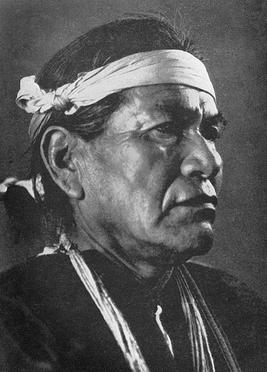

Hosteen was able to cement Diné history through the foundation of the Wheelwright Museum of the American Indian alongside Mary Cabot Wheelwright. Both Hosteen and Mary were concerned about the gradual erosion of Diné religion due to harsh assimilation tactics employed by missionaries and the United States government. Later in life, Hosteen demonstrated traditional art at exhibitions, such as the Century of Progress Exposition attended by President Franklin D. Roosevelt (Marc Stein).
Bibliography & Further Reading
DISCLAIMER: While the links below work at the time this article was originally published, they may not last forever – especially when government officials intentionally purge official-reviewed research and censor mainstream media.
Agonito, Joseph. American Indian Women: Telling Their Lives. University of Nebraska Press, 1995.
American Indian Conservancy. “Ojibwe Gender Roles and Oral History.” University of Minnesota Conservancy.
https://conservancy.umn.edu/server/api/core/bitstreams/26ddca47-fbf1-4b35-891c-3c2218644cc4/content
American Indian Health Service. Two-Spirit History and Identity. U.S. Department of Health & Human Services.
https://www.ihs.gov/sites/lgbt/themes/responsive2017/display_objects/documents/lgbttwospirithistory.pdf
Anglure, Bernard Saladin d’. Inuit Stories of Being and Rebirth: Gender, Shamanism, and the Third Sex. University of Chicago Press, 2006.
https://transreads.org/wp-content/uploads/2021/07/2021-07-23_60fa0ef1b4064_InuitStoriesofBeingandRebirthGenderShamanismandtheThirdSexbyDAnglureBernardSaladinz-lib.org_.pdf
Bierhorst, John (ed.). The Mythology of North America. Oxford University Press, 2002.
Britannica, Encyclopaedia.
“Arapaho.”
“Cree.”
“Indigenous Peoples of California.”
“Indigenous Peoples of the Great Plains.”
“Indigenous Peoples of the American Southwest.”
“Mojave.”
“Plateau Indian.”
“Tlingit.”
https://www.britannica.com
Devereux, George. “Institutionalized Homosexuality of the Mohave Indians.” Human Biology, 1937.
https://psycnet.apa.org/record/1938-02533-001
Dorsey, George A. The Cheyenne. Field Columbian Museum, 1905.
Driskill, Qwo-Li. Asegi Stories: Cherokee Queer and Two-Spirit Memory. University of Arizona Press, 2016.
Driskill, Qwo-Li. “Doubleweaving Two-Spirit Critiques.” GLQ: A Journal of Lesbian and Gay Studies, vol. 16, no. 1–2, 2010.
Erdoes, Richard, and Alfonso Ortiz (Tewa). American Indian Myths and Legends. Pantheon Books, 1984.
Gilley, Brian Joseph. Becoming Two-Spirit: Gay Identity and Social Acceptance in Indian Country. University of Nebraska Press, 2006.
https://transreads.org/wp-content/uploads/2022/01/2022-01-13_61e06e72ab1b0_BecomingTwo-SpiritGayIdentityandSocialAcceptanceinIndianCountrybyBrianJosephGilleyz-lib.org_.pdf
Kalman, Monica. “Transgender Roles in Mojave Society.” Journal of Homosexuality, 1997.
Kroeber, Alfred L. Handbook of the Indians of California. Bureau of American Ethnology Bulletin 78, 1925.
https://archive.org/details/handbookofindian00kroe
Laguna, Frederica de. Under Mount Saint Elias: The History and Culture of the Yakutat Tlingit. Smithsonian Institution Press, 1972.
Lang, Sabine. Men as Women, Women as Men: Changing Gender in Native American Cultures. University of Texas Press, 1998.
Mandelbaum, David G. The Plains Cree. American Museum of Natural History, 1940.
https://archive.org/details/plainscreeethnog0000mand
McWhorter, Lucullus Virgil. Yellow Wolf: His Own Story. Caxton Printers, 1940.
https://archive.org/stream/yellowwolfhisown002070mbp/yellowwolfhisown002070mbp_djvu.txt
Medicine, Beatrice. “Changing Native American Gender Roles.” Human Organization, vol. 38, no. 3, 1979.
Miranda, Deborah A. “Extermination of the Joyas: Gendercide in Spanish California.”
https://lgbtqreligiousarchives.org/media/page/teaching-resources/queering-the-spirit-course/Deborah%20Miranda,%20Extermination%20of%20the%20Joyas.pdf
Miranda, Deborah A. Bad Indians: A Tribal Memoir. Heyday Books, 2013.
National Congress of American Indians. Two Spirit People: History, Identity, and Contemporary Issues.
https://archive.ncai.org/policy-research-center/initiatives/Pruden-Edmo_TwoSpiritPeople.pdf
National Park Service. “Native American Heritage and Archaeology.”
https://www.nps.gov/articles/000/archeology-this-month-native-american-heritage.htm
PBS Independent Lens. Two Spirits.
https://www.pbs.org/independentlens/content/two-spirits_map-html/
Pyle, Kai. “Naming and Claiming: Recovering Ojibwe and Plains Cree Gender Systems.” Transgender Studies Quarterly, vol. 5, no. 4, 2018.
https://read.dukeupress.edu/tsq/article-abstract/5/4/574/136483
Rasmussen, Knud. Intellectual Culture of the Iglulik Eskimos. Gyldendal, 1929.
https://archive.org/details/intellectualcult00rasm
Roscoe, Will. Changing Ones: Third and Fourth Genders in Native North America. St. Martin’s Press, 1998.
Roscoe, Will. “Living the Tradition: Gay American Indians.” Journal of Homosexuality, 1987.
Smithers, Gregory D. Reclaiming Two-Spirits: Sexuality, Spiritual Renewal, and Sovereignty in Native America. Beacon Press, 2014.
Stevenson, Matilda Coxe. The Zuni Indians: Their Mythology, Esoteric Fraternities, and Ceremonies. Smithsonian Institution, 1904.
https://archive.org/details/thezueniindians00stevrich/
Swanton, John R. Social Condition, Beliefs, and Linguistic Relationship of the Tlingit Indians. Bureau of American Ethnology, 1908.
https://archive.org/details/socialcondition00swanrich
Tanner, John. A Narrative of the Captivity and Adventures of John Tanner. 1830.
https://ojibwegrammar.langsci.wisc.edu/Assets/Pdfs/BookTanner.pdf
Teit, James A. The Thompson Indians of British Columbia. American Museum of Natural History, 1900.
https://archive.org/details/thompsonindians00teit
Trans Solidarity Project. “History of Transgender Identity.”
https://transsolidarityproject.org/history-i/
Wilson, Alex. “N’Tsitootamowin: The Understanding That We Must Think Like Our Ancestors.” Canadian Woman Studies, 1996.
World History Encyclopedia. “Nih’a’ca Tales.”
https://www.worldhistory.org/article/2566/nihaca-tales/