Community-driven support, advocacy, and grassroots action for transgender liberation and social justice. This section highlights mutual aid efforts, fundraising campaigns, protests, organizing resources, community initiatives, and ways to support transgender people through direct action and collective care.
Mutual aid sustains communities with resources and services without common financial barriers, empowering individuals to help each other. It’s a system based on solidarity and cooperation that invites people to help purely for the common good. These are five transgender mutual aid and support resources everyone should have bookmarked.
Rainbow Railroad is an international nonprofit organization that assists LGBTQIA+ individuals in escaping persecution in their home countries. Originally founded in 2006, Rainbow Railroad has physical locations in Toronto and New York City.
Rainbow Railroad has assisted thousands of people in leaving hostile situations, although their services are distributed equitably based on need. As of August 2026, the United States is still designated as a safe country for all LGBTQIA+ individuals despite growing discrimination by anti-transgender lawmakers.
Under that designation, the Rainbow Railroad and comparable projects are unable to assist Americans and advise transgender individuals experiencing persecution to move domestically to safer states.
Regardless, Rainbow Railroad is a critical resource to bookmark. In the event that the United States becomes unlivable for transgender individuals, immigration information and resources from Rainbow Railroad can save lives. Additionally, Rainbow Railroad continues to be a lifeboat for LGBTQIA+ individuals currently living in hostile countries.
Another mutual aid organization also doing amazing work is Elevated Access, a network of trained pilots that provide private flights to individuals seeking gender-affirming care and abortion services throughout the United States. Elevated Access operates on the same premise behind angel flights for cancer patients, victims of natural disasters, and domestic violence survivors to increase access to medical care.
Point of Pride: Direct Financial Aid & Gender-Affirming Grants
Point of Pride is a nonprofit organization that provides financial assistance to transgender individuals for transition-related care. Aydian Dowling created Point 5cc in 2014 as a clothing brand to use profits in helping trans folks fund their transitions, later registering officially as Point of Pride in 2016.
As of August 2026, Point of Pride has given nearly $6,000,000 across 129 different countries over the past decade. Point of Pride has several programs available to assist with gender-affirming surgery, hormone replacement therapy, electrolysis, chest binders, femme shapewear, and other needs.
Although many organizations provide financial aid to help transgender individuals offset transition costs, Point of Pride is the largest entity continuously providing aid. Even big organizations like Trans Lifeline pause their microgrants occasionally due to budget constraints.
Erin in the Morning: Informed Consent Hormone Replacement Therapy Map
Erin in the Morning is an independent journalist who writes daily about transgender-related legislation throughout the United States. In addition to her monthly risk-assessment map, Erin publishes an informed-consent HRT map.
The Informed Consent HRT Map contains nearly 1,000 entries to increase access for informed consent-based hormone replacement therapy. The map, which is hosted through Google, lists healthcare providers in all US states and select international locations.
Erin’s map is important because traditional routes for hormone replacement therapy are a grueling and time-consuming process. Informed consent allows individuals to pursue medical care with a basic knowledge of treatment risks and medical consultation, eliminating the requirement to undergo years of gender therapy to begin medical transition.
Black & Pink: Prison Abolition & Support for Incarcerated LGBTQIA+ Folks
Black & Pink supports LGBTQIA+ prisoners and prisoners living with HIV, advocating for prison abolition while providing critical services to incarcerated individuals. It was created in 2004 based on Jason Lydon’s experiences in county jail as a youth.
Black & Pink is well-known for their pen pal program, connecting incarcerated individuals with people on the outside. Pen pal programs are incredibly important to support true rehabilitation in inmates by reducing isolation, building positive relationships, and practicing harm reduction. Historically, LGBTQIA+ inmates and inmates living with HIV are excluded from pen pal programs – despite the reality that pen pal participation is associated with less abuse from other inmates and prison guards. Relatedly, Black & Pink also distributes a newsletter to inmates containing relevant news, history, opinion pieces, and resources.
Other programs by Black & Pink include the REAP Program, Sex Worker Liberation Project, and Transitions. Each of these programs empowers LGBTQIA+ individuals currently or formerly experiencing incarceration.
Prison abolition groups like Black & Pink are integral to the tapestry of mutual aid. Bookmarking and connecting others with these resources not only support current inmates, but also helps broaden people on the outside to humanize incarcerated individuals.
Local Mutual Aid Projects: Building Support in Your Own Community
Arguably, the best mutual aid organizations are the ones local to your community. These projects are your friends, family, and neighbors directly contributing to each other’s needs.
Due to the United States’s history of targeting left-wing collaborative projects, many mutual aid organizations don’t advertise publicly or maintain strong online presences. Locating these spaces relies heavily on word-of-mouth to protect the group.
Local organizing is ideal compared to larger national and international projects because of the visible impact it creates. While large mutual aid projects can provide more services, people are infinitely more likely to volunteer and donate resources to projects they feel included in.
Frequently Asked Questions
What is the difference between mutual aid and traditional charity?
Charity is traditionally seen as a top-down system where affluent individuals and institutions provide aid, while mutual aid is a horizontal exchange between peers. Charity inherently maintains a hierarchy to position some individuals with power and others without.
Traditional charity also frequently has eligibility criteria and rules to allocate aid based on need. Mutual aid eliminates bureaucratic red tape by allowing community members to directly share resources.
How can I safely find or join a local mutual aid group near me?
Grassroots mutual aid groups maintain low digital profiles for security, so word-of-mouth and community networking continue to be the best way to connect with local mutual aid groups. You can also use national directories like Mutual Aid Hub, A Radical Guide, or local Food Not Bombs and DSA chapters.
How can I support trans mutual aid if I don’t have money to donate?
Although direct financial assistance is helpful, there are many ways to support transgender mutual aid projects. You can volunteer your time, your professional skills, and share information within your personal network to increase mutual aid access.
Everyone has the capacity to appreciate socialist ideas, but you can’t call them socialist when introducing them. Americans have nearly a century of built-up feelings about communism, so you have to appeal to their ego when presenting these ideas. And when I say everyone, I really do mean everyone. Here are some of the best entry points to get regular folks interested in left-wing ideas.
Interested in More Activism?
Check out these posts for guides based around mutual aid and equality.
Fundamentally, it all comes down to your approach. Leftists struggle to articulate their ideas to regular people, which is where all those stereotypes about theory-wielding college communists come from. Don’t use theory and the Communist Manifesto thinking it will appeal to today’s audience. If you want regular people to understand socialism, you have to talk to them in a way they can understand.
One of the most common arguments against increasing the minimum wage is that service employees (ex. fast food, retail) shouldn’t make a comparable wage to white collar workers. After all, aren’t these jobs meant to be entry-level, best suited for teenagers wanting pocket money?
There are a lot of fallacies with this argument – like in order for a white collar worker to go to McDonald’s on their lunch break, you can’t have high schoolers working and get fed. The retail and food service industry relies on 82% of adults ages 20 and older, and they’re necessary to keep the industry afloat. Even in the most rural regions in the United States, the minimum wage is not sustainable unless you’re working multiple jobs.
That being said, the most successful argument I’ve made regarding the minimum wage is by appealing to the white collar worker’s ego:
“Look, I’m not saying a fast food worker should make the same amount as you. It’s not the service employees’ fault that your boss is underpaying your work. That fast food worker should be paid more – but so should you. Your supervisor is the one holding your wage back on purpose.”
In reality, I believe service employees deserve better wages because the work isn’t easy. They’re tough jobs with high stress. As much as folks bellyache that fast food employees shouldn’t be paid better, they aren’t jumping at the chance for an “easier” job. But calling them a hypocrite won’t win them over.
Another argument you will likely get back is that companies require low wages in order to operate, and raising the minimum wage to be livable would only cause inflation to increase. That doesn’t have to be the case. If a company is only able to operate through unsustainable wages, they aren’t a successful business. That’s the point of capitalism – but corporations like Walmart and Dollar General come into rural areas and demolish local businesses and job diversity to create a surplus of underpaying minimum wage jobs.
Corporations don’t have to raise the price of products due to higher wages. They jump at every opportunity to increase prices because they maximize profits for their CEOs and shareholders. Corporations are fully able of shrinking their profits by just a fraction of a percent and pay their employees a decent wage, but they’ve bullied you into believing they can’t afford to.
The Big Bad Socialist Evil: Universal Healthcare
The public murder of UnitedHealthcare CEO Brian Thompson brought this topic back into the spotlight. Depending on your age, you likely have strong opinions – younger folks are less sympathetic to Brian’s murder and more likely to look up to Luigi Mangione; older individuals find the issue more complicated since they’ll agree the American healthcare industry is out of control, but they don’t want to approve of Luigi or Brian’s murder.
Most Americans are aware of how unfair the inflated costs of healthcare and medicine in the United States are. The industry has been warped by insurance companies that force their way as the middlemen of healthcare. If you don’t have insurance coverage, you can easily pay hundreds of thousands of dollars for breaking a leg or needing surgery. You might still pay thousands for those same services even if you have insurance.
The industry thrives on the expectation that people will pay any price to keep themselves or those they love alive. A mother and father will go into debt because they need to pay for their young daughter’s cancer treatments. A young professional has to borrow money for treatment or never work again, falling deeper into poverty while still in pain. In the US, the healthcare insurance industry has put very visible price tags on life.
As long as you refrain from using phrases like “universal healthcare,” most Americans are supportive of the idea – they’re just scared of the term because it’s “socialist.” The US is the only first-world country that uses healthcare insurance. Brazil, China, South Korea, Canada, Algeria, Saudi Arabia – 69% of the world’s population has coverage from some program like universal healthcare. But US healthcare is hyper-focused on making a profit, not promoting good health – and that’s hard to take pride in. Our government spends billions each year on unnecessary things, but your grandmother has to worry about whether she can afford her diabetes medication. Your sister has to think about how expensive it is to give birth and raise a baby. Do you have money to throw away if you got into an accident and broke a leg? It doesn’t have to be that way because it’s not like that in any other developed country.
Gender-Affirming Care, Abortions, & Other “Scary Stuff”
At their core, these are some of the hardest topics to talk about. Compared to other ideas, these topics have the most religious weight to them because Republican politicians ally with religious evangelicals to push specific agendas.Ultimately, if someone is convinced based purely on religion, you will not be able to convince them. There is no magical argument or reason you apply to open their worldview quickly. For these folks, the only way to get them to become open-minded is to open their horizons.
Unfortunately, “opening their horizons” isn’t a quick fix. More than any other component, knowing someone directly affected by these policies changes conservative mindsets – even when religion is involved. Folks are quick to demonize illegal immigrants until they meet someone who entered legally, had their passport and papers stolen by an employer, and is being trafficked for farm work. They hate abortion until it’s their middle schooler who was sexually assaulted and is being forced to carry a fetus that might kill them during childbirth. They’ll despise transgender people until they meet a real person and realize they’re just as much of a human as they are.
Again, there is no winning argument here. The Republican Party stated that empathy is their enemy – and as exhausting as it is, it’s the best medicine for these issues. These are issues people argue based out of blind loyalty to religion and emotion, not logic or reason.
Green Energy
Environmental protections are a weird one – over the years, the GOP has taken a strong stance that global warming isn’t real. Most folks, regardless of where they fall on the political spectrum, do understand that something is fundamentally wrong, even if they struggle with climate change.Natural disasters are becoming more frequent and more dangerous. Where I live, there used to be at least a foot of snow by early December – but now, the grass is still green until mid-February. This isn’t normal.
Conservatives are well aware that their arguments lack factual evidence. They rely on moral panic to sway votes. When discussing the need for sustainable energy or greater environmental protection, refrain from using fact-based or logical arguments unless you’re certain they’re open-minded enough to base their opinion in reality. No amount of facts will change someone’s mind if their opinion is based on faith alone. Those folks aren’t hopeless, but they need time to come to their own conclusions.
Emphasize the importance of ensuring a better world for future generations. This idea is even in the Bible – humans are meant to be protectors of God’s creation, after all. They might not have to deal with all of the immediate consequences of climate change, but they can see it in motion. They can see how climate change will further spiral, that their inaction will create an inhospitable world, their future grandchild won’t be able to survive in.
On the other hand, I also recommend not letting environmental-based conspiracy theories fly. When someone argues that windmills kill hundreds of birds each year, cut them off and state the facts. If they argue that climate change is part of the natural cycle of Earth warming up and cooling off, don’t give them space. Yes, the Earth does have a sort of cycle, but the number of ecological changes you have seen in your lifetime alone is not natural.
Rehabilitation, Homelessness, and Social Services
Americans feel entitled to not see poverty in their communities.They get uncomfortable, anxious, and even afraid when they see homeless individuals – but they don’t help them.
Traditionally, religion should actually help here. In fact, it’s why JD Vance and the Pope don’t get along – American Christians are distinctly non-Christian when it comes to Jesus’s teachings about compassion and empathy. The Christian answer to homelessness and poverty should never be to imprison people for the crime of simply being homeless. Christians ought to favor greater funding for homeless shelters and social services to lift people out of poverty rather than larger police budgets or prisons.
Unlike other cultures, Americans don’t have a great sense of duty towards helping the poor. We’ve been hard-wired to perceive wealth as the result of one’s hard work, as well as view poverty as the result of one’s moral failing. If the mythical American Dream is possible, then only lazy folks are unable to pick themselves up by their bootstraps and achieve it, right? Because of this, it’s hard to persuade people into sensitive topics like defunding the police or the value of rehabilitation over punitive punishment.
If there’s a common theme with all of these topics, it’s that you have to find a middle ground to work from. Fundamentally, Americans aren’t inherently adverse to these concepts if you’re able to separate their pre-existing conceptions.
Wouldn’t it be nice if your community were able to utilize other services than the police? If there’s a large amount of theft in your neighborhood, wouldn’t services like food banks and employment opportunities have just as much of a positive impact as constantly patrolling police officers? If there are overdoses and substance abuse, wouldn’t it make sense to put more money into rehab and overdose prevention over policing them? If there’s a significant homeless population, isn’t it more logical to fund homeless shelters, public housing, and jobs rather than putting individuals in jail?
Police officers have as little as three months of training before being certified and put into the field; they aren’t necessarily required to have a lengthy education, and they aren’t well-trained on substance abuse, homelessness, suicide, or other crises. And greater police budgets haven’t equated to better police officers – the money goes towards larger guns, armored vehicles, and everything that doesn’t actually help your community.
When nations transition out of “developing” status, there is always a common thread that conservatives hate: They embrace some aspect of ‘socialism.’ Of course, international political scientists are quick to point out that these countries aren’t actually socialist, but that doesn’t change the stilted way American media represent them.
Through the Canada Health Act of 1984, all Canadian citizens and permanent residents have had access to universal public healthcare. ‘Universal healthcare‘ refers to countries where federal taxes are used to pay for healthcare services rather than requiring individuals to pay private insurance companies – it dates back to the late 1800s and is considered one of the most visible markers as to whether a country is doing well. On the global stage, any country that can afford to use tax revenue to offset healthcare must be doing okay compared to countries that utilize capitalism to bar healthcare services to only those who can pay premiums.
As of 2024, the average life expectancy is 79.5 years, which is more comparable with countries like Cuba (78.3), Saudi Arabia (79.0), and Panama (79.8) rather than ‘similar’ global powers like Japan (84.4), Germany (81.5), Canada (82.7), and Australia (84.1).
In the United States, it is extremely difficult to obtain unemployment funds. Our program is intentionally designed to help as few people as possible. To qualify, you have to prove you’ve lost your previous job through no fault of your own (meaning you weren’t fired and you didn’t quit on your own) and must regularly prove you are applying for new work at the risk of being audited and forced to pay unemployment funds back. The US’s strict definition of “unemployment” is purposely misleading.
This system promotes individuals to work all the time. Labor rights are weighted for corporations and supervisors – employees who reside in at-will states can be fired at any moment, resulting in them being out of work and unable to pay bills while still not qualifying for unemployment because their job loss was “their fault.” This isn’t a system that moves people out of poverty; it incentivizes it.
In 1971, 61% of adults were classified as middle class, whereas just 50% of American adults met that criteria in 2021. The median income for the middle class has also declined over the past half-century – which affirms the fact that the US isn’t built to uplift citizens and the American Dream is a fantasy.
When compared to the rest of the world, why is the United States so unwilling to continue moving forward? It’s a fundamental question that both Republicans and Democrats fail to answer. Corporate profit has kept the US from moving economically forward for the last 50 years. Why are American workers so resistant to rebelling?
The explanation is two-fold. America’s anti-commie can be traced to the Red Scare when senators like Joseph McCarthy used moral panic to accelerate Americans’ anxieties over the rise of left-wing ideologies in the 1940s and 1950s. McCarthy and the right cemented the underlying belief that to be American, one must be against left-wing ideologies like communism; to favor systems like communism and socialism is to be un-American. McCarthyism was a hard time that led to civil liberties being squashed in the name of patriotism and national security.
By the 1980s, there was a massive media push to convince Americans that their wealth was the byproduct of pure hard work and good moral character. Propaganda was produced to persuade workers that anyone can become unfathomably wealthy with enough work ethic, obscuring the reality that nepotism, family status, luck, and other uncontrollable factors play parts in our life stories. The ultra-wealthy are of an inherently better moral character because they “worked” for their money; the best route to financial success is not through labor laws that restrict corporate wealth but by licking the boots of one’s supervisors in hopes you will be rewarded. Once one generation had taken the bait set by corporations who bribed Congress and Reagan with lobbying, the rest was history.
Beyond the United States, these “leftist” institutions, like universal healthcare and affordable college, aren’t socialism. They’re common sense. While most British citizens will moan at the imperfect nature of the NHS, they’ll also be quick to point out that universal healthcare is a fundamental right to them. Japan isn’t any less capitalist because it enforces a livable minimum wage. Germans are more likely to believe programs like Bürgergeld are a right paid for by working citizens rather than extreme leftism – and they’d probably be offended if you insinuated they were communist. These welfare programs are moderate, centrist. They aren’t “socialist” to anyone outside of the United States.
Fundamentally, the second aspect of America’s issues is the Overton Window. It’s a large reason why the US is so different from its peers. The theory suggests that regular folks find moderate ideas reasonable based on the furthest left and right extremes. The realm of reasonable ideas is the “Overton Window,” where politicians can easily advocate for policies without worrying about major pushback. Yet the Window isn’t static; it moves because society changes.
Take an issue like the Israel-Palestine conflict. One side of the spectrum pledges full support to Israel (the US right), the other side pledges support to Palestine (the US left). The “reasonable” in-between is to either support both or neither (Democrats). Or, consider the status of marijuana in the United States – one side advocates for harsher prison sentencing and criminalization, while the other argues for recreational legalization. The moderate approach falls somewhere between decriminalization and age restrictions.
The issue with the Overton Window is that moderate isn’t always better, especially regarding civil rights. Going back to the 1960s, one side argued for the enslavement and dehumanization of all people of color, while the other advocated for equal rights. The moderate solution between the KKK and equality was segregation. When human rights are at the focus, moderate solutions are never reasonable or humane. Both sides of the political spectrum play a metaphorical tug-of-war with the Overton Window. For equal civil rights for Black Americans to be the reasonable solution, people had to keep pushing against the window. But then, Donald Trump entered the political stage.
Trump doesn’t play by the rules; he plays by what suits him best. Trump has normalized far-right ideas throughout his presidential campaigns, both directly through comments like demeaning Latino Americans and transgender people, as well as indirectly by giving a voice to extremists like Elon Musk’s Nazi salute. He’s quick to call everything he despises socialist to stir up American anxieties, and he’s just as quick to fume when opposition calls him a fascist or neonazi.
And this time around, Democrats are trying to play moderates rather than rebel against Trump’s status quo – but that led to their failure in 2024 because they failed to appeal to the working class of real moderates.
The current fascist movement can be traced before the 2024 election – far-right and authoritarian politics have been growing in United States politics for decades. Some trace recent events to President Ronald Reagan due to his administration’s dismantling of government programs in favor of creating a more ‘free market,’ since it is predominantly the ultra-wealthy that are moving into politics via fascist ideas to grow their wealth further.
Interested in More Activism?
Check out these posts for guides based around mutual aid and equality.
At its core, fascism seeks to consolidate power into the hands of a few select individuals and undermine the public’s ability to impact politics. Movements may have different ideologies – some favor nationalism, others use racism and populism to convince the general public that they are the right choice to hand power to. Historical fascism is defined by leaders of World War II, such as the crimes against humanity perpetrated by the Axis powers. At the same time, newer influences are referred to as neo-fascists – but it’s all the same brand: a far-right political movement characterized by a dictatorial leader, centralized autocracy, militarism, forced suppression of opposition, belief in a natural social hierarchy, and subordination of individuals for the ‘good’ of the nation or race.
Words like fascism and neo-Nazis have a lot of weight – the majority of Americans have rolled their eyes when individuals like Trump are called fascists, chalking it up to polarizing politics. Due to the virtual echo chambers monetized by social media algorithms, the American public is unaware of the real dangers Trump and The Heritage Foundation’sProject 2025 pose to democracy. Like other nations that have succumbed to fascism, Americans are naturally more concerned with their own survival – we are more worried about affording groceries and job security, similar to the Germans who were radicalized while suffering from economic collapse and hyperinflation post-World War I. On top of this, Americans lack fundamental media literacy skills regardless of age – which is why fake news and misinformation spread so rapidly. Major American social media sites are incentivized by fascism and misinformation since it leads to higher engagement, even if it harms democracy and the general public.
With that in mind, it’s not easy to learn about anti-fascism. The United States has been purposely built for the past several decades to make it difficult, jarring, and taxing. Works like The Communist Manifesto are dense reads – and we all have negative stereotypes about leftists obsessed with reading too much theory. The following is introductory material for Americans curious about what fascism is, how it applies to current events, and advice on how to become empowered enough to prevent the destruction of American democracy.
Nineteen Eighty-Four / 1984 by George Orwell
Probably one of the most talked about books right now – Orwell wrote both 1984 and Animal Farm, which became classics taught in nearly every American high school. His literature even created the term ‘Orwellian,’ referencing brutal situations that destroy free societies through propaganda, surveillance, disinformation, truth denial, and other repressive means as described in his novels.
If you haven’t read 1984, do so. Like the other fiction books I’ll recommend, a book not being nonfiction doesn’t mean it isn’t valuable. Through this book, Orwell invented concepts still discussed today – like Big Brother, Thought Police, and doublethink. It was published in 1949 and explored a future where fascist totalitarianism took control of previously free societies like the United Kingdom.
Bradbury’s dystopian novel is commonly banned or censored due to its themes (including in the United States) – which is ironic, considering Fahrenheit 451 centers on literary censorship. Published a few years after Orwell’s 1984, Fahrenheit 451 imagines a future American society where books have been banned entirely – ‘firemen’ are employed to burn books similar to the real book burnings done by Nazi Germany.
In his personal life, Bradbury had mixed politics – in his younger days, he was a strong Democrat but eventually became a stereotypical Republican staunchly against affirmative action and political correctness, which he said was an allegory for censorship within Fahrenheit 451. Ironically, Bradbury was a white man of substantial financial means who became the exact type of antagonist his main character in Fahrenheit 451 fought against – and it’s worth wondering what Bradbury would have said if he were still alive in Trump’s war on democracy, considering he deemed the American left villains despite Fahrenheit 451 and American book censorship during his lifetime was perpetrated by conservatives like today.
Fahrenheit 451 is still valuable and a necessary read when learning about anti-fascism – while Bradbury’s politics further warped after its publication, it is still important to connect his personal ideology when reading the novel. He wrote in 1979, “Every minority, be it Baptist/Unitarian, Irish/Italian/Octogenarian/Zen Buddhist, Zionist/Seventh-day Adventist, Women’s Lib/Republican, Mattachine/Four Square Gospel feels it has the will, the right, the duty to douse the kerosene, light the fuse… Fire-Captain Beatty, in my novel Fahrenheit 451, described how the books were burned first by minorities, each ripping a page or a paragraph from this book, then that, until the day came when the books were empty and the minds shut and the libraries closed forever.” It centers on state-based censorship – similar to acts by President Trump to remove all mentions of transgender people from government-funded sites and literature. Bradbury later argued minorities were the cause of censorship, forgetting that Fahrenheit 451 centers on government censorship – and these minorities have never held power in the same way that Republicans have.
Like 1984, you can find Fahrenheit 451 at any library. It’s also available for free in PDF format online in several places, although it’s not commonly uploaded as an audiobook for free – so visit your local library if you prefer alternative formats.
It Can’t Happen Here by Sinclair Lewis
Published originally in 1935, It Can’t Happen Here is a dystopian novel that predates 1984 and Fahrenheit 451 but it’s recently rejoined best-seller lists alongside other dystopian classics. While the other two novels are science fiction, It Can’t Happen Here is historical fiction and instead visualizes an alternative reality of 1930s America where the United States falls to fascism. Lewis uses the fictional character Berzelius ‘Buzz’ Windrip to portray real-life Adolf Hitler in Germany, who was rising to power overseas – but in this reality, Buzz becomes America’s first dictator through a self-coup through the same tactics Hitler and Mussolini did.
Unlike later dystopian works, It Can’t Happen Here doesn’t try to imagine new technologies that aid totalitarianism or a far-away future. The point of the work is that fascism can very well happen in America – which Lewis was cautioning against in 1935. Even in Lewis’ time, American Nazis were a very real threat to democracy as they integrated into US politics. The Friends of New Germany, German American Bund, and other Nazi organizations purposely spread fascist propaganda as they infiltrated other parties and stormed American newspaper publishers. Several entities have been compared to the story, beginning with Franklin D. Roosevelt’s forced relocation of Japanese Americans during WWII, potential presidential candidate Huey Long, Richard Nixon through the Watergate scandal, George W. Bush’s attack on individual privacy and the National Security Agency, and most recently Donald Trump and Elon Musk.
Considering It Can’t Happen Here is such an old novel, you should be able to find it at any library – but it’s also available via PDF on the Internet Archive as well as an audiobook on YouTube.
The Hunger Games by Suzanne Collins
As a contemporary pick, The Hunger Games took the world by storm when it was released in 2008. No matter your age, I recommend giving it a re-read – the themes you’ll pull will likely vary since Americans have vastly different interpretations of the series depending on their media literacy level. The books focus on an oppressive American future controlled by an oligarchy that a populist movement strives to overcome – bringing up an interesting point that despite how Trump and other fascist leaders use populism, it isn’t inherently a bad thing since populism is a general movement by the common public against the establishment. Fascist rulers convince the public that they are the sole savior for the nation against the twisted government that hinders common folks – and since these rulers are well-versed in propaganda, they make it look convincing to their audiences.
At its core, The Hunger Games centers on the social inequality that causes caste discrimination within American capitalism – but it also delves into the ethics of entertainment and war alongside mass revolution. I’ve seen many right-wingers try to compare the book’s inequality as an allegory to communism – but the series overwhelmingly describes the conditions caused by unchecked capitalism due to the wealth hoarding by the government creating painful conditions for the poor common class. Unlike Bradbury, Collins has remained politically silent – a wise move considering the fall of other authors like JK Rowling – but her novels’ political views mark her as not conservative. The Hunger Games is a good fictional read for anti-fascism because it explores oppression, governmental totalitarianism, the injustice of capitalism, and how dictators like Snow impact freedom.
You will likely find a copy of The Hunger Games at your local library – although you might have trouble getting some of the newer releases like The Ballad of Songbirds and Snakes and Sunrise on the Reaping. Read it online via the Internet Archive’s upload or as an audiobook on YouTube.
Beautiful Trouble by Andrew Boyd
The first nonfiction book on this list, Beautiful Trouble is a collection of ‘creative campaigns’ throughout activism’s history. Written as a handbook and guide, it details strategies, theories, and examples of demonstrations – successful or otherwise. Beautiful Trouble illustrates forms of protest beyond just marches and boycotts (although it does touch on them) and explains the philosophies that guided previous movements to action.
Unlike the fictional novels I’ve included, you’re not inherently going to get some moral from Beautiful Trouble – but it’s a book that I readily recommend to any individual interested in social justice. It is a less dense read than similar books that aim to disrupt the current status quo in activism (ex. The Revolution Will Not Be Funded: Beyond the Non-Profit Industrial Complex) but makes you want to delve deeper and learn more. In oppressive regimes, most forms of protest are illegal – but it guides you through the risks and benefits in ways that Recipes for Disaster and The Anarchist Cookbook don’t. Beautiful Trouble also takes inspiration from beyond Europe and North America – it’s easy for people to focus on demonstrations that have taken place within the ‘first world,’ even though most campaigns happen elsewhere
You are unlikely to find Beautiful Trouble or other nonfiction books I’ve included at your public library – it’s not impossible, but it will vary drastically based on what state you reside in and what library district you’re connected to. However, most nonfiction social justice books are available for free online – Beautiful Trouble and its tools are all hosted on its website with constant updates as well as its upload on the Internet Archive. These books are aimed at creating a better world, so there are fewer paywalls associated with them – even for newer releases, you typically just have to wait a few months before they’re uploaded somewhere like The Anarchist Library, Internet Archive, Library Genesis, or the Pirate Bay.
On Tyranny by Timothy Snyder
It’s a short read, but On Tyranny is a fantastic introduction to breaking common individuals out of their isolated bubbles and understanding how fascism can still happen in places like the United States today like Germany, Italy, and other historical fascist governments. Snyder published the work at the beginning of the first Trump presidency, and the book’s lessons are even more important now as Trump’s administration takes a bolder turn towards authoritarianism.
Snyder is primarily a historian – but history is political. On Tyranny is not an end-all book, but another good starting point and probably one of the best to recommend to non-political friends and family. He wrote the book intending to wake people up from the monotony of centralism since the failure of the political left and center in Germany led to the far-right’s rise in the 1930s. It includes fundamental ideas in just over 100 pages that, if spread to enough open minds, can prevent a fascist takeover of America. Do not obey in advance, remember professional ethics, believe in truth, listen to dangerous words, be a patriot – because there’s little less American than being anti-fascist, especially in service to democracy and the common good.
This book is immediately next on my reading list – it was gathering dust until this most recent election but analyses contemporary anti-fascist movements throughout the United States and Europe. It was published at the same time as On Tyranny but takes a militant approach when considering how to handle the far-right. Whereas Snyder focuses on bringing people to attention to the signs of fascism, Bray moves people to take up arms as a reasonable and legitimate reaction to fascism.
According to Donald Trump and other enemies of democracy, ‘antifa’ is a real political party – but as Bray explains, antifa (or anti-fascism) is merely the belief that fascism and authoritarianism are inherently wrong and is no more a political party than other political terms like ‘liberal’ or ‘conservative.’ In fact, anyone can be anti-fascist regardless of whether they identify as a Democrat, Republican, Socialist, Libertarian, or something else as long as they remain opposed to authoritarian rule. The reason why more leftists identify with anti-fascism compared to conservatives is because the far-right leans into power consolidation but anti-fascism is nonpartisan. In the face of fascism, everyone must be united to preserve democracy.
Antifa: The Anti-Fascist Handbook is less likely to be found in a public library, but it is commonly uploaded on the internet. Check the Internet Archive for a few uploads and YouTube for audio versions.
Strongmen by Ruth Ben-Ghiat
As one of the most recently published books on this list, Strongmendiscusses the lengthy history of fascist leaders and the movements that opposed them – ranging from historical examples like Adolf Hitler to contemporary fascists like Vladimir Putin and Donald Trump. It’s a great read if you’re interested in the personalities and egos that lead fascist leaders to assume power – but it’s a dense book. Ben-Ghiat is another historian, so Strongmen is just as much a history book as a political one.
Ben-Ghiat’s book isn’t entirely gloomy, though – she makes it clear that while authoritarian rulers do terrible things to their countries, they’re awfully predictable since they are pushed by their egos and beliefs to forcibly move nations. That doesn’t alleviate the harm caused by fascist movements, but it does guide activists to understand their opponents and the movements that stand behind them. With current events, we’re seeing this play out between the extraordinarily public and fragile egos of Donald Trump and Elon Musk – while the two men publicly collaborate, it is also incredibly clear that they are competing against each other to be America’s sitting president.
Strongmen is available in some libraries, as well as several places online via PDF – but you might have to do some digging since it does not have a centralized version on major sites like Internet Archive.
Why Bad Governments Happen to Good People by Danny Katch
Another book inspired and published right after Trump’s 2016 election, Why Bad Governments Happen to Good People explores the political system that enabled Trump to rise to power in the first place. Compared to other titles on this list, Katch’s book is lesser known, more humorous, and an easier read than books like Strongmen.
Katch uses the current political system as an introductory point for socialism in the United States – most Americans dislike capitalism even if they lack the words to verbalize it after decades of pro-capitalism propaganda. He wrote it after his 2015 work Socialism… Seriously: A Brief Guide to Human Liberation to outline how the United States was capable of putting Donald Trump in the White House after the two-term presidency of Barack Obama. Can America turn back and restore democracy? Can Americans vote fascism out of power?
Unfortunately, Why Bad Governments Happen to Good People isn’t broadly available – it’s unlikely to be in your local library and there are no full editions of the work online. At the time of this article, the only way to get a copy is to purchase it online either as an e-book or paperback.
How Democracies Die by Steven Levitsky and Daniel Ziblatt
Levitsky and Ziblatt wrote How Democracies Diein 2018, also in response to Donald Trump’s rise within the Republican Party. Rather than focus on just Trump, they write about the long-standing tradition among political leaders to subvert democracy to further increase their individual power. Rooted in political theory, How Democracies Die pushes readers towards the center – in the grand scheme of democracy, political parties must tolerate and respect their opponents as legitimate even when they disagree to ensure fair elections based on the public’s interests. They also explain the dangers of abusing the various branches of government – but given the period, How Democracies Die isn’t able to hold up to the current reality of the Republican Party that wages war on democracy.
Considered one of the most important books on political theory from the first Trump administration, How Democracies Die is not a guidebook for Donald Trump’s return to office – these periods illustrate the schism between advocating for moderate opinions and the paradox of tolerance since tolerating fascist parties will ultimately lead to the destruction of democracy. Yet, that doesn’t make the book null: Levitsky and Ziblatt explain how America got here and is a time capsule when tolerance was still an option. Even if tolerance is no longer able to defend democracy, How Democracies Die invites readers to think critically about the cost and benefits of such tolerance as they fight for a future.
How Democracies Die was even read and carried by President Joe Biden during his term, which he occasionally read passages from – so it shouldn’t be difficult to locate a copy near you. If your library doesn’t have a version available, check out the Internet Archive.
The Complete Maus by Art Spiegelman
In 1991, Art Spiegelman published the final chapters of the Pulitzer Prize-winning graphic novel Maus: A Survivor’s Tale – the story uses the real-life experiences of Spiegelman’s father as a Polish Jew and Holocaust survivor, depicting Jewish people as mice, Germans as cats, and Poles as pigs. The entire series was published between 1980 to 1991, which makes up The Complete Maus today.
Since Maus directly deals with the Holocaust, it’s been banned as ‘inappropriate’ in recent years. After being banned in a Tennessee district in 2022, the series skyrocketed as an Amazon best-seller as more school districts throughout the country tried to follow suit. Additionally, Maus‘s availability varies around the world since countries like Russia have banned the book due to its inclusion of the Nazi swastika. Most American schools have not successfully banned Maus, although the book is still aimed at youth ages 13 and older due to its violent content and depictions of the Holocaust.
Most public libraries should have Maus, although it might depend on the state you’re residing in due to censorship laws and book bans. It’s available on the Internet Archive and as an audiobook on YouTube – but considering it’s a graphic novel, I recommend actually reading it over listening to the series.
Banned Books
As a general rule, any book that is banned is a book worth reading. Censorship grows alongside fascism, and book bans have been steadily climbing in number by Republicans through school boards and library takeovers.
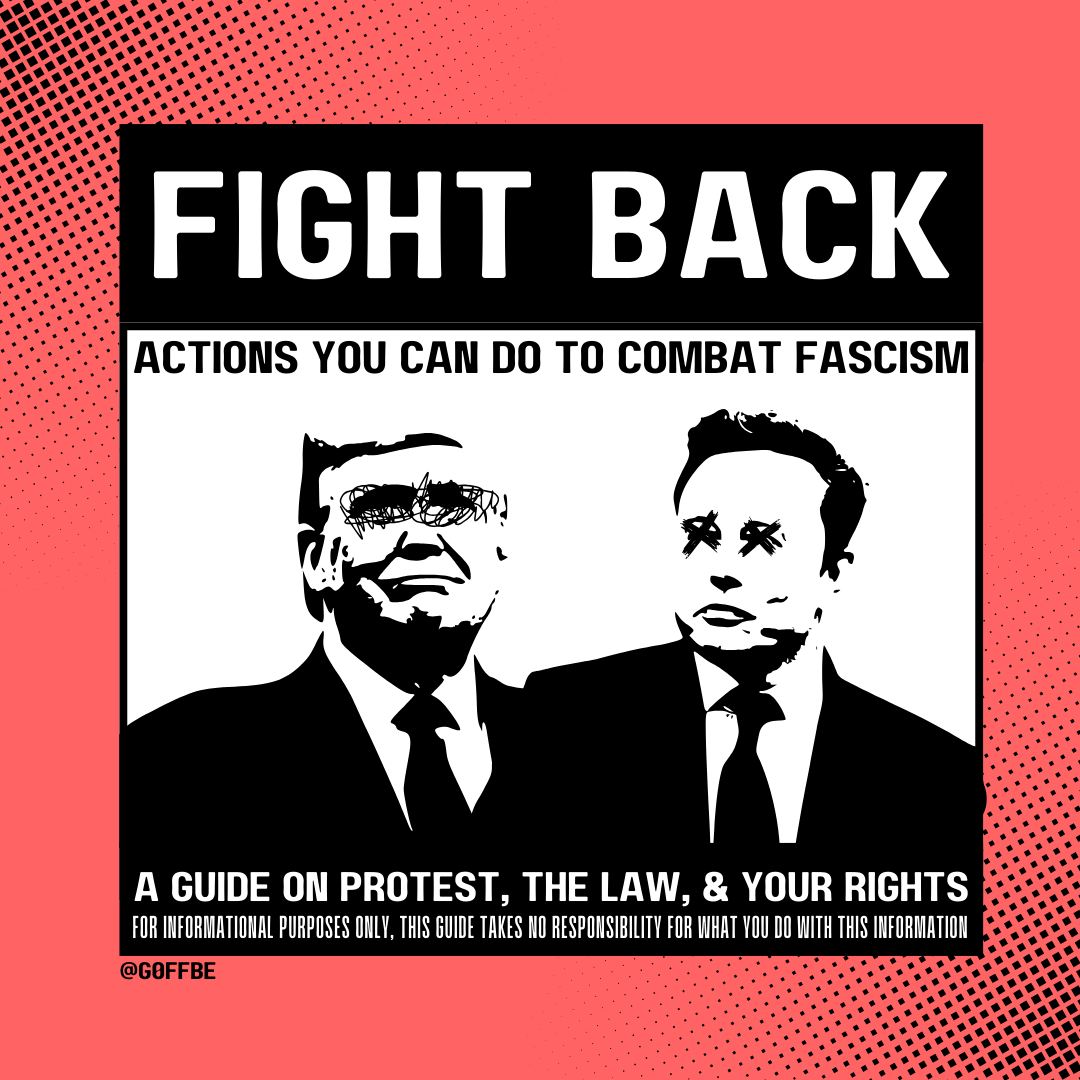
At the beginning of February, I created a set of shareable images of actions anyone can take if they’re feeling angry, upset, or otherwise motivated due to the current anti-trans political climate. It’s a fantastic starting point as a guide – this post is more advanced for folks wanting additional context.
DISCLAIMER: This guide does NOT promote illegal activity and does not incite the public to violate the law. This article is strictly for informational purposes and takes no responsibility for what individuals do with this information.
Why act? Why does it matter?
It is easy to give in to hopelessness. The world can be a terrible place and there are individuals in power whose mission is to eradicate transness alongside other people deemed invaluable by themselves and the organizations that support them. There has never been a time within human history without queerness and there will never be a time without us – the world is overwhelmingly a better place with trans folks like you and me in it, which is why we must act. It is unfair and exhausting, but do not let bullies push you out of existence – your life is worth fighting for, as are the future lives of transgender kids and the past histories of transgender elders they erase.
Most Americans are not aware of what is going on. The United States is one of the best countries in the world at distributing propaganda to its citizens, and most Americans lack media literacy skills regardless of their age, political affiliation, or educational background. Americans are not stupid, but most of us are unable to connect the dots on how fascism is taking hold in our government based on past fascist regimes. Currently, mainstream American media is owned and controlled by the Republican party – this isn’t an exaggeration. Large news sites like the New York Times and Washington Post are being censored by their billionaire owners, and similar actions are being done by television media like CNN by moving ‘controversial’ hosts to worse spots. The top social media platforms also fall into this, with sites like Facebook, Twitter/X, Instagram, and even TikTok catering to the GOP. Google changed the official name of the Gulf of Mexico to the Gulf of America while removing Black History Month and LGBTQIA+ topics and doodles.
Why? Personally, I think Mark Zuckerberg and Facebook are great case examples. At the end of the day, Zuckerberg and most other insanely wealthy people do not subscribe to the ideas or politics of the GOP: they’re in the business of making as much money as possible, regardless of the political party in power. Many were shocked when Facebook officially released its new rules stating harmful speech against transgender folks was no longer considered hate speech on the platform – but Mark is attempting to appeal to what he believes will get him the most profit. These term updates and making the office “more masculine” aren’t that different from when Facebook changed into a rainbow logo in June. Similarly, Bezos barred the Washington Post from making a political endorsement in 2024 because he feared making the ‘wrong’ endorsement would harm profits since an angry Trump would be liable to use his political power to persecute his enemies. Elon is super-gluing himself to Trump’s backside because he believes it will produce the most profit. Unfortunately, the same thing happened during Hitler’s rise to power and Nazism as BBC History writes, “The elites [of 1930s Germany] thought they could ride Hitler like a horse. But they soon discovered that they were the horse and that Hitler was the horseman.” Like those German elites, today’s American billionaires believe they can use fascism to deepen their pockets – even if they lack the foresight or integrity to see how terrible a decision that is in the long run.
Combined, most of the actions I recommend circle around visibility. If the American public cannot see our anguish because we are being censored by mainstream media, then we must draw attention until they are unable to censor us.
That being said, I’m a strong believer that there is more than one way to be an activist and incite change. For a movement to work, we can’t all be on soapboxes and leading marches: to lead a successful demonstration in your community, you need leaders but you also need folks well-versed in first aid, marketing, security, and empathy to make it work. I’m a fan of education as a form of activism (hence this blog) – there’s so much value in meeting people where they are and opening their values to social justice. The American public largely wants ‘radical’ programs like universal healthcare, better wages, and marriage equality, but they lack the language to see their value beyond the GOP versus Democrat binary that pushes them to see anything ‘radical’ as un-American and communist. When considering what actions you want to take, that’s worth remembering: to win the American public over and see our struggle, we have to cater to their human nature and play to their values. Our fight is everyone’s fight in the war on fascism, so open them up to ideas like fascism is inherently un-American, hatred is un-Christlike, and anyone who preaches hatred over empathy should be questioned.
All of the actions discussed can be performed with or without a large group. Many forms of social change can be carried out best with a small group of tight-knit folks united by a common cause (also known as an affinity group) – so empower yourself and your friends to get out there. Every action, no matter how small, is valuable. Even if just one person sees your message before it is removed or censored, it matters and is worth the effort.
Do Not Comply: In Advance or Otherwise
“Most of the power of authoritarianism is freely given. In times like these, individuals think ahead about what a more repressive government will want, and then offer themselves without being asked. A citizen who adapts in this way is teaching power what it can do.” – On Tyranny by Timothy Snyder
Laws do not dictate morality and something being legal does not make it okay. Fascism relies on obedience and thrives when individuals obey in advance. We are already witnessing this – upon Trump’s executive orders, hundreds of hospitals immediately halted transgender care in fear of violating the administration’s unjust orders. Upon Trump’s return to the White House, sites like Facebook preemptively changed its guidelines to harm transgender users. When Trump banned DEI via order, thousands of companies compiled without a second thought because it is easier to follow unjust laws than it is to sue or refuse to obey.
OnTyranny goes into this a great deal, and I recommend the entire book – it’s easy to follow and uses historical examples from previous fascist regimes, and compares them to modern times. Snyder explains, “If lawyers had followed the norm of no execution without trial, if doctors had accepted the rule of no surgery without consent, if businessmen had endorsed the prohibition of slavery, if bureaucrats had refused to handle paperwork involving murder, then the Nazi regime would have been much harder pressed to carry out the atrocities by which we remember it.” In other words, fascism would not have been able to flourish if the public had been resistant or refused to comply with terrible rules. Remind people of their values, personal and professional ethics, and their role in preventing tragedy. Call out institutions and people who comply in advance. Offer space to change and learn, and encourage them to stand up.
Call Your Reps
This action is… Legal!
Admittedly, this is hard to do – it’s easy to be overwhelmed with life and be too socially awkward to call your elected officials. No matter your social skills, you’re entitled to be heard by your representatives because they work for you.
Emails, written letters, and petitions usually get dumped directly into the trash before being read. Some officials are better than others about reading these, but they’re commonly disregarded unless they’re presented in a remarkable way. Phone calls are harder to ignore – which is why Republicans call a LOT. On an average day, right-wingers call their elected officials four times compared to others. When specific issues come up like queer rights being included on an upcoming bill, that number skyrockets 11:1. Unlike unread emails and letters, representatives have to listen to phone calls. Officials assign staff to listen to all callers every day and report on the top issues via a summary. When a topic gets enough attention, that representative will be pushed to take a stance based on the views of their callers since they’re assumed to be voting constituents – even if that view contradicts their party platform.
The phone numbers of all elected officials in Congress are publicly available. Some people find it helpful to save these numbers in their contact list to call regularly. If you don’t know who represents you in Congress, usa.gov/elected-officials will give you current information based on your address to direct you. Take the information there and insert it into house.gov and senate.gov to get the contact details of your officials. You will likely be sent to their personal website, which you will need to navigate to find their phone number – most ‘contact’ forms will try to force you to stop at an email, so look for something like ‘offices.’
When calling, make sure you have a script. It’s easy to stumble over your words, especially as you’re calling about issues that matter deeply to you. After enough practice, you’ll be able to call without a script – but there’s no rush. I have a practice script focused on DOGE, but it’s not hard to write one with AI tools like ChatGPT available to organize your thoughts.
Anyone Can Write
This action is… Legal!
Even if major media outlets are catering to fascism, news isn’t dead. Everyone and anyone is qualified to write op-eds and letters to the editor. A select number is published in print and online with each release, letting your message be read by thousands. Opinion sections have been used to highlight political topics for decades since it’s a free way to publish your work. The following buttons direct you to relevant places for both the Post and NYT.
Major news publications have thousands of writers submit their work each day – so you are less likely to be published compared to other outlets. That doesn’t mean it isn’t worth it – keep writing until you get published, and then keep writing for the cause. Look up the specific submission guidelines for your local, regional, or national news of choice. All newspapers (as well as many other media outlets) invite reader submissions.
Make Your Mark
This action is… Illegal!
It’s easy to post flyers, stickers, and other messages in your community. You can look up a recipe for wheat pasting, the old-school method of sticking flyers, online – or you can purchase a can of high-strength spray adhesive at any local home improvement store. Like always, public libraries are your friend since they offer printing services significantly cheaper than commercial alternatives like Staples or Office Depot – some libraries have self-service stations that allow you to print without getting the help or approval of staff.
Label 228s are free stickers issued by the United States Postal Service meant to allow the general public to easily write addresses on packages. These labels can even be ordered and mailed for free directly to your home – which is why they became widely associated with graffiti culture beginning in the 1990s. ‘Slaps’ are easy to access, decorate, and adhere to – but it’s technically illegal to use Label 228s for non-mail purposes.
Some places are more legal to tag than others. Walls, utility poles, and public restrooms are generally considered illegal unless you have permission from the city or business owner. Of course, in the words of many graffiti artists who use spray paint, paint markers, and other tools to leave their mark: “No face, no case.” On the other end of the spectrum, lots of community venues have public boards where anyone can place flyers – but a political or pro-trans message may be likely to be taken down in these locations.
Under Title 18, Section 333 of the United States Code, defacement of currency is a punishable crime. Defacement is defined as mutilating, cutting, disfiguring, perforating, uniting, or cementing together bills with the intent to make them unfit to be used – but it leaves two things to note. One, it’s only a crime if you are caught defacing currency – it’s not a crime to have defaced money and there is no way to know who wrote what on a bill which is why money defacement is an unprosecutable crime. Secondly, writing on money is not considered defacement despite what most people believe.It’s actually commonly used to spread messages regarding social change since cash is widely used.
Okay, spreading information as a whole is not illegal – but the following method is. Most people have a mailbox to receive items through the postal service – these mailboxes must be kept safe and easy to access for packages to be regularly delivered. It is illegal to place items in mailboxes if you are not authorized postal personnel (ex. a mail carrier or rural mail carrier) since without postage, it’s considered tampering with mail and a violation of federal law.
It is fully legal to send mail through the postal service, but you’ll have to pay postage. As long as the mail doesn’t violate any major rules, the USPS will send it – including junk mail. USPS even has an online tool to allow you to send mail in bulk based on zip code, “Every Door Direct Mail.” However, it is extremely uncommon for people to be arrested or prosecuted for placing mail directly into someone’s mailbox without postage or the USPS. Generally, this law only gets brought up when local companies try to send a ton of junk mail to communities.
Similarly, it’s sometimes legal to put flyers on cars and other personal transportation. Even when cars are parked in public areas, it can be considered trespassing since the car is private property – but these laws fluctuate too greatly to make large-scale assumptions. Look up your local laws to determine if it’s legal in your area or risk getting into trouble if you’re caught.
Show Up
This action is… Legal!
The Constitution guarantees the Freedoms of Speech, Assembly, and Petition to ALL people within the United States – regardless of citizenship, political view, gender identity, sexuality, race, ethnicity, class, etc. In relation to social change,these rights give you well-protected status to be in ‘traditional public forums’ like streets, parks, sidewalks, and government buildings. When demonstrating in these spaces, you don’t need a permit to protest, picket, hand out flyers, or speak out as long as you’re not blocking traffic.
Some cities require individuals to fill out permits to hold demonstrations regardless of whether they’re in a public forum. It’s up to you whether you want to complete the appropriate paperwork or go for the “ask for forgiveness later” approach – again, remember you have the right regardless of permit regulations.
Stay in Touch
This action is… Legal!
Keep community connections and share information about upcoming actions in your social network. In deeply dangerous times when fascism is at its worst, it is easy for the general public to forget about the marginalized since those in power work to cover up the inhumane damage caused. By being a regular person in your community, you establish a connection that can’t easily be forgotten. When people realize they know a trans person, it’s difficult to demonize us once we are seen as people.
“Make eye contact and small talk. This is not just polite. It is part of being a citizen and a responsible member of society… A smile, a handshake, or a word of greeting—banal gestures in a normal situation—took on great significance. When friends, colleagues, and acquaintances looked away or crossed the street to avoid contact, fear grew.” – On Tyranny, Chapter 12
As mentioned at the beginning of this article, most actions can be done alone or with just a few friends. If you’re engaging in high-risk work that dabbles in activities either illegal or disliked by political opponents, you should learn some digital safety. Learn more about activism and digital safety here. As Snyder elaborates, “Nastier rulers will use what they know about you to push you around. Scrub your computer of malware on a regular basis. Remember that email is skywriting. Consider using alternative forms of the internet, or simply using it less. Have personal exchanges in person. For the same reason, resolve any legal trouble. Tyrants seek the hook on which to hang you. Try not to have hooks.”
Lastly, it is important to stay up-to-date on current events – even if it’s triggering and exhausting. Fascism works best when it overwhelms you, but it is important to keep acting. This is difficult to do even when fascism is at bay, but an uninformed activist isn’t capable of much change. Pick a few select news sources that you can trust as reliable and do not feed into sensationalism – enough to keep you current on events, but not too much to overwhelm.
Interested in More Activism?
Check out these posts for guides based around mutual aid and equality.